
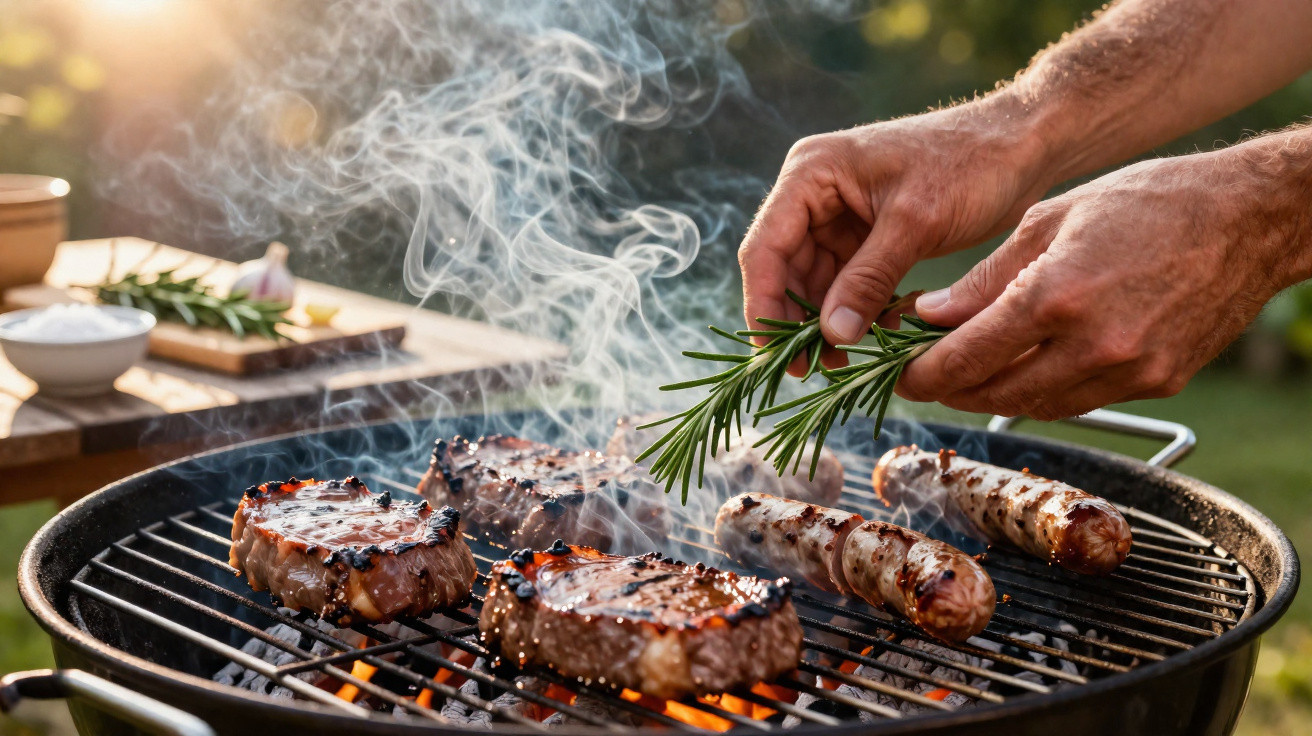
Tossing rosemary sprigs onto barbecue coals is a way to perfume the smoke with the herb’s essential oils, carrying that aroma onto the meat as it cooks. The heat of the embers releases rosemary’s fragrance, but you need to manage the timing so it doesn’t turn bitter. This works best when the sprigs go on at the right point in the grill, with steady heat and the meat already properly cooking.
Why does rosemary scent the smoke from the coals?
Rosemary contains essential oils in both its leaves and thin stems. As soon as the sprigs touch the hot coals of the barbecue, those compounds evaporate quickly and blend into the smoke rising towards the meat.
This fragrance doesn’t penetrate like a marinade. Instead, it sits mostly on the surface, mixing with rendered fat and the crust that develops on the grill. That’s why the effect is strongest on cuts that spend a few unhurried minutes in the smoke, without rushing and without high flames.
When should you add sprigs so the meat doesn’t taste bitter?
The ideal time to add rosemary sprigs to barbecue coals is once the charcoal has become glowing embers, with very little flame and a consistent heat. If the herb drops onto a strong flame, it burns too fast and can produce a dry, more resinous smell rather than a clean, aromatic one.
In practical terms, use rosemary around the midpoint of cooking, or in the last few minutes for quicker cuts. These cues help you get it right:
- The embers are red underneath and covered with a pale grey ash.
- The meat has already been seared and has started releasing fat onto the grill.
- There are no flames licking the cut directly.
- The sprig gives off fragrant smoke but doesn’t turn to charcoal within seconds.
Which meats pair best with this aroma?
Cuts with visible fat tend to suit rosemary particularly well, because fat holds on to some of the smoke’s perfume. Rump cap (sirloin cap), ribs, flank, and ribeye all take on this touch nicely, as long as you don’t overdo the sprigs.
Chicken also works well-especially drumsticks, thighs, and wings-because the skin and longer time on the barbecue help the aroma linger. More delicate fish needs restraint: a small sprig is enough, as rosemary can overpower the meat’s natural flavour.
How can you use rosemary on the coals without overdoing it?
Treat rosemary as a smoke seasoning, not as fuel. Two or three fresh sprigs are plenty for a medium batch of meat on the grill. Dried sprigs burn faster and create a stronger aroma, so they should be used in smaller amounts.
To keep the scent under control, stick to a straightforward approach:
- Choose fresh, sturdy sprigs with green leaves and an obvious scent.
- Place the sprigs at the edge of the embers, not in the hottest centre.
- Use them for just a few minutes and pay attention to how the smoke smells.
- Avoid adding rosemary every time you turn the meat.
What changes in flavour when the herb goes on at the right time?
When rosemary hits stable embers, the smoke becomes herbal and lightly resinous, pairing well with the meat’s salty crust. You’ll notice it as soon as you slice in, particularly near the toasted fat and the areas most exposed to the grill.
If it goes on too early or in large quantities, rosemary shifts from aroma to bitterness. The best result comes from using just a few sprigs, keeping the heat controlled, and limiting the smoking time-especially with beef cuts, skin-on chicken, and pieces that stay on the barbecue long enough to take on the fragrance without masking the meat’s own flavour.






Comments
No comments yet. Be the first to comment!
Leave a Comment