
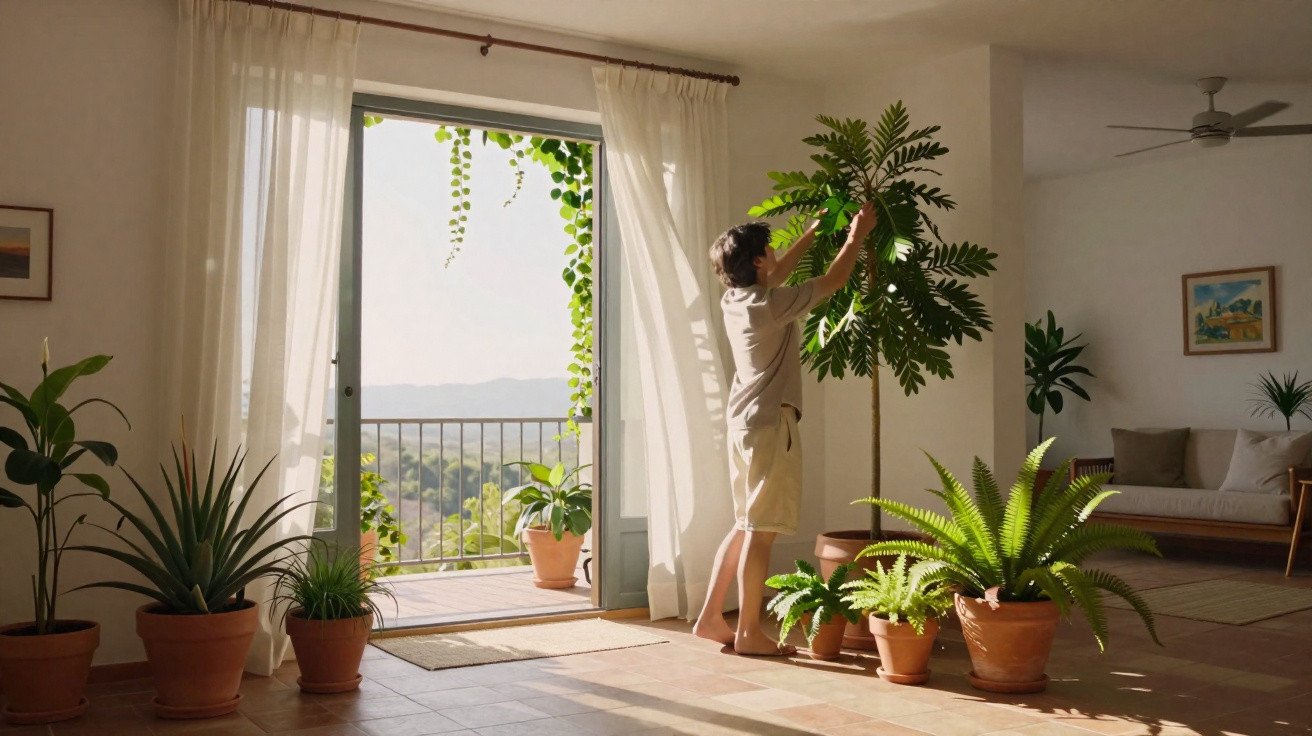
Keeping a house cool without air conditioning is often simpler when you use plants as natural shade across sunny windows, balconies and exposed façades. In a Mediterranean-style approach, climbers, oversized pots and heat-tolerant varieties are combined to cut direct solar radiation, cool the air through evapotranspiration, and limit how much exterior walls warm up.
How do plants help reduce heat indoors?
Plants act as a shaded buffer before sunlight reaches the glass, floors, walls and furniture. By stopping radiation on the outside, far less heat makes its way indoors, so the room feels more comfortable throughout the day.
Shading is only part of the effect. Leaves and moist compost also release water vapour gradually. This steady evaporation helps cool the air closest to windows, especially on balconies, patios and sun-facing façades that take strong afternoon light.
Which plants work best in this Mediterranean method?
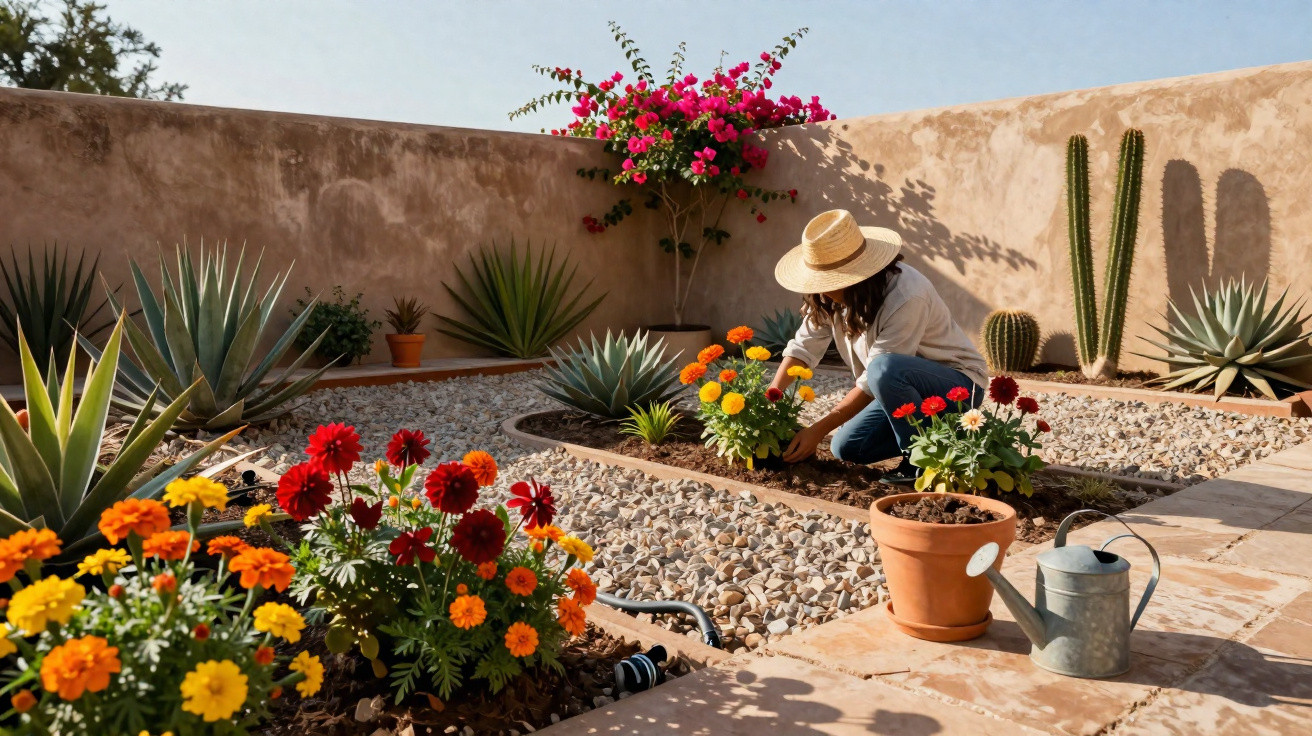
The most useful choices are those that cope well with full sun, withstand high temperatures and build a dense canopy without needing constant watering. Mediterranean plants typically have tougher, aromatic or narrow leaves, which suit dry spells and intense light.
- Jasmine and bougainvillea for pergolas, boundary walls and outdoor trellis panels.
- Ivy and Boston ivy (false vine) to cloak walls in natural shade.
- Lavender, rosemary and sage for sun-baked pots and hot balconies.
- An olive tree in a large container to cast light, dappled shade outdoors.
- Bay laurel, myrtle and pittosporum to create green screening close to the façade.
Where should you place pots to cool things most effectively?
Placement matters more than sheer quantity. Put containers and climbers where the sun hits directly-most notably west-facing windows, glazed doors, balconies and walls that heat up towards late afternoon.
In a flat, lining the balcony with tall planters can reduce heat before it reaches the sliding door. In a house, a trellis with climbers works well near windows, as long as you leave enough space for air to move between the plant and the wall.
How can you create shade without blocking ventilation?
The goal is not to seal the home behind thick greenery, but to filter sunlight while still letting breezes through. Foliage pressed right up against the glass can trap moisture and hinder airflow, whereas a green layer set back by a few centimetres casts shade without making the space feel stuffy.
- Fit trellis panels, metal grids or supports so climbers sit away from the wall.
- Leave an air gap between pots, the window and any indoor curtain.
- Choose small- to medium-leaved plants for narrow windows.
- Position larger species to the sides rather than in the middle of the opening.
- Water early in the morning or late afternoon to keep the compost cooler.
Does this natural solution really improve thermal comfort?
Well-placed plants will not chill a room the way air conditioning does, but they can reduce heat gain on the most exposed surfaces. When the façade is shaded, walls absorb less heat, glass stays cooler, and the interior takes longer to warm up.
You will notice the biggest difference when planting is paired with cross-ventilation, lightweight curtains and keeping windows closed during the harshest sun. With climbers, correctly positioned pots and heat-resilient species, the home gains living shade, fresher-feeling air and less reliance on electrical appliances in summer.
Comments
No comments yet. Be the first to comment!
Leave a Comment