
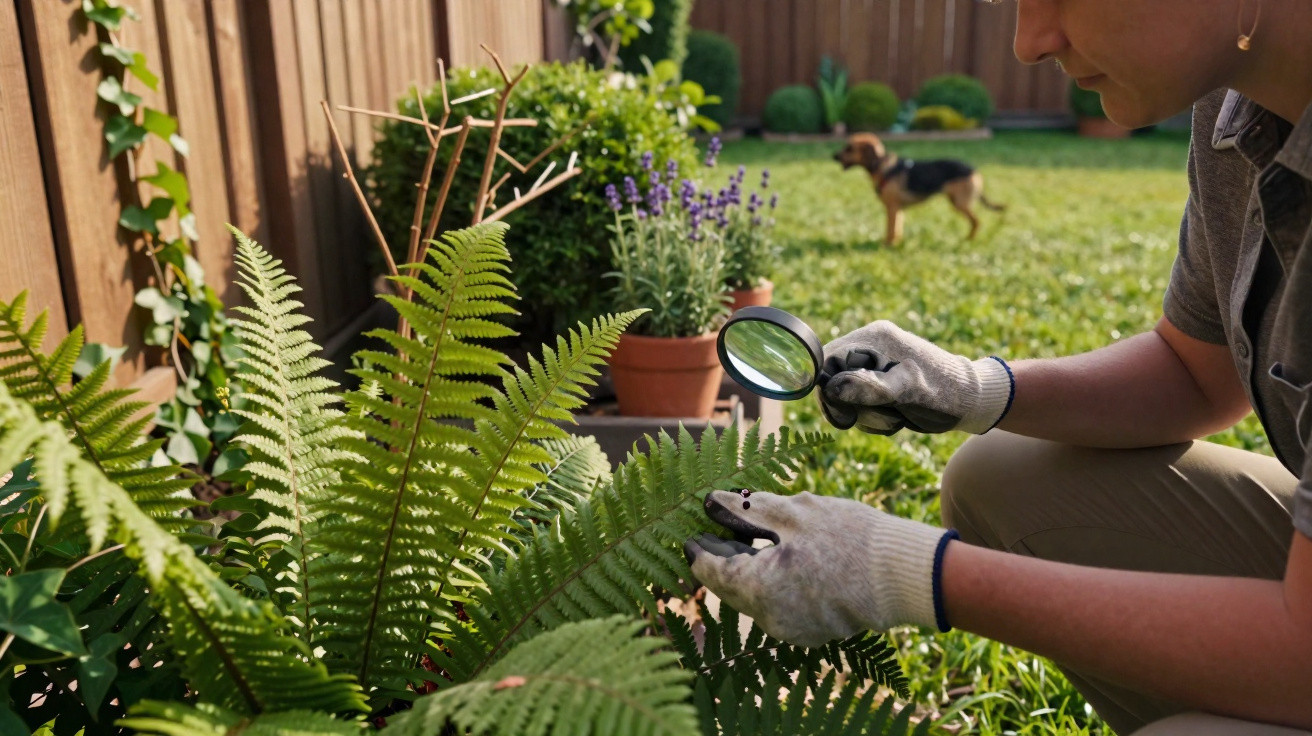
Summer can make a garden look its best, with blooms fully open and the lawn a vivid green. Yet, between one pot and the next, a small but stubborn problem may be settling in right under your nose: ticks.
The perfect hiding place that attracts ticks in the garden
Ticks favour damp, shaded conditions-and many gardens provide exactly that without the homeowner realising. All it takes is a more enclosed corner with a build-up of leaves for these tiny parasites to feel completely at home.
Long grass is one of their favourite spots, where they can stay concealed among the blades while they wait for an animal-or a person-to pass by. But the issue goes beyond an untidy lawn, because certain garden plants can act almost like an open invitation.
- Long grass: ticks climb up the stems and lie in wait, ready to latch onto anyone who brushes past.
- Ferns: the dense fronds create a humid microclimate, ideal for ticks to hide and reproduce.
- Ivy and ground-cover plants: thick foliage and constant shade form an excellent refuge for these parasites.
- Shrubs such as mulberries and hazelnuts: when left to grow freely into dense thickets, they provide extra shelter for ticks.
- Dense conifers, such as thuja: tightly packed branches block sun and wind, helping the parasites survive.
Ferns and ivy may be attracting ticks
Plenty of people look after their garden with appearance in mind, without considering that plant layout can also affect tick presence. A bed packed with ferns or ivy, for instance, might seem purely ornamental, but it offers exactly the shade and moisture these parasites seek out.
That does not mean you need to strip every green plant from the garden. What matters is knowing which species need closer attention and adopting simple maintenance habits to lower the risk of bites over the summer.
Unpruned shrubs turn into a trap
Shrubs such as mulberries, elderberries and hazelnuts can be excellent hiding places for ticks, particularly when they grow unchecked and become tightly packed thickets. The denser the shrub, the more likely it is to become an ideal nesting spot for these parasites.
Pay attention to this detail
Regular pruning makes all the difference
Keeping garden shrubs neatly trimmed prevents them turning into closed-off, damp thickets-the environment ticks like best.
Routine pruning not only makes the garden look better, it also significantly reduces the chances of finding these parasites lurking among the leaves.
The same approach applies to conifers such as thuja, whose branches sit very close together. Opening these plants up to improve airflow helps reduce the number of hiding places available to ticks.
Fewer ticks, more freedom in the garden
If you enjoy spending time outside with your family, managing the planting is also a way to protect your health. Tick bites can transmit diseases, and reducing direct contact with these parasites starts with the plants you choose and how you keep them.
Mowing regularly-ideally every two weeks during the growing season-goes a long way towards making the lawn less welcoming for ticks to settle in.
Plants that help keep ticks away
Some species can support this effort because their scent tends to deter ticks. Lavender, lemon balm and rosemary are strong choices to plant as a natural barrier, while also leaving the garden smelling pleasant.
In the end, a garden that is both attractive and safer comes down to small, everyday actions. Keeping an eye on plants like ferns and ivy, alongside regular shrub pruning and consistent mowing, makes a huge difference in keeping ticks at bay.
Interested in this overlooked garden detail? Pass it on to someone else who loves caring for their own outdoor space.




Comments
No comments yet. Be the first to comment!
Leave a Comment