
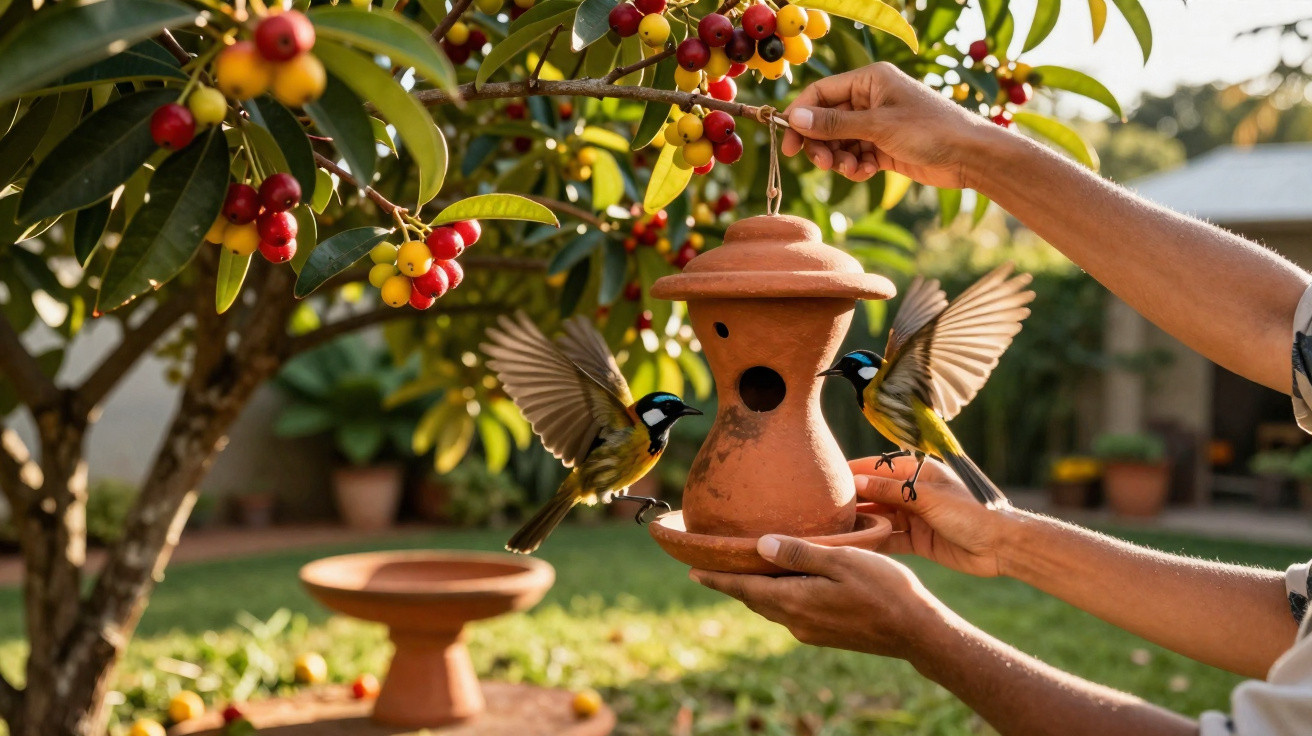
If you have a fruit tree in the back garden, one small touch can make it far more inviting to thrushes and rufous-collared sparrows. These birds tend to seek out calm spots with shade, natural food and straightforward access to clean water. When those conditions are met, they are more likely to return regularly, making the garden feel livelier, more balanced and more pleasant throughout the day.
Why do thrushes and rufous-collared sparrows like leafy back gardens?
Thrushes and rufous-collared sparrows favour places that feel safe and comfortable. Fruit trees provide shaded areas and work as natural shelter from strong heat and potential predators. The ground beneath them also often holds seeds, insects and small fallen fruits, which form part of these birds’ diet.
Peace and quiet matters too. Gardens that are still and include a mix of plants tend to feel more protective to birds. When the space is kept natural and there is not too much movement, visits usually become more frequent in every season of the year.
Which item helps attract birds to a fruit tree?
The most useful addition is a shallow container filled with clean water, placed close to the tree’s branches. This simple step quickly draws the attention of wild birds, particularly in hot spells. They use the water both to drink and to cool and clean their feathers during the day.
A few small choices can make the back garden even more appealing to them:
- Choosing low containers makes it easier for smaller birds to reach the water.
- Changing the water daily helps keep the area healthier.
- Adding a few small stones gives birds a safer place to perch.
- Positioning the container near foliage provides a sense of natural cover.
How can you make the back garden more attractive to thrushes and rufous-collared sparrows?
Alongside fresh water, it helps to keep natural features in the garden. Dry leaves left on the ground allow rufous-collared sparrows to forage for seeds, while thicker branches provide secure places to rest. The more natural the setting feels, the greater the chance of seeing wild birds around.
These simple actions also help create a more welcoming space for birds:
- Avoiding pesticides protects insects that birds rely on for food.
- Planting flowers increases the presence of small animals in the garden.
- Keeping green areas intact supports a stronger sense of safety.
- Light, moderate pruning helps maintain sheltered spots.
What can drive wild birds away from the back garden?
Ongoing noise, heavy footfall and dirty water containers can quickly discourage thrushes and rufous-collared sparrows. These birds watch the surroundings before settling and tend to avoid places that suggest risk or discomfort. Frequent appearances of predator animals can also significantly reduce how often they visit.
Garden upkeep plays a part as well. Dry spaces with little vegetation, or gardens where chemical products are used too heavily, become less attractive to a range of species. When a back garden offers natural balance, shade and fresh water, the fruit tree can turn into a genuine meeting point for wild birds.
Comments
No comments yet. Be the first to comment!
Leave a Comment