
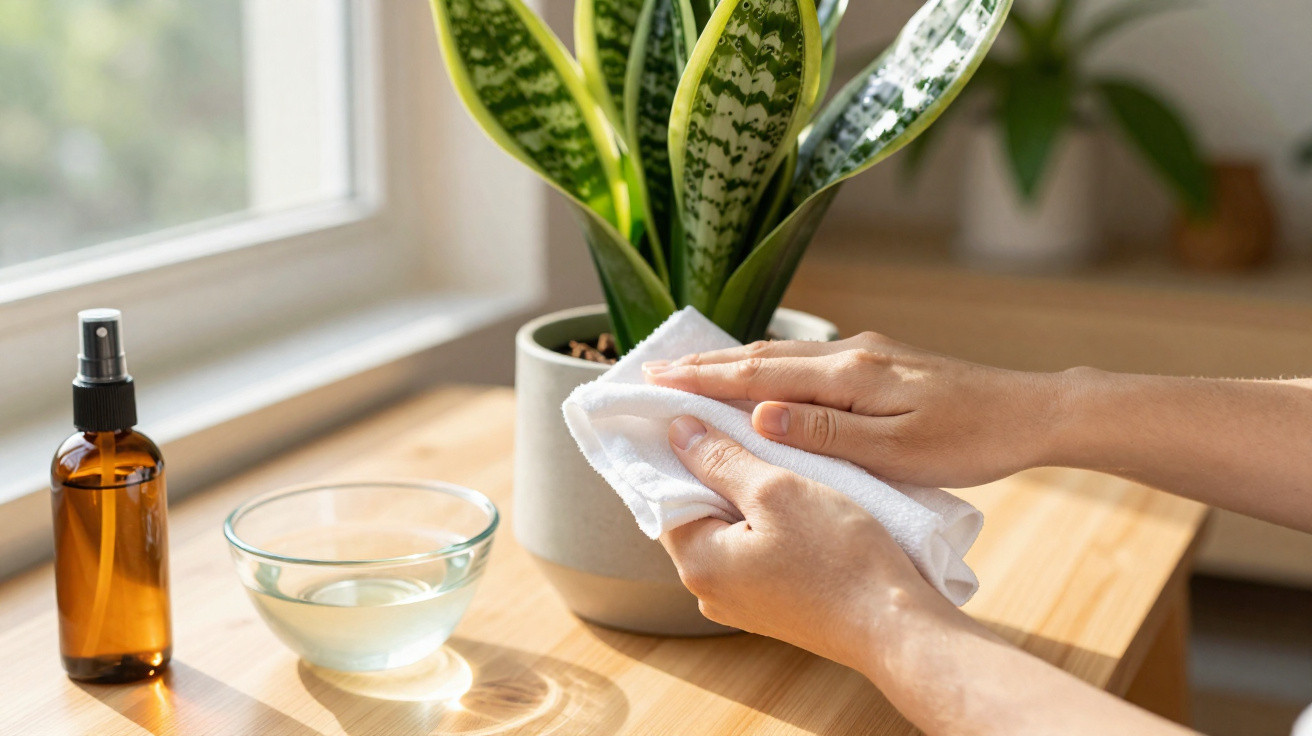
The plant commonly known as the snake plant (often kept in flats and offices) tends to be overlooked in day-to-day care. Even though it is hardy, this species gathers dust on its stiff, upright leaves, which dulls its natural sheen and can disrupt gas exchange. In enclosed indoor spaces-where windows stay shut for longer-an easy cleaning routine helps keep the plant looking healthy and performing well, alongside essentials such as moderate watering and good light.
Why clean the snake plant with water and vinegar regularly?
Cleaning the leaves of the snake plant with water and vinegar lifts away the film of dust and can help reduce unwanted micro-organisms. White vinegar contains mild acids at a low concentration, which loosen light grime without the need for harsh products, while the water dilutes the vinegar and makes it easier to apply.
Doing this hygiene step from time to time supports photosynthesis, because heavy dust reduces the amount of light reaching the leaves and may even block stomata. In places affected by air pollution, cooking grease, or frequent footfall, build-up is greater; cleaning helps the plant make better use of available light and keep growth steadier. The snake plant is also often referenced in indoor air-quality studies as one of the species that can help filter volatile compounds found in interiors; clean leaves can strengthen that effect by increasing the active surface area for gas exchange.
How to prepare and apply the cleaning solution on the snake plant?
Mixing water with vinegar for the snake plant is quick and straightforward, using only room-temperature water and culinary white vinegar. Keeping the ratio gentle avoids overly strong concentrations, which may be too harsh on paler leaves or variegated varieties.
- Combine about 250 ml of filtered water (or water that has been left to stand) with 1 tablespoon of white vinegar.
- Pour the mixture into a clean container and, if possible, use one with a lid for short-term storage.
- Lightly dampen a soft cloth-ideally microfibre-or a piece of cotton with the solution.
- Carry out a patch test on a small section of one leaf, especially on varieties with yellow edges.
- If there is no colour change after a few minutes, continue by wiping each leaf gently, one by one.
It is usually best to wipe from the base upwards, following the direction the leaf grows, and to avoid soaking the plant or the compost. After using the damp cloth, a second dry cloth helps remove excess moisture, prevents dull water marks, and makes the natural shine more noticeable. For plants grown near very sunny windows, it is sensible to clean during the cooler parts of the day, so droplets do not act like tiny lenses and cause heat-related spotting.
How often should you clean the snake plant, and what signs should you watch for?
How frequently you should use water and vinegar depends on where the plant is kept. In sheltered indoor spots-such as bedrooms and living rooms set back from the street-cleaning once a month is often enough. In areas closer to busy roads, kitchens, or open windows, the interval may drop to around every two weeks.
A few straightforward signs can show when the plant needs attention and can also guide other routine care:
- Leaves that look dull, feel rougher to the touch, and have visible dust on the surface.
- Dry tips or dark patches, which may point to overwatering or intense cold.
- Leaves that turn very yellow at the base, suggesting waterlogging or compacted compost.
- Slow growth in a very shaded position, indicating a need for brighter indirect light.
What additional care helps keep the snake plant healthy?
Along with gentle cleaning, a handful of basic practices will keep the snake plant vigorous for many years indoors. This species copes well with periods without watering, so it is best to let the compost partially dry between waterings, always using a pot with good drainage to prevent root rot.
Placing it where it receives bright, indirect light, turning the pot occasionally, and avoiding strong sun at peak hours-especially for paler leaves-helps maintain a rich green colour and an upright, firm habit. Watching for changes in colour, texture, or spotting acts as a natural "thermometer": the earlier you notice these signs, the easier it is to adjust watering, light, and any products used in day-to-day upkeep. In very cold areas, shielding the snake plant from chilly draughts and from direct contact with cold window glass also helps prevent the leaves from turning soft or looking waterlogged during winter.



Comments
No comments yet. Be the first to comment!
Leave a Comment