
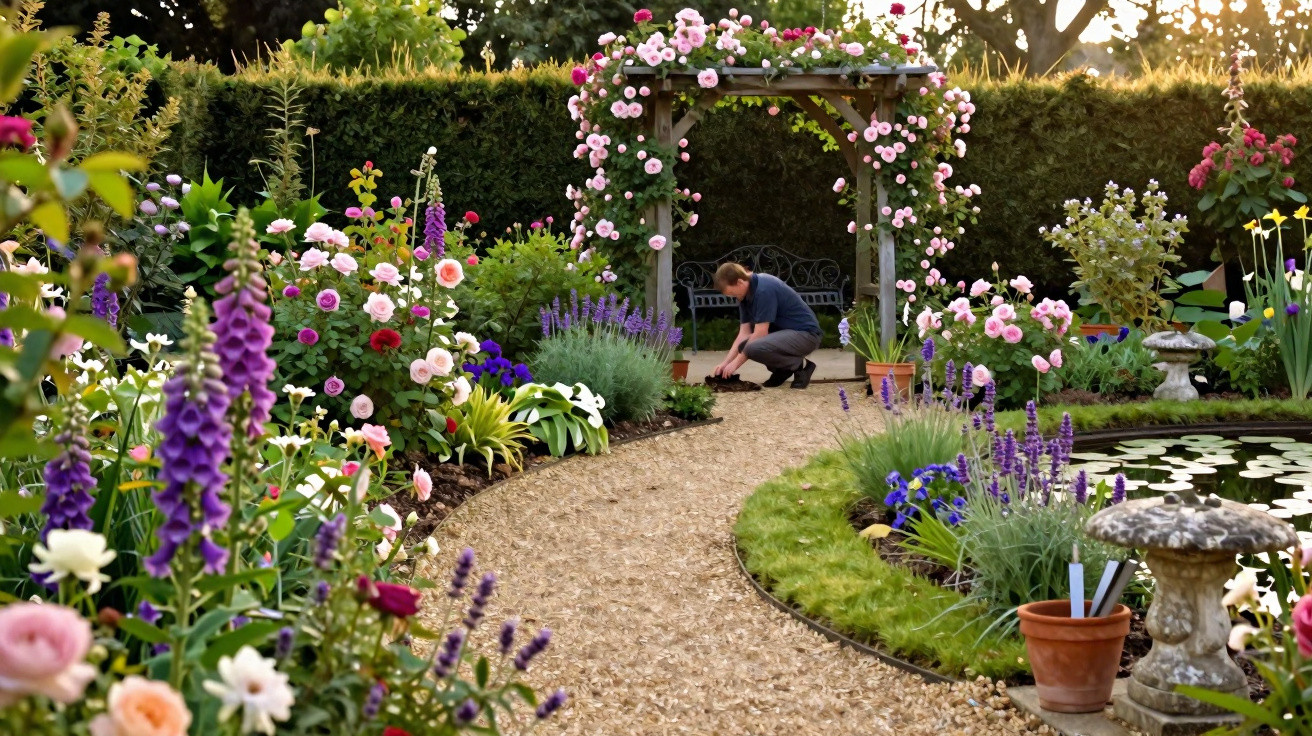
Finding a lush natural haven is entirely possible with the traditional British landscaping style. By blending formal structure with the freedom of wilder growth, you can shape a romantic atmosphere that sits naturally within your area’s rich biodiversity.
How can you structure abundant flowerbeds in a harmonious way?
The hallmark of classic English borders is the depth of the planting area you set aside. The key is to plant in generous, repeated blocks of the same species across the space, creating a striking look with plenty of impact in every one of the year’s seasons.
To keep the display balanced, arrange plants in tiers according to their mature size. Position the tallest varieties at the back, mid-height plants through the middle, and the lowest growers at the front, producing a smooth sense of grace that highlights floral lushness.
How can you save bees and still save water in the garden?
Choosing the right plants draws in pollinators that are essential to the ecosystem, while smart management methods significantly cut unnecessary water loss… Read more
Which structures add vertical charm to the setting?
Vertical features are vital for adding romance and depth to a home garden. Well-made timber structures provide the perfect framework for vigorous climbers and fragrant roses, creating a captivating focal point that naturally draws your visitors’ eyes.
When mapping out these overhead walkways, plant young specimens on both sides of each support for even coverage. Correct pruning, along with leaving openings at the top, helps sunlight filter through properly-supporting healthy development and ensuring generous flowering.
To understand these changes more clearly and see British arrangements in real-life detail, watch the excellent audiovisual content below, produced especially by The Middle-Sized Garden (YouTube) on YouTube, which explores the ideas discussed here in greater depth:
How can you create mysterious corners and inviting paths?
Dividing the plot into distinct themed areas-often called “rooms”-makes exploring the garden far more engaging. You can begin with a smooth transition close to the house, using geometric paving to organise the outdoor social space with a neat, elegant feel.
As the visitor moves further from the building, the mood should become intentionally wilder and more connected to native nature. Curving paths are meant to spark curiosity, leading towards resting points set off with sculptures or furniture that adds real comfort.
English Garden Kit
Structural elements - Three crucial components for bringing authenticity to a classic design:
- Large-scale sculptures placed strategically to guide the gaze;
- High-quality, comfortable benches that also function as works of art;
- Clearly defined paths linking the different outdoor themed sections.
How can you include hedges and artistic touches?
Adding hedges gives the garden a strong backbone throughout the entire year. These green forms perform especially well in winter by maintaining visual interest, while also providing a beautiful contrast to the summer’s sunlit burst of colour.
You can also introduce handcrafted sculptures or small monuments made from easy-to-find reclaimed materials. Decorative pieces built from rough stone or fallen logs bring a distinctive eccentricity, strengthening the personality of your landscaping work while encouraging local wildlife life.
Because creating a distinctive outdoor space demands attention to practical details that protect year-round plant beauty, the following essentials help anchor your home project:
- Selecting plants that thrive in shady areas;
- Using species that cope well with waterlogged soils;
- Grouping simple geometric topiary shapes.
What is the importance of the lawn and water?
Unlike informal borders, a broad lawn plays a vital role by offering a calm, visual breathing space. In temperate conditions, lawns made up of native grasses can absorb atmospheric carbon efficiently and hold on to rainwater, acting as a useful tool for the ecosystem.
Finally, adding a moving water feature attracts amphibians that help with natural pest control. Small raised ponds or ornamental tanks perfectly complete the classic British look, bringing fauna and flora together in a sustainable way within this domestic refuge.


Comments
No comments yet. Be the first to comment!
Leave a Comment