
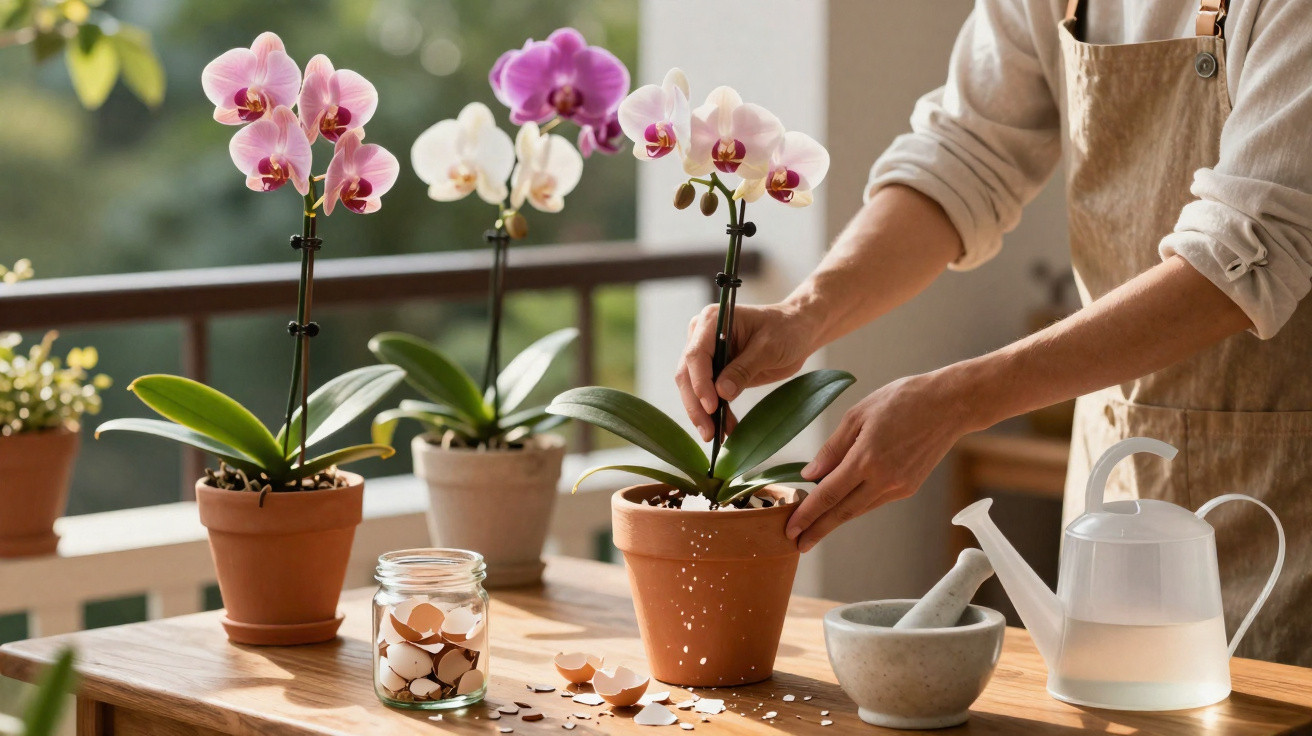
Seeing an orchid stop flowering while its leaves stay green and healthy is a common experience for people who grow these plants. Before reaching for chemical fertilisers, many gardeners turn to a simple kitchen leftover: eggshell. Because it is rich in calcium and other minerals, it can help top up an orchid’s nutrition when prepared and used properly.
Even so, specialists point out that eggshell is only an add-on to good basic care. It will not replace the essentials: suitable light levels, correct watering, and a balanced orchid feed.
Why can eggshell benefit orchids?
Eggshell is made mostly of calcium carbonate, and it also contains small amounts of magnesium and other minerals. Calcium helps build cell walls, supports root development, and can contribute to a more stable balance in the growing medium-conditions that help an orchid be ready to produce new flower spikes.
However, flowering depends on several factors working together. Most orchids need bright, indirect light, spaced-out watering, a well-draining substrate, and suitable temperatures. On its own, eggshell cannot make a plant bloom if those conditions are not being met.
Watch a video on the YouTube channel Matos Orquídeas showing when to use eggshells on your orchid.
How do you prepare this natural fertiliser?
The method is straightforward, but a few precautions matter to prevent smells and contamination. Only use shells that are clean and thoroughly dried.
Once crushed, the shells can be used to make a mineral-rich water, applied occasionally during watering.
- Wash the eggshells well.
- Boil for about five minutes.
- Leave to dry completely.
- Grind until you have a fine powder.
- Put the powder in a container of water for roughly four hours.
- Strain the mixture and use the diluted water to moisten the substrate once a month.
When should you use it, and what precautions should you take?
The most suitable time to use this supplement is after flowering has finished, or when the orchid starts producing new leaves and roots. At this point, the plant is in active growth and is more likely to make good use of available nutrients.
It is also important not to overdo it. Frequent use can lead to a build-up of mineral residue in the substrate. If you notice whitish deposits, unpleasant odours, or signs of mould, stop applying it and flush the substrate using clean water only.
- Use only shells that have been properly cleaned.
- Grind them as finely as possible.
- Apply only once a month.
- Do not replace a dedicated orchid fertiliser when it is needed.
- Keep the plant in a bright spot, away from strong direct sun.
- Water only when the substrate is almost dry.
Is it worth using eggshell on orchids?
Used in moderation, eggshell can be a useful way to provide calcium to orchids while also reusing a kitchen waste product. That said, it is not a miracle fix. Flowering still relies mainly on good light, appropriate humidity, temperature, and correct day-to-day handling of the plant.
The key to a healthy orchid is balance between light, watering, airflow, and nutrition. Eggshell can fit into that routine, but it cannot stand in for essential care.

Comments
No comments yet. Be the first to comment!
Leave a Comment