
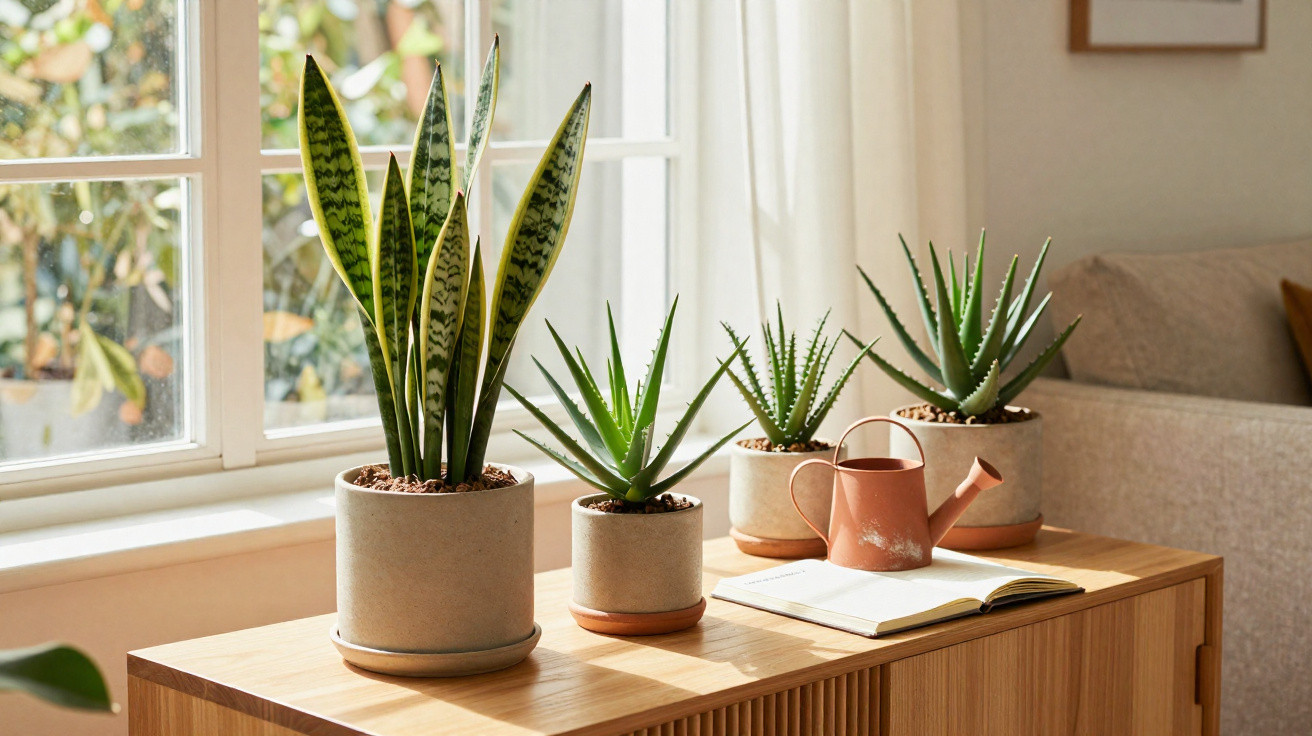
In many city homes, indoor plants have to fit around a fast-paced routine and very little time for daily care. In that context, hardy species that cope with dry spells and the occasional missed watering become the obvious choice. They let people enjoy a greener living space with minimal upkeep, cutting down on plant losses and making it easier to keep plants thriving even when you’re out all day.
What makes indoor plants resilient to a lack of water?
Some indoor plants are built to store water, whether in thick leaves, succulent stems, or sturdier root systems. Others have adapted to limit moisture loss, for example with waxy or narrow leaves, or simply by growing more slowly.
Many of these plants originate from arid or semi-arid regions, where rainfall is unreliable and soils drain quickly. That background means they tend to do well in pots filled with a light, free-draining compost and can cope with longer gaps between waterings-ideal for anyone who wants practicality and very little day-to-day attention.
What are 5 indoor plants that survive well with little watering?
Among the many species available, a handful stand out for combining toughness, easy growing, and strong suitability for flats. Below are five popular options for anyone who regularly forgets to water-perfect for creating a green, low-maintenance indoor setting.
Zamioculca (Zamioculcas zamiifolia)
Zamioculca handles low water and indirect light very well, helped by its firm leaves that hold moisture. Only water once the compost feels dry to the touch, and avoid waterlogging. It suits living rooms, offices, and hallways with moderate light levels.Saint George’s sword (Sansevieria trifasciata)
Saint George’s sword is one of the most drought-tolerant indoor plants. Its upright, fleshy leaves retain water, allowing long stretches without irrigation. It accepts anything from indirect light to filtered sun, needing only occasional watering when the soil has dried out.Cylindrical mother-in-law’s tongue (Sansevieria cylindrica)
Closely related to Saint George’s sword, the cylindrical form produces thick, rod-like leaves with a high capacity for storing water. Often chosen for minimalist interiors, it prefers well-drained compost, pots with drainage holes, and widely spaced waterings.Pothos (Epipremnum aureum)
Pothos is a climbing plant frequently used indoors as a trailing, hanging plant. While it prefers moderate humidity, it can tolerate some time without water, particularly in partial shade. Its aerial roots help it make use of moisture in the air between waterings.Indoor cactus (various species)
Cacti store water in their tissues and are a classic example of plants that cope with infrequent watering. Indoors, they do best with plenty of light, such as near windows or in enclosed balconies. Watering is usually done every two or three weeks, always taking care to avoid excess water.
How do you care for indoor plants if you forget to water?
Even with drought-tolerant choices, a few straightforward steps greatly improve your chances of success. It’s best to pair the right pot-one with drainage holes-with a light, airy compost that prevents root rot and allows good airflow.
To simplify the routine and avoid common problems, it helps to adopt a few practical everyday habits that work as “smart shortcuts” for keeping plants healthy:
- Test the compost with your finger: if it still feels damp, postpone watering to prevent overwatering.
- Avoid saucers full of water: standing water encourages fungal issues and root rot.
- Adjust the position: spots with consistent indirect light are usually more stable for indoor plants.
- Use simple reminders: a note in your calendar or a phone reminder helps you remember occasional watering.
What extra care helps these plants stay healthy?
Small details can make a real difference to the vitality of hardy indoor plants. Wiping dust from the leaves, turning the pot from time to time for even growth, and watching for signs such as yellowing or wilting all help you spot and fix issues early.
It’s also worth adjusting how often you water with the seasons: in winter, many species prefer longer intervals, while in summer they may need slightly more consistent attention-still in moderation.
Comments
No comments yet. Be the first to comment!
Leave a Comment