
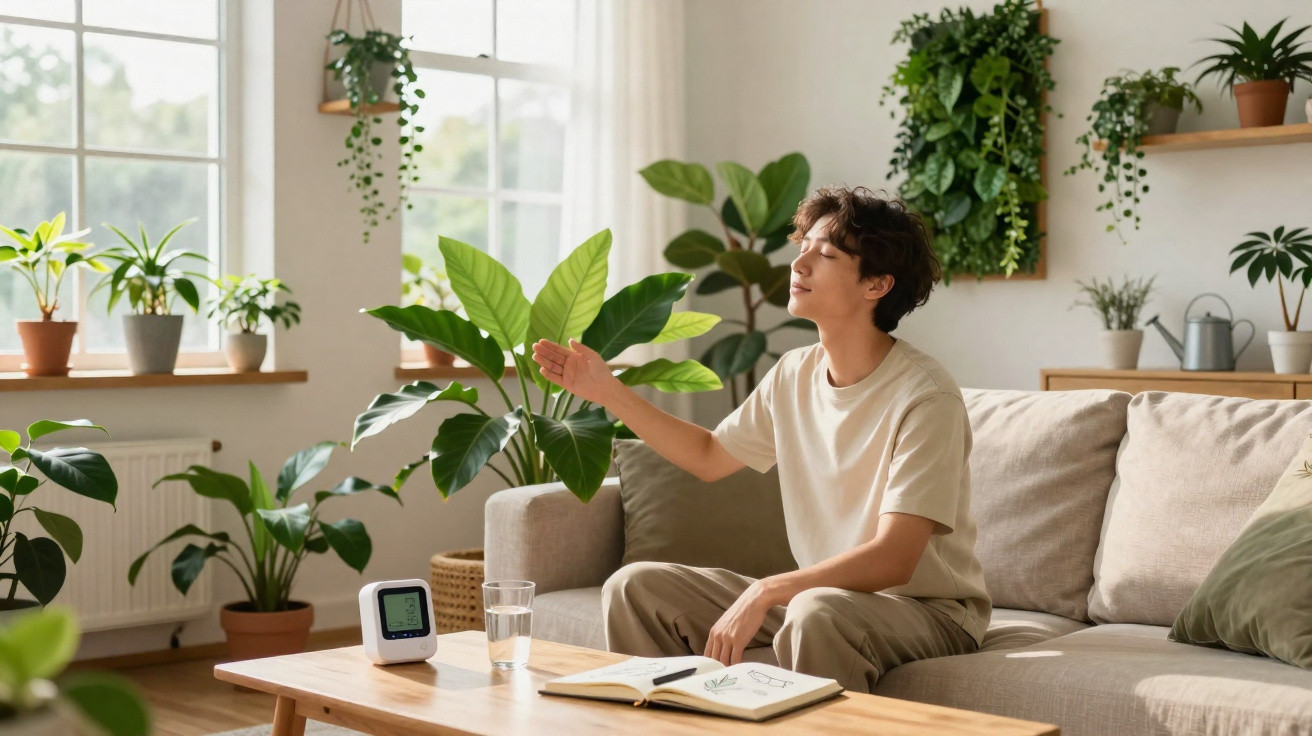
Most of us scarcely notice how strongly indoor spaces influence everyday life. At home, in classrooms, offices and shopping centres, we spend the bulk of our waking time inside buildings.
Fresh research from the University of Surrey suggests that bringing plants indoors does far more than brighten a room.
As well as improving how spaces look, indoor plants and more advanced indoor greening systems can enhance comfort, improve air quality and even help buildings respond better to heat.
Studying indoor plant systems
For years, scientists have examined trees and green spaces outdoors. Urban parks and street trees, for instance, can cool neighbourhoods and help clean the air.
By contrast, indoor plant systems have received much less detailed attention. The researchers wanted clearer evidence of how plants influence real-world indoor conditions.
A large study led by the University of Surrey’s Global Centre for Clean Air Research investigated the subject thoroughly. It brought together 35 specialists from the UK, Europe, the USA, Australia, India and Brazil.
This international work was carried out under the GREENIN Micro Network Plus project, which is centred on improving indoor environments as the climate warms.
Comparing indoor greening systems
To pin down the genuine effects of indoor plants, the researchers developed a framework built around ten questions.
It assessed technical performance, microbiology, health impacts, social and economic considerations, and the importance of place. By using this structure, experts were able to evaluate indoor greening from multiple perspectives rather than concentrating on a single advantage.
The team also reviewed 26 indoor greening systems, ranging from basic potted houseplants to indoor living walls and hydroponic towers.
Living walls grow plants across vertical surfaces. Hydroponic towers cultivate plants without soil, using water enriched with nutrients.
This side-by-side comparison provided practical direction for building designers and facilities managers on what is most effective, while also highlighting where evidence remains limited.
Plants cool and clean indoor air
One finding stood out clearly: larger indoor plant installations can make a space feel up to 2°C cooler.
Even if the thermometer reading does not change, a room can seem fresher and more comfortable, helping to ease the heavy, stuffy sensation that often develops in warm interiors.
Indoor plants also release moisture into the air. Low humidity is common during winter and in air-conditioned buildings. When plants raise humidity levels, it can feel easier to breathe, and the added moisture may reduce dryness in the nose and throat.
Some purpose-built planting systems can also improve indoor air quality. They may reduce fine particles and lower levels of harmful gases known as VOCs. VOCs can be emitted by products such as paint, furniture and cleaning materials.
These advantages, however, are not automatic. Performance depends on factors such as the number of plants, the available light and overall system design. A well-designed setup can be far more effective than a handful of plants left at random in a dim corner.
Plants and the indoor microbiome
The study also highlights early indications that indoor greenery could enrich the indoor microbiome - the microscopic organisms present in indoor air and on indoor surfaces.
Plants can introduce microbes associated with natural outdoor environments. This shift might support a healthier, more balanced indoor environment, although more research is required to confirm longer-term health outcomes.
The researchers also pointed to weaknesses in earlier studies. Many previous experiments relied on unrealistic quantities of plants or on small lab chambers.
Those conditions do not represent typical homes, schools or offices.
To address this, future studies need to be carried out in real buildings over extended periods. Variables such as lighting, ventilation, occupancy and ongoing maintenance all affect how well indoor greening performs.
Placement and care matter
“People spend around 90 per cent of their lives indoors, but surprisingly, we still understand very little about how indoor plant systems can reshape those environments,” said Professor Prashant Kumar, lead author of the study.
“Our collaborative work shows that indoor greening can make a meaningful difference in certain situations – not just to how buildings feel, but to how they cope with heat, humidity and pollutants.”
“But these benefits don’t happen by accident. They rely on using the right systems, in the right way, with the right lighting and maintenance.”
Plants need proper planning
To deliver measurable benefits, indoor greening requires thoughtful planning and consistent upkeep. Without suitable light and routine care, plants may fail to thrive and may not provide the intended improvements.
“Treating greening as environmental infrastructure, rather than decoration, as well as filling substantial research gaps in the topic area, will be key to unlocking its full potential,” noted Professor Kumar.
The point is straightforward: indoor plants should not be seen solely as decorative. To achieve genuine environmental gains, designers and building managers need appropriate design choices, correct lighting and regular maintenance.
Greener and healthier spaces
“Indoor planting is a fantastic way to bring the benefits of plants, and people’s interaction with them, into urban homes, schools and any other spaces where nature is not easily accessible,” said study co-author Dr. Tijana Blanusa.
“This paper lays strong foundations by providing evidence of the conditions needed to achieve the greatest impact on air quality, wellbeing and more.”
Indoor plants on their own will not fix every environmental issue. Yet when indoor greening is treated as a serious element of building design, plants can contribute to spaces that are healthier, more comfortable and better able to cope with a changing climate in everyday life.



Comments
No comments yet. Be the first to comment!
Leave a Comment