
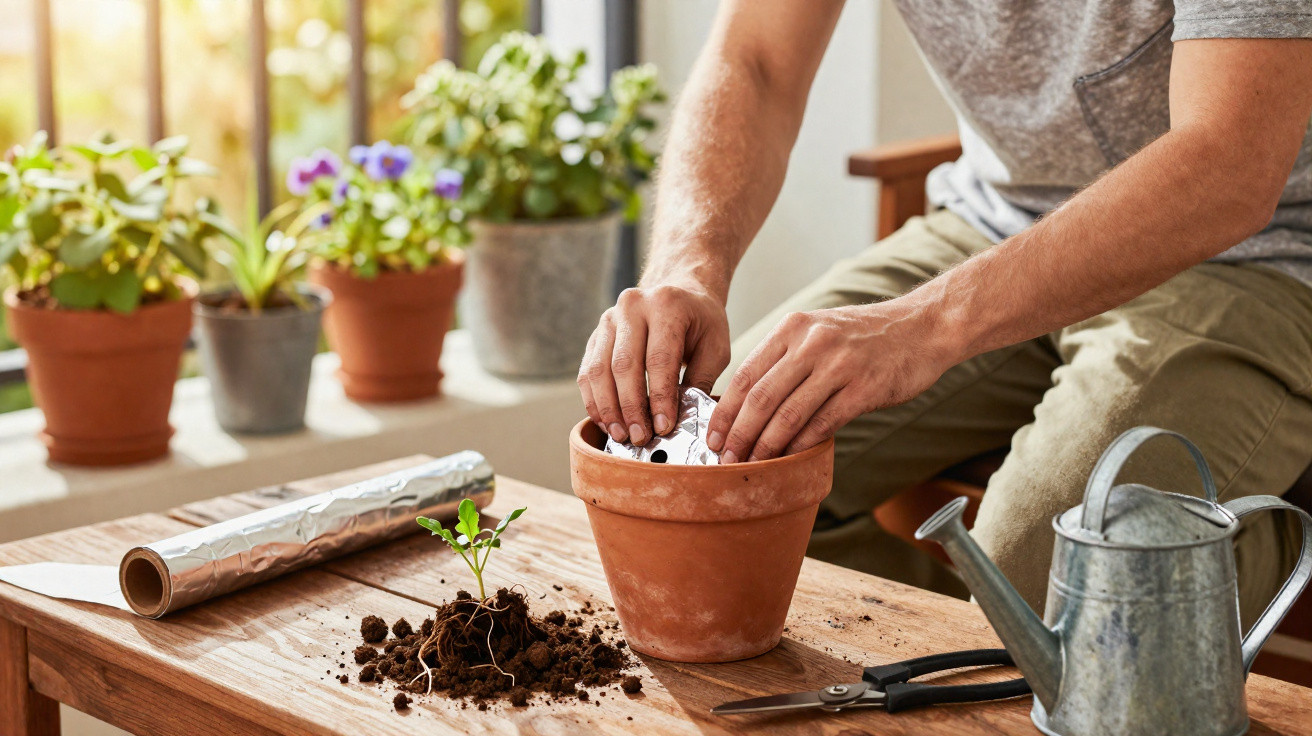
Lining the bottom of a plant pot with aluminium foil is a familiar trick among home growers. It is often treated as a do-it-yourself option for several purposes, although its advantages for cultivation are limited and largely depend on how it is used. While aluminium foil is inexpensive and easy to find, what it does is mainly physical, and it needs to be applied carefully to avoid harming plant growth-particularly by trapping too much moisture.
What does it mean to put aluminium foil in the bottom of the pot?
In most cases, “putting aluminium foil in the bottom of the pot” means placing a sheet partially or fully across the inside base of the container before adding any drainage layer and the potting mix. Typically, the shinier side is left facing upwards, so it sits against stones, expanded clay, or the soil.
In practical terms, this creates a barrier between the pot and the growing medium. Depending on the pot type and how the foil is fitted, it can reduce some moisture loss in certain situations. It may also help hold the substrate in place and provide a degree of protection for more delicate materials, such as wood or porous ceramic. Indoors, some people also use aluminium to bounce a little of the available light back into tall or dark pots, although the improvement is usually subtle.
What is aluminium foil used for in a plant pot?
The most straightforward reason for using aluminium foil is to stop potting mix from washing out through drainage holes-especially when holes are large or during the first waterings after planting. In some setups, it is also used to shield the inside of decorative pots or to reflect a small amount of light, but these effects tend to be minor.
In certain arrangements, foil is paired with other materials to better organise the inside of the pot and help contain moisture. When used this way, it commonly appears alongside:
- Decorative stones or expanded clay placed above the foil layer
- A looser, more aerated substrate added on top of the drainage layer
- Pots used without a saucer, in an attempt to keep water contained within the container
If the aim is to improve drainage, specialists generally advise focusing on the basics instead: a suitable substrate, containers with drainage holes, and materials such as expanded clay, gravel, or perlite. These have a far greater impact on root health than aluminium foil.
What care is needed when using aluminium foil in pots?
The main risk involves drainage. If the foil completely covers the holes, water can build up and increase the likelihood of root rot. For that reason, it is best to shape the foil like a pierced “tray”, or cut and puncture it so excess water can drain freely. Aluminium foil should never replace a pot with drainage holes or a properly chosen potting mix.
A few practical steps can reduce the chances of waterlogging and fungal problems in the roots when foil is used:
- Keep the holes partially open by making slits or perforations in the foil.
- Add an effective drainage layer (such as expanded clay or gravel) above the foil.
- Avoid using it for plants that need the substrate to dry quickly, including many cacti and succulents.
- Monitor how long the substrate takes to dry between waterings and adjust your watering schedule accordingly.
In which situations is aluminium foil worth using in the pot?
Aluminium foil tends to be most useful in specific scenarios-such as decorative containers without drainage, where a plastic inner pot with normal drainage is placed inside. Between the two pots, the foil can act as a protective layer for furniture and floors, without directly affecting the roots.
Some growers use aluminium foil temporarily to help hold the substrate in place during repotting, although it is not considered essential. In low-light areas, foil may support other lighting approaches, but it does not replace the fundamentals: choosing the right substrate, controlling watering carefully, and positioning the pot correctly remain the most important factors for keeping plants healthy.
Comments
No comments yet. Be the first to comment!
Leave a Comment