
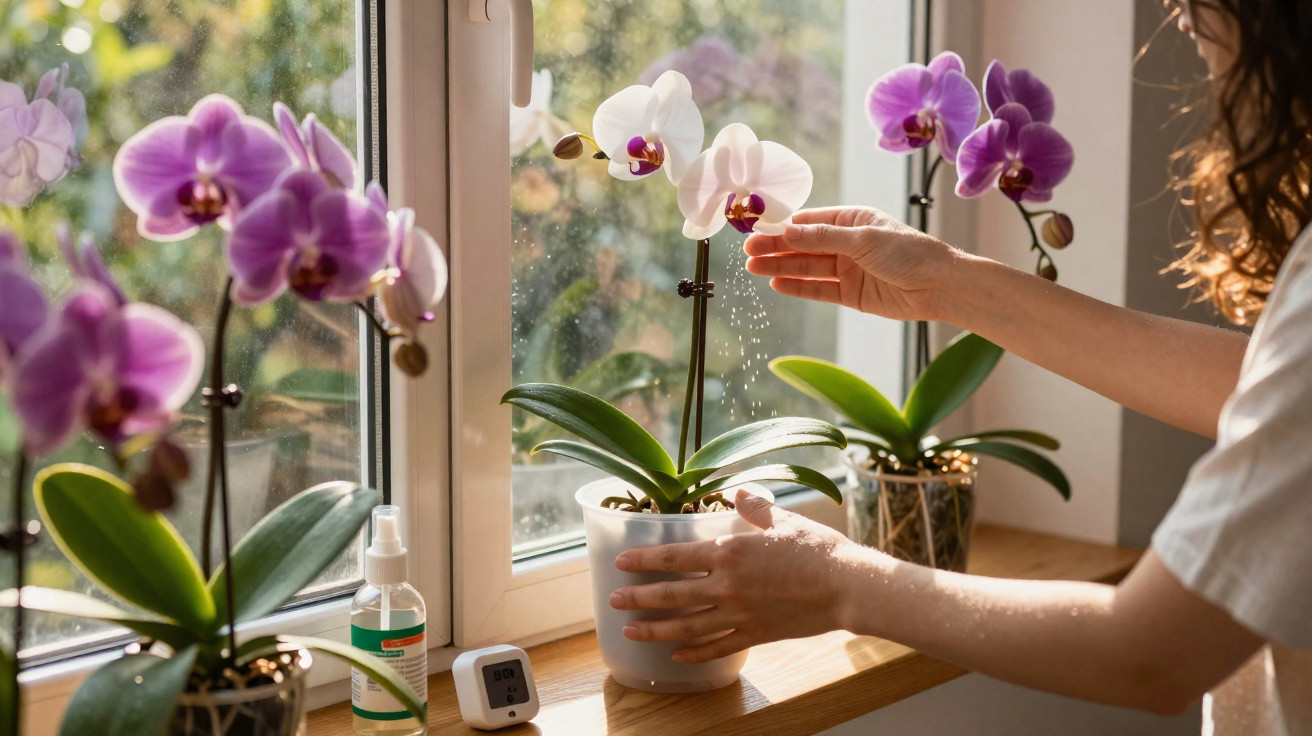
To keep an orchid in bloom for extra weeks, the key is to bring together bright indirect light, steady temperatures, correct watering, and restrained feeding. Most orchids sold as indoor plants are Phalaenopsis, which flowers best when it gets enough brightness, has well-aerated roots, and experiences small temperature shifts between daytime and night-time.
What makes an orchid’s flowers last longer?
Blooms hold for longer when the plant is kept away from harsh direct sun, strong draughts, continuous air conditioning, and excessive heat. Specialists emphasise that light is vital for Phalaenopsis to flower again, and that insufficient light is among the most common reasons new flower spikes fail to appear.
While it’s in flower, the aim is a bright spot with filtered light-through a curtain, for instance-or near a well-lit window. Direct sun during the hottest part of the day can scorch leaves and speed up the wilting of the flowers.
What is the ideal combination of light and temperature?
To encourage future blooming, an orchid needs strong indirect light during the day and a gentle drop in temperature at night. Specialists explain that a day–night difference of about 6°C (around 10°F) matters for flowering in many orchids, particularly in home growing conditions.
In practical terms, this means keeping the plant somewhere bright in the daytime and slightly cooler overnight, without subjecting it to real cold. That subtle variation helps the plant register a natural cycle and supports the development of new spikes.
How do you water without the flowers dropping early?
Watering should thoroughly wet the growing medium, but the pot must never be left waterlogged. Orchids depend on ventilated roots; when they sit in stagnant water, roots rot and the plant loses the strength needed to hold its blooms.
One guide advises keeping water out of the plant’s crown and off the flowers, and watering in the morning so leaves and roots can dry before night. The same guidance notes that after flowering the plant enters a rest period and needs less water and no fertiliser for about a month.
Which fertiliser routine helps extend flowering?
During active growth and while flowering, feeding should be light but consistent. The recommendation is to fertilise actively growing and flowering plants every third or fourth watering, using a commercial orchid fertiliser according to the label.
A frequent mistake is overfeeding in the hope of getting more flowers. In reality, too much fertiliser can scorch roots, cause salts to build up in the growing medium, and weaken the plant. With orchids, smaller amounts applied regularly tend to work better than strong doses.
What should you do after the flowers fall?
Once the flowers drop, check the flower spike. If it is still green and healthy, some Phalaenopsis can produce a new side branch. The usual advice is to cut the spike just above an unused node, below any dry or dead section, as long as there are still viable nodes.
If the spike is brown, dry, or yellowing, it’s best to cut it close to the base using clean scissors. This helps the plant divert energy to leaves and roots, setting up a stronger bloom in the next cycle.
Which mistakes shorten an orchid’s flowering period?
A few straightforward habits help prevent flowers from fading too soon:
- don’t leave the orchid in strong direct sun;
- don’t wet the flowers or the centre (crown) of the plant when watering;
- avoid a saucer of water left under the pot;
- don’t move the plant to a new spot every week;
- don’t over-fertilise;
- don’t place it near cold draughts or intense heat.
What is the secret to getting new flowers?
The secret to an orchid in bloom is keeping the plant robust even after the flowers have finished. Strong indirect light, healthy roots, light feeding, and a rest period all help the plant prepare its next spike.
For flowers that last longer, treat your orchid as a living plant rather than a decorative display. When it has good brightness, balanced temperatures, and watering that isn’t excessive, the blooms last for more weeks and the plant has the energy to repeat the show in the next cycle.

Comments
No comments yet. Be the first to comment!
Leave a Comment