
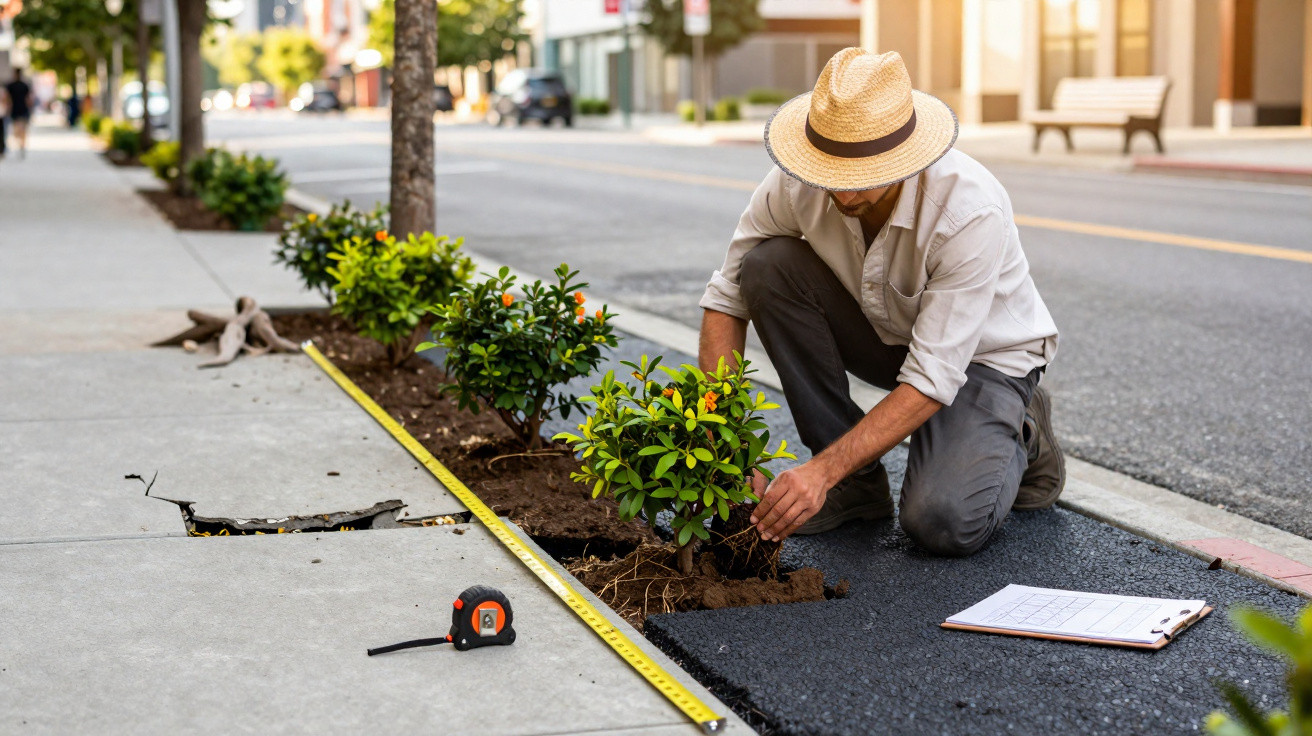
Picking shrubs for pavements and public squares sounds straightforward, but in reality it can become a real puzzle. Everyone wants a street that looks attractive, colourful and welcoming; no one wants cracked paving, roots lifting slabs, or trouble with pipework. The good news is that you can create a lovely planted area in front of a home or in a public space by choosing shrubs with less aggressive roots-plants that help protect the paving while making the area feel cooler and more pleasant.
Why are aggressive roots a risk for pavements and pipework?
Plants don’t all grow underground in the same way. Some shrubs send roots deeper, while others spread sideways close to the surface-exactly where the pavement concrete and paving blocks sit.
In narrow planting strips, more forceful root systems gradually push up the surface, crack blocks, create hazardous uneven levels, and can even reach pipes, drains and underground cables. In most cases, the issue starts with choosing the wrong species and planting too close to walls, inspection chambers, lamp posts and driveway entrances; later, it turns into repair costs and neighbour disputes.
Which shrubs with less aggressive roots are most suitable for public spaces?
If you want colour and flowers across the year without living next to constant pavement repairs, it’s worth prioritising shrubs with more contained roots, suited to the local climate and able to cope with everyday sun and rain. These shrubs work well along pavements, in public squares and in small urban gardens, provided they receive sun and some watering during dry spells.
- Ixora (Ixora coccinea) – A compact shrub with generally calm roots and clusters of brightly coloured flowers (red, orange, yellow, pink). It prefers warm conditions and full sun.
- Dwarf hibiscus – Compact varieties with a more controlled canopy and root system, producing large, showy blooms-ideal for a tropical look in limited space.
- Dwarf golden dewdrop (Duranta repens ‘Golden’) – Known for its yellow-gold foliage, it forms low hedges and typically causes few root problems when kept in shape with pruning.
- Azalea (Rhododendron simsii) – Medium-sized, with relatively contained roots in well-drained soil, and a strong flowering display in autumn and winter.
- Mini roses and small rose shrubs – Discreet roots and repeated flowering through the year, making them well suited to narrow beds and front gardens.
How should you plant and space shrubs correctly?
Choosing the right species isn’t enough: planting needs to encourage roots to grow downwards rather than spreading outwards. Along pavements, people often create small beds within the green verge, and the size of the planting hole directly affects how roots behave.
As a general rule, make the hole about twice the width of the root ball, loosen the soil well around the sides, and enrich it with well-rotted organic matter. It’s also important to keep a distance of 40–60 cm from walls, posts and access chambers, and to space shrubs 0.8–1.5 m apart depending on the size you want-avoiding both excessive shading and too much competition for space.
What maintenance prevents headaches with pavements?
After planting, the key is a simple but consistent care routine. Shrubs with less invasive roots don’t usually require major interventions, but they respond well to small actions that help extend the life of the pavement and keep the planting looking tidy.
Light pruning to manage height and spread, moderate feeding once or twice a year, and watering without waterlogging can make a noticeable difference. Regularly checking the surrounding area for cracks, paving that is starting to lift, or unusual slopes helps you spot any issues early-when it may still be possible to fix them with pruning, minor adjustments or transplanting-maintaining the balance between appearance, safety and practicality in public spaces or outside the home.
Comments
No comments yet. Be the first to comment!
Leave a Comment