
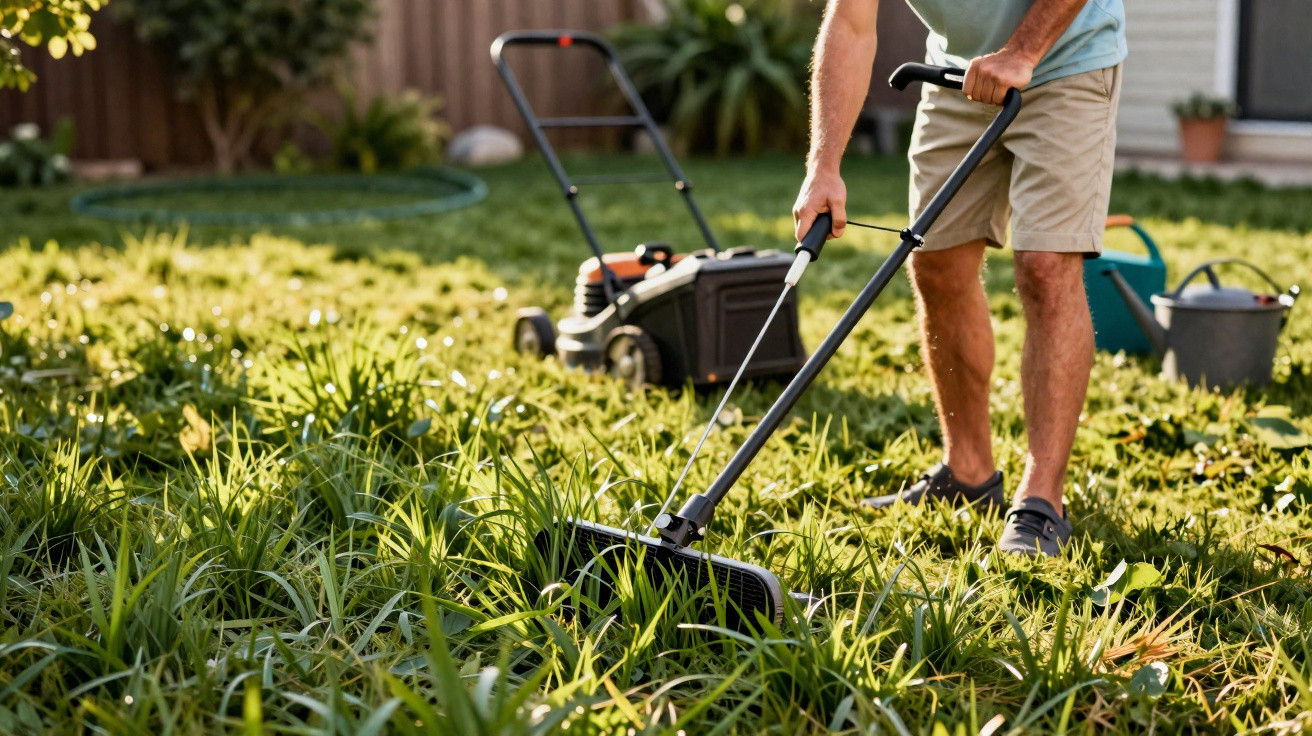
The mower judders to a halt, the scent of freshly cut grass still lingering, and for a moment your garden looks flawless.
Smooth, neat, even. Then the sun bears down again and, by late afternoon, that bright green has shifted into the familiar dull, thirsty yellow.
You water, you fertilise, you hover - yet every heatwave feels like an exam you keep failing. Meanwhile, the neighbour’s grass somehow looks fresher, even though you swear you see his mower out less than yours.
At first it seems unfair: same weather, same road, completely different outcome. But when you really look at his lawn, you spot a small detail that explains almost everything.
Why a slightly longer lawn stays greener when the heat hits
On a baking July afternoon in a suburban cul-de-sac, you can almost tell who mows how just by walking past. The closely cropped lawns near the pavement turn pale and brittle first. A few doors along, the grass is only a little taller, moving slightly in the breeze, and it keeps a softer, cooler green that’s calming just to see.
The change is only a couple of centimetres, but it can feel like two different microclimates. Walk barefoot over both and you’ll notice immediately: the short lawn is prickly and hot; the slightly longer one feels cooler and more springy. Same postcode, same soil, same sky - but not the same roots.
What you’re seeing above ground is driven by what’s happening underneath. When the blades are left longer, they shade the soil, slow down evaporation and allow the plant to push more energy into root growth. Grass that isn’t constantly being cut to the bone spends less time recovering from mowing and more time driving roots downwards, reaching water that a buzz-cut lawn simply can’t access.
One US study looking at cool-season lawns found that grass kept at roughly 7–8 cm (about 3 inches) produced root systems that were significantly longer than grass maintained at 3–4 cm. That extra depth can make the difference between getting through a three-week dry spell and ending up with a lawn that feels like a brittle doormat.
You’ll often see the contrast as soon as the first summer drought arrives. The “golf-course” lawns start to show brown patches after only a few rain-free days. The slightly shaggier lawns tend to fade more slowly and often hold their colour even when hosepipe bans come in. Those deeper roots function like a moisture savings account, feeding the plant when the surface layer is bone dry.
There’s a psychological element as well. A very short cut gives quick visual gratification, like a freshly shaved face: crisp for a day or two, then it demands payment all week. A slightly taller lawn can feel less “controlled” to some people, but that extra height is exactly what delivers the toughness most of us actually want.
The science is simple. Grass is a living plant, not a carpet. The leaves you cut are its solar panels. When you scalp it, the plant effectively goes into emergency mode, diverting energy into repairing the damage rather than building roots. Set the mower a bit higher and the plant keeps more leaf surface for photosynthesis. More photosynthesis means more sugars, more energy - and more resources being sent down into the root zone.
That root network then sits beneath the hottest, driest top layer of soil. While a shallow-rooted lawn is stuck pleading at the surface, a deeper-rooted lawn can draw from cooler, steadier pockets of moisture. So when the hosepipe goes back in the shed during drought restrictions, the longer lawn still looks somewhat alive - and the scalped one gives up quickly.
There’s also a clear microclimate benefit. Taller grass shades its own soil, which reduces evaporation and stops temperatures around the crown of the plant swinging so wildly. It’s like giving the lawn a built-in parasol, rather than relying on extra sprinkling and hoping it’s enough.
How to let your lawn grow longer (without letting it go wild)
The easiest change is simply to lift the mowing height by one or two settings. For most everyday lawns, about 7–9 cm (roughly 2.5–3.5 inches) tends to be a sweet spot: it still looks tidy, but it’s long enough to protect the soil and encourage deeper roots.
Avoid going from very short to long in one leap. If you’ve been cutting low, increase the height over a few mows so stressed grass has time to recover and rebuild. A useful guide is the classic “one-third rule”: take off no more than about a third of the blade length each time you mow.
Letting the grass sit a little higher doesn’t mean surrendering the garden to a meadow. You can still keep sharp edges, clearly defined paths and clean lines around beds and borders. In fact, that mix - neat edges with a slightly taller centre - often reads as more intentional and contemporary than an evenly scalped surface.
Here’s the part many of us don’t like admitting: we often mow out of habit and worry, not because the lawn truly needs it. A few wispy tips appear and we’re out there again, as if the neighbours are scoring us in a silent competition. In practical terms, mowing a bit less frequently and a bit higher saves time, saves fuel or battery life, and - quietly - can reduce your water bill.
The most common fear is, “If I let it grow, it’ll look untidy.” But untidiness usually comes from uneven mowing and blunt blades, not from an extra couple of centimetres. A slightly taller lawn cut cleanly with sharp blades will look far smarter than a very short lawn shredded by a dull mower.
Another common error is reacting to the first hot spell by soaking the lawn every day. Light, frequent watering keeps roots near the surface - exactly where the ground dries out quickest. Longer grass paired with deeper, less frequent watering encourages roots to head downwards instead of lingering in the top few centimetres.
Let’s be honest: hardly anyone manages that kind of perfect routine every day. Life gets in the way. That’s precisely why a slightly higher cut and a more forgiving approach can make such a difference. The lawn becomes less delicate, less reliant on perfect timing, and far better able to cope with busy weeks and sudden weather swings.
Then there’s the guilt. A few weeds appear, one area pales, and it can feel like you’ve “failed”. In reality, lawns are living systems, not showroom displays. Giving the grass an extra centimetre or two often helps it compete with weeds naturally, simply by shading the soil more and building stronger roots.
One turf specialist put it succinctly:
“If you want a greener lawn with less effort, stop fighting the grass and start working with how it grows naturally.”
Once you adopt that way of thinking, everything feels less heavy. The aim isn’t perfection under a magnifying glass; it’s a lawn that gets through heatwaves without you treating it like a second job.
If you want to keep things straightforward, focus on three practical tweaks:
- Raise your mower height by one or two settings as summer approaches.
- Use the one-third rule rather than chasing a bowling-green finish.
- Water deeply but less often, allowing the soil to dry slightly between sessions.
They’re small shifts, but together they push roots deeper, lower stress and make dry spells feel less like an emergency every time.
A new kind of “perfect lawn” for hot summers
There’s something quietly bold about deciding that a slightly longer lawn isn’t laziness - it’s a plan. It challenges the old ideal of a tightly manicured, almost artificial strip of turf and leans towards something more alive, more forgiving and less thirsty. Those extra centimetres become a kind of insurance policy rather than a flaw.
On a street where hoses sit unused during restrictions and the air shimmers above the tarmac, the lawns that keep their colour send a small but clear signal. Not “I work harder than you in my garden,” but “I’ve learned how to let the lawn do more of the work itself.” That may be why people ask questions when they notice a greener patch that clearly isn’t being fussed over every evening.
Once you get through a summer where your grass doesn’t instantly surrender to the first stretch of heat, it’s hard to go back. You remember the crunch underfoot, the worry about water use, and the brown patches creeping in from the edges. Longer grass doesn’t guarantee perfection - it offers resilience, which is a different kind of beauty.
| Key point | Detail | Why it matters to you |
|---|---|---|
| Mow a little higher | Keep blades around 7–9 cm rather than very short | Helps grass develop deeper roots and stay greener in drought |
| Follow the one-third rule | Never remove more than one-third of the blade at once | Reduces stress on the lawn and improves recovery |
| Water less often, but deeply | Long, infrequent watering instead of daily light sprays | Encourages roots to chase moisture deeper in the soil |
FAQ:
- How long should I actually let my lawn grow? For most home lawns, aim for about 7–9 cm (2.5–3.5 inches). That’s tall enough to protect the soil and promote deeper roots, yet still neat to the eye.
- Won’t a longer lawn attract more pests? Healthy, dense grass tends to resist pests better. Problems usually come from compacted soil, overwatering, or thick thatch, not from an extra centimetre or two of height.
- How quickly will I see a difference in drought resistance? You might notice the lawn staying greener within one season, especially if you combine higher mowing with better watering habits. Root systems keep improving over time.
- Do I need a special type of grass to use this method? No. Most common turf grasses respond well to a slightly higher cut. Just adjust within the recommended range for your specific species and climate.
- Can I still have stripes and a “designed” look with a longer lawn? Yes. Stripes come from bending the blades, not cutting them ultra-short. Taller grass often shows stripes even better, as the leaf surface catches more light.



Comments
No comments yet. Be the first to comment!
Leave a Comment