
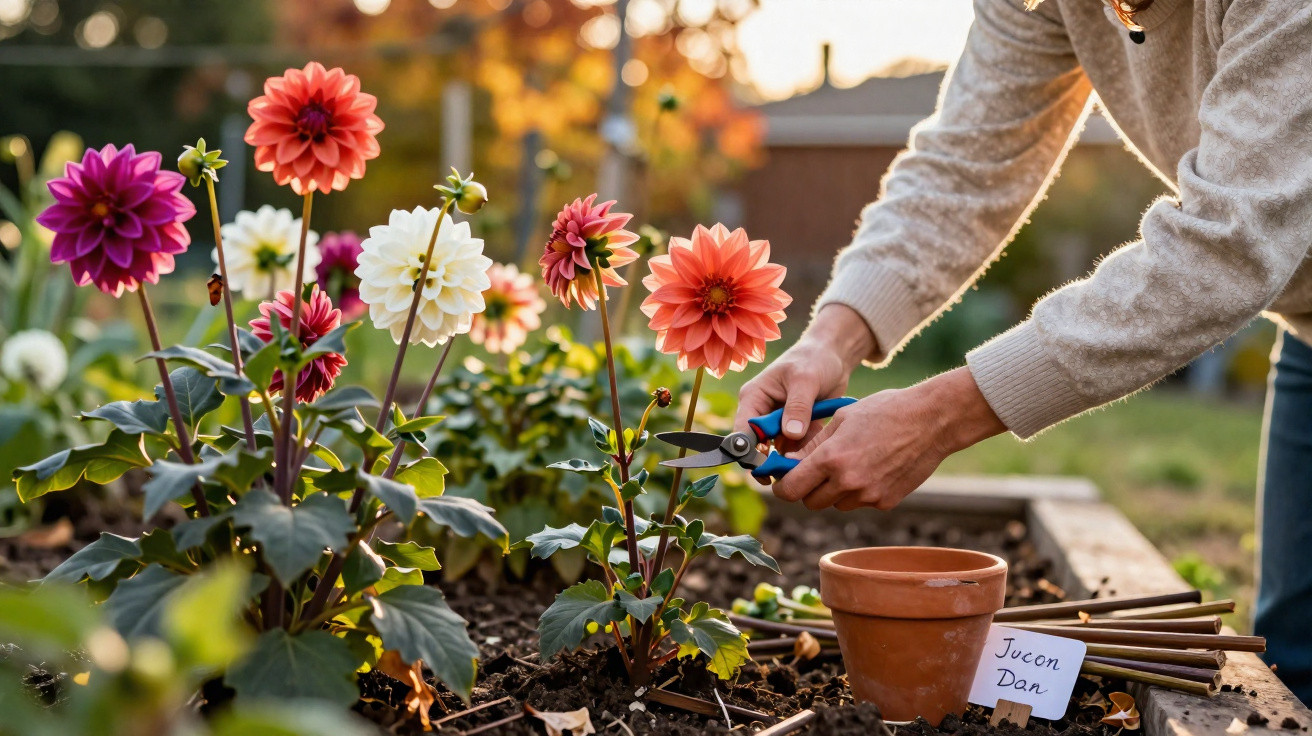
Stems collapse, buds pause, and the whole display finishes before it really gets going.
But a handful of well-timed, almost under-the-radar cuts can transform the season.
Plenty of gardeners put drooping dahlias or a brief burst of flowers down to poor weather or “weak stock”. More often, the real culprit is how we prune and manage growth from the first spring shoots right through to the foliage that turns black after the first hard frost. Three targeted pruning actions, singled out by the French outlet Airzen and the US blog Backyard Garden Lover, quietly dictate how your dahlias perform from start to finish.
Why pruning makes or breaks a dahlia season
Dahlias originate in the mild highland regions of Central America, so they thrive when they get a long stretch of warmth. In many gardens they need 90 to 100 days to go from planting to their first flowers. Because that lead-in is so long, what you do early on-watering, staking, feeding and pruning-shows up much later.
If you leave many varieties to their own devices, they tend to shoot up as tall, narrow plants with one dominant stem. Blooms then sit high, catch the breeze, and can snap where the stem meets the base. The plant also starts funnelling effort into seed rather than fresh buds. By mid-season the whole thing can look weary, right when neighbouring borders begin to look their best.
A dahlia that gets the right cut at the right week becomes shorter, sturdier and far more generous with its blooms.
Airzen goes further than simple tidying and stresses summer deadheading done properly, not just a quick snip. Backyard Garden Lover, meanwhile, focuses on the importance of cutting back after frost so tubers store energy rather than burning it on growth that will be lost. Add one vital early step-pinching-and you have a straightforward three-part approach that many gardeners still overlook.
Pinching young dahlias for stronger, stockier plants
When and how to pinch without fear
The first key move happens early, once the plant is about 20–30 cm tall and the stems are still pliable. Beginners often hate the idea of removing the growing tip because it feels like throwing flowers away. In practice, it typically leads to more blooms, not fewer.
Pinching is simply taking off the soft top of the main stem just above a healthy pair of leaves. You can do it with clean fingers or with sharp snips that have been disinfected.
- Hold off until there are four to six pairs of leaves.
- Pick a robust pair of leaves roughly halfway up the plant.
- Remove the stem above that pair by pinching or cutting.
After pinching, the plant shifts growth hormones into the side buds. Rather than one tall cane, it produces two or three fresh stems that thicken up, branch more freely and carry more flowering stems over the season.
A single pinch can turn a wind‑prone, top‑heavy dahlia into a compact, multi‑stemmed plant that rarely needs emergency staking.
What pinching really changes in the plant
With a proper pinch, gardeners usually see three clear changes:
| Without pinching | With early pinching |
|---|---|
| Tall, whippy main stem | Several shorter, thicker stems |
| Fewer blooms, higher up | More blooms spread across the plant |
| Greater risk of wind damage | Better balance, less flopping |
| Plant tires quickly | Energy spread over many shoots |
There is one compromise: the very first flowers may arrive a week or two later. The payoff is a longer, more consistent run through late summer and early autumn. For anyone growing for the vase, that fuller framework can also produce more long, straight stems at a sensible picking height, rather than blooms perched awkwardly at head level.
Deadheading deep, not lightly, to fuel repeat flowering
The common mistake: just popping off the spent bloom
Once the plants are in flower, many people simply twist off the faded head. It smartens things up, but the short stub that remains often acts like a dead end. You’re left with a cluster of little stems that rarely extend or branch again.
Airzen points to a more decisive approach to deadheading-often described by gardeners in the UK and US as “cutting back to a junction”. Instead of trimming immediately beneath the old flower, you move down the stem until you reach a stronger side shoot or the main stem.
The better way to remove spent dahlia flowers
Use this method to encourage better repeat flowering:
- Trace the flower stem down with your fingers.
- Stop where it meets a thicker stem or a pair of leaves.
- Make a clean cut at that junction, with the blade slightly angled so water runs off.
Removing the whole flowering stem stops the plant wasting energy on seed and forces it to send up fresh, vigorous growth from lower down.
Gardeners who adopt this technique often find the next stems come through longer and straighter, with bigger buds forming at the tip. It works for both borders and cut-flower harvesting. Combined with deep, occasional watering-another point Airzen underlines-you help the plant keep pushing forward rather than merely coping.
Pairing pruning with water and feeding
Deadheading delivers the best results when it’s backed up with a few steady habits:
- Water thoroughly once or twice a week, instead of small daily splashes.
- Mulch with compost or shredded bark to keep roots cooler and moisture steadier.
- Feed sparingly with a low-nitrogen fertiliser so the plant prioritises flowers over foliage.
With this routine, the dahlia rebounds quickly after each prune, using stored moisture and nutrients to build new stems rather than battling drought stress.
Cutting back after frost to strengthen the tubers
Why the first hard frost sets the schedule
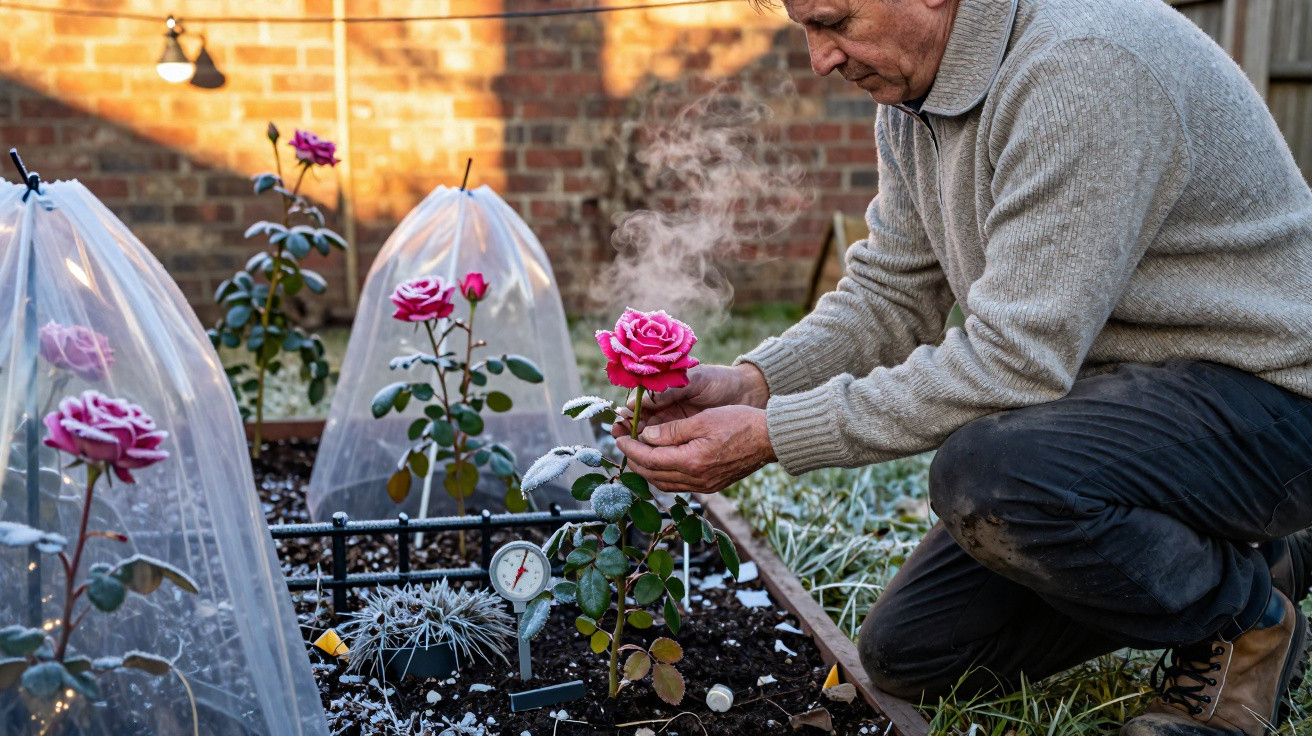
Backyard Garden Lover suggests relying on a clear cue: the first proper frost that leaves the foliage black and limp, usually after several hours around -2°C (28°F) or lower. Up to that point, the stems are still sending resources to the tubers. If you cut too soon, you can provoke a burst of new growth that the next cold spell will destroy, squandering stored energy.
Once a hard frost has unmistakably hit, the plant’s green growth has finished its work. That’s when the secateurs come out.
How to cut dahlias back for a better return next year
Late autumn cutting isn’t about neatness; it’s about winter reserves. The aim is to concentrate what’s left into the tubers that must carry the plant through the cold months.
- Wait until the foliage and stems are clearly blackened by frost.
- Reduce each stem to 10–15 cm (4–6 inches) above soil level.
- If you grow several types, label each clump by variety.
That last cut channels the final flow of nutrients into the underground tubers, which act like a battery for next spring’s growth.
In milder regions, some gardeners leave tubers in the ground under a thick mulch. Where winters bring repeated freezes, lifting and storing them usually offers much better survival.
Digging up and storing tubers without damage
Backyard Garden Lover recommends waiting about a week after cutting before you dig. That pause lets the soil dry slightly and the crown firm up. Use a garden fork and start well away from the clump so you’re less likely to spear the tubers.
Lift carefully, knock off loose soil, then leave the clumps to dry somewhere airy and frost-free. When the skin feels dry and papery, the tubers are ready to store. Many people pack them in dry compost, sawdust or sand inside a crate or box.
- Ideal storage temperature: roughly 4–10°C (39–50°F).
- Keep the space dark and free from frost.
- Inspect tubers monthly and remove any that go soft or show mould.
Done alongside the earlier pruning steps, this sets you up with tubers that wake strongly once the soil warms again.
Reading your dahlias like a professional grower
The three cuts-pinching early, deadheading deeply, and cutting back after frost-sound simple on paper. In practice, the difference comes down to timing and careful observation. Commercial growers rarely stick to a fixed date; they respond to what each plant is doing.
Compact varieties may only need a gentle pinch. Tall, dinner-plate dahlias often respond better to firmer early shaping plus sturdier staking. If a plant is producing thin, weak stems by mid-season, you can still steer it in the right direction by deadheading more decisively and feeding with a lighter hand.
Some gardeners also run small year-to-year trials: pinching only half their plants, or cutting spent stems back to different points on separate clumps. That kind of testing quickly reveals which mix of pruning, watering and feeding best matches a particular garden, soil and climate.
Extra angles: pests, weather swings and backup plans
Pruning isn’t a standalone fix. Heavy rain, slugs, earwigs and sudden heatwaves can all change how a dahlia reacts. Cutting back after storm damage, for example, often sparks vigorous growth from lower buds, much like the principle behind deep deadheading.
There’s also a practical safety point. A tall dahlia left unpinched, with heavy stems, can shear off at the base in strong winds-especially in exposed coastal gardens in the UK and US. Early pinching, paired with a solid stake and a few soft ties, reduces the chance of snapping while still letting the plant move naturally.
Gardeners who like a data-led approach sometimes note the first bloom date, the first frost, height before and after pinching, and the number of stems per plant. Over two or three seasons, those records become a personal playbook for how hard to pinch and how far to deadhead each variety.
Ultimately, these three “quiet” cuts take very little: a thumb and forefinger in spring, a more deliberate hand when removing spent blooms in summer, and a decisive trim once frost bites. Together they can shift dahlias from slightly temperamental prima donnas into reliable performers that keep earning their place in the border all season long.
Comments
No comments yet. Be the first to comment!
Leave a Comment