
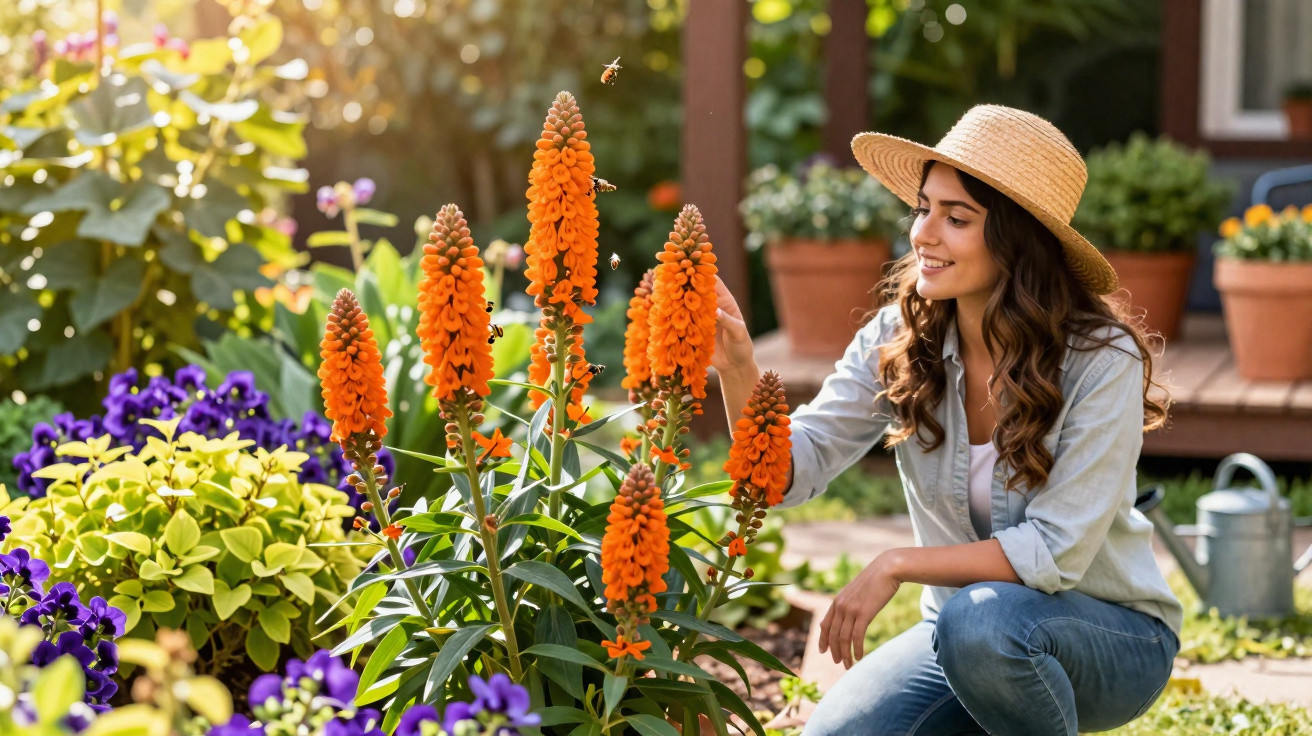
The garden could have been lifted straight from a glossy spread: thick, shiny foliage; borders bursting with blooms; green in every gap. People strolling past slowed at the fence to admire the “jungle”, offered praise, and asked for cuttings. In photographs, it looked faultless.
Inside the kitchen, the reality didn’t match the image. You got a small handful of cherry tomatoes over the whole summer. A single little bowl of strawberries. Herbs that shot to seed before you’d even had a proper taste.
You’re left holding a colander, looking out at a mass of plants-and almost nothing to eat.
Something isn’t adding up.
The secret war happening under your lush garden
A lot of gardens that are “beautiful but useless” share the same unseen issue: loads of leaf above ground, not enough life below it. From the surface, everything screams abundance-leaves, stems, flowers, and vines tangling together as if they’re competing. It’s the kind of growth that feels like you must be doing something right.
Underneath, it’s a quieter struggle. Roots are competing for oxygen, moisture, and nutrients. The soil is often compacted, worn out, or even waterlogged. You’ve got plenty of plant material, but the system that powers fruit and vegetables is barely ticking over. That never shows up on Instagram; it only shows up at dinner.
Last summer, Maya posted a proud photo of her “urban jungle” in a gardening group. Her raised beds were basically a green wall: huge courgette leaves, dense tomato growth, and nasturtiums spilling over everything. It looked like a permaculture daydream.
When she asked why she’d only harvested two courgettes and one misshapen pepper, there was a brief pause-then the questions arrived: “What’s the soil like?” “How deep are the beds?” “How do you water?” She eventually admitted the “soil” was mostly builders’ rubble with about 10 cm of budget compost on top, and she watered little and often every evening, wetting only the surface.
That lush-but-empty pattern usually comes down to an imbalance between vegetative growth and reproductive growth. Put simply: plants are pouring energy into leaves rather than into flowers and fruit.
It tends to happen when nitrogen is plentiful but the soil lacks structure and key minerals. Roots stay near the top-comfortable, over-catered for, and not doing much exploring. The plant feels safe and postpones reproduction. Extreme stress will wipe plants out, but mild, well-managed stress nudges them towards fruiting. A garden that does nothing but pamper ends up producing looks, not meals.
The quiet fix: nurturing soil instead of just plants
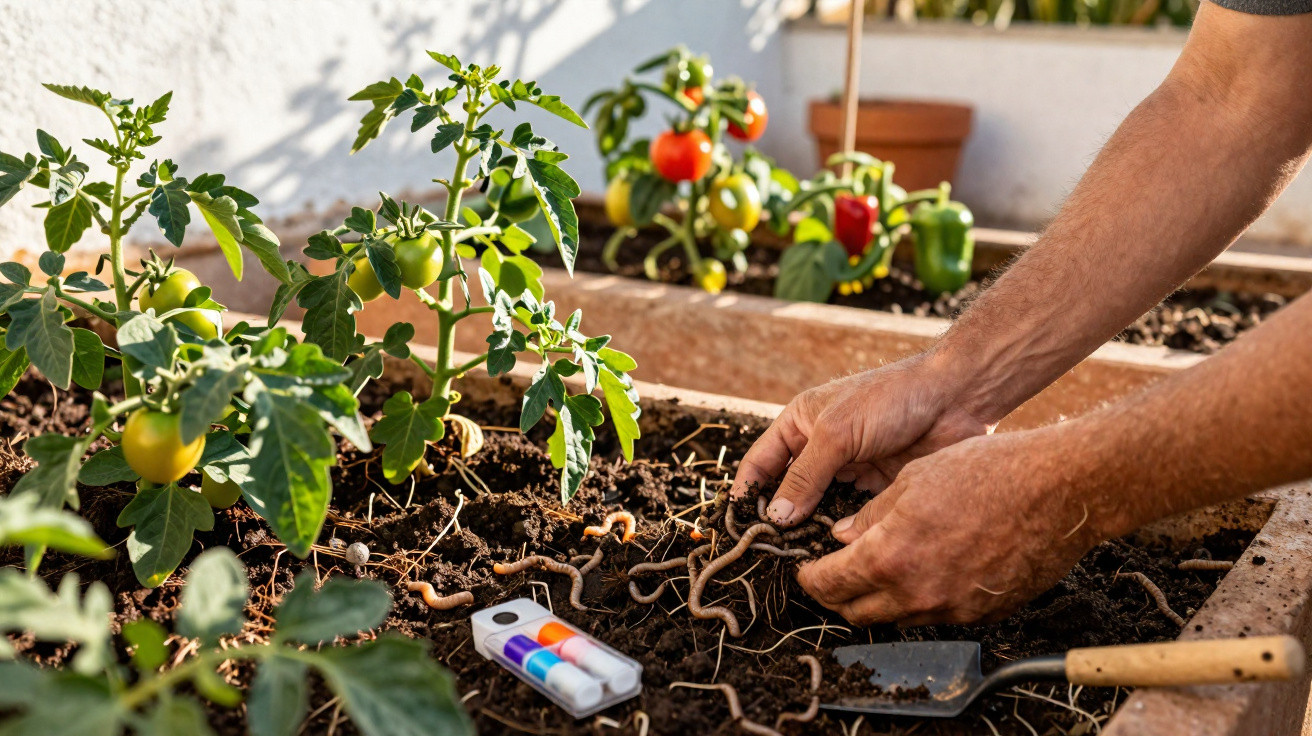
The most effective change usually isn’t another feed-it’s restoring what’s happening underground. Begin with a simple spade test. Push a spade in where things are growing and pay attention to what you feel. Does it jam after a few centimetres? Do you notice roots turning sideways rather than heading down? That’s often the real culprit: compacted, low-life soil that appears fine from above.
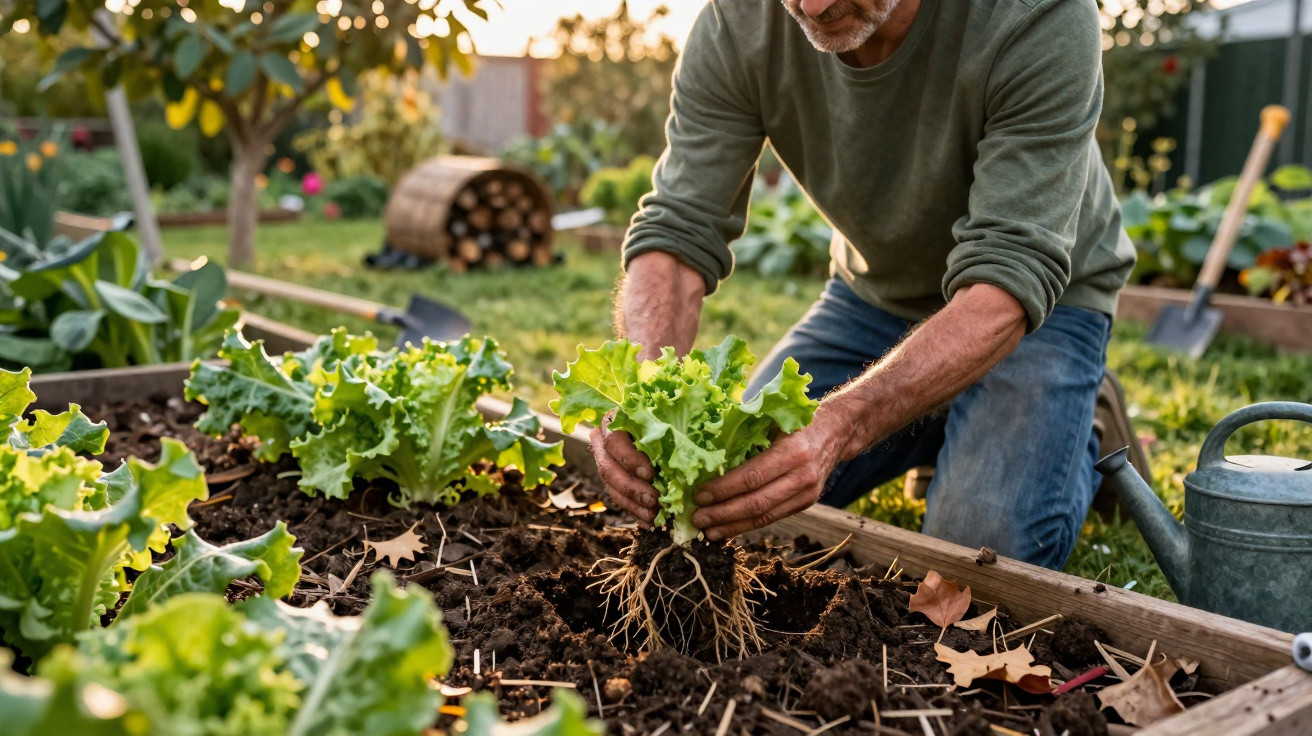
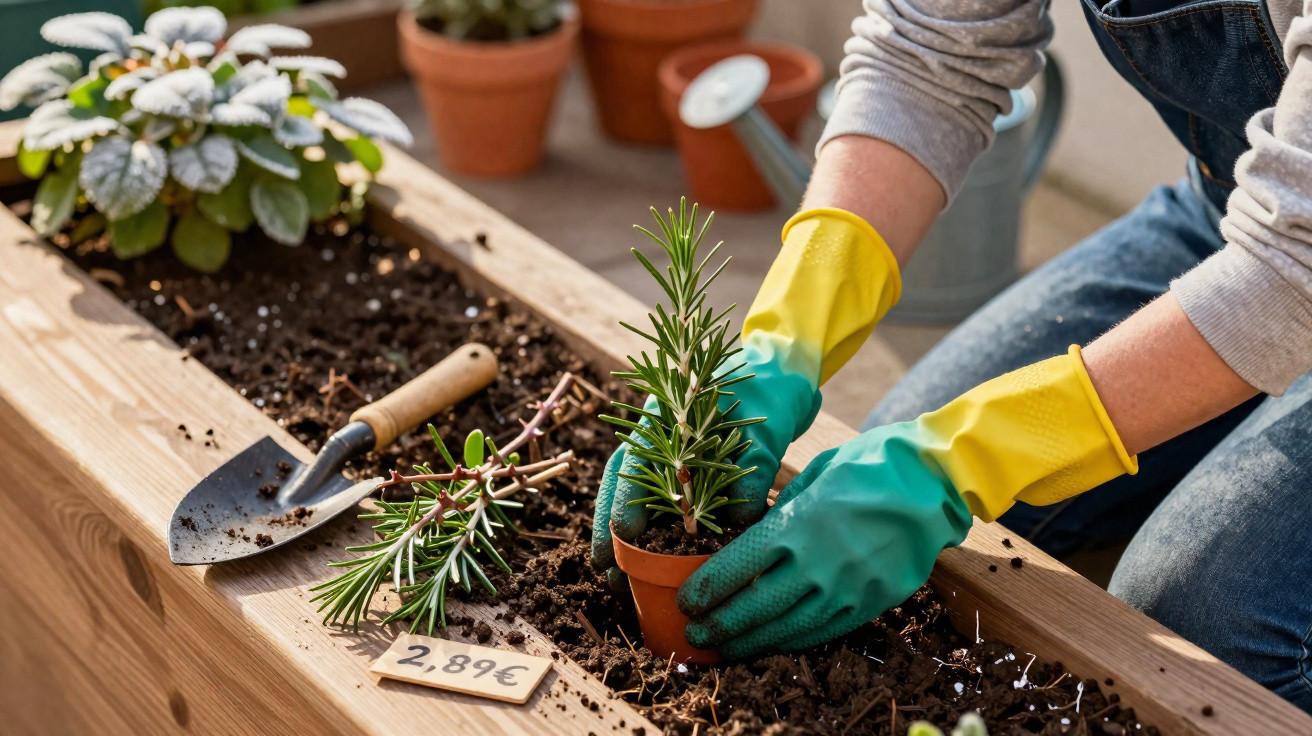
Instead of turning everything over, ease it open with a garden fork to create airways and channels. Top up with plenty of organic matter-compost, well-rotted manure, leaf mould-then protect the surface with a light mulch. You’re aiming for soil that behaves like a sponge, not soil that sets like a crust. Once it can breathe, roots travel deeper; once roots travel deeper, plants start shifting from “leaf mode” to “produce mode”.
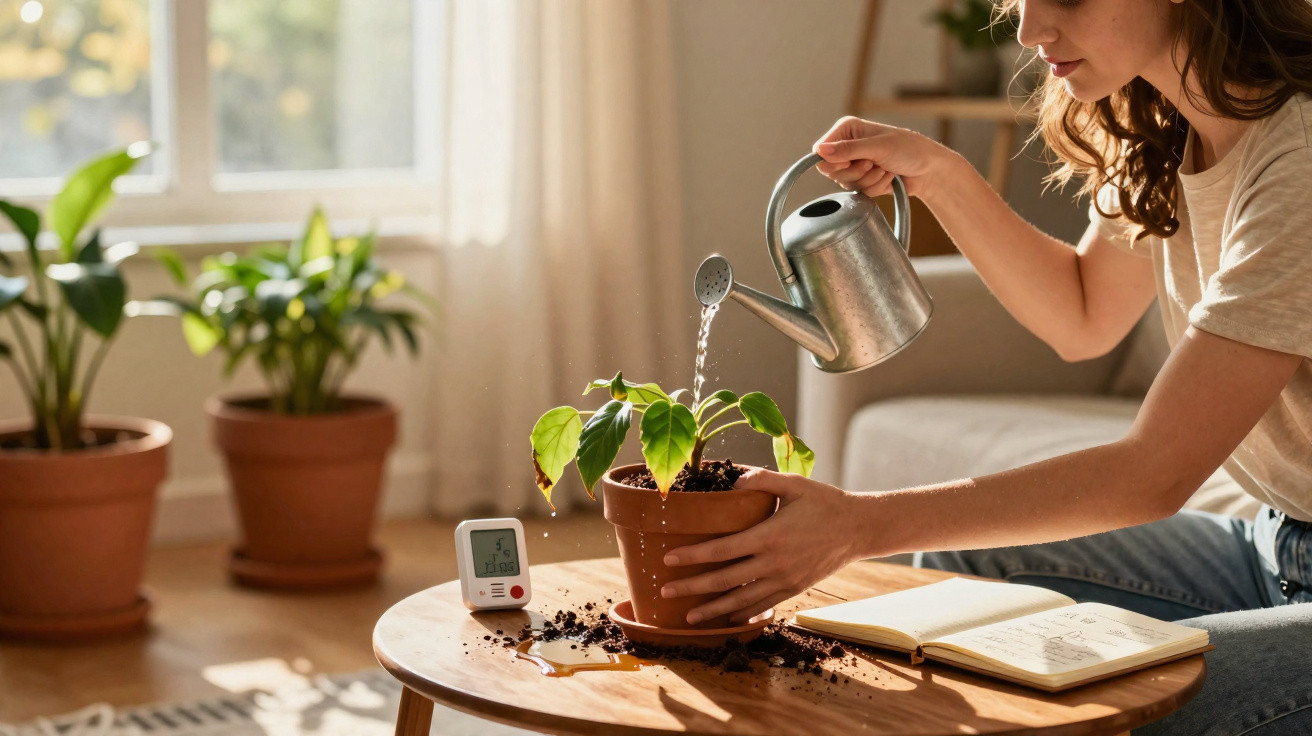
One of the easiest mistakes is to chase what looks impressive quickly. You cram plants in “so it doesn’t look empty”. You rely on high-nitrogen feeds because that surge of green feels like progress. You water little and often so the top layer never appears dry. Each of those habits pushes the same problem: shallow roots, lush soft growth, and a disappointing harvest.
Most of us recognise the temptation: it’s easier to post a striking photo of greenery than to wait another month while the soil settles and improves. And realistically, hardly anyone is checking soil-test numbers every single month. Yet the beds that quietly keep feeding households year after year are usually the ones where someone spent an extra season investing in the soil rather than the scenery.
A useful way to think about it is in layers: soil life first, then roots, then leaves, then flowers and fruit. Reverse that sequence and you tend to pay for it later.
“Soil isn’t a background,” says a veteran market gardener I met on a rainy morning. “Soil is the main character. The plants are just the way the soil speaks to you.”
To bring things back into balance, many experienced growers stick to a short, practical checklist:
- Open the soil once a season with a fork, not a tiller
- Lay 2–5 cm of mature compost on top, not mixed in
- Cover bare soil with mulch or a living cover crop
- Space plants so leaves barely touch at full size
- Use strong feeds rarely, gentle feeds regularly
When a lush garden finally starts feeding you
There’s often a turning point-usually in the second or third year of soil-focused care-when the garden shifts without any fanfare. Leaves may look a little less oversized. Beds can appear less jam-packed. The “jungle” calms.
And then you spot the change that matters. Tomato flowers suddenly seem able to set fruit reliably. Beans hang in clusters. Courgettes show up almost overnight.
The same square metre that once gave you one dramatic sunflower now fills a basket. The garden stops being a backdrop and starts acting like a pantry. That’s when you realise the lush look has finally caught up with real productivity.
It rarely feels like a makeover; it feels more like the garden taking a breath. Even in dry spells, the soil stays slightly springy. Watering becomes occasional rather than frantic. Plants topple less in wind because their roots have actually gone down. The greenery remains, but it’s thicker and steadier-less showy, more resilient.
You begin to notice the small signs: more worms, tiny mushrooms after rain, fewer leaves turning yellow. The space looks less like a set and more like a functioning ecosystem. Beauty and yield stop competing.
What surprises many people is how modest the “fix” can be: more watching, less knee-jerk reacting; more space, less crowding; a little less nitrogen, a little more patience. You’ll still lose a plant now and then, make a mess of a bed, or forget to mulch one corner. That’s normal. A seriously productive garden is rarely perfect.
When the harvest feels thin, return to the spade, the smell, the texture of soil in your hands. That’s where the imbalance began-and that’s where it gets corrected. A productive garden is simply a beautiful garden with its priorities quietly rearranged.
| Key point | Detail | Value for the reader |
|---|---|---|
| Soil imbalance is the hidden cause | Compacted, low-life soil pushes plants into leaf growth instead of fruiting | Helps explain why a lush garden can still give poor harvests |
| Gentle soil work beats heavy feeding | Shallow loosening, compost and mulch create deeper, stronger root systems | Gives a realistic method to increase yields without expensive products |
| Spacing and stress shape productivity | Right spacing and mild, controlled “stress” encourage plants to fruit | Shows how small changes in layout and care boost real food output |
FAQ:
- Why do my plants look huge but give almost no fruit?
They’re likely getting too much nitrogen or growing in compacted soil, so they invest in leaves instead of flowers and fruit. Deep roots and balanced nutrients push them toward reproduction.- How can I tell if my soil is the problem?
Do a simple spade test: if it’s hard to dig, breaks into hard clumps, and you see few worms, your soil is probably compacted and low in life, even if plants look green on top.- Will adding more fertiliser fix my low harvests?
Not usually. Strong fertilisers often exaggerate leaf growth. Focus on compost, structure, and mulching first. Fertiliser works best on soil that’s already alive and airy.- How long does it take to see a difference after improving soil?
You can notice better water retention and root growth in one season, but the real transformation often appears in year two or three as soil life stabilises.- Can a small garden be both pretty and productive?
Yes. Mix flowers with food crops, leave enough space for air and light, and build rich soil. A balanced bed can look ornamental while still filling your basket through the season.
Comments
No comments yet. Be the first to comment!
Leave a Comment