
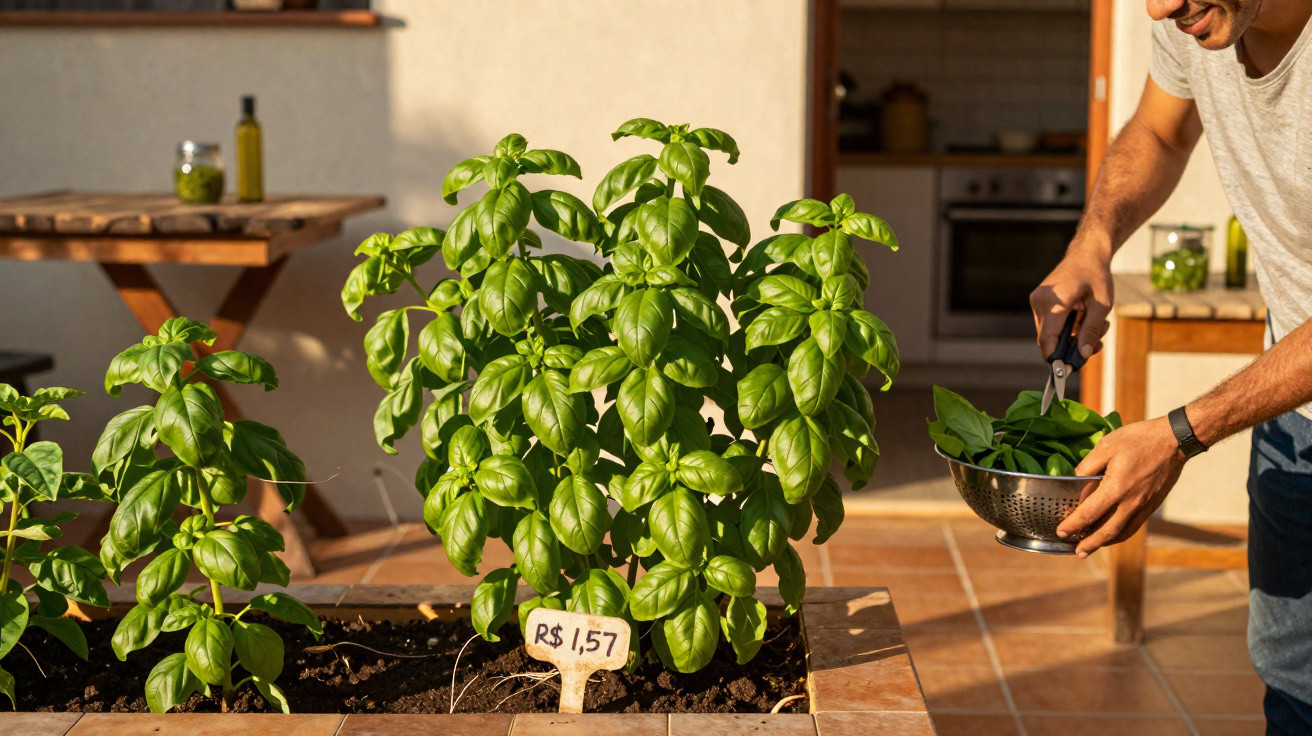
It began with a single plastic pot: a few washed-out green leaves and a price tag so small it barely counted as spending. A few months on, that unassuming basil plant had sprawled across a modest Brazilian back garden, altering how the household looked, smelt and cooked every day.
From 30p to back-garden star
In pounds or dollars, R$1.57 is the sort of money that slips down the side of the sofa. That was the price of the basil seedling that came home on impulse, tucked in beside the rice and pasta during the weekly shop.
At first glance, it was nothing special: a thin stem, a handful of slightly battered leaves, and compost that had clearly dried out under supermarket lights. Expectations stayed low - keep it going for a fortnight, take a few leaves for a pasta dish, then accept that it would probably give up.
"Instead of fading away, that seedling treated the yard as an open invitation, expanding so quickly it became impossible to ignore."
Once it was planted out, a few weeks of steady sunshine and more reliable watering set off a rapid change. Fresh growth pushed out from every node, side branches strengthened, and the spindly seedling thickened into a compact, scented shrub. By the end of the first season, it had stopped being a small extra and become the focal point of the entire back garden.
Why basil thrives when given a bit of space
Basil (Ocimum basilicum) is often sold like a bunch of cut flowers: pretty, temporary, and expected to collapse on a kitchen window sill. Put it outside or give it a larger container, though, and it responds in a completely different way.
Sun, pruning and a feedback loop of growth
The real improvement came down to three straightforward tweaks: brighter light, decent drainage, and routine pruning. Rather than sitting indoors on a gloomy worktop, the basil was moved to a sunny corner with soft morning sun and a little afternoon warmth.
Pruning turned out to be the key. Each time the growing tip was pinched out - and those leaves went into a salad or sauce - the plant answered by sending up two new side shoots. The more it was picked, the fuller it became.
"Basil rewards attention: every harvest triggers more growth, turning casual cooking into active plant training."
As the weeks passed, it stopped resembling a single tuft and started behaving more like a small green fountain, spilling over the edge of the bed. When it eventually flowered, slender spikes of white blooms drew in bees and tiny wasps, adding movement and a soft buzz to the garden.
The simple care routine behind a “runaway” basil
There was no complicated gardening set-up and no pricey kit involved. What let one bargain plant dominate its patch was a surprisingly simple routine.
| Care step | What was done | Visible effect |
|---|---|---|
| Sunlight | Placed in a spot with 4–6 hours of gentle direct sun, mostly in the morning. | Leaves stayed bright green and the plant kept producing new shoots. |
| Watering | Soil was checked by touch; watering only happened when the top felt dry. | Roots stayed firm, with fewer yellowing leaves or droopy stems. |
| Drainage | Soil was loosened, and excess water was allowed to escape freely. | Less risk of root rot and fungal problems, even in heavy rain. |
| Pruning | Tips were pinched and flower buds removed regularly. | Plant became more compact, dense and full of usable leaves. |
| Feeding | Light doses of organic compost every few weeks. | Leaves developed stronger flavour and richer aroma. |
The most unexpected change was mental rather than botanical: watching something so cheap and ordinary shift day by day made the whole garden feel more alive. It prompted more regular check-ins, quick bursts of weeding, and small trials with other herbs.
How a basil bush reshapes cooking habits
Once it hit maturity, basil stopped being an occasional treat and became the default. Without anyone really noticing, day-to-day cooking began to revolve around what was growing outside.
- Tomato sauces started with onions and garlic, then finished with a generous handful of fresh basil torn in at the end.
- Plain cheese sandwiches were improved with a few leaves, instantly tasting lighter and fresher.
- Leftover rice was warmed through with olive oil and basil instead of packet seasoning.
- Weekend pizzas shifted from freezer toppings to tomatoes and mozzarella, with basil scattered over after baking.
"Having basil within arm’s reach pushed highly processed seasonings to the back of the cupboard and brought more fresh food to the plate."
Beyond flavour, a living herb supply created a quiet daily ritual: stepping outside before dinner, rubbing a leaf for its scent, listening for bees, and taking a quick look at what else was growing.
Stretching a R$1.57 plant into a year-round supply
At its most productive, the basil bush produced more leaves than one household could sensibly get through in a single day. Wasting any felt wrong, so a few preservation habits quickly followed.
Different ways to store basil without losing all the flavour
Some approaches proved far more useful than others:
- Fresh use on the same day: the strongest aroma, best for salads, pasta and last-minute garnishes.
- Pesto in small jars: blitzed with olive oil, garlic, nuts and cheese, then frozen in portions for quick midweek meals.
- Ice-cube method: chopped basil packed into ice trays and topped with olive oil, making ready-to-use seasoning cubes for soups and sauces.
- Air-dried leaves: laid out on a clean cloth in a shaded, airy spot, then stored in jars to use as a dried herb.
These methods turned a fast-growing herb into a reliable pantry staple. Even after heavy pruning left the bush looking almost stripped, preserved basil continued to appear in meals long afterwards.
How long basil can last – and when to start again
Basil is commonly treated as an annual, but in warm conditions and with steady care it can keep going for more than one season. The original R$1.57 plant outlasted its first year by a long way, although stems eventually thickened and some leaves became smaller and rougher.
Pinching out flowers helped slow that ageing. When the stems grew too woody and leaf production dropped, cuttings were taken from the healthiest shoots and rooted in water or damp compost. Those new plants inherited the same vigour as the original bush, effectively turning that first supermarket purchase into several generations of basil.
"One cheap seedling turned into a chain of plants, each one a living reminder of the first impulsive buy at the supermarket."
Why basil changes the feel of a small garden
A large basil plant offers more than taste. Its scent releases whenever someone brushes past, naturally perfuming a balcony or patio. Its flowers also draw bees and other pollinators, which in turn support nearby chillies, tomatoes and other crops.
That energy encourages variety. Once basil is thriving, it feels obvious to tuck in more herbs around it - mint, parsley, chives or oregano. Gradually, a bare concrete area starts to function like a small ecosystem rather than simply an outdoor passageway.
Risks, small problems and how to keep them in check
Even a strong plant can run into trouble. Too much water in wet spells can bring on fungal leaf spots. Aphids sometimes gather on soft new tips, and a full dry-out can make the whole plant flop dramatically.
Even so, these problems are usually managed with basic steps: thin nearby growth to improve airflow, water early in the day, squash small clusters of insects by hand or wash them off with a gentle spray. Because basil grows quickly, it often replaces minor damage within a week or two.
From one herb to a new routine
A R$1.57 basil seedling taking over a back garden isn’t really about luck; it’s about what happens when a cheap plant gets just enough care. The change comes quietly: more meals cooked at home, less dependence on bottled sauces, and more time spent outdoors.
For anyone with a window sill, balcony or small patch of soil, basil is a low-cost experiment. One little pot can alter how a space looks, how it smells, and how the people living there cook. If that first seedling takes off, the next steps tend to follow naturally: more herbs, more colour, and a garden that finally feels lived in.
Comments
No comments yet. Be the first to comment!
Leave a Comment