
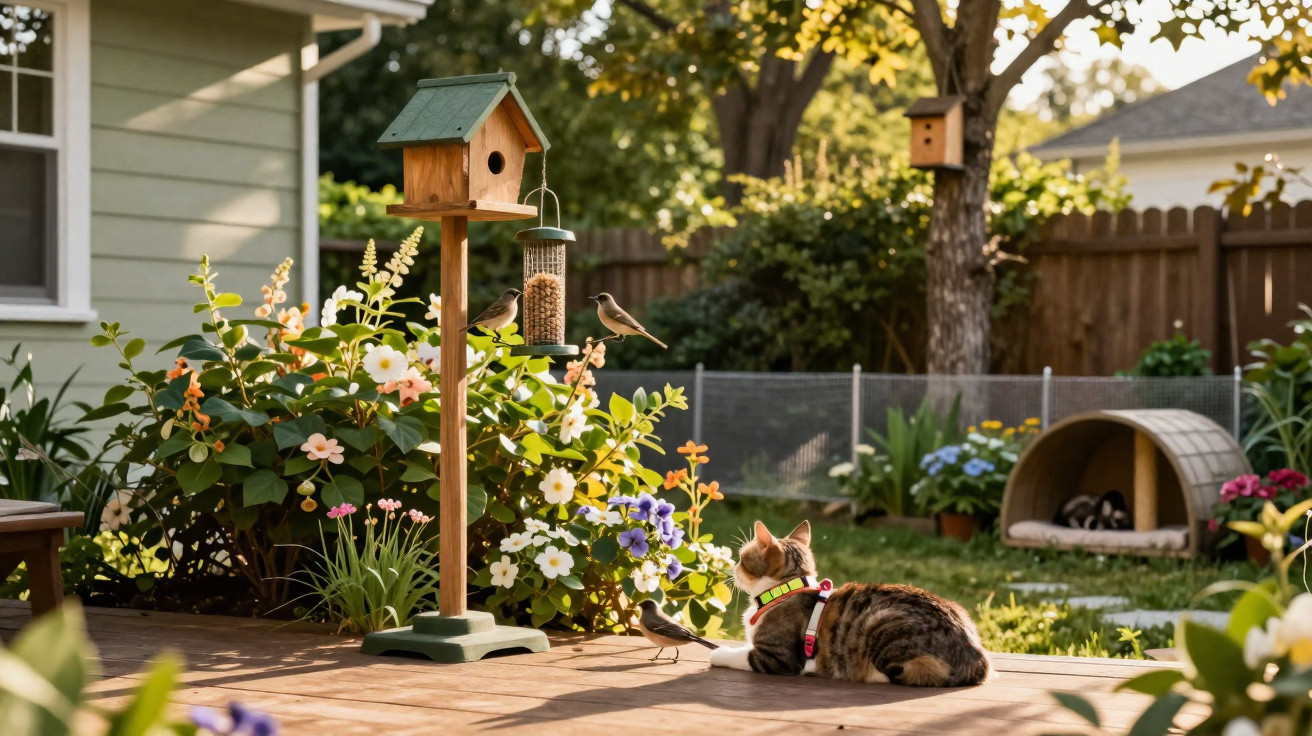
Anyone who adores cats yet worries about blackbirds, tits and robins will know the dilemma inside out. Pet cats are charming and self-assured - and they are also relentless hunters. The good news is that the clash is not inevitable: with a handful of targeted changes, you can design a garden where birds have far more cover, while your cat still gets to keep its territory.
When your cuddle-bug turns into a bird hunter
Across many European countries, millions of pet cats have easy access to the outdoors. Research from France, the United Kingdom and Switzerland suggests that, together, they kill tens of millions of songbirds each year. Not because they are hungry, but because they are driven to hunt. For many owners, the statistics are a shock - especially the moment the first bird appears on the doormat.
Cats remain predators no matter how full the food bowl is. The instinct runs deep. They are particularly effective in spring and early summer, when fledglings are leaving the nest and many species breed low down in hedges or even on the ground, making them easy prey. If you want to boost biodiversity in your garden, you need to consider both sides: your cat’s behaviour and the way the garden is structured.
“If you plan your garden intelligently, you reduce the cat’s opportunities without taking away its freedom completely - and you significantly increase the birds’ chances of survival.”
What a truly bird-friendly garden looks like
Plenty of keen gardeners keep their lawn like a golf green, clear away every leaf and prune shrubs into strict shapes. It looks neat, but ecologically it’s a problem: birds struggle to find cover, nesting material and hiding places. For cats, that kind of garden is perfect - they can spot any movement and reach every corner quickly.
To help birds, you need to flip that approach on its head. Structure, density and changes in height become the key ingredients. One practical rule of thumb that works well in real gardens is the so-called 3–2–1 rule for creating a refuge.
The 3–2–1 rule for more safety outdoors
- Dense ground cover: plants such as Carex, hardy geranium, periwinkle or any other thick greenery provide hiding places and escape routes for small birds.
- Protection through shrubs: thorny or dense shrubs such as blackthorn, hawthorn, wild roses, barberry or hazel make it difficult for cats to reach nests.
- A “roof” of trees: a few trees or tall shrubs reduce clear sightlines and add extra perching and nesting spots higher up.
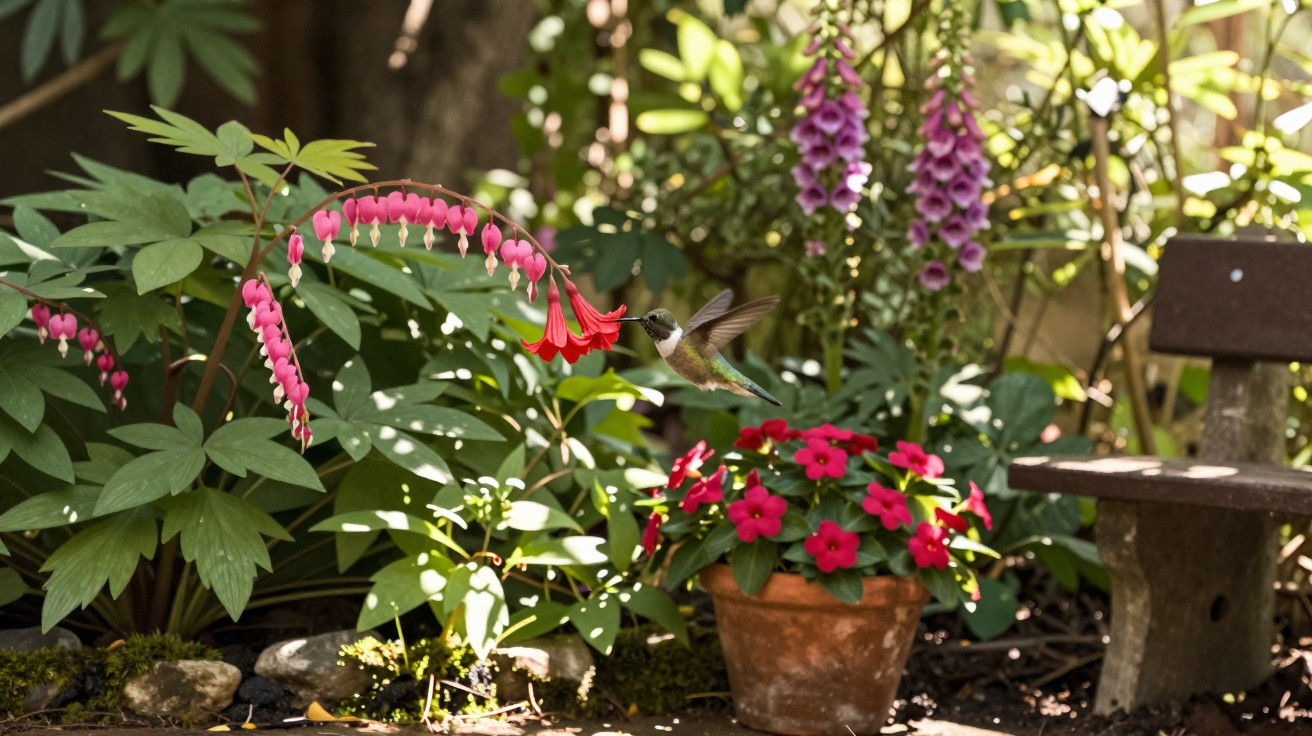
The fewer open, easily visible areas there are, the harder it is for a cat to hunt effectively. Long grass, piles of leaves and corners with dead wood can look “messy” compared with a tidy garden - but for birds they are a lifeline, and they help insects too.
Safe nest boxes: small details, big impact
Nest boxes are now almost standard equipment in wildlife-friendly gardens. However, many are put up incorrectly or designed in ways that still give cats an advantage. A few straightforward rules make nesting sites far safer.
What owners should look out for with nest boxes
- Height: around 3 metres above the ground is a solid guideline.
- Distance from branches and ledges: avoid any nearby branch that would let a cat jump onto the box.
- Direction of the entrance: ideally facing east or south-east, sheltered from extreme weather.
- No decorative perch: the little stick under the hole helps predators far more than it helps birds.
- Box depth: the distance between the entrance hole and the floor should be about 15 to 20 centimetres.
“The fewer climbing and jumping aids there are, the less likely it is that a cat will reach a nest - even if it notices the box.”
When it’s better for your cat to stay indoors
It isn’t only space that matters - timing does too. Cats hunt most at dawn and dusk, early in the morning and later in the evening. Those are exactly the periods when many songbirds are most active, feeding or tending to their young.
If you keep your cat indoors at these times during the sensitive breeding season - roughly March to July - you can markedly reduce successful hunts. Many owners set consistent “outdoor hours”, and most cats adapt surprisingly quickly.
- Let your cat out later in the morning, once the first busy hours of birds’ breakfast activity have passed.
- Close the door earlier in the evening, before dusk.
- During intense breeding phases - in poor weather or when bird activity is especially high - skip outdoor access altogether during the day.
Bright collars and other practical tricks
Another route is to make your cat easier for birds to spot. Colourful collar covers in bold shades or with reflective elements break up a hunter’s camouflage. Studies indicate that birds notice these signals from further away and take off sooner.
Some owners also use gentle deterrents to make specific spots less appealing to cats, for example:
- Mesh guards around tree trunks, to stop cats climbing into nests in the canopy.
- Coffee grounds or citrus peel in particularly sensitive areas; many cats avoid these smells.
- Plants such as *Coleus canina*, whose scent cats generally find unpleasant.
On their own, these steps won’t solve the issue - but they can help shield nesting zones in a targeted way. Combined with a well-structured garden and controlled outdoor times, they create a much safer environment.
Long-term responsibility: fewer kittens, less hunting pressure
One aspect is often overlooked: any unneutered outdoor cat can, over time, lead to many more cats - and each of those will hunt too. Neutering and identification (for example microchipping) reduce uncontrolled breeding and make it easier to reunite lost pets with their owners.
If you live in an area with lots of free-roaming cats, it can help to raise the subject within your building, street or neighbourhood. Some councils already use mandatory neutering requirements for outdoor cats to ease the pressure on wildlife.
How to create a “reconciliation garden”
Many owners find it easier with a clear plan. The overview below shows how a typical garden can be turned step by step into a safer space for birds - without banning your cat from everything.
| Area | Measure | Benefit for birds | Effect on the cat |
|---|---|---|---|
| Lawn | Leave sections as long grass; create leaf piles | Hiding places; insects as food | poorer visibility; less hunting success |
| Hedges | Thorny shrubs; dense growth | safer nesting sites deeper inside | harder to climb and access |
| Trees | Install nest boxes high up and cat-safe | protected breeding sites at height | little chance of reaching nests |
| Patio / near the house | Place feeding stations out of the cat’s jumping range | fewer ambush points right by the house | fewer successful hunts at windows and doors |
What owners should keep in mind
These measures rarely make cats feel “punished”. Dense bushes, different levels and hiding spots can even make the garden more interesting. Hunting success drops, but the experiences remain: climbing, stalking, exploring - just with far less danger to fledglings.
Birds benefit in two ways: they gain better protection from cats, and the wilder growth brings more insects and seeds for food. If you also plant native species, you support a wide range of wildlife that no longer has a place in sterile gravel gardens.
Practical examples for day-to-day life
A common setup is a small terraced-house garden with short grass and a single line of conifers. With minimal effort, you can make meaningful changes: turn one strip into a wilder corner, add a few wild roses, move a nest box onto the house wall at 3 metres high, and keep the tomcat indoors until nine in the morning in April. Even in the first year, many owners notice the difference: more birdsong, fewer dead animals.
Even if you only have a compact city garden or courtyard, you can still tip the balance: a large pot with a dense shrub, a nest box on the façade, some leaves left in a corner, and a bright collar cover for your house cat - you can create refuges even in a small space.
Ultimately, it’s about a fair compromise. Your cat is allowed to be a cat, with exercise, stimulation and adventure. Birds get a genuine chance to make it through the breeding season. With a thoughtfully planned garden, safer nesting sites and a little discipline around outdoor hours, this balancing act is often far more achievable than it first appears.



Comments
No comments yet. Be the first to comment!
Leave a Comment