
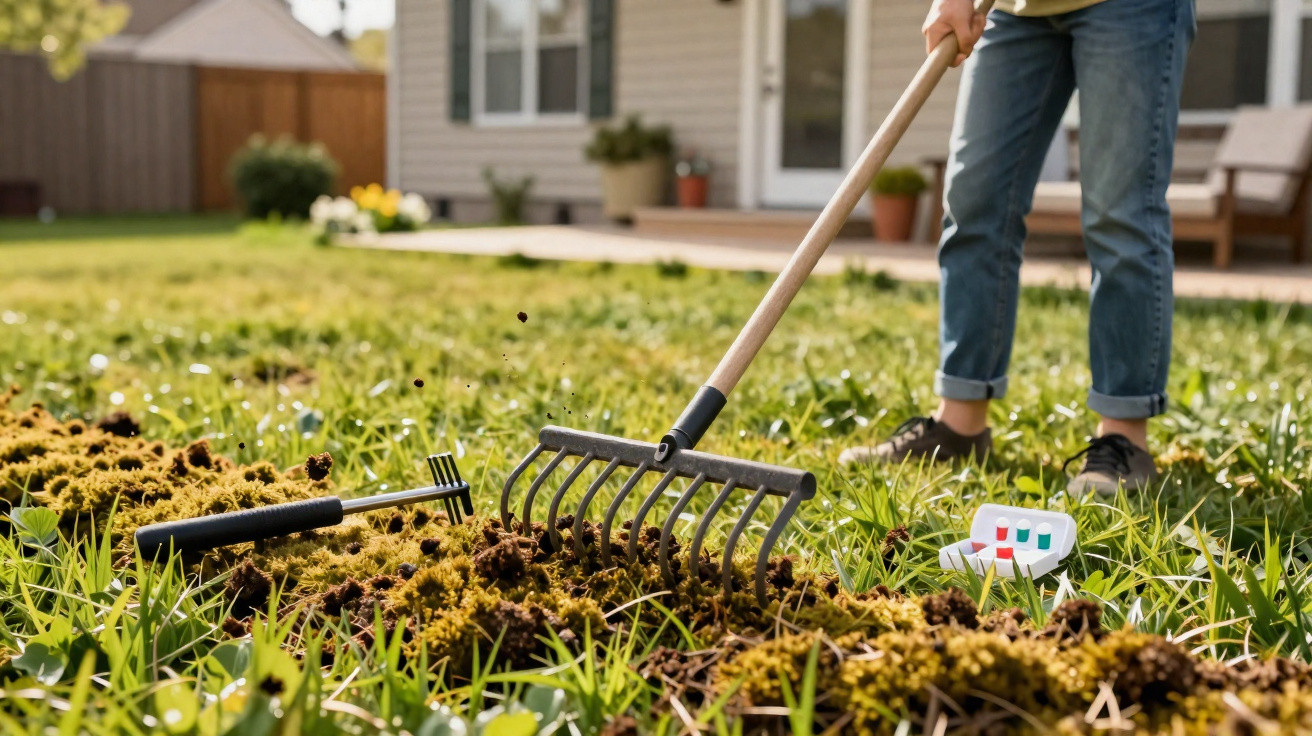
Many amateur gardeners reach straight for expensive machines or so‑called “miracle cures”. That’s rarely necessary. If you understand why moss shows up in the first place-and learn to use two classic hand tools properly-you can turn your lawn into a dense, hard‑wearing carpet step by step, without harsh chemicals and without high‑tech kit.
Why moss suddenly takes over the lawn in spring
Moss doesn’t appear by chance. It reliably exploits every weakness in the turf. Wherever grass thins out, moss moves in.
The usual triggers are easy to pinpoint:
- persistent shade, for example beneath trees or along house walls
- waterlogging after rain because the soil is too compacted
- very acidic soil where lawn grasses struggle
- mowing too low and too often
- heavy foot traffic that compresses the ground
This looks particularly dramatic in late winter and early spring. The lawn is only just starting to wake up, while moss is already active. If you act thoughtfully during this window, you can set the direction for the whole gardening year.
Moss isn’t “evil weed”; it’s a signal that the soil and the lawn need better conditions.
Many experts suggest waiting to start targeted measures until temperatures are reasonably settled. Grass needs warmth to bounce back quickly after any intervention and to fill bare patches again. On cold March days, patience usually pays off more than rushing in.
The two tools that can transform almost any mossy lawn
Instead of a powered scarifier and specialist machines, most home gardens do well with two straightforward helpers:
- Lawn rake or scarifying rake (rigid or spring‑tine type) to pull out moss and thatch
- Lawn aerator-for instance a garden fork or a roller with hollow or solid spikes-to aerate and loosen the soil
These two tools work as a pair: the rake deals with the surface, while the aerator improves the layer below.
What the lawn rake really does
Use the scarifying rake in short, firm strokes. The tines pull up:
- moss cushions
- old, dead grass blades
- matted organic debris
That clears space for light and air right at the base of the sward. The grass can then produce fresh shoots instead of trying to push through a thick layer of thatch.
If it’s your first proper rake‑through, the amount you collect can be a shock. That’s normal-and actually a positive sign, because it shows the lawn has been “covered up” for a long time.
Why the aerator is the quiet star
The second tool matters just as much: the aerator. It creates small holes in the ground and, depending on the design, may even cut or punch out tiny soil plugs.
The benefits come in three ways:
- water drains away more effectively instead of sitting on the surface
- air reaches the grass roots and microorganisms become more active
- roots grow deeper and form a denser network
Well‑aerated soil makes life difficult for moss-and at the same time strengthens the lawn from below.
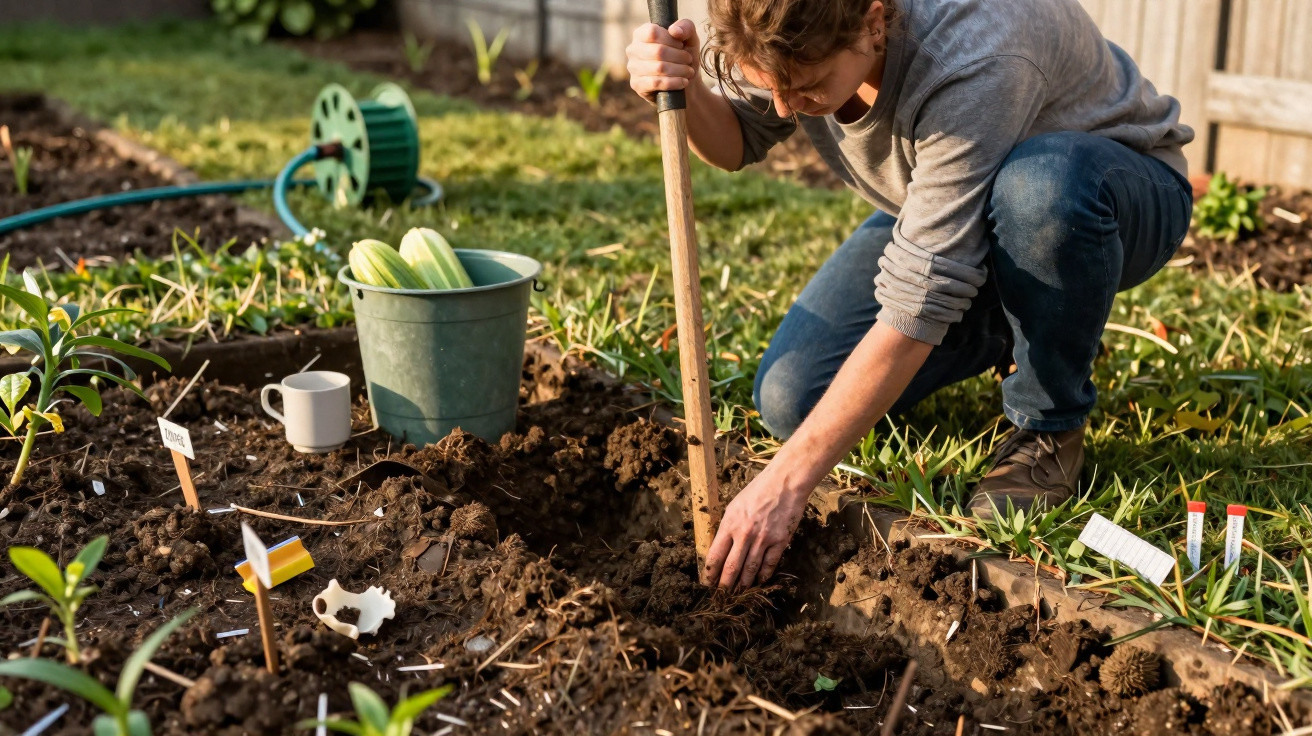
For a small garden, a sturdy garden fork is enough: work in an even grid, push it in, rock it gently back and forth, done. For larger lawns, a spiked roller is worth considering.
The ideal yearly plan for a “strong and healthy” lawn
When lawn care has a clear structure, improvements tend to show up sooner. A practical spring‑centred schedule might look like this:
| Phase | Action | Aim |
|---|---|---|
| Early spring | mow a little higher, remove larger twigs and leaves | wake the lawn up, let light reach the sward |
| Mid‑March to early April | rake out moss, paying attention to suitable temperatures | reduce moss cushions, loosen thatch |
| Immediately afterwards | aerate the soil, make holes with an aerator | improve airflow, reduce waterlogging |
| After that | overseed, apply organic fertiliser, mow to 4–5 cm | close gaps, strengthen the grass |
| Autumn | repeat light raking and aeration | keep the lawn winter‑ready and competitive |
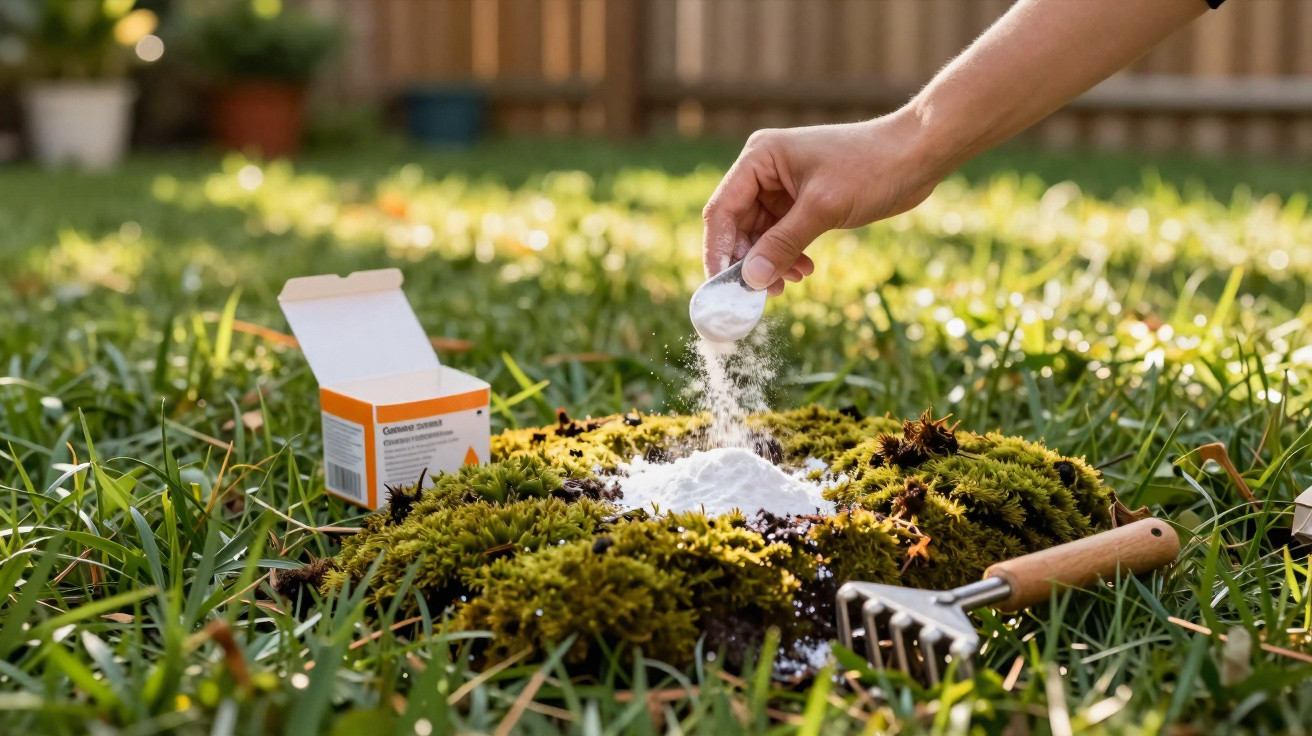
Many gardeners also add an iron‑based moss treatment, which turns the moss plants black within a few days. These combined products of iron and nutrients are commonly treated in the hobby market as fertilisers rather than a classic pesticide approach-unlike synthetic total herbicides, which have long been banned.
Timing matters: fertilise or apply the moss treatment first, then wait one to two weeks so the active ingredient can do its job. After that, rake out the dead moss thoroughly.
Common mistakes that practically invite moss in
Certain issues repeat year after year in many gardens. Spot them early and you’ll save yourself plenty of frustration:
- Mowing too low: a “golf‑green lawn” is usually harmful in a home garden. Around 4–5 cm is ideal.
- Constantly damp areas: watering every day-even when the soil is still wet-encourages moss instead of grass.
- Compacted soil: children, dogs and garden parties are all great, but they compress the ground. Aeration helps counter this.
- Never overseeding: gaps from disease, molehills or building work stay open-moss takes the opportunity.
- Ignoring shady “problem spots”: under trees, standard lawn often struggles. Shade‑tolerant seed mixes or alternative planting tend to suit those areas better.
The lawn only beats moss when it becomes denser and more vigorous than the moss’s fine cushion.
How to fit the two tools into everyday routine
If you go over the lawn with a rake and aerator only once a year, you’ll notice a difference-but it fades faster than many people would like. More effective is a rhythm that matches your own garden.
Small lawns: ten minutes that makes a big difference
In a typical terraced‑house garden, short sessions are often enough:
- in spring: one afternoon of thorough raking and aerating
- in summer: every few weeks, a quick check of trouble spots
- in autumn: a lighter repeat, especially where the grass suffered over summer
Keeping to this routine stops moss from spreading across the whole lawn again. Instead, it stays in small patches that are quick to tackle.
Larger plots: work in zones, not perfection
On bigger areas, it’s sensible to think in zones. Not every corner needs to look like a football pitch. Set priorities such as:
- play and lounging areas for children and family
- smart, visible sections near the house or patio
- trouble zones with permanent shade or waterlogging
At the edges, you can partly tolerate moss and intentionally transition towards a more natural meadow. That reduces workload and supports insects.
What terms like “lawn scarifier” and “aeration” actually mean
Many guides use English or technical wording that isn’t always clear day to day. Two key ideas are straightforward:
- Scarifying: lightly scratching the sward, combing out moss and thatch, and effectively “cleaning” the surface.
- Aeration: perforating the soil so air, water and nutrients can penetrate deeper.
They work best together: first you free up the surface, then you make the layer underneath more permeable. That pairing is why the rake‑and‑aerator duo is so effective despite its simplicity.
What happens if you do nothing-and what changes if you stay consistent
If you simply accept moss, the shift is often gradual: each year a little more grass disappears, and the green cushions spread further. The lawn feels softer, stays wet for longer, and becomes more vulnerable during frost or dry spells.
The alternative is regular use of the rake and aerator. In that case, the balance changes slowly but clearly. With better conditions, the grass forms more side shoots and stronger roots, and it closes gaps more quickly. Moss finds fewer and fewer open niches.
It’s not the moss treatment, but repeated care with simple tools that determines how “strong and healthy” a lawn really looks.
If you commit to the process, you’ll often notice after just one season that the work gets easier each year. What starts as fighting moss turns into steady progress towards a resilient, dense green-using two tools, a bit of time, and a clear understanding of what your soil needs.


Comments
No comments yet. Be the first to comment!
Leave a Comment