
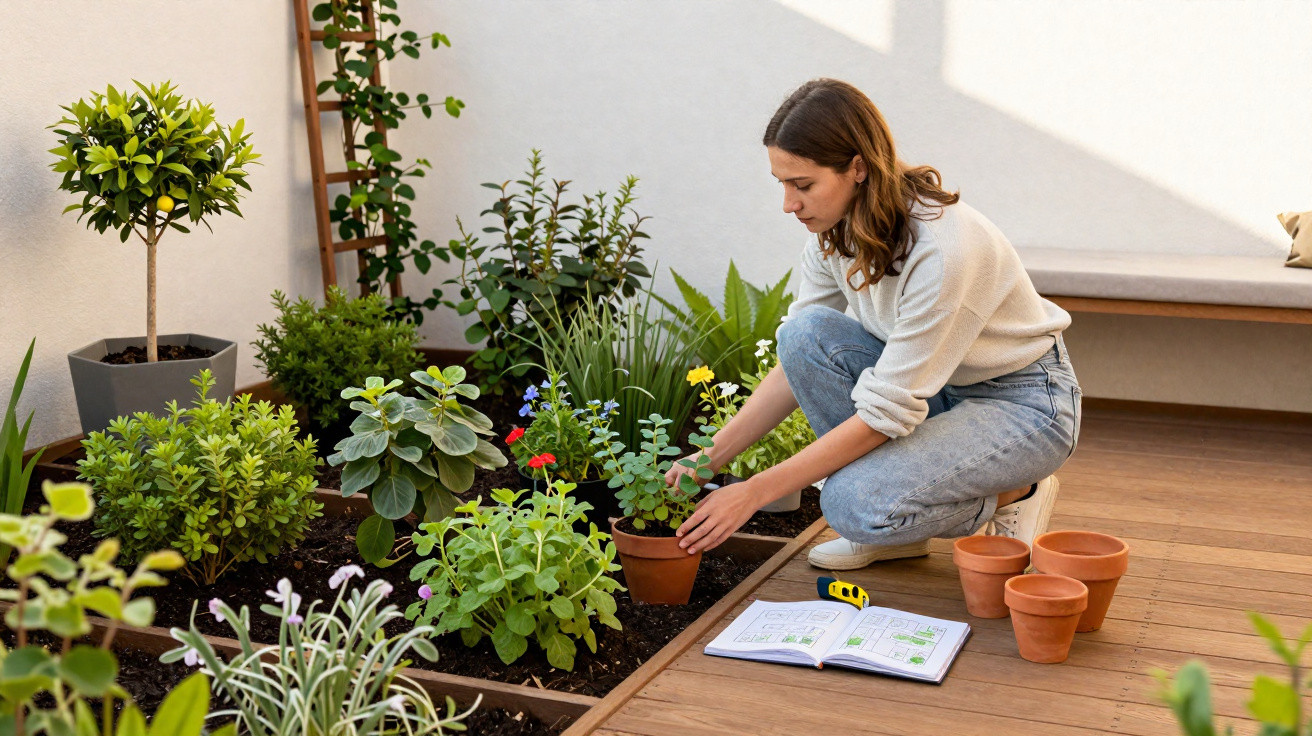
The first time I attempted to lay out a tiny garden, I stood in the centre of my three-by-three-metre back garden and felt… absurd. I was there holding a tray of plants like an overly optimistic game-show contestant, spinning slowly, trying to picture what could possibly go where. Overnight, every container looked oversized. Every plant label boasting “vigour” and “spread” sounded less like a promise and more like a threat.
Either side, my neighbours had leafy, sprawling plots. I had a postage-stamp patch of soil and a very real worry that I’d get it wrong.
That was the moment I realised something simple: in a small garden, every choice you make is on display.
Why small gardens are less forgiving than big yards
In a large garden, your gaze drifts. There are areas you rarely look at, experiments that didn’t work tucked behind shrubs, and that struggling rose everyone quietly ignores. Big spaces give you that kind of mercy.
In a small garden, there’s nowhere for mistakes to disappear. A plant that’s too tall, too broad, or simply the wrong colour announces itself from across the fence. Put one pot in an awkward spot and the whole layout feels wrong.
You aren’t only planting-you’re curating.
I once dropped in on a couple in the city with a slim courtyard, scarcely wide enough for two chairs. They’d started the way many of us do: buying whatever caught their eye at the garden centre. Lavender, hydrangeas, a miniature apple tree, several roses, and a bamboo in a pot “for height”.
By the next year, the bamboo had become a privacy-obsessed brute, the hydrangeas were throwing shade over the lavender, and the apple tree ended up sulking in a corner, fruiting where nobody could reach it. The whole place felt tight, gloomy, and strangely unsettled.
They hadn’t planted “wrong”. They’d planted as if they had far more room than they actually did.
In bigger gardens, impulse purchases and sloppy spacing often get forgiven. There’s another border, another edge, another stretch of lawn that can restore balance. The sheer scale smooths over the scars.
Small gardens, though, amplify every decision. One plant that outgrows its allotted space steals light from everything behind it. One clashing colour can dominate the view from your kitchen window. One poorly positioned tree can take away your only sunny square metre of soil.
That’s why small spaces need a plan: you’re creating an entire world that’s read in a single glance.
Planting like a strategist, not a shopper
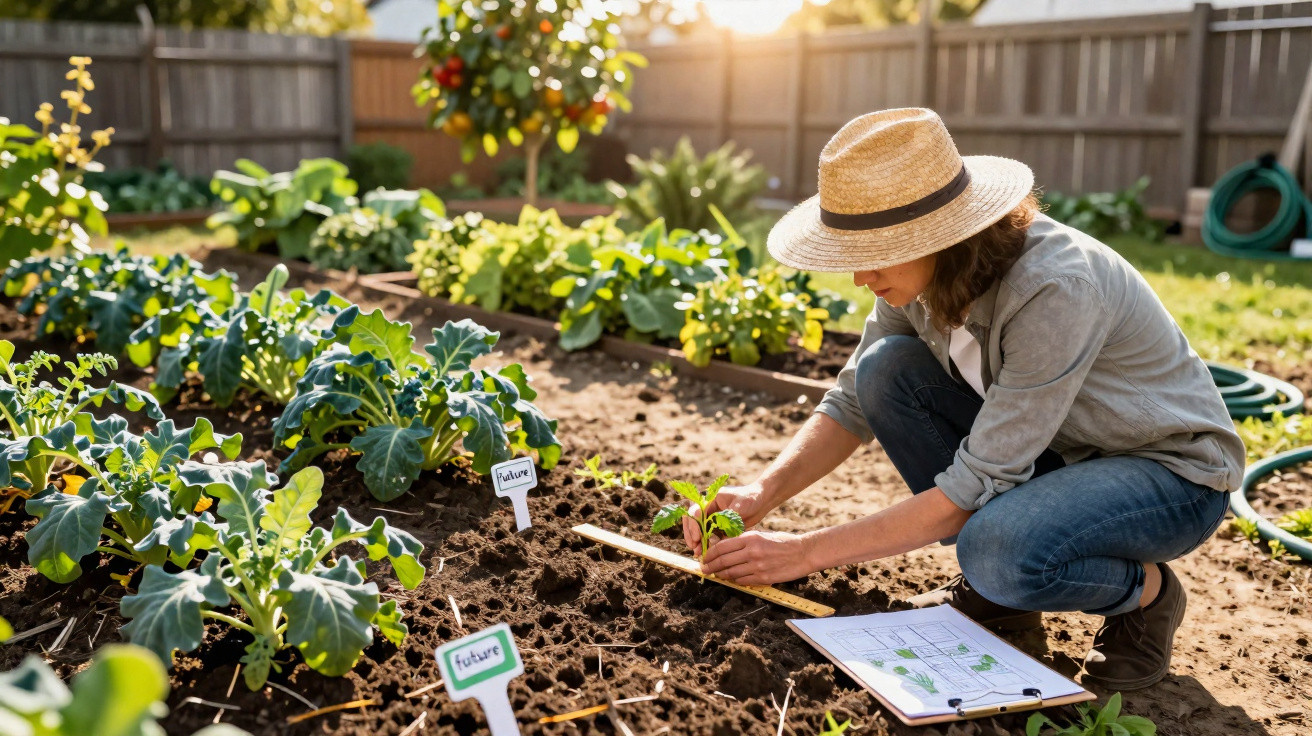
A practical way to begin with a small garden is to plan in layers rather than as a list of individual plants. Picture the space from three viewpoints: looking down from above, standing at eye level, and sitting in your favourite spot. What do you want each view to give you?
Start with the bones: a small tree or a taller shrub, followed by a couple of medium-height anchor plants, and then lower plants that spill gently and soften the edges. Every plant should have a purpose, not merely a position. Shade, privacy, fragrance, seasonal colour, support for pollinators-decide the roles before you spend the money.
Once you approach it that way, random purchases start to feel oddly reckless.
There’s a familiar error in very small gardens: planting everything on one level. Perhaps you’ve done it-short plants lined neatly along the fence, a few pots sitting on the ground, and a tidy, flat horizon. It looks acceptable… for a fortnight. Then it somehow becomes both boring and crowded.
In compact spaces, height variation is one of your strongest tools. A slender ornamental tree, a trellis with a climbing rose or clematis, tall grasses that move in the breeze-these draw the eye upwards and leave the ground plane feeling calmer.
Let’s be frank: hardly anyone gives plants the generous spacing the labels recommend, especially in small gardens. That’s precisely why you use height to create the illusion of depth.
“Plant for the garden you actually have, not the one you daydream about on Instagram,” a landscape designer told me once, watching a client try to squeeze a magnolia into a courtyard. “The smaller the garden, the more those fantasies cost you.”
- Choose multitaskers
Go for plants that earn their keep by doing two or three jobs: fragrance plus shade, flowers plus food, privacy plus colour. - Think long-term sizes
Focus on the eventual height and spread, not the appealing baby plant in its nursery pot. That mature size is what you’ll be living alongside. - Plan the view from indoors
Most of us see our gardens more through windows than from an outdoor chair. Prioritise that everyday view. - Use repetition
Placing the same plant in three positions creates rhythm and a sense of calm, particularly where space is tight. - Leave empty space
Bare soil or an unplanted corner isn’t wasted-it’s flexibility you’ll appreciate later.
Living with a small garden that actually breathes
After you’ve lived with a small garden that’s been properly thought through, you begin to notice how uneasy overcrowded spaces can feel. There’s a quiet assurance in a tiny courtyard built on a handful of strong decisions: a single Japanese maple with ferns and hellebores beneath it; a slim bench; a pot of herbs by the door.
You notice it the moment you sit down. Nothing is competing for attention. Everything has enough room to become what it is. The plants aren’t battling for light-and neither are you.
We’ve all had that moment: you arrive home with yet another plant and immediately wonder where on earth it could possibly go.
| Key point | Detail | Value for the reader |
|---|---|---|
| Think in layers, not rows | Blend tall, mid-height and low plants to create depth and vertical interest | Helps a tiny space feel bigger, more generous, and less cramped |
| Give every plant a role | Select plants for shade, privacy, scent, colour, or wildlife support | Stops random choices and produces a garden that genuinely suits you |
| Respect mature size | Plan around the plant’s eventual height and spread, not its current pot size | Prevents overcrowding, regret, and costly replanting later |
FAQ:
- How many plants should I put in a very small garden?
Fewer than you think. Begin with 3–5 key plants you truly love, then repeat them rather than adding more varieties. This keeps the look coherent and avoids the “plant zoo” effect.- Can I grow trees in a tiny garden?
Yes, provided you pick narrow, small-growing species or varieties on dwarf rootstock. Look for words such as “columnar”, “compact”, or “patio” on the label and always check the mature size.- Is grass a good idea in a very small yard?
Sometimes, but often a small patch of lawn brings more maintenance than pleasure. Many people choose gravel, decking, or groundcovers with a few stepping stones, which stay practical in every season.- How do I add privacy without making it feel boxed in?
Use layered planting instead of a solid wall of evergreen hedge. A combination of a slim tree, tall grasses, and a climber on a trellis screens views while still allowing light and air through.- What’s the biggest mistake in small garden planting?
Purchasing plants before you’ve decided what you need the space to do. Start with how you live-coffee spot, children’s corner, herbs for cooking-then choose plants that support that life, not the other way round.
Comments
No comments yet. Be the first to comment!
Leave a Comment