
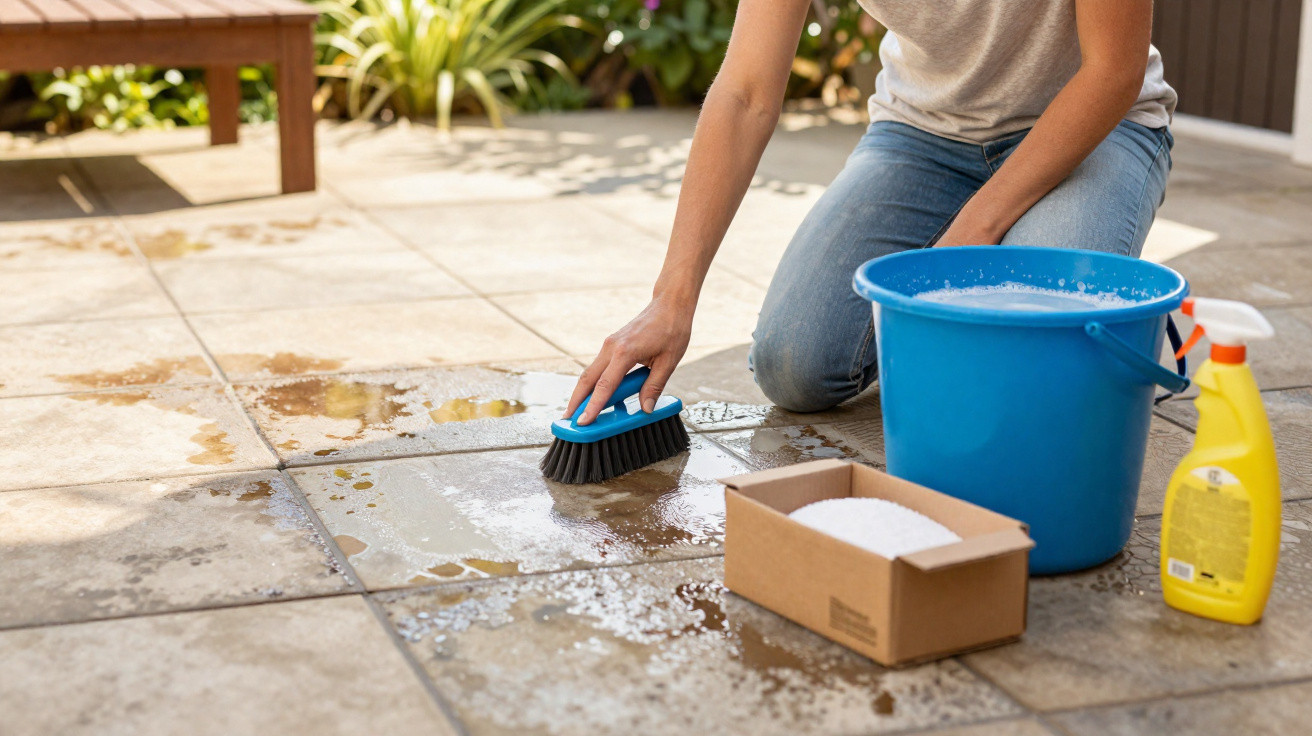
The sun finally shows up - and the terrace reveals its true colours: green, blotchy, rusty.
But before you reach for the pressure washer, there’s a surprisingly straightforward alternative.
Plenty of garden owners know the sinking feeling: from a distance the patio looked fine for months, yet on the first warm weekend you suddenly notice every patch of algae, every rust mark and every grimy joint. The usual response is predictable - chemical cleaners, vinegar, or a noisy jet wash. However, a simple blend of two inexpensive household products can achieve a far gentler clean, which is kinder to paving, the garden and pets.
Why the terrace looks so neglected after winter
During the colder months, rain, frost, limited sunshine and wet leaves create ideal conditions for algae and lichen. They settle as a greenish film over concrete slabs, natural stone and brick pavers. On top of that, you often get:
- Rust stains from the metal feet of chairs and tables
- Brown rings left by planters and their drainage channels
- Grease and sauces from the last barbecue
- Dust and soot that lodge in the stone’s pores
The result is a surface that looks dull, stained and older than it really is. Many people then automatically reach for bleach, “limescale removers” or vinegar, because vinegar is often seen as “natural”. That’s exactly where the trouble starts.
Why vinegar and harsh cleaners can be a problem on terraces
Vinegar may sound mild, but chemically it is still an acid. On calcareous stones such as sandstone, concrete or limestone, it can roughen the surface and cause damage over time. In densely planted gardens, the acidic solution can seep into borders and put stress on microorganisms and sensitive plants.
Even more concerning are chlorine-based products or aggressive limescale removers. They can:
- Leach or discolour jointing mortar
- Leave permanent staining on natural stone
- Run into lawns and beds and harm roots
- Abrade the surface so it becomes more “open”, meaning dirt clings more readily after the next rain
"If you scrub with harsh products every year, you often end up making the terrace look dirty again much sooner - without meaning to."
The two-product trick: washing soda and washing-up liquid instead of a pressure washer
A British DIY channel demonstrates a different approach that’s impressively simple. Instead of a jet wash and specialist chemicals, they use:
- Soda crystals (washing soda)
- Ordinary washing-up liquid
Soda crystals - typically sold as washing soda - are familiar to many from laundry care. This alkaline substance cuts through grease, softens organic grime and helps lift algae deposits from the surface. Washing-up liquid adds extra degreasing power, which is particularly useful after barbecue sessions or in towns and cities where fine dust settles on patios.
Important: washing soda is not the same as drain cleaner based on caustic soda. The latter is far more aggressive and does not belong on paving slabs.
How the method works, step by step
The key is that this approach relies more on dwell time than brute force. The basic routine looks like this:
- Scrape weeds out of joints and remove loose leaves.
- Sweep the terrace thoroughly with a stiff broom.
- Dampen the area with a garden hose so the washing soda dissolves more easily.
- Sprinkle a light layer of washing soda over the wet slabs - don’t tip the whole pack out at once.
- Drizzle a few lines of washing-up liquid over the surface.
- Work it in firmly using a scrubbing brush or a stiff outdoor broom.
After that, it’s a waiting game: the mixture should sit on the surface for around two days. Heavy rain isn’t ideal, but a bit of light drizzle usually won’t ruin the result because the soda has already settled into the pores. Once the time is up, rinse the terrace again with the hose.
"A budget alkaline mix of washing soda and washing-up liquid can often replace a pressure washer for terrace cleaning with very little effort."
Keep safety and material suitability in mind
Even though the ingredients are simple, a quick safety check is sensible. Washing soda is alkaline, can mildly irritate skin and eyes, and should be kept out of children’s reach. A few basic rules keep things straightforward:
- Wear gloves while working and avoid rubbing your eyes.
- Keep children and pets away while the surface is wet.
- Rinse thoroughly afterwards with clean water, especially in joints and low spots.
If you have delicate natural stone such as polished limestone or fine slate, it’s worth testing first in an inconspicuous corner. For extra caution, dissolve the washing soda in a bucket of hot water and apply it with a scrubbing brush or watering can, rather than sprinkling crystals directly.
Common mistakes that undermine the result
Long-standing cleaning habits often get in the way of a lasting outcome. The most frequent pitfalls include:
- Too much pressure: over time, pressure washers can scour away fine layers from concrete slabs and joints. The surface becomes rougher and attracts dirt more quickly.
- Wire brushes: they can leave scratches and, particularly on softer stone, create visible marks.
- Mixing products at random: chlorine cleaner first, then vinegar, then something else - these “cocktails” can trigger reactions and may even fix stains in place.
If you’re using the washing soda method, it helps to give other strong cleaners a break and allow time for the deposits to loosen. Here, patience simply replaces expensive specialist products.
How to keep the terrace cleaner for longer
The biggest mistake is giving the patio one heavy scrub each year and then ignoring it until the following spring. Small, regular habits work far better:
- Give it a quick sweep every one to two weeks, especially after heavy rain and high pollen periods.
- Remove damp leaves promptly so they don’t stain.
- Wipe up barbecue grease straight away with a little washing-up solution, rather than letting it dry on.
- Plan a lighter round with the washing soda and washing-up liquid mix in autumn.
This way, less green film builds up, and the big spring clean feels much more manageable. If you keep potted plants on the patio, using saucers can help prevent brown rings caused by standing water.
Suitability for different types of terrace
The method described works particularly well on:
- Concrete slabs and concrete block paving
- Standard paving slabs from DIY stores
- Durable natural stone with a more textured surface
With very smooth or dark natural stones - for example basalt or polished granite - a gentler mix is often enough: a little washing-up liquid in warm water and a softer broom. In those cases, it’s less about ground-in soil and more about dust and a light surface film.
Timber decking and composite (WPC) boards should be treated separately. Depending on the manufacturer and the material blend, washing soda can leach the surface. In those situations, it’s better to follow the manufacturer’s guidance and use a timber cleaner or dedicated WPC products.
Why the gentler method wins in the long run
If you want to reduce strain on your terrace and the environment in one go, this two-product approach is a practical tool. The ingredients are inexpensive, easy to dose, and don’t come with a harsh chemical smell. For people with dogs or cats, pet safety is another plus - provided you rinse thoroughly at the end.
Over time, joints and slabs benefit too. Less pressure washing, less acid and fewer harsh brushes mean the paving keeps its structure, and the terrace is less likely to need re-pointing or relaying every few years. Especially on older patios, that gentle approach can pay off in very real savings.
Anyone tackling their spring terrace clean a little differently this year often notices after the first attempt: you don’t need professional kit to make slabs look respectable again. A bag of washing soda, a bottle of washing-up liquid, a sturdy scrubbing brush - and a bit of patience - are enough to make the outdoor space look well cared for again.
Comments
No comments yet. Be the first to comment!
Leave a Comment