
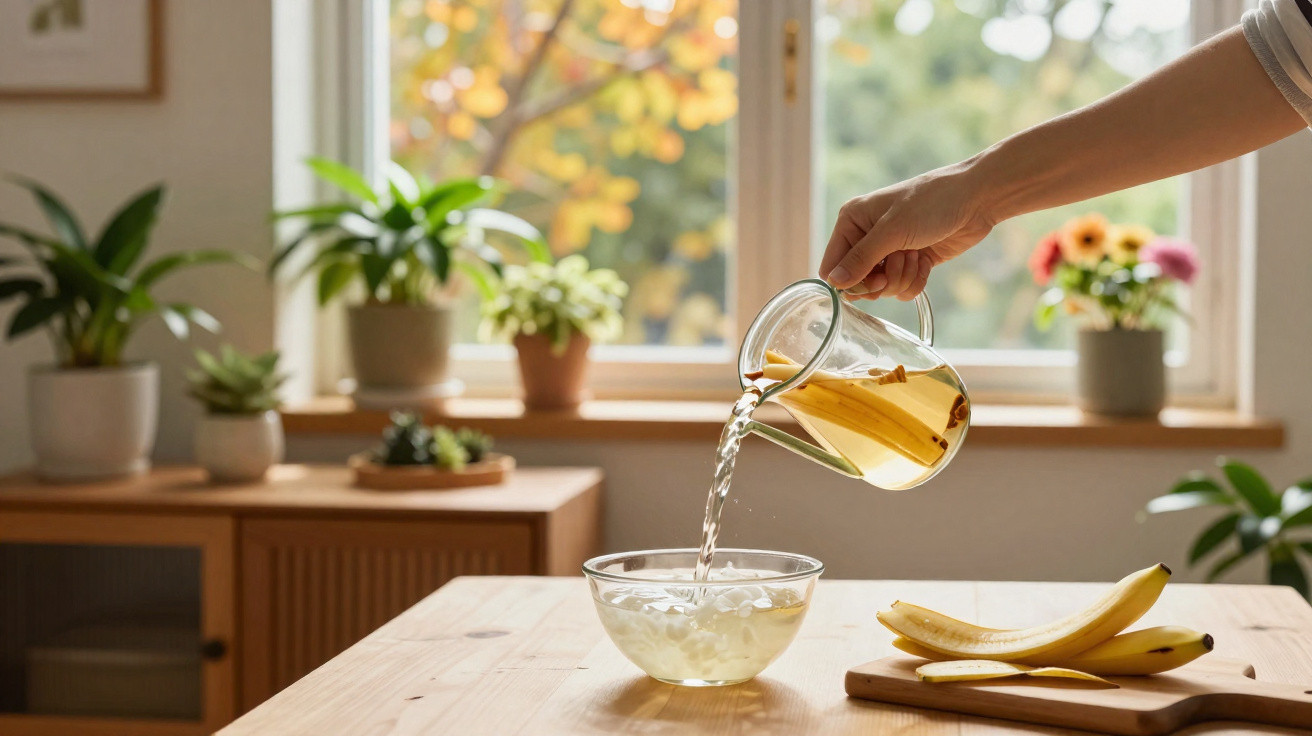
If central-heating air is still hanging in the leaves and your pots look tired, a surprisingly simple home remedy with just two ingredients can help.
After winter, many houseplants look clearly worn out: drooping leaves, hardly any new growth, and flowers that refuse to arrive. At exactly this point, some plant lovers skip pricey specialist feeds and turn instead to a homemade nutrient solution made from kitchen leftovers. A garden journalist in England has relied for years on a mix of nothing more than water and a banana peel - and says her plants repay her with fresh green growth and long-lasting blooms.
Why houseplants need a kick after winter
The heating season, dry indoor air and reduced daylight make winter a stressful time for houseplants. Many varieties slow their growth right down, and some almost stop altogether. Watering often becomes guesswork: sometimes too much, sometimes too little. Chemical liquid feeds may be sitting in the cupboard, but in small living-room pots they can be easy to overdo.
As the days start to lengthen in March, most plants move into a new season. They push out new leaves, roots become active again, and water demand rises. That is precisely when it makes sense to restart nutrition gently, rather than trying to force growth in mid-winter.
"The best time is towards the end of March, when the plants naturally show signs of a new surge - young shoots, firmer leaves, the first buds."
Catching that moment supports the plant’s own rhythm rather than feeding against it. The banana-water method is designed to fit that window.
The idea behind banana water as a natural plant fertiliser
Banana peels usually go straight into the food-waste bin. For many plant enthusiasts, they have become a free resource: the peel contains potassium along with various trace elements, some of which can leach into water. The concept is simple - instead of adding a highly concentrated fertiliser to your watering can, you make a mild nutrient solution that feeds houseplants slowly and gently.
The journalist, who has turned her flat into a mini indoor jungle, has used this approach for years across very different types of plant: orchids, snake plant, peace lily and spider plant. Despite their differing needs, she waters them all in spring with the same banana-water mix - in moderation - and reports vigorous foliage and dependable flowering well into autumn.
What potassium does for houseplants
Potassium is one of the most important nutrients for plants. It:
- strengthens cell walls and makes leaves more resilient,
- supports the plant’s water regulation,
- encourages bud formation and flowering,
- helps roots supply new growth.
In pots, plants quickly hit nutrient limits because the amount of compost is restricted. A gentle potassium boost in spring can work like a training plan for the new season.
How to make the two-ingredient nutrient solution
The principle is straightforward, and the process only requires a little patience. For a small household, the banana leftovers from a week are usually enough.
Step-by-step guide to banana water
- Prepare the banana peel: Eat a ripe organic banana and cut the peel into pieces. Organic is worthwhile because there are typically fewer residues on the skin.
- Start the soak: Put the peel pieces into a glass or bottle and pour in tap water until everything is covered.
- Wait for it to infuse: Leave the mixture for two to four days at room temperature. Rest the lid on loosely so pressure cannot build up.
- Strain the liquid: Remove the peel after soaking, then filter the water through a sieve or coffee filter.
- Dilute before watering: Never use the nutrient solution neat. A rough mixing ratio is 1 part banana water to 3–4 parts plain water.
"It should look like a light tea, not a syrup. The darker and stronger the infusion, the more you should dilute it."
The journalist uses banana water at the start of spring about once a month. When summer arrives and plants are growing strongly, she switches to a weekly feed - but then she dilutes it much more.
How often to water - and when to be cautious
Even a natural fertiliser is still an intervention in a pot. Plants also need periods when they receive only plain water. Feeding too often increases the risk of waterlogging and root rot, whether you are using banana water or not.
Practical rules for safe use
- Never feed into already-wet compost: Only water again once the top layer has dried.
- Increase the dose gradually: In the first year, start carefully and watch how your plants respond.
- Respect the rest period: In the darker months, do not add extra nutrient solution; water sparingly.
- Watch for smells: If the mixture smells rotten, dispose of it and make a fresh batch.
Many readers worry that banana’s sweetness could attract small flies or other pests. In user reports, this seems to come up surprisingly rarely. If you are still concerned, you can shorten the infusion time, keep the mixture cool, and be meticulous about hygiene around the pot - remove dead leaves regularly and do not bury peel pieces in the compost.
A kitchen alternative: what water from leftover rice can do
Alongside banana peels, some houseplant fans also use the water from washing or cooking rice. Rinsing releases small amounts of starch and minerals, which can then go into the watering can.
The idea is similar to banana water: lightly enriched water instead of a concentrated fertiliser. Here too, dilution is key. Undiluted cooking water can sour quickly or start to smell if it is left standing. For that reason:
- make only small amounts,
- use cooled water within a few days,
- mix with fresh water at a ratio of at least 1:3.
Leafy green plants that do not need to produce heavy blooms often respond well to these mild additions.
Which houseplants benefit from the method
This routine has been shown to work with classic living-room plants such as orchids, peace lily and spider plant. Other species can also be suitable, as long as they actually like nutrients and are not meant to be kept in very lean conditions.
| Plant | Suitability for banana water | Note |
|---|---|---|
| Orchid (Phalaenopsis) | suitable, in moderation | Only highly diluted; let the growing medium dry well |
| Peace lily (Spathiphyllum) | very suitable | appreciates an extra potassium boost for flowering |
| Spider plant | uncomplicated | forgives small mistakes; responds with denser foliage |
| Snake plant | only sparingly | very undemanding; feed quite rarely |
| Cacti and succulents | only rarely | dry care, few nutrients; only assess in high summer |
The key point remains: every plant has its own personality. If you are unsure, begin with one test plant, watch it for four to six weeks, and then decide which of the other pots should follow.
How to tell your plants are enjoying the treatment
The most reliable check is what you can see in the pot. Positive changes usually show up within a few weeks:
- leaves look firmer and stronger,
- new shoots appear where growth had previously stalled,
- flower stems form where nothing was happening before,
- leaf colour shifts towards a rich green rather than a pale yellow.
If you notice brown leaf tips, limp growth or a musty smell from the compost, the cause is often too much water rather than too much nutrition. In that case, do one or two watering cycles using only plain water and increase the time between waterings.
How to combine home remedies with traditional fertiliser sensibly
For heavily flowering patio plants or very hungry container plants, banana water on its own is not always enough. Many hobby gardeners use it as a basic feed and only turn to shop-bought fertilisers occasionally - for example during intense flowering or when leaves yellow despite regular care.
If you also use liquid fertiliser, halve the dose and keep watering sessions clearly separate: one week banana water, the next week (if needed) a small amount of houseplant feed, and in between one or two waterings with plain water. This keeps the nutrient mix manageable and significantly reduces the risk of overfeeding.
Above all, the method demonstrates one thing: plenty of kitchen waste can be a useful resource when used deliberately and with restraint. A single banana peel will not replace a complete care routine, but in spring it can give your houseplants the lift they need after a long winter - without harsh chemicals and with surprisingly little effort.


Comments
No comments yet. Be the first to comment!
Leave a Comment