
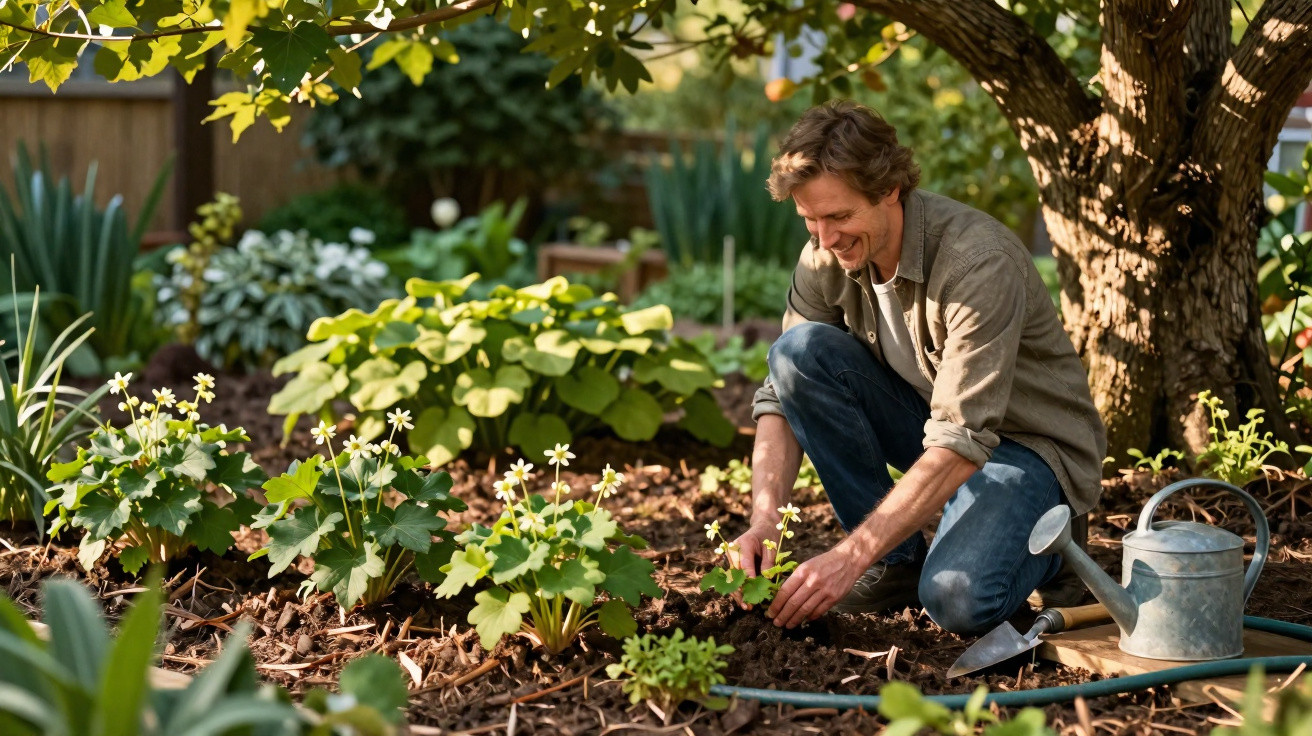
Many amateur gardeners know the frustration: beneath pine, spruce or oak, a patch of garden can look like a scorched wasteland. Nothing seems to take, the ground sets like concrete, and every new attempt fails. Yet for these seemingly impossible shady spots there is a remarkably resilient answer-one that is often overlooked in most garden centres.
Why it can seem like nothing will grow under trees
Planting beneath an established tree is not just a battle against low light. The real challenge is underground: a dense web of fine roots that relentlessly pulls away water and nutrients. On top of that, less rainfall actually reaches the soil because the canopy and needles intercept so much of it.
Garden professionals describe this as “dry shade”. Common signs include:
- The lawn turns yellow and dies back
- Soil looks cracked, powder-dry and is often heavily compacted
- Roots from the tree or hedge sit close to the surface
- Fewer than two hours of direct sun per day
Research from institutes highlights two particularly important causes: intense root competition and, with certain species, chemical compounds in the soil that inhibit other plants. Pines and some types of oak, in particular, can make replanting extremely difficult.
"Under trees, there is a brutally tough struggle for water, light and nutrients – ordinary perennials almost always lose there."
Why classic shade plants fail here
In photos, hostas, astilbes and delicate ferns look made for shady borders. In part shade with consistently moist, humus-rich soil, that can be true. Under a mature tree, however, the conditions are very different.
These popular perennials simply do not get the steady moisture they rely on. They prefer cool, lightly damp soil-ideally rich in leaf mould and with depth. Beneath a shallow-rooted tree they instead face:
- Extremely dry soil in summer
- Constantly drawing roots right alongside the planting area
- Very limited nutrient replenishment
- Dry air and heat trapped under the canopy
The result is predictable: leaf edges scorch, flowering is reduced or stops altogether, and plants either retreat or die off entirely after two or three years. What remains is the familiar patchwork of bare ground.
The small perennial with a big impact: Epimedium
This is where a plant comes into its own that many gardeners barely notice: Epimedium, commonly known in the UK as barrenwort. In a nursery it can look rather unremarkable. Planted in the right place, though, it can transform a difficult area.
Over time, Epimedium forms a dense, shallow carpet. Many varieties keep their foliage throughout winter. Depending on the cultivar, leaves may flush red, bronze or copper, or show attractive speckling. In spring-usually April and May-delicate flowers hover above the foliage in white, yellow, pink or orange shades.
"Once barrenwort has rooted in, it copes with dry shade and heavy root competition far better than most perennials."
Key benefits of Epimedium at a glance:
- A tolerant groundcover for dry shade
- Long-lasting, fairly dense foliage-useful for suppressing weeds
- Easy to combine with other shade perennials
- Needs good attention at the start, but becomes surprisingly low-maintenance later
How to plant it successfully, step by step
The best time
Autumn is ideal, timed with the first proper rainfall. The soil still holds warmth, water arrives “free” from above, and young plants have time to establish before the stress of summer.
Prepare the soil properly
When working under trees, the rule is simple: proceed carefully. You must not damage the tree’s major roots. Use this approach:
- Loosen the surface to about 5 to 10 centimetres deep using a hand cultivator.
- Remove stones, thick root pieces and old lawn remnants.
- Work in a thin layer of sieved leaf compost or bought bark humus-this creates a woodland-like soil layer.
That light humus topping helps barrenwort settle in faster without harming the tree.
Water well-before and after planting
A common mistake is putting young perennials into the ground with a dry rootball. A better method:
- Place each pot in a bucket of water.
- Wait about 15 minutes until no more air bubbles rise.
- Only then plant.
After planting, water thoroughly so the soil settles snugly around the roots. During dry spells in the first year, regular watering is essential-if you neglect this stage, losses are likely.
Spacing and first-year care
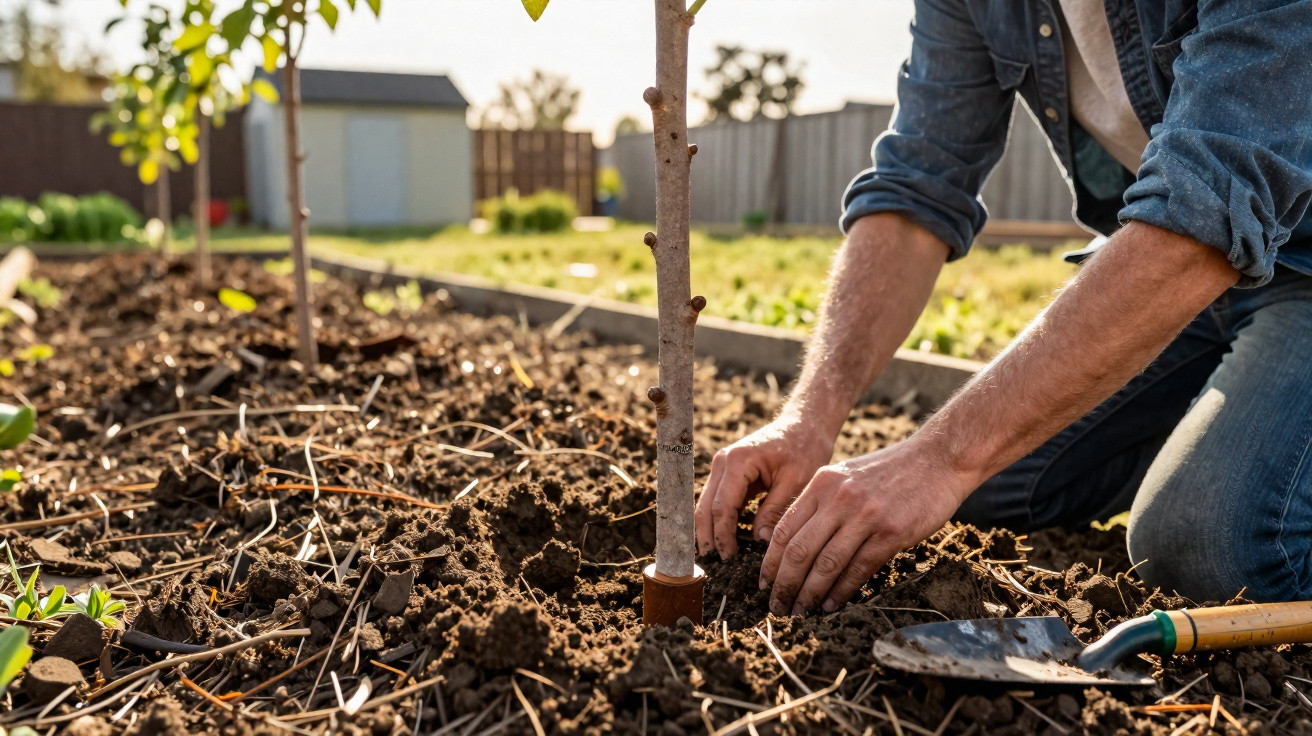
For a continuous cover, plant in a staggered pattern at around 30 centimetres spacing, rather than in straight lines. This helps the carpet knit together sooner and leaves fewer gaps for weeds.
For the first few months, three things matter most:
- Water during dry periods
- Apply a thin layer of fallen leaves as protection and a slow nutrient source
- Remove large weeds promptly
Once the planting has filled in, it is usually enough to cut back or pull away tired-looking old leaves in late winter. Fresh shoots quickly cover any small gaps.
Companion plants that make shade areas glow
A carpet of barrenwort on its own looks calm and unified. If you want to lift the look of the space, add a few carefully chosen accents. Two plants are especially suitable.
Lady’s mantle for bright highlights in low light
Alchemilla mollis (lady’s mantle) generally thrives in light shade. Its softly hairy leaves catch raindrops like tiny beads. In early summer it produces yellow-green clouds of flowers that noticeably brighten darker corners.
Combined with Epimedium, you get an appealing sequence and contrast: fine barrenwort flowers in spring, airy lady’s mantle blooms in early summer, and foliage that gives structure throughout the year.
Small periwinkle as a tough gap-filler
Vinca minor (small periwinkle) works well as a transition from the base of the tree into the rest of the garden. It tolerates poor soils and strong roots, and quickly forms a low mat of glossy leaves.
From spring through to autumn, violet or white starry flowers appear. Between barrenwort and lady’s mantle, Vinca adds playful touches without overpowering the other plants.
Practical example: from dusty problem patch to a small woodland garden
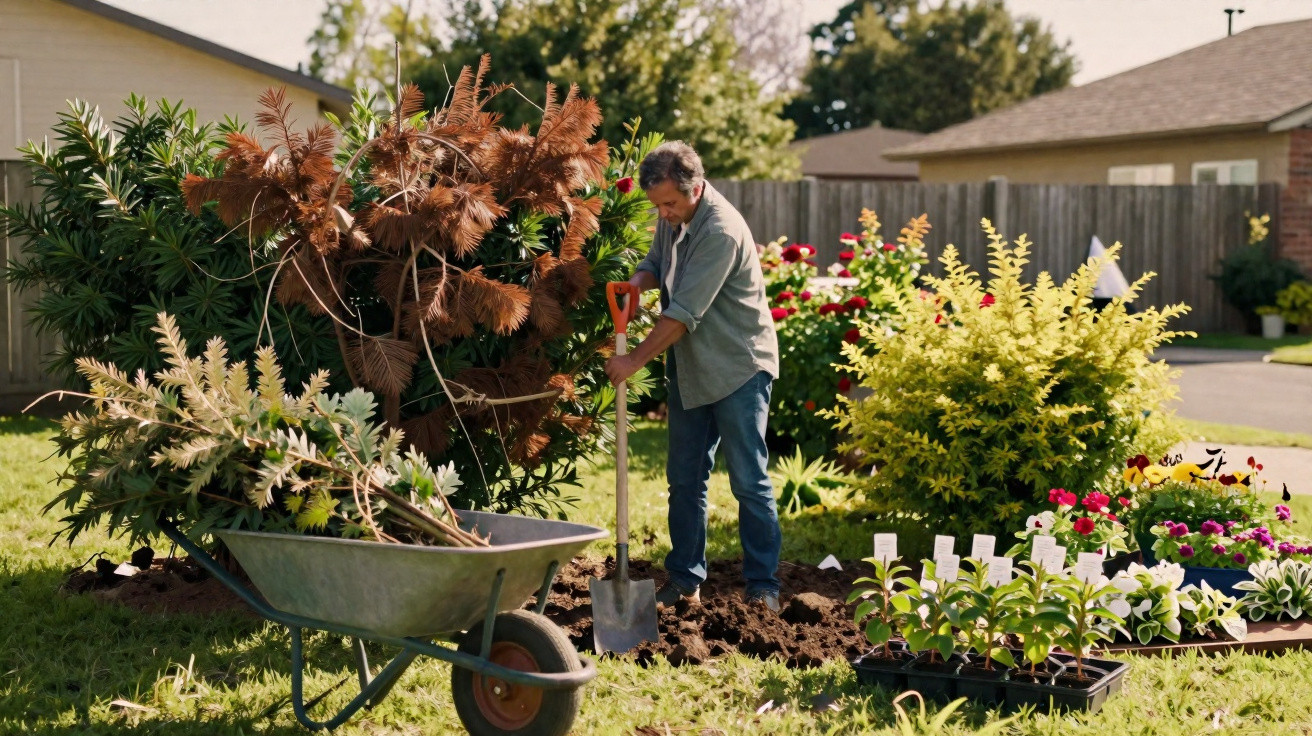
A familiar situation: beneath an old pine or oak, the lawn has disappeared, the soil is hard, and thick roots protrude. Any attempt with fresh grass seed or “shade-tolerant” perennials ends in disappointment.
Using the method above, you can improve the area step by step:
- Carefully loosen the topsoil, working around major roots.
- Spread a thin layer of leaf compost.
- Plant Epimedium in a staggered layout at around 30 centimetres spacing.
- Water in gently, and water again during dry weather in the first year.
- Gradually add lady’s mantle around the edge and small periwinkle as a border.
Even in the first year, the ground turns green again. In the second year, the carpet thickens noticeably, and in spring the barrenwort flowers form a delicate ring around the trunk. The dead corner becomes a quiet, almost woodland-like space.
What gardeners should also know about dry shade
The term “dry shade” can be misleading. It does not mean total darkness, but rather an area with little direct sun and soil moisture that fluctuates strongly: often wet in winter, yet extremely dry in summer. Plants need to tolerate both-periods of waterlogging and weeks of drought.
Epimedium handles this balancing act better than many supposed shade “stars”. If you also use leaf mulch, you further improve the microclimate: the soil stays cooler, dries out more slowly, and receives regular organic matter-much like a natural woodland floor.
If you are unsure, try a small patch first. If establishment goes well, you can expand the carpet year after year. Many barrenwort varieties spread slowly via rhizomes and can later be divided. That is how a plant that seems modest at first can become the long-term key to greening difficult shady areas of the garden.

Comments
No comments yet. Be the first to comment!
Leave a Comment