
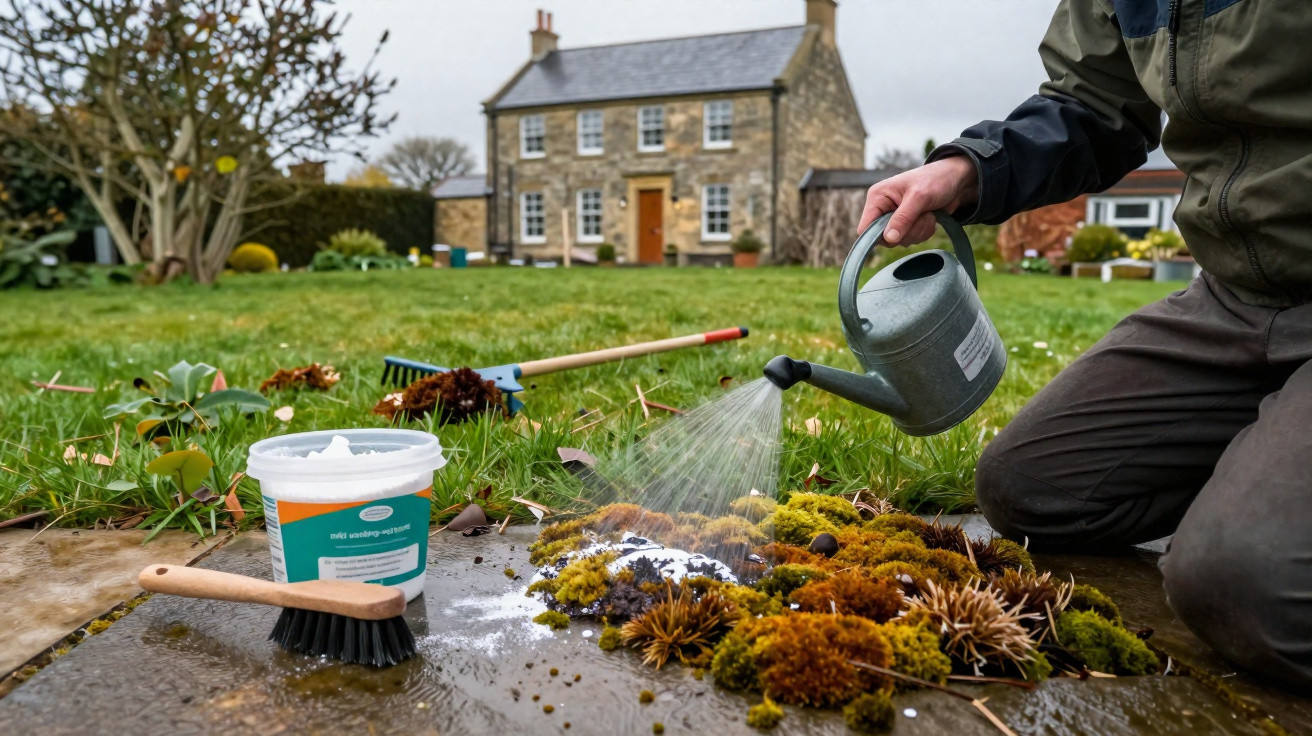
Most gardens can swing the balance without resorting to aggressive products.
All over the UK, lawns and walkways can turn green in no time once the damp of autumn arrives. One straightforward, budget-friendly routine can interrupt that pattern by drying moss out, lifting it away neatly, and making it far less likely to return.
Why moss takes over
Moss moves in when turf is underperforming. Low light, compacted ground and poor fertility lead to a thin sward with bare spots. Moisture then lingers at the surface, spores settle, and growth gets a foothold. Once it’s established, moss spreads quietly and keeps conditions wet, which further weakens the grass.
Moss isn’t the cause of a poor lawn; it’s a symptom. Fix the conditions and moss has nowhere to cling.
The simple trick that beats bottles
A pair of everyday staples can do the job: a gentle washing-up liquid spray for lawns, and baking soda for hard surfaces. That means no branded moss killer, no obvious staining, and-when used carefully-very little disruption to life in the soil.
For lawns and borders
Start by using a mild soap spray to dry the moss, then pull it out with a rake. It’s fast, inexpensive, and you only treat the areas that actually need it.
- Mix 60–100 ml washing-up liquid in 4.5 L water.
- Use a fine rose or a sprayer so you dampen the moss itself rather than soaking the entire lawn.
- Leave it for 24–48 hours. The moss should shift to an orange-brown colour.
- Rake or scarify to lift thatch and clear away the dead moss.
- Overseed and topdress any thinned patches so grass can take the space back.
For patios, paths and gravel
On paving and similar areas, use baking soda as a spot treatment. It nudges surface pH upwards and dries the growth out without bleaching slabs or damaging nearby borders.
- Sprinkle a light dusting of baking soda onto damp moss, or
- Spray 50 g baking soda dissolved in 1 L warm water over the affected patch.
- After two to three dry days, brush it off; repeat if required.
The win comes from pairing a gentle kill with fast lawn recovery: treat, remove, overseed, and you shut the door on re-growth.
How it compares with common options
| Method | Best for | How it works | Speed | Risks | Cost |
|---|---|---|---|---|---|
| Washing-up liquid spray | Lawns, borders | Disrupts moss cell membranes, drying out the mats | 1–2 days | Can scorch grass if used too heavily | Very low |
| Baking soda | Patios, steps, gravel | Increases surface pH and dehydrates growth | 2–3 days | Can leave a residue on dark stone; brush off | Very low |
| Iron sulphate (shop) | Lawns | Quickly turns moss black | 1 day | May stain stone; runoff can be an issue | Medium |
| Acetic acid sprays | Hard surfaces | Scorches plant tissue | Hours–1 day | Damages plants; strong smell; re-growth often returns | Medium |
Step-by-step plan for lasting results
1. Treat what you see
Deal with the moss that’s already there using the soap or baking soda method above. Choose a dry, frost-free day, and if possible allow a 24-hour spell with no rain.
2. Change the conditions
- Aerate: Push a garden fork in, or use a hollow-tine aerator, on compacted areas. Aim for 8–10 cm depth.
- Topdress: Sweep a 70:30 blend of sandy loam and compost into the holes to help water drain through.
- Raise light: Thin or lift overhanging branches. Even one extra hour of sunlight a day can make a difference.
- Feed and seed: Use a balanced spring lawn feed, then overseed sparse sections with a shade-tolerant mix.
- Set the mower right: Keep the cut at 4–5 cm; slightly longer grass shades the soil and helps outcompete moss.
3. Check soil pH
Turf generally prefers a pH of about 6.0–6.5. If it drops below 5.5, moss is far more likely. Test several areas; if the soil is acidic, apply garden lime at the rate on the label during winter or early spring.
Aeration and light do more to stop repeat moss than any bottle. Think airflow and roots, not quick scorch.
Timing for UK gardens
For lawns, late winter into early spring is ideal: the soil starts to soften, grass growth begins, and you can overseed immediately after raking. For patios and paths, any dry spell works throughout the year. Steer clear of frozen surfaces and periods of heavy rain, which can wash treatments away.
What to avoid
- Using strong vinegar on lawns, as it will burn grass and any nearby plants.
- Using bleach on paving, which can etch stone and harm drains and wildlife.
- Saturating large areas with soapy water; over-application can stress the sward.
- Missing out the raking step-dead moss left behind holds moisture and encourages more.
Safety, pets and drains
Keep pets away from treated areas until everything is dry. Apply small, targeted amounts so nothing runs into surface drains. Store powders safely out of reach, and clearly label any solutions you’ve mixed.
Extra gains most people miss
Adjust how you water. Regular, light watering favours moss, while deeper watering less often encourages roots to grow down and lets the surface dry between wet spells. In the North and West, where rainfall tends to hang around, hollow-tine aeration twice yearly can dramatically improve drainage.
Pick a grass type that suits the conditions. Fine fescues cope with shade better than ryegrass, so a shade mix in darker corners will fill gaps sooner-leaving fewer places for moss to settle. If you keep a wildlife area, consider letting moss remain there; it provides cover for beetles and helps retain soil moisture. Keep the main lawn and paths clear, and allow the rest to support the helpful green growth that belongs in that space.



Comments
No comments yet. Be the first to comment!
Leave a Comment