
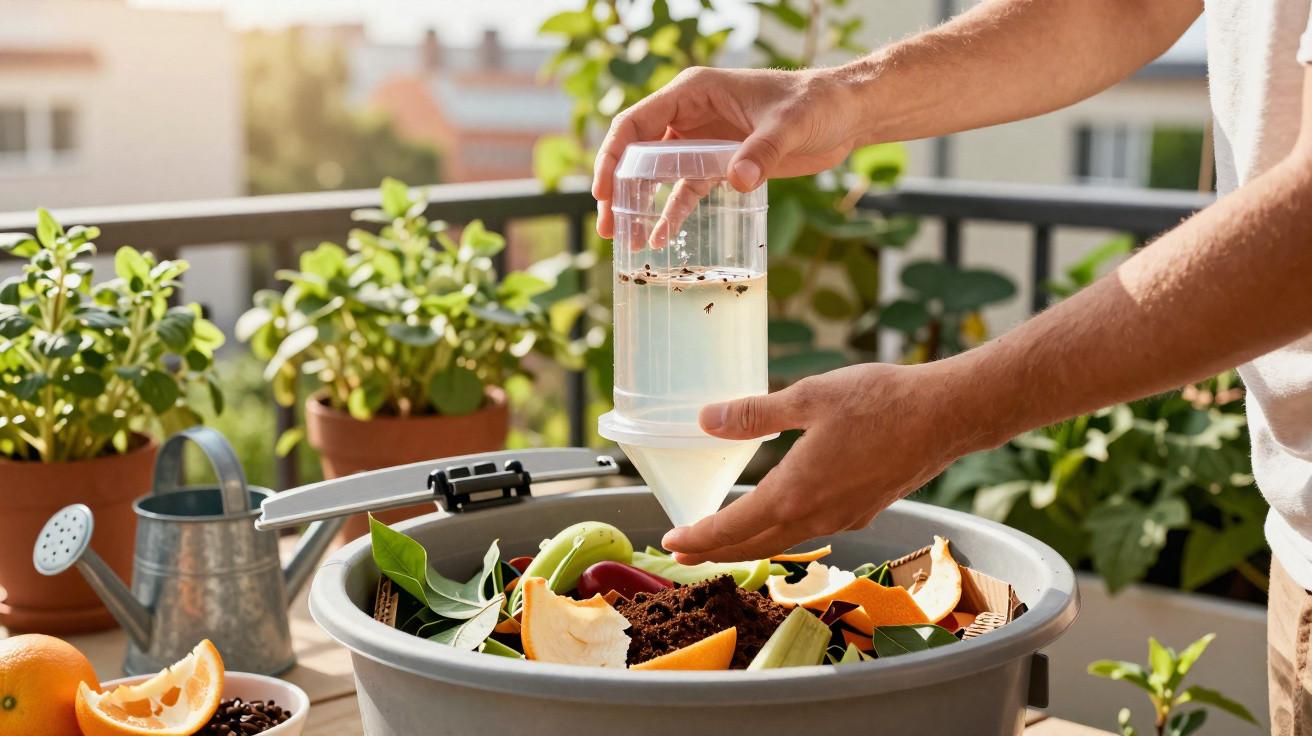
Hot summer days, food peelings and an overfilled compost bin can combine into the ideal conditions for a persistent cloud of tiny gnats.
For plenty of home gardeners, a compost spot that started out as a great idea can rapidly become a dreaded swarm area. The upside is that you can get on top of it again with an inexpensive DIY trap made from a single plastic bottle and a handful of cupboard basics.
Why compost attracts gnats so quickly
A compost heap is essentially an all-you-can-eat spread for small flies and gnats. As fruit and vegetable waste breaks down-along with things like coffee grounds-it gives off sugars and fermented aromas that these insects can detect from several metres away.
In most gardens, the culprits are fungus gnats or fruit flies. Both do well in warm, moist, nutrient-packed spots, and a compost pile that’s slightly too wet or heavy on kitchen scraps becomes an ideal place for them to breed.
Gnats are not just annoying; a badly managed compost bin can become a permanent breeding site a few days after the first invasion.
After the first adults show up, they can lay hundreds of eggs into decomposing matter. In roughly a week, a new batch emerges-and every time you open the lid, the familiar “puff” of insects rises with it.
The bottle trap: simple, cheap and surprisingly effective
This approach works because it uses two things gnats can’t resist and one thing they’re poor at. They’re strongly attracted to sweetness and fermentation, and they find it difficult to escape through a narrow opening that points downwards.
A plastic bottle provides exactly that: space for a sweet, yeasty bait and a built-in funnel that lets insects enter, then makes it hard for them to get back out.
What you need from the kitchen
Chances are you already have everything you need to put this together-no specialist kit required.
- 1 clean plastic bottle (0.5–1.5 litres)
- 150 ml lukewarm water
- 6 tablespoons sugar (white or brown)
- 1 tablespoon baker’s yeast (dry or fresh, crumbled)
- A few drops of washing-up liquid or 1 teaspoon apple cider vinegar
- A sharp knife or scissors
- Optional: tape or string to secure and hang the trap
The combination of sugar, water and yeast mimics the smell of fermenting fruit that gnats find impossible to ignore.
Step-by-step: how to build the gnat trap
You’re aiming for a bait liquid in the bottom section and an upside-down bottle top that functions as a one-way entry.
Follow these steps:
- Using a knife or scissors, cut off the top third of the bottle. Set both pieces aside.
- In a small jug, combine 150 ml of lukewarm water with 6 tablespoons of sugar.
- Tip in 1 tablespoon of yeast and stir until it looks even and a little frothy.
- Pour the mixture into the bottom section of the bottle.
- Add a few drops of washing-up liquid or add a teaspoon of apple cider vinegar.
- Turn the cut top upside down and place it into the bottom piece to form a funnel.
- If necessary, tape around the join so there aren’t any large gaps around the funnel.
The washing-up liquid reduces the liquid’s surface tension, which stops trapped gnats from sitting on top and helps them sink. Apple cider vinegar boosts the sharp scent-useful if the compost is outdoors and the wind is dispersing the smell.
Where and when to place your trap
You can use the trap indoors or outside, provided it’s positioned close to where gnats are active.
| Location | Best position | Frequency of replacement |
|---|---|---|
| Outdoor compost bin | On the ground next to the bin or hung inside the lid | Every 7–10 days in warm weather |
| Indoor compost caddy | On the worktop nearby, not directly touching food prep zones | Every 5–7 days |
| Balcony worm bin or bokashi | On a shelf just below or beside the container | Every 7 days, or sooner if full of insects |
If you’re opening the lid and seeing a visible cloud of gnats, you may need two or three traps operating at once.
You’ll typically see an improvement within 24–48 hours. The first sign is less frantic hovering at the lid. After that, the number of adult gnats drops noticeably as they’re lured into the bottle.
Preventing the next invasion
A trap deals with adult insects, but it won’t remove the conditions that are attracting them in the first place. A few straightforward tweaks can make your compost far less inviting.
Balance your “greens” and “browns”
Compost that attracts gnats is often too heavy on wet “greens” (such as fruit waste and coffee grounds) and short on dry “browns” (like cardboard and dried leaves).
- Whenever you add food scraps, cover them with shredded cardboard or a layer of dry leaves.
- Aim for roughly two parts brown to one part green by volume.
- If the heap looks slimy or has a sour smell, add more brown material and turn it.
Keeping that balance helps dry out the surface and dull strong odours-both of which make the heap less appealing to egg-laying gnats.
Double-check the lid and ventilation
If the lid doesn’t sit properly, you can end up with warm, humid conditions that gnats love. But if it’s completely sealed, decomposition can slow down.
Try to strike a balance:
- Make sure the lid shuts firmly and has only small air holes rather than wide gaps.
- If your compost is uncovered, add a basic cover using wood, a tarp or thick cardboard.
- Turn the pile every couple of weeks to reduce wet pockets where larvae do well.
What’s actually happening inside the trap?
At a microscopic scale, the yeast consumes the sugar and releases carbon dioxide and alcohol. Those gases and smells closely resemble fermenting fruit, which naturally attracts fruit flies and gnats.
From the insect’s point of view, the bottle smells like overripe fruit; they follow the scent, slip through the narrow funnel and cannot navigate their way back out.
Without a trap, those adults would continue laying eggs in the compost and the cycle would repeat. By reducing the adult population, you interrupt the next generation and the situation gradually settles.
When a bottle trap is not enough
In some cases the compost has already turned into a full-blown nursery. Then the bottle trap is best used as one part of a broader reset.
Two common signs you may need stronger measures are:
- The surface is crawling with visible larvae.
- The bin smells strongly enough that you can detect it from several metres away.
When that happens, many gardeners remove the top layer containing larvae and either bury it deeper in the pile or dig it into garden soil, where predators and cooler conditions reduce survival. After that, adding more dry material and increasing aeration helps restore the right balance.
Extra tips for urban composters and small spaces
In city flats and small gardens, the compost container is often close to doors and windows, so any gnat problem is noticed indoors very quickly.
If you compost on a balcony, pair the bottle trap with a few simple routines:
- Freeze very wet scraps (such as melon rind or pineapple peel) before adding them, to slow decomposition.
- Keep a small tub of shredded cardboard next to the compost caddy so you can “cap” each fresh layer.
- Empty kitchen caddies often in warmer months, even when they aren’t full.
Some homes also keep a second, smaller bottle trap in the kitchen near the fruit bowl, which can catch wandering gnats before they reach the compost.
Key terms and risks worth knowing
“Gnat” is often used as a catch-all term for tiny flying insects. In compost, the most common are fruit flies and fungus gnats. Fruit flies go for sugary, fermenting waste, while fungus gnats prefer damp soil and decaying plant material. Either can end up breeding in a compost bin that’s being overfed.
By themselves, they’re usually more irritating than dangerous: they don’t bite, and they only live for a few days. The bigger risk is that the frustration puts people off composting altogether, sending food waste back to landfill where it creates methane.
A simple plastic bottle, a spoonful of yeast and some sugar can keep your compost active, your garden fed and your kitchen gnat-free.
Comments
No comments yet. Be the first to comment!
Leave a Comment