
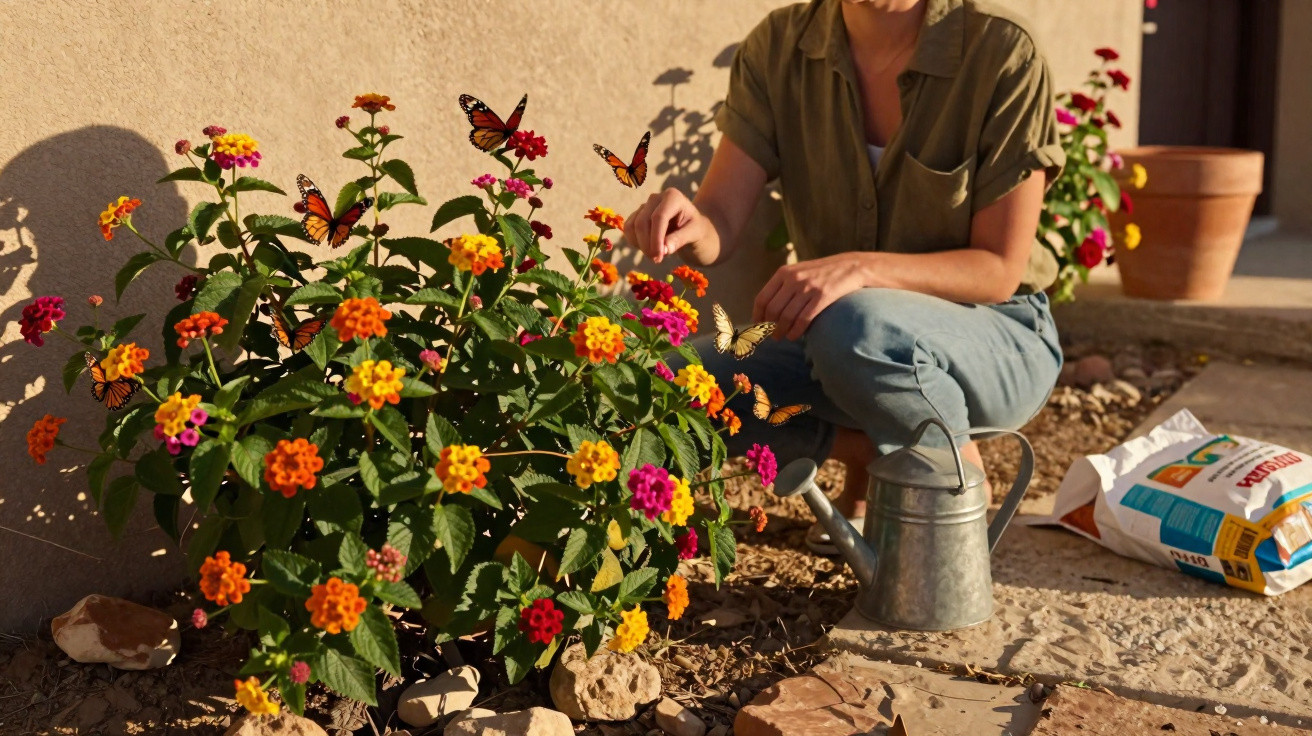
A neighbour hauled a hose across his garden like he was going through the motions, soaking a lawn that seemed ready to give up. Over the fence, though, the picture was completely different: a low shimmer of orange and gold, flickering in the hot air, with no sprinkler anywhere. Butterflies hovered and swooped as if the heatwave were a welcome sign rather than a warning.
I stood watching longer than I intended. There were no clipped borders or perfectly edged beds-just an easy, informal sweep of the same plant, repeating again and again like a refrain, shifting gently in the warm breeze. A monarch settled, then another. Then a sulphur butterfly streaked past like a spark of yellow.
One garden looked drained. The other looked full of life. The difference came down to one sun-loving, almost-no-water plant that plenty of people still walk past at the garden centre without a second glance.
This unthirsty plant butterflies can’t resist
That glowing garden wasn’t built around a rare import or a delicate, pricey shrub. It was lantana: a rough-and-ready perennial that thrives when the sun is harsh and the hose stays coiled.
Each stem carried clusters of tiny, multi-coloured flowers-hot pink, orange, lemon, red, white-scattered like confetti. The warmer the weather became, the harder it flowered. No midday collapse, no dramatic wilting, no drooping leaves-just colour, again and again.
Butterflies are drawn to lantana for an uncomplicated reason: plentiful nectar. The blooms are shallow and easy to reach, suiting monarchs, swallowtails, skippers and every unidentified “what’s-that-one?” visitor passing through. While many plants pause in extreme heat, lantana keeps the buffet running.
In suburbs outside Phoenix, landscape crews have been quietly replacing thirsty lawns with broad, sweeping beds of lantana. Where patchy Bermuda grass used to struggle, front gardens now read as low, glowing waves of orange and yellow.
One homeowner I spoke to kept track of his water bills for a year after swapping out a third of his lawn for lantana and a gravel path. His summer irrigation use fell by almost 40%. The butterflies didn’t need to see his figures, but they clearly got the message: they arrived by late spring and more or less stayed.
Across parts of Texas, motorists catch flashes of lantana planted down highway central reservations. Those narrow strips get baked, blasted by exhaust fumes, and still the plants persist. For butterflies, those hot medians become surprise refuelling points-small pockets of safety amid all that tarmac.
There’s a straightforward reason it’s so dependable. Lantana evolved for lean, dry ground and fierce sunshine. Its deep, tough roots help it draw moisture from places where fussier plants simply give up.
Rather than spending energy on soft, lush foliage, it prioritises resilience and masses of flowers. That near-constant flowering translates into a steady nectar supply, which is why a garden planted heavily with lantana becomes a reliable stop on butterfly routes.
We often talk about “pollinator gardens” as though they require specialist skills, but lantana suggests an easier route. Put a hardy, nectar-rich plant in the most difficult part of your garden-the stony strip by the gate, the slope that always scorches-and a neglected corner can turn into a small wildlife station. No special kit. No irrigation system. Just a different decision.
How to turn a dry patch into a butterfly station
If you want to use lantana to invite butterflies in, start with sunlight rather than soil amendments. Choose the brightest spot you have, ideally with six hours of direct sun or more. It will cope with partial shade, but it really performs in full sun.
Work the ground with a spade or fork so the roots can push out. It doesn’t need rich, cosseted soil-only decent drainage. If there’s one thing lantana truly dislikes, it’s sitting in water.
Plant spacing depends on the type. For dwarf varieties, leave about 30–45 cm between plants; give larger forms a little more room. Water thoroughly on planting day, then keep it going for the next week or two while the plant settles. After that, gradually lengthen the gaps between waterings until it is largely self-sufficient.
The reality is that people tend to do one of two things: overwater lantana or abandon it entirely. It doesn’t want daily attention, but it does need some support early on. Those first weeks are when roots are establishing and spreading-especially in hot, windy gardens.
Let’s be honest: hardly anyone keeps up a perfect daily routine. So choose a practical pattern-deep watering every few days at first, then once a week, and eventually only when the leaves begin to look a little tired.
In cooler areas, treat lantana as an annual and use it in pots or along a sunny edge. In frost-free climates, it can grow larger than you might expect. Lightly trim it after each flush of flowers to keep it compact and blooming heavily. Avoid heavy fertiliser: it usually drives leafy growth instead of more flowers.
A landscape designer I interviewed put it like this:
“If you can’t keep lantana alive, the problem isn’t the plant - it’s your expectations. It wants heat, light and a bit of neglect. The more you baby it, the less it performs.”
Once lantana is thriving, think about the wider set-up. Butterflies need more than nectar: places to land, a bit of shelter from wind, and perhaps a shallow water source with pebbles or sand.
Even on a small balcony, a single pot of lantana beside a chair can bring regular visits from tiny skippers or cabbage whites. In a bigger garden, repeating lantana along a path or drive can guide butterflies through like runway lights.
Most of us have had that moment when a butterfly appears right next to us and, for a beat, everything else goes quiet. That’s part of lantana’s quiet appeal-it doesn’t only alter the garden; it subtly changes how you move through it.
- Choose sun-soaked spots rather than cramped shade.
- Water deeply at planting, then gradually reduce.
- Avoid heavy fertilisers and constant pruning.
- Mix in native nectar plants to add variety.
- Keep a few “messy” corners as calm refuges.
Living with a wild, low-water butterfly garden
Growing lantana changes the everyday feel of your garden. Instead of one burst of colour in May and then nothing much, you get a season-long, shifting cast. Early on it may be mostly bees. By mid-summer, swallowtails start to drift in, hovering briefly before committing to a bloom.
Children begin to name “their” butterflies and notice which colours seem busiest. Adults pick up on smaller details too: how the flowers intensify after a brutally hot day, or how a ragged monarch still manages a careful landing on a vivid orange cluster.
And when the heat turns relentless and you feel like giving up on gardening altogether, lantana keeps flowering as though it never received the notice about drought and restrictions. That steady resilience is contagious.
Not every neighbour will see the appeal of trading a neat lawn for looser, wilder planting. Some will call it “messy” compared with short grass lined up like a green carpet.
But the steady traffic of wings tends to change minds. When someone stops on the pavement to take a photo, or leans on the fence to ask, “What is that plant? It never seems to die,” you realise the garden is doing a kind of quiet outreach.
There’s a practical comfort, too, in watching your water bill stop climbing each summer. Less time hauling hoses, more time sitting in the shade while the garden looks after itself. Heatwaves still feel heavy, but your landscape no longer looks like it’s losing.
Lantana isn’t flawless. In some warm, humid areas, certain varieties can spread into natural habitats and become invasive. That’s why many nurseries now flag sterile or non-invasive cultivars-particularly in places such as Florida or parts of Australia, where wild lantana is a serious issue.
Getting the right variety in the right setting matters. A conscientious gardener checks local guidance and chooses cultivars bred to stay put. That way, butterflies get their nectar while nearby wild ecosystems remain protected.
Underneath these choices sits a quieter question: how much control do we actually want over our gardens? A heat-loving, low-water plant that draws butterflies asks you to accept a bit of motion and a bit of unpredictability. It swaps perfection for life.
When you stand in a garden alive with wings on a 35°C afternoon, your idea of what a “nice garden” should look like begins to shift. The old model-flat lawn, thirsty roses, rigid edges-suddenly feels strangely hollow.
Instead, it starts to feel collaborative. You choose lantana because it fits your climate and your routine. In return, it produces waves of colour and a steady stream of visitors you didn’t plan, can’t control, and never really tire of watching.
Maybe that’s the real attraction: in a world that’s managed to the last detail, a butterfly-friendly lantana patch becomes a small place where nature can still improvise-and you get a front-row view from your own doorstep.
| Key point | Detail | Why it matters to you |
|---|---|---|
| Lantana loves heat | Continuous flowering in full sun, even during heatwaves | A colourful garden when the rest of the neighbourhood turns brown |
| Low water needs | Once established, it survives with very little watering | Lower water bills and less time spent with the hose |
| Butterfly-friendly | Nectar-rich flowers that suit many species | Turn a dry corner into a living refuge for pollinators |
FAQ:
- Is lantana really drought-tolerant? How little water can it handle? Once established, lantana can go for long periods without irrigation, particularly in free-draining soil. In very hot climates, an occasional deep watering during extreme heat can increase flowering, but it won’t fall apart if you miss a week.
- Will lantana survive winter in colder regions? In frost-free or mild climates, lantana behaves as a perennial. In colder areas (roughly USDA zone 7 and below), it’s usually grown as an annual or kept in pots that can be brought indoors before a hard frost.
- Is lantana safe for pets and children? Lantana berries and foliage can be toxic if eaten in quantity. Many gardeners grow it safely by placing it where small children and pets are unlikely to chew it, and by removing berries if that’s a worry.
- Can lantana become invasive? In some warm, humid regions it can spread into natural areas. Look for non-invasive or sterile cultivars recommended locally, and check gardening guidance before planting large areas.
- Which colours attract the most butterflies? Butterflies use all lantana colours, but warm blends-orange, yellow, red-often prove especially popular. Mixed-colour varieties can act like a “neon sign” that’s easy to spot from the air.



Comments
No comments yet. Be the first to comment!
Leave a Comment