
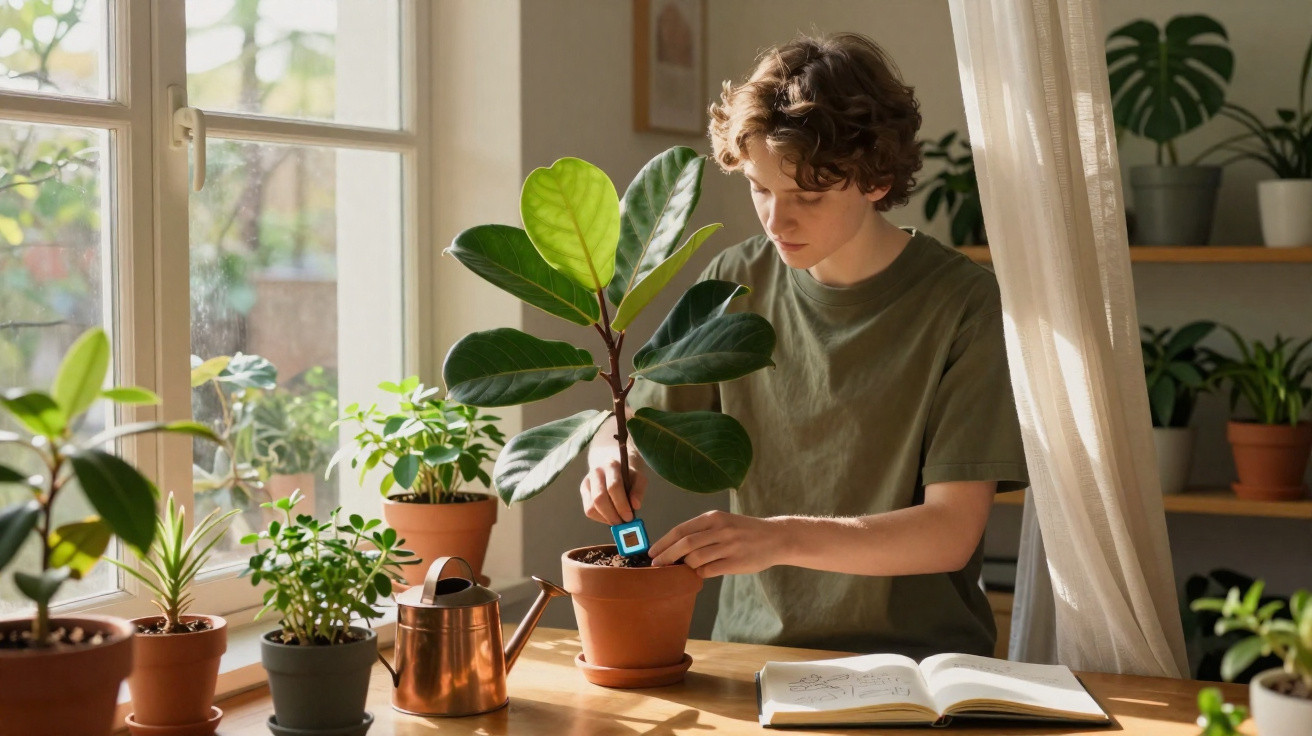
The first time I almost loved a plant to death, it was a miserable little basil sitting on my kitchen worktop. I watered it like clockwork, spun the pot so every leaf got “ideal” light, and even wiped dust off the stems. Less than a fortnight later, it had collapsed like a teenager sprawled on a sofa in July.
Right beside it, a scruffy rosemary I routinely forgot about on the chilly balcony was doing brilliantly. It was knocked about by the wind, baked in the daytime sun, and I only remembered to water it when the compost felt as dry as breadcrumbs.
I couldn’t shake that comparison: one plant smothered by attention, the other quietly toughening up through small discomforts.
Oddly enough, the most vibrant plant in your house is often the one you didn’t wrap in cotton wool.
Strange, isn’t it?
Why some plants need a little struggle to grow strong
Step into any plant shop and you’ll see a familiar ritual. Shoppers stroke leaves, ask about “ideal light” and “perfect watering routines”, and cradle pots like they’re delicate newborns. It’s easy to assume the route to lush, rainforest-style growth is removing every difficulty.
But outdoors, no plant gets daily misting, perfectly tempered tap water, or a protected corner forever. Instead there are pavement cracks, sun-scorched slopes, cold nights and hot days. And in those slightly harsh, less-than-cosy places, you’ll often find the hardiest, glossiest specimens.
Some plants are genuinely set up to respond to mild stress by growing better. Small jolts that don’t finish them off can make them more robust.
Picture a lavender shrub clinging to a dry hillside in the south of France. No one is hovering with a watering can. The soil drains quickly, wind tugs moisture from the foliage, and summer heat bakes the ground. Yet the plants keep going for years-woody, fragrant, and flowering profusely.
Put that same lavender into a heavy, water-holding compost, tuck it into a dim corner, and water it daily “just to be safe”, and it often deteriorates quickly. Leaves yellow. Roots rot. The whole thing looks almost insulted by the affection.
Many cacti follow the same pattern. Bright light and the occasional dry spell? They flourish. Shade and constant damp? They sulk and eventually give up.
The explanation sits in plant biology. Gentle stress encourages plants to strengthen their tissues, send roots deeper, and build up sugars and protective chemicals. Botanists refer to this helpful kind of challenge as “eustress”-stress that prompts positive adaptation.
By contrast, conditions that are too controlled-particularly for species evolved for tougher climates-can switch off those survival responses. Roots stay shallow because water is always available. Stems remain soft because there’s no wind to push back. Pests and disease take hold more easily because the plant never needed to build up its own defences.
What feels like comfort to us can become a slow-moving trap for them. “Perfect” isn’t always what they were made for.
How to use gentle stress to help your plants (without hurting them)
A classic technique gardeners rely on is “hardening off”. You take a cosseted plant-often grown indoors or under glass-and introduce it to real-world conditions in small steps. Start with a few hours outside in light shade. Move on to a breezier position. Add more sun, ease back slightly on water, and let it experience cooler nights.
That gradual shift prompts the plant to thicken its cuticle, develop stronger roots, and adjust its internal chemistry. It’s like getting a child off the sofa and onto the playground, rather than throwing them straight into a marathon.
Over a week or two, tender leaves become sturdier, colours look richer, and stems hold themselves more confidently. It isn’t misery; it’s learning.
Where many people slip up is confusing mild stress with outright neglect. They hear “plants like a bit of struggle” and then their ficus goes without water for a month. That isn’t resilience-building-it’s abandonment.
The sweet spot is small, repeatable challenges with recovery time in between. Let the top layer of compost dry out before watering again. Give a sun-lover a little more light rather than shielding it indefinitely. Switch off the grow light at night so the plant can properly rest.
And let’s be honest: hardly anyone follows every care label perfectly, every day. When that inconsistency stays sensible, it can actually help some plants become tougher.
“Plants don’t want a spa. They want a habitat,” a horticulturist told me once, laughing as she brushed soil from her hands.
She wasn’t wrong. A spa sounds kind, but a habitat includes wind, shifting shade, cooler evenings, and the occasional thirst. The aim isn’t flawlessness; it’s something closer to reality.
- Let the soil breathe – Pick free-draining mixes, particularly for Mediterranean herbs and succulents.
- Give them seasons – Slightly cooler, drier winters help many houseplants reset and grow better in spring.
- Rotate, don’t shield – Turn plants regularly so each side gets light, rather than hiding them from it.
- Skip a comfort step – Now and then, water a day later, or open a window so they feel a gentle draught.
- Watch the plant, not the rule – Leaves, posture and colour tell you more than any generic care card.
When “perfect care” quietly backfires
Some of the most dramatic houseplant failures begin with the best intentions. Watering daily “just in case” can lead to sodden roots and fungus gnats. Keeping rooms permanently warm can confuse plants that depend on cooler nights or drier seasons to rest. Constant, low-stress conditions may sound ideal, but many species read them as a signal they’ll never need to grow deeper, thicker or stronger.
Most of us recognise the moment: the plant you fussed over the most is the one looking the roughest. Meanwhile, the half-forgotten spider plant perched on top of the fridge is happily producing new babies.
The straightforward truth is that, for plenty of hardy species, a slightly imperfect, real-life routine often beats a tightly managed “perfect” set-up.
| Key point | Detail | Value for the reader |
|---|---|---|
| Mild stress builds resilience | Short dry periods, brighter light, and cooler nights trigger stronger roots and tissues | Helps you grow tougher plants that survive longer and handle mistakes |
| Over-protection weakens plants | Constant moisture, no air movement, and flat “perfect” conditions keep defenses low | Shows why pampered plants die suddenly and how to avoid slow decline |
| Realistic care beats rigid rules | Observing leaves, growth, and soil feel guides small, safe stress signals | Makes plant care simpler, more intuitive, and less anxiety-inducing |
FAQ:
- Question 1Will stressing my plants on purpose kill them?
- Question 2Which plants actually like a bit of drought or rough conditions?
- Question 3Why does my plant look worse indoors than the same species outside?
- Question 4How can I tell the difference between healthy stress and real damage?
- Question 5Is “perfect care” ever a good idea for some plants?
Comments
No comments yet. Be the first to comment!
Leave a Comment