
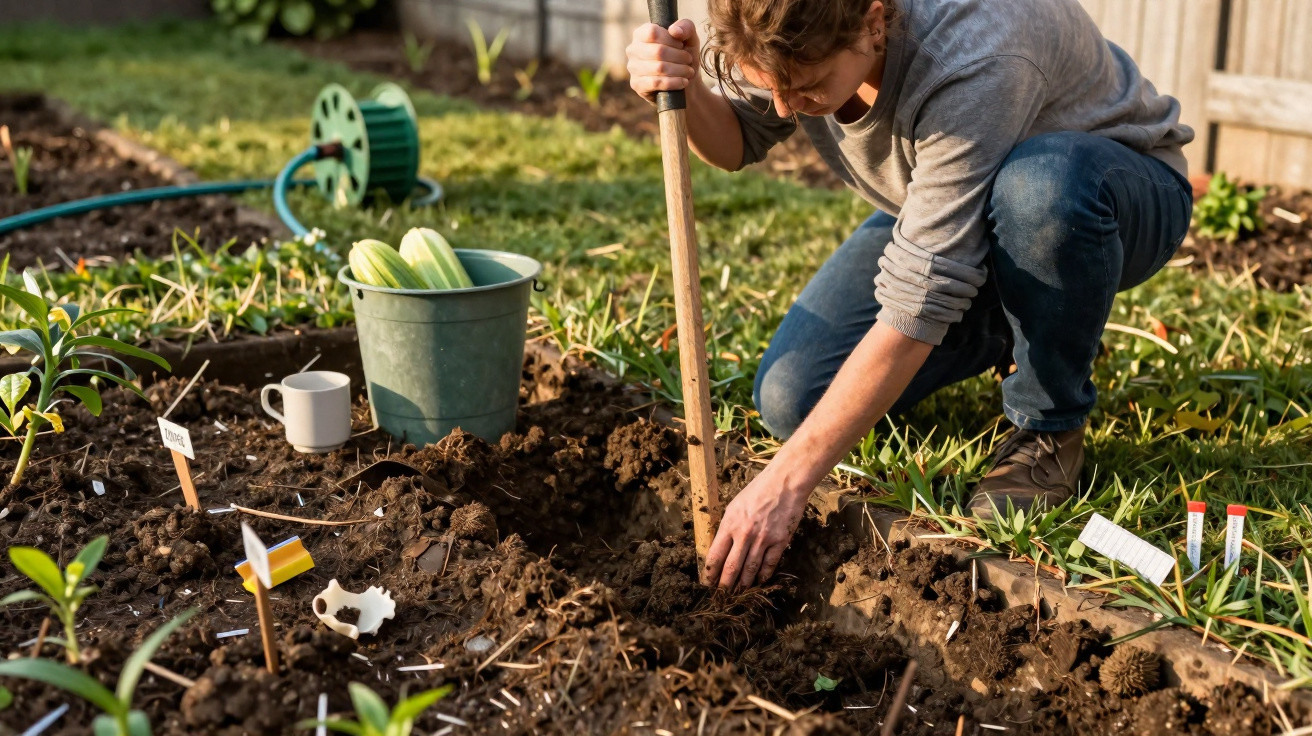
In gardens and on social media alike, trench composting is often marketed as the ultimate shortcut for “lazy” gardeners: dig, tip in peelings, cover with soil and let the ground do the rest. It’s an appealingly simple idea-almost out of sight-and it lands at a time when tighter food-waste rules are spreading and many people want a low-effort answer.
What trench composting really is
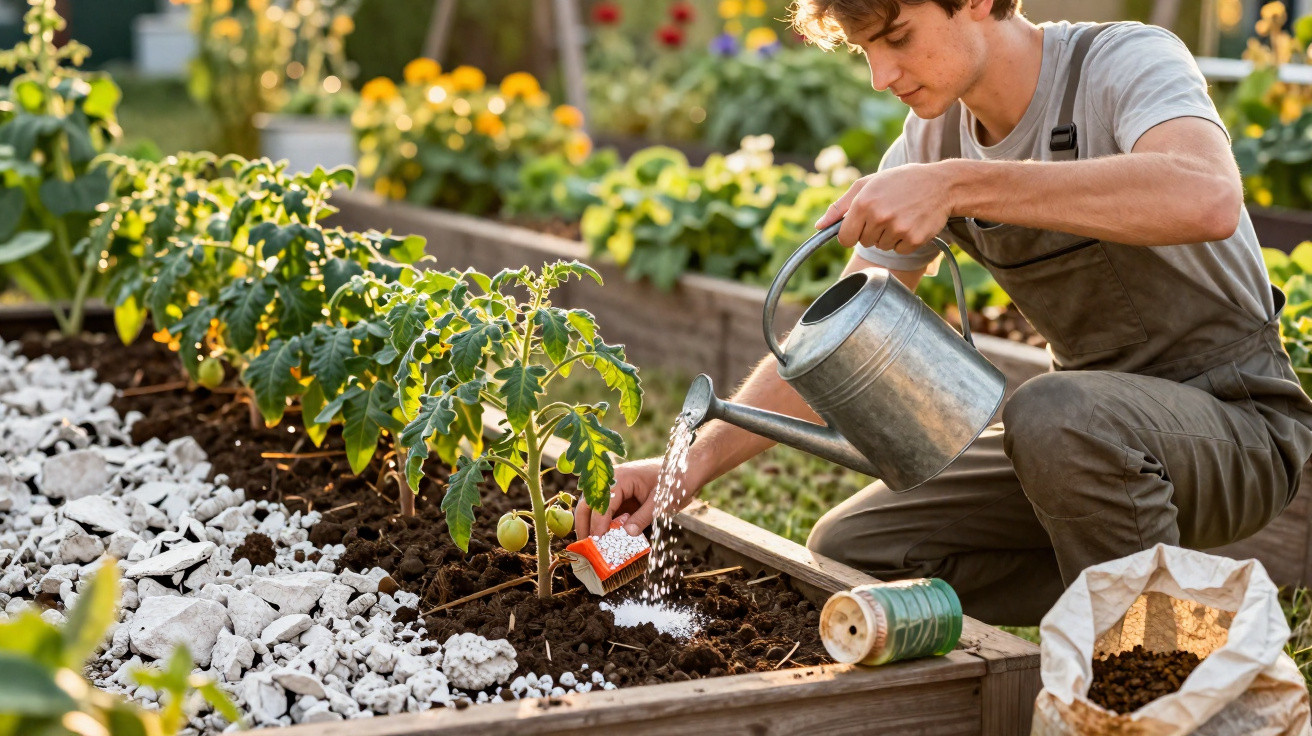
Trench composting is the practice of excavating a hole or a long, narrow trench, adding organic scraps, and then refilling it with soil. There’s no compost bin, no lid and no turning a heap. It tends to attract gardeners who don’t want a visible compost pile, or who don’t have room for a large container.
In theory, it tackles several common problems at once. Food waste goes straight into the ground, odours stay sealed in, and flies find it harder to reach the scraps. The soil is also meant to receive a gradual release of nutrients exactly where plants can use them later.
Trench composting promises invisible recycling of food scraps: no bin, no monitoring, just the quiet hope that the soil will cope.
As councils and cities across Europe and North America push towards compulsory separation of food waste, this do-it-yourself approach can look attractive to homeowners who would rather manage their own scraps than depend on kerbside collections or shared community schemes.
The physical effort many how‑to guides skip
The “no maintenance” promise glosses over a basic reality: someone still needs to do the digging-again and again. And that’s in real soil, not the light, loose beds often shown in slick gardening videos.
If your ground is heavy clay or full of stones, cutting a trench that’s deep and wide enough for regular kitchen waste is hard work. For older gardeners, anyone with back problems, or people working with a basic spade, the supposed simplicity can quickly become a job that gets delayed for weeks.
- Every new load of scraps requires another hole to be dug.
- In winter, cold or waterlogged soil can be extremely difficult to break open.
- Digging repeatedly in the same area can compact paths and injure existing roots.
A method that begins as a clever way to deal with waste can end up as a confusing patchwork of half-forgotten trenches, each one effectively off-limits for months-making the garden harder to organise and less enjoyable to move through.
When your garden turns into a patchwork of no‑go zones
Buried material doesn’t disappear quickly. Depending on your soil type, the temperature and what you bury, decomposition can take many months before plant roots can cope with what’s left.
Many supporters recommend leaving a trench alone for at least six months before planting directly above it. In a small garden, that waiting period can remove valuable square metres from use during the growing season.
Each trench becomes a temporary dead zone: you need to remember where it lies and when it will finally be safe to plant again.
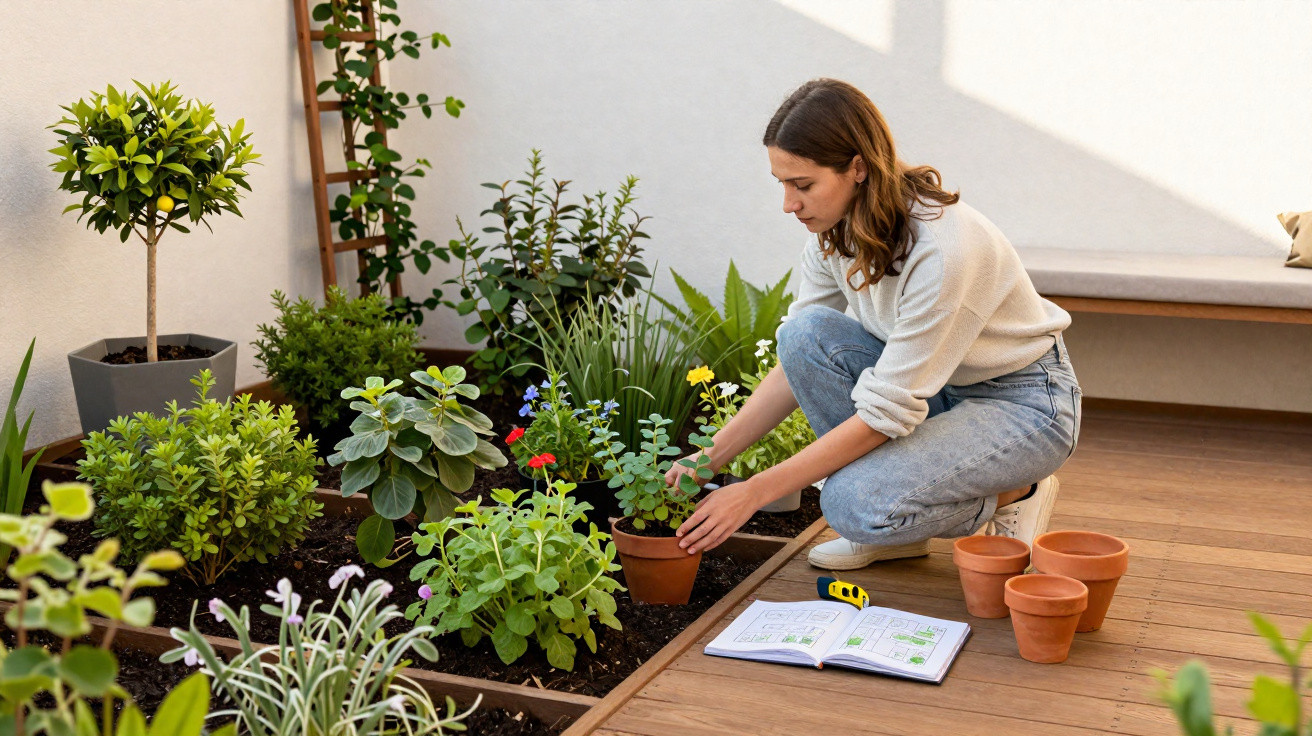
Unless you keep a sketch or physical markers, it’s easy to forget exactly where each trench runs. The outcome is often an uneven plot: vigorous strips where older trenches have finished breaking down, beside awkward, softer lines where newer waste is still collapsing.
How a “low‑tech” method can reshape the whole plot
Over several seasons, repeated trenching can push planting into the same familiar lanes, skirting around buried bands of scraps. Beds become less adaptable, paths shift to avoid spongy areas, and some gardeners end up abandoning certain sections altogether-leaving them as rough, underused strips while the last burial settles.
The appeal is that it stays visually discreet, yet it can be structurally disruptive: the garden may look normal at a glance, but it behaves as though it has underground scars that keep dictating what can be grown-and where.
Slow, cold decomposition and the science beneath your feet
A well-run compost heap can heat to more than 50°C, but a buried trench generally remains “cold”, sitting close to ambient soil temperature. That cooler process changes what happens biologically in ways that short tutorials often ignore.
With cold breakdown, many weed seeds, plant diseases and certain pathogens are more likely to survive. A fungus that can’t tolerate frost may die off, but tough seeds from dandelions, tomatoes or invasive ornamentals can persist and later emerge precisely where you want clean soil.
Because air moves poorly underground, anaerobic pockets can form. These areas may produce methane, a greenhouse gas that is far more potent than carbon dioxide. In one garden the effect seems minor, but if thousands of households adopt the same practice, the cumulative impact is no longer negligible.
| Method | Temperature | Weed seed kill | Gas profile |
|---|---|---|---|
| Hot compost bin | High (50–65°C) | High | Mostly aerobic, less methane |
| Trench composting | Low (ambient soil) | Low to moderate | Risk of anaerobic zones, more methane |
Nutrients also stay concentrated in narrow bands. A row planted directly above a trench may thrive, while the rest of the bed remains comparatively lean. Compared with mature, crumbly compost spread across the surface, the results can be uneven and difficult to anticipate.
When underground compost clashes with real planting plans
For gardeners growing heavy feeders such as tomatoes, squashes, sweetcorn or dahlias, the idea of a hidden reserve beneath each row can sound ideal. However, roots can be scorched by very fresh, concentrated material-particularly if the mix contains lots of citrus peel, onion skins or salty leftovers.
Seedlings can also struggle where soil swings between rich, damp pockets and drier, untouched mineral ground. Sudden bursts of nutrients may encourage soft, lush growth rather than strong plants that can handle wind, pests and summer dry spells.
The soil does not see a smooth upgrade. It gets streaks of feast and famine, which plant roots experience as stress rather than comfort.
In ornamental borders, shrub and perennial roots may grow into trenches, potentially destabilising plants or creating lopsided, leaning crowns. In lawns, buried lines of decomposing scraps can produce sunken tracks and yellowing strips that may take seasons to even out.
Who trench composting suits - and who should think twice
Handled carefully, trench composting can still be useful for some people. It tends to work best when:
- The garden is spacious enough that resting areas don’t disrupt the overall layout.
- The soil is light and easy to dig, such as sandy or loamy ground.
- The scraps are mainly plant-based and chopped small, with no meat and no large woody pieces.
- The gardener uses simple notes or markers to record trench locations and dates.
By contrast, gardeners with very small urban plots, extremely dense clay, or intricate mixed planting plans often find the compromises more severe. They can lose vital growing space for months and may end up with unstable voids forming exactly where the design needs firm ground.
Alternatives that match different lifestyles
Community compost hubs spread the workload, tools and know-how across multiple households. One person might turn the heap, another supplies shredded wood, another checks moisture levels. The finished compost is then shared-either returned to participants or used in local growing spaces.
In many densely populated areas, kerbside food-waste collections and neighbourhood drop-off points now take peelings and leftovers. This route doesn’t necessarily provide compost back to the gardener, but it does send organic material to industrial facilities that reliably reach high temperatures and produce more consistent results.
More controlled options at home
If you want to process waste on your own property without constant trench digging, there are several household approaches:
- Rotating compost drums: quicker mixing, less bending, and tidier for small patios.
- Bokashi buckets: ferment food waste indoors, then bury the pre-digested material in one carefully chosen spot.
- Electric food digesters: shrink volume quickly, with an energy and purchase cost some households are willing to accept.
These options require spending, but they offer greater control over speed, cleanliness and end texture. They also separate waste processing from bed layout-so planting plans can follow the needs of plants, not the memory of old trench lines.
Using trench composting without losing the garden
Some gardeners now treat trench composting as an occasional technique rather than a complete system. Instead of burying every scrap, they save trenches for targeted jobs: feeding a future hedge line, reviving exhausted soil in a forgotten corner, or dealing with an overload of leafy prunings that would swamp a compost heap.
Others use a mixed approach: kitchen waste goes into a traditional compost pile, while fibrous weeds or disease-free prunings are buried deeper and kept away from the main beds. Sharing the load between methods can reduce downsides and keep the visible garden more predictable.
Soil scientists often point to a straightforward guiding idea: organic matter performs best when it builds structure and supports life throughout the soil profile, rather than appearing as occasional underground dumps. Whether you use surface mulches, evenly applied compost, or carefully planned trenches, the aim remains the same-a living, resilient soil that can cope with change.
For beginners drawn in by viral “no-maintenance” tricks, a small trial is usually more revealing than committing the whole garden. Dig one trench, label it clearly, observe what happens over a full year, and compare it with a bed improved using conventional compost. That comparison often shows where burial works well-and where it quietly starts reshaping the garden in ways no short tutorial mentions.

Comments
No comments yet. Be the first to comment!
Leave a Comment