
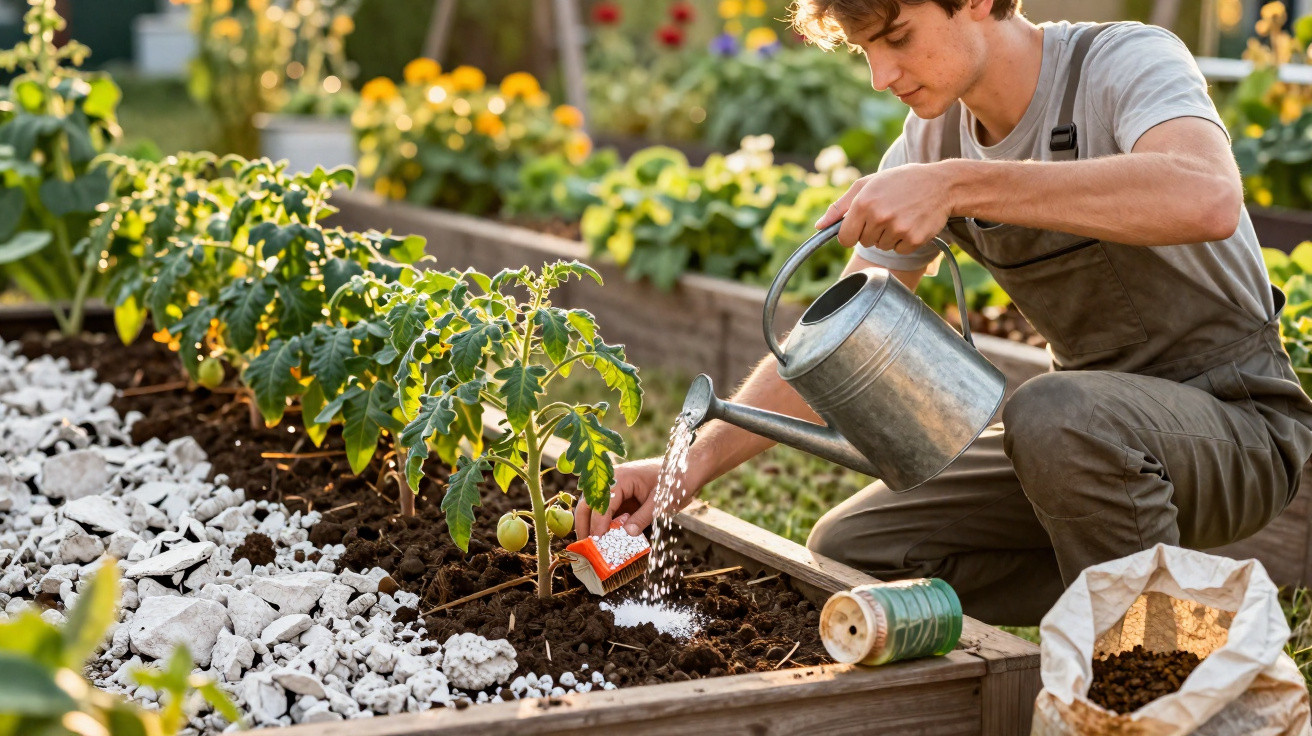
That faint, sour edge of compost tea and chemical feed still hung over her prize border, like a haze that refused to shift. From the path, the roses looked full and almost self-satisfied; up close, though, the leaf edges were singed brown and the newest buds were clenched and misshapen, as if they’d second-guessed themselves halfway through. Jane stood with a fertiliser scoop in her hand, trying to understand how something intended to help could unravel so quickly.
Her neighbour leaned over the fence, arched an eyebrow and said, “Maybe you’re loving them a bit too hard.” Then she returned to deadheading petunias with the easy assurance of someone whose plants generally cooperate. Jane crouched down, brushed a leaf that ought to have felt supple but snapped instead, and took in that familiar, quiet sting of guilt gardeners know too well. She’d done everything “properly”. She’d followed the packets. She’d watched the videos.
So why did the garden seem drained rather than flourishing?
When “more” quietly turns into “too much”
Step into a garden centre in April and you can almost taste the temptation. Aisles of miracle feeds, slow-release granules, bright bottles that swear they’ll deliver huge blooms and bumper harvests. The underlying message is steady and persuasive: if a plant is struggling, give it more food. If it’s doing well, feed it again so it keeps performing. In the background sits an unspoken worry that not feeding at all is the same as neglect.
But the truth is that many garden soils already contain more nutrients than we assume. Plenty of everyday plants will manage perfectly well with minimal input. What they don’t tolerate is the gradual accumulation of salts from synthetic fertilisers, or the sharp jolt of a mix that’s “just a touch stronger” than the label advises. Over-fertilising doesn’t always announce itself with immediate drama; more often it begins as a gentle slide.
A small community allotment just outside Bristol discovered this the hard way. A few enthusiastic new plot holders turned up with sacks of high-nitrogen lawn feed and general-purpose fertiliser. In early spring they spread it liberally across their beds, picturing armfuls of courgettes and sunflowers towering by summer. For a short while, it looked like they’d found the shortcut to abundance. Everything greened up rapidly.
By July, the tomatoes were producing leaves but scarcely any fruit, the beans were curling at the tips, and the lettuces had taken on a strangely bitter taste. Later that year, a soil test revealed a clear jump in soluble salts and nitrate levels. One gardener joked they’d basically made their plots into an over-seasoned soup. It wasn’t a lack of effort; it was a gap between good intentions and what the plants were actually asking for.
Too much feed damages plants in ways that aren’t always obvious from above. Surplus nutrients draw water out of roots, leading to the classic “fertiliser burn” – crisped edges, yellowing foliage and growth that stalls. Excess nitrogen pushes out lots of soft, sappy leaves, which then invite aphids and slugs and flop about in the wind. And too much phosphorus can tie up essential micronutrients such as iron and zinc, leaving leaves washed-out even though the soil seems to contain “everything”.
The harm doesn’t stop with the plant, either. Strong feeding can unsettle the fungi and bacteria that enable roots to take up water and minerals. The more we replace that living system with quick fixes, the less tough and adaptable the plant becomes. It can look indulged, yet behave like something that’s never had to cope on its own. That might work on a greenhouse bench. In a garden facing real weather, the weakness eventually shows.
Practical ways to dial back and heal your soil
The most effective change is also the least exciting: feed less, but feed well. As a starting point, use half the packet’s suggested dose for anything growing in the ground rather than in a pot. Stick to a straightforward routine instead of constant adjustments – for instance, one gentle feed as growth begins in spring, a second after the first flush of flowers or fruit, and then stop. With lawns and borders, treat fertiliser as a small steer, not a weekly appraisal.
If a plant starts to look stressed – brown leaf margins, sudden drooping after feeding, growth that’s unusually dark, soft or floppy – put all feeding on hold for a few weeks. Water thoroughly to wash excess salts out of the root area, particularly with containers. Also consider whether what’s missing is organic matter rather than more nutrients: compost, leaf mould, well-rotted manure. These improve soil structure and moisture-holding, which often matters far more than another blast of nitrogen.
One of the quieter pitfalls in modern gardening is mistaking thirst for hunger. A sagging tomato can send us reaching for feed, when the real fix was consistent watering and a larger pot. Plants that have been over-fed often develop shallow roots and become completely reliant on you. Skip a day and they sulk; miss a week and they collapse. That’s when the emotional side creeps in: we’ve all had the experience of a plant we pampered for months giving up overnight, and it feels oddly personal.
It’s useful to separate genuine care from constant inputs. A sensible habit is to tie feeding to clear stages: seedling to young plant, pre-flowering, post-harvest. Outside those windows, prioritise watching rather than doing. Aim for steady, firm growth and balanced colour instead of chasing maximum size or bloom counts. And allow some plants to be a little underwhelming for a season while the soil rebuilds. A reality check helps: not every bed needs to look Instagram-ready in June.
There’s a gardener in Leeds who keeps a tatty notebook taped to the inside of her shed door. One line in it captures the shift many of us need:
“I finally stopped trying to force my plants to be impressive, and started trying to make them comfortable.”
In plant terms, “comfortable” is often surprisingly low-key. A spring mulch of compost instead of bright blue pellets. Collecting a bit of rainwater rather than grabbing a bottle every time leaves fade slightly. Leaving fallen leaves beneath shrubs instead of vacuuming beds clean. Small, almost lazy-sounding decisions that actually support the hidden systems doing the real work.
On days when you want something clear and practical to follow, keep this list handy:
- Test your soil every 2–3 years before changing fertiliser habits.
- Use half-strength liquid feed on containers, and skip every third scheduled feed.
- Swap one chemical fertiliser session a month for a thin layer of homemade compost.
- Stop feeding perennials six weeks before first frost to avoid soft, frost-tender growth.
- When in doubt, wait a week and watch. Most plants won’t die in the meantime.
From quick fixes to long-term conversations with your plants
There’s a particular satisfaction in learning to interpret a plant before you reach for a product. A tomato that suddenly produces masses of leaves but no flowers is signalling too much nitrogen. A hydrangea with scorched edges after a strong feed is warning you the mix was too rich. A houseplant with a salty crust on the compost surface is practically yelling that it’s being overfed. None of this is a character flaw. It’s information.
Gardeners often say “listen to the garden” as though it’s a mysterious talent reserved for old hands. Most of the time it’s simply recognising patterns. Note how your roses respond when you feed lightly compared with when you go heavy. Observe how quickly the lawn dries out after a big nitrogen boost. Notice which beds cope best through a dry spell: they’re often the ones with more organic matter and less reliance on chemical inputs. With time, those mental records matter more than any single miracle feed.
There’s also a bigger knock-on effect that’s easy to overlook when you’re focused on one sad-looking petunia. Excess fertiliser doesn’t disappear after it leaves your soil. It washes into drains and streams, fuelling algal blooms that smother wildlife. It also escapes as nitrous oxide, a powerful greenhouse gas. This isn’t here to shame anyone who adds a splash of feed to a watering can on a Sunday afternoon. It’s simply to point out that feeding more thoughtfully genuinely makes a difference.
And let’s be frank: a lot of marketing trades on our insecurity. The suggestion that “proper” gardeners keep shelves of specialist feeds. The implication that if you aren’t dosing weekly, you’re doing it wrong. Let’s be honest: nobody really does that every day. Most thriving gardens are built from trial, error and small course corrections. The trick isn’t never over-fertilising; it’s spotting when you have, then giving your plants – and your soil – a route back.
It can feel strangely liberating to accept that a calmer, lighter-touch approach often grows sturdier plants. You don’t need to chase the lushest growth on the street or the biggest dahlias online. You can aim for plants that recover after wind, cope with a missed watering, and flower quietly but dependably. That sort of resilience rarely comes from the bottom of a bright plastic bottle.
Next time you’re standing over a border with fertiliser in hand, pause for an extra moment. Ask what the leaves, stems and soil are actually telling you. Look for the small clues rather than defaulting to “it must need feeding”. The more often you choose restraint instead of reflex, the more the garden starts to feel like a conversation rather than a to-do list-and that’s often where the joy slips back in.
| Key point | Detail | Why it matters to you |
|---|---|---|
| Spot the signs of excess | Brown edges, soft/floppy growth, very dark green leaves but few flowers | Helps you catch over-fertilising before plants decline sharply |
| Prioritise organic options | Compost, well-rotted manure, mulches rather than heavy chemical doses | Improves soil health and reduces the risk of root “burn” |
| Reduce the dose | Half-doses, fewer applications, focus on a few key growth moments | Cuts waste, protects the environment and builds plant resilience |
FAQ:
- How can I tell if I’ve over-fertilised my plants? Typical signs include brown leaf tips, wilting soon after feeding, foliage that’s unusually dark green, a salty crust on the soil surface, and plenty of leaves with very few flowers or fruits.
- Can fertiliser burn in garden beds be put right? Yes. Stop feeding straight away, water deeply and repeatedly over several days to flush out salts, apply compost as a mulch, and only cut back the worst damage once fresh, healthy leaves have started to appear.
- Are organic fertilisers always safe to use freely? No. Manure, chicken pellets and concentrated organic feeds can still overload soil with nutrients and salts if applied heavily. They’re generally gentler, but the same “less is more” principle still applies.
- How often should I feed container plants? For most plants in pots, a half-strength liquid feed every 10–14 days during active growth is sufficient. Miss a feed if growth slows or leaves look stressed, and replace the compost each year.
- Do home gardeners really need soil tests? Not annually, but a simple test every 2–3 years reduces guesswork, shows whether you’re overdoing particular nutrients, and can save money on fertilisers you don’t actually need.


Comments
No comments yet. Be the first to comment!
Leave a Comment