
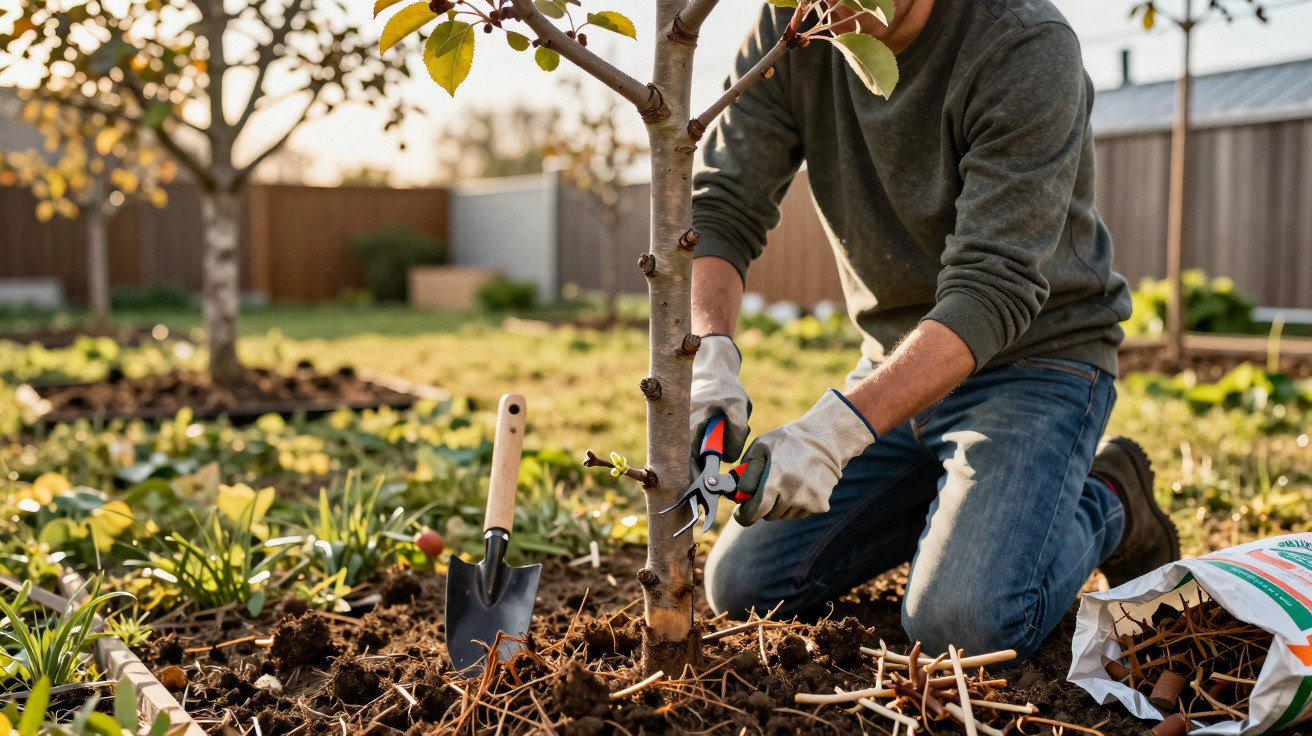
They wear you down gradually, giving off tiny warning signs right by the trunk.
Those hardy little shoots popping up at the base of an apple or pear can seem harmless - even encouraging. In reality, they quietly siphon off the tree’s strength, upset its growth pattern and, over time, can unravel years of careful pruning.
Why base suckers can quietly ruin a healthy tree
Most fruit trees from garden centres are effectively two plants joined together. The part you see above ground is the named variety you picked - ‘Gala’ apple, ‘Conference’ pear, ‘Victoria’ plum. Beneath the soil is a different plant entirely: the rootstock, chosen for vigour, resilience and how well it copes with local conditions.
The robust shoots that appear around the base nearly always arise from the rootstock rather than the variety you bought. They carry the rootstock’s genetics, and that lower part is often programmed to grow faster, taller and more forcefully than the grafted top.
Base suckers drain sap, weaken fruiting wood and can eventually replace the variety you planted with a rough, less tasty impostor.
Rootstocks are selected because they establish well and grow strongly. That same urge to push on also makes them likely to throw suckers, particularly when they’re under pressure: a knock from a strimmer, dry weather, heavy pruning or frost can all spark a burst of new shoots.
If you allow those shoots to develop, they compete head-to-head with the fruiting framework. They grab water and nutrients before they reach spurs and flower buds. Crops fall, flavour and size can decline, and the tree starts prioritising wood growth over blossom.
How to recognise a sucker from the rootstock
To cut the right thing, you first need to identify what you’re seeing. Rootstock suckers and shoots from the grafted variety usually differ in a few clear ways:
- They typically start beneath the graft union, often right at soil level or just below it.
- The leaves may be subtly different in shape, shade or sheen.
- Growth is often more upright, with quicker, stronger extension than the rest of the tree.
- They frequently appear in tight clumps rather than as evenly spaced branches.
On older trees, the graft union can look swollen or slightly kinked. Anything growing below that point almost always belongs to the rootstock and should be removed.
Step 1: expose the base and cut right back to the roots
A common instinct is to trim suckers off at ground level. In many cases that backfires: you’ve effectively just topped them, prompting the rootstock to replace one shoot with two or three.
Instead, carefully uncover the area around the trunk. Using your fingers or a small hand fork, pull back soil, mulch or grass so you can see precisely where each shoot starts.
The closer you cut to the true point of origin, the less energy the rootstock will send to regrow that sucker.
With the base exposed, locate every shoot and trace it to its source on a root or at the trunk flare. Use secateurs you’re prepared to blunt a little, as soil and small stones can mark and dull blades.
Remove each sucker as close as possible to the root or stem, leaving no stub. A neat, tight cut closes over more quickly and leaves fewer buds for the rootstock to re-sprout from.
When to carry out this first step
You can take off suckers at almost any point when the soil can be worked. Many professional growers favour late spring or early summer, because shoots are still soft and it’s easier to see which growth is overly vigorous and which belongs to the productive structure.
Steer clear of frozen ground and periods of severe drought. When a tree is already under intense stress, it can respond more aggressively and you may provoke an even heavier flush of suckers afterwards.
Step 2: protect roots and avoid stimulating new growth
As you clear around the trunk, be gentle with the root area. On many fruit trees - especially those on dwarfing rootstocks - roots sit close to the surface and don’t tolerate rough treatment from spades or hoes.
Cuts and scrapes on roots can also encourage suckering. Each wound can wake dormant buds. One careless chop with a spade may be enough to produce a whole ring of shoots the following season.
Think of the root zone as a living network: if you scar it, it will try to heal by producing more growth, often exactly where you do not want it.
Stick to hand tools rather than heavy digging tools, and stop as soon as you can see where each sucker begins. Move methodically around the tree instead of digging in from one direction. If you do nick a root, make a clean cut back to healthy tissue - that will recover better than a crushed or torn edge.
Once a sucker is removed, some gardeners choose to treat larger wounds with a pruning sealant or grafting compound. This can reduce drying of exposed tissue and may slow infection. For small, fine cuts, tidy technique and decent soil conditions usually matter more than any dressing.
How soil conditions affect suckers
Trees growing in compacted, waterlogged or poorly drained ground often respond with stress growth, including suckers. By contrast, keeping a generous circle of loose, mulched soil around the trunk tends to promote fine feeder roots rather than thick, aggressive roots that throw shoots.
When you’ve finished, ease the soil back into place without piling it against the trunk. Keep mulch off the bark itself. Constant damp against the stem can weaken tissues and trigger further stress responses.
Step 3: deal quickly with trunk shoots and “water sprouts”
Shoots from the base aren’t the only unwanted growth to watch for. Many fruit trees also produce strong, vertical shoots from the trunk or main limbs. In orchards these are often called watershoots - and they’re sometimes (incorrectly) lumped in as “suckers”.
They’re commonly triggered by hard pruning, storm damage or a sudden surge of fertility. They tend to be fast, thick and upright, and they usually contribute little to fruiting.
The best time to remove trunk shoots is when they are young, soft and easy to pinch or cut cleanly against the bark.
Use sharp secateurs and cut each shoot flush to the bark collar, following the natural swelling where it joins the trunk. Don’t leave little pegs behind: stubs die back and can rot, allowing disease into the tree.
If you spot them early enough, you can often rub them off with your thumb in late spring as they emerge. That light removal disrupts the bud before it becomes a true shoot, helping the tree direct energy back into established branches and spurs.
How often should you repeat these three steps?
With newly planted trees, it’s common to need checks two or three times each year. Young rootstocks can keep pushing growth until the crown develops enough to dominate and shade them.
As the tree ages, an annual check is often sufficient. Many seasoned gardeners do a walk-round in early summer with secateurs, looking over the bases and trunks and cutting out any unwanted shoots immediately.
What happens if you ignore suckers for several years?
If you leave suckers unchecked, they can eventually change the whole tree. The rootstock may form its own crown beside - or even above - the grafted variety. The result is a muddled, multi-stem specimen where one part bears good fruit and another produces hard, bitter or ornamental fruit.
| Scenario | Likely consequence |
|---|---|
| Occasional small suckers cut at ground level only | Repeated regrowth, thicker bases, more shoots each year |
| Suckers left for several seasons | Rootstock branches compete with the grafted crown, reduced fruiting |
| Rootstock growth dominates the canopy | Loss of named variety, poor fruit quality, taller and harder-to-manage tree |
In the worst cases, the original variety can all but disappear. Gardeners then ask why their “Gala” is suddenly producing small, sharp apples. The explanation is usually simple: the rootstock has taken over, while the grafted top has weakened or died.
Ways to reduce sucker growth in the first place
Careful planting and steady aftercare reduce the chances of suckering. When you plant a young tree, keep the graft union clearly above soil level and never bury it. If soil or mulch is heaped over that point, the scion may root above the graft, or the rootstock may answer with a ring of new shoots.
Maintaining a clear, grass-free circle around the trunk also prevents knocks from strimmers and lawnmowers - a frequent cause of basal shoots. A straightforward mulch of woodchip or composted bark helps hold moisture and protects the bark from impacts.
Calm, steady growth usually produces fewer suckers than cycles of stress and surge, where a tree lurches from drought to heavy feeding.
Using a balanced fertiliser, watering during dry spells and pruning with a light, considered hand all help limit the tree’s urge to produce emergency growth. When you prune, avoid very severe cuts into old wood unless you genuinely need them for safety or structure.
Going further: when a sucker might actually be useful
Not every sucker needs removing immediately. Occasionally, a strong rootstock shoot can help you work out which rootstock you have, because leaf shape and vigour can be revealing. Professional growers sometimes even lift suckers and use them to propagate new rootstocks for nursery production.
For most home gardeners, that’s still more experimental than practical. Even so, a vigorous rootstock shoot can be a useful learning aid: compare its leaves and growth habit with the grafted variety above, and you’ll quickly train your eye to spot what belongs - and what doesn’t.
Related risks and opportunities for home orchards
Keeping on top of suckers fits into the wider routine of managing a small orchard. The same close attention you give to the base of each tree will also help you spot pests, fungal problems, sunscald on bark, or wildlife damage earlier.
Some gardeners use their yearly sucker inspection as a prompt to thin fruit, tweak branch angles with small weights or ties, or judge which trees are truly worth the space. A tree that constantly throws suckers, struggles in the soil and crops poorly may simply be a poor match for the site. Replanting with a more suitable rootstock can save years of frustration.
Finally, bear in mind that species vary. Plums can sucker aggressively after root damage, while some dwarf apples remain relatively restrained. If you keep a simple notebook noting dates of sucker removal, pruning and harvest results, you’ll build a tailored picture over a few seasons of how each tree reacts - and how firmly you need to manage growth at its feet.
Comments
No comments yet. Be the first to comment!
Leave a Comment