
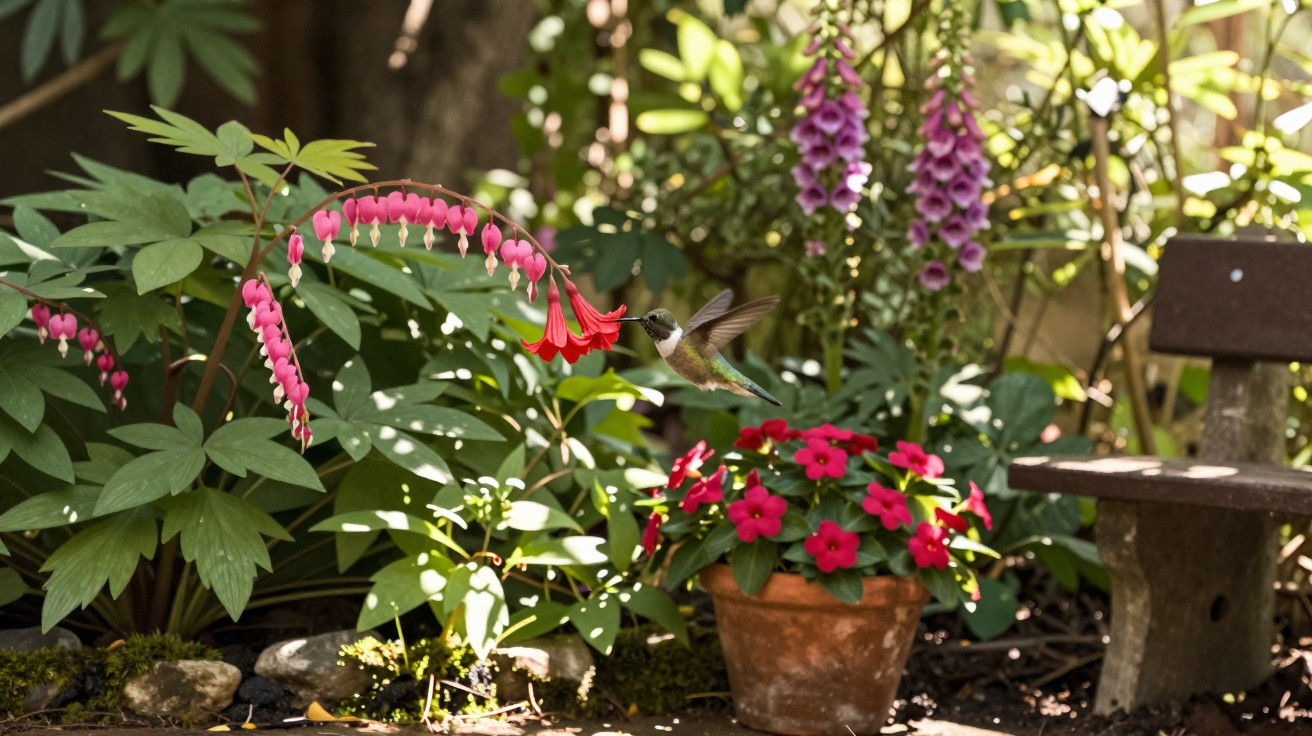
A forgotten corner of the garden that never sees the sun can look like a lost cause - yet it may be the place where wildlife thrives most.
Plenty of amateur gardeners abandon gloomy spots too quickly: beneath the canopy of a mature tree, along the north-facing side of the house, or on a balcony that gets no direct sunshine. With the right shade-tolerant flowering plants, though, these areas can become more than just prettier to look at. With surprisingly little effort, they can turn into a real draw for hummingbirds, butterflies and wild bees.
Why hummingbirds are happy in shady areas
Hummingbirds are often pictured as tiny sun worshippers, hovering non-stop around bright red flowers or feeders. That’s only part of the story. These birds are high-performance fliers: their wings can beat dozens of times per second, their heart rate rockets, and they burn through energy fast - which means they also need shelter and quiet places to pause.
"Hummingbirds only stay where nectar, shelter from wind and safe resting places are close together."
A thoughtfully planted shaded area can offer exactly that. Under trees and beside sheltered walls, the air stays cooler and the light is gentler, while shrubs and climbers help take the edge off the wind. In these calmer pockets, hummingbirds can briefly stop, preen and refuel before moving on.
When it comes to feeding, they key in on flower shape and strong colour contrast. Tube- or bell-shaped blooms suit their long beaks and extendable tongues perfectly. Vivid reds stand out, but intense pinks, purples and coral shades also catch their attention - and these tones often glow particularly well in partial shade.
How to turn a dark corner into a hummingbird refuge
To help shade plants really cope, it’s worth working out what sort of shade you have. A border right against a house wall is often on the dry side. Beneath a deciduous tree, the shade is more likely to be cool to damp, while the lighter edge of shrubs tends to be partial shade.
- Dry shade: for example at the base of a wall or under a deep roof overhang
- Cool/moist shade: under deciduous trees where the soil is rich in humus
- Partial shade: areas with a few hours of sun per day or dappled, filtered light
Before planting, a generous layer of well-rotted compost pays off. It holds moisture, adds nutrients and improves soil structure. Gardeners should also avoid chemical pesticides. Hummingbirds don’t live on nectar alone - they also snap up small insects and spiders - and toxins in the garden can harm that food chain directly.
A small, shallow water spot is also very useful: a plant saucer, a tiny dish, or a very low bird bath. Hummingbirds will happily use these for quick breaks, especially when there are protective twigs or branches nearby.
The 5 best shade plants to attract hummingbirds
One flower on its own rarely keeps the birds around for long. The real impact comes from combining different heights and flowering periods - climbers, perennials and low, ground-covering plants. The five choices below provide a colour-rich backbone for almost any shaded hummingbird garden.
Busy Lizzie: impatiens for borders and window boxes
The classic plant for shady bedding displays is Impatiens walleriana. In the UK it’s widely known as Busy Lizzie (also sold as garden impatiens).
- Height: about 20 to 40 cm
- Spread: around 20 to 30 cm per plant
- Position: shade to partial shade, sheltered from wind
- Flowering: from late spring until the first frosts
These plants form a thick, cushion-like mound of glossy green leaves, covered in countless flowers in white, pink, red, salmon or violet. In partial shade, the colours often look especially saturated. In areas with a temperate climate they’re usually grown as seasonal annuals, because they only tolerate short cold snaps to just below 0°C.
"A broad carpet of impatiens brings instant colour to any dark corner - perfect along paths, under trees or in a north-facing balcony box."
For continuous flowering, Busy Lizzies need steady moisture without becoming waterlogged. Humus-rich, slightly damp soil and a sheltered position out of draughts encourage lush growth. Regularly picking off faded flowers helps prompt fresh buds.
Lobelia with instant impact: red spikes for damp spots
Cardinal flower (Lobelia cardinalis) thrives in moist ground and is an excellent fit for pond edges or slightly boggy corners in partial shade. Its upright flower spikes in vivid red are almost impossible for hummingbirds to miss.
The blooms line up along tall stems like a nectar ladder, making the plant particularly appealing to fast-moving birds that hop from flower to flower. In cooler regions, it helps to protect the root area in autumn with leaves or bark mulch so it comes through winter reliably.
Bleeding heart: romantic spring flowers
Bleeding heart (Lamprocapnos spectabilis) is one of the most familiar perennials for part-shaded planting. In spring, its arching stems carry rows of small, heart-shaped flowers that hang like a delicate chain.
Give it soil that is humus-rich, loose and on the cooler side. It tends to do especially well under the light shade of trees with higher canopies or beside shrubs. After flowering, bleeding heart often dies back a little; other perennials can then take over the space - for example hostas or ferns. For hummingbirds, those dangling clusters provide a valuable early nectar source in spring.
Trumpet honeysuckle: a climber with trumpet blooms
The evergreen or semi-evergreen honeysuckle Lonicera sempervirens produces bright, trumpet-shaped flowers in red and coral tones. Trained up trellis, pergolas or walls, it creates living screens and “rooflines” that suit hummingbirds well.
A curtain of flowers like this brings several benefits at once:
- It creates cover and tucked-away resting spots within the branches.
- It reduces wind and forms calmer flight lanes.
- It provides nectar at hummingbird eye and beak level.
In bright partial shade - such as on east- or west-facing walls - this honeysuckle shows its best display. The soil shouldn’t be allowed to dry out too much; a mulch layer helps keep the roots cool. Pruning back after flowering keeps it neat and encourages more blooms.
Foxglove: towering flower spikes - with a clear warning
Common foxglove (Digitalis purpurea) adds height and structure to part-shaded areas with its tall spires of blooms. The bell-shaped flowers are often speckled inside and look like stacked little feeding stations.
Important: foxglove is poisonous, and every part of the plant is toxic. If you have young children or free-roaming pets, think very carefully about where it’s planted - or choose a safer alternative.
"Foxglove belongs in many classic wildlife gardens - but always with respect for its toxicity."
In the right place - beside a lightly shaded fence or along the edge of a shrub border - it delivers height and dramatic colour. After self-seeding, new plants often appear the following year in unexpected spots.
How to combine the plants into a lively shade border
The planting really comes alive in layers. Honeysuckle climbs up a support and creates sheltered cover. In front, bleeding heart and foxglove make up the mid layer. At ground level, Busy Lizzies knit everything together and fill gaps. In the dampest pockets, or beside a water dish, add the lobelia.
A simple planting plan for a shady corner could look like this:
| Layer | Plant | Purpose |
|---|---|---|
| Height | Honeysuckle | Shelter, climbing structure, nectar higher up |
| Middle | Bleeding heart, foxglove | Spring and early-summer flowers, colour accents |
| Ground | Impatiens | Dense flowering cushions, continuous carpet |
| Damp zone | Lobelia | Bright signal colour, nectar close to the ground |
If you also hang feeders, avoid placing them right next to the flowers. Otherwise a single dominant male may claim everything as his own. Spreading nectar sources out tends to calm competition and increases the chances of seeing more than one bird.
Practical tips, risks and worthwhile results
Hummingbirds are sensitive to changes around them. Noise, reflective glass and roaming cats can quickly drive them away. Bright markings on large windows greatly reduce the risk of collisions. Shrubs or tall perennials planted near windows can also steer flight paths away from the glass.
Many garden owners wonder how much upkeep is involved. The good news is that, once established and after an initial period of regular watering, most of these shade plants need only modest attention. A yearly top-up of compost, watering during summer dry spells and a thin mulch layer in autumn are usually enough.
If you feel inspired to improve a shaded patch, start small: two pots of Busy Lizzies on a north-facing balcony, a bleeding heart in partial shade, plus a dish of water. Over time, you can add more perennials and build a tiered, flowering shade haven that offers nectar and shelter from spring through to autumn.
Alongside the joy of watching hummingbirds up close, other wildlife benefits too. Butterflies and wild bees gain extra forage, the soil structure improves thanks to more roots and leaf litter, and the garden gains a space that stays pleasantly cool in hot weather - a quiet, living retreat for people and animals alike.
Comments
No comments yet. Be the first to comment!
Leave a Comment