
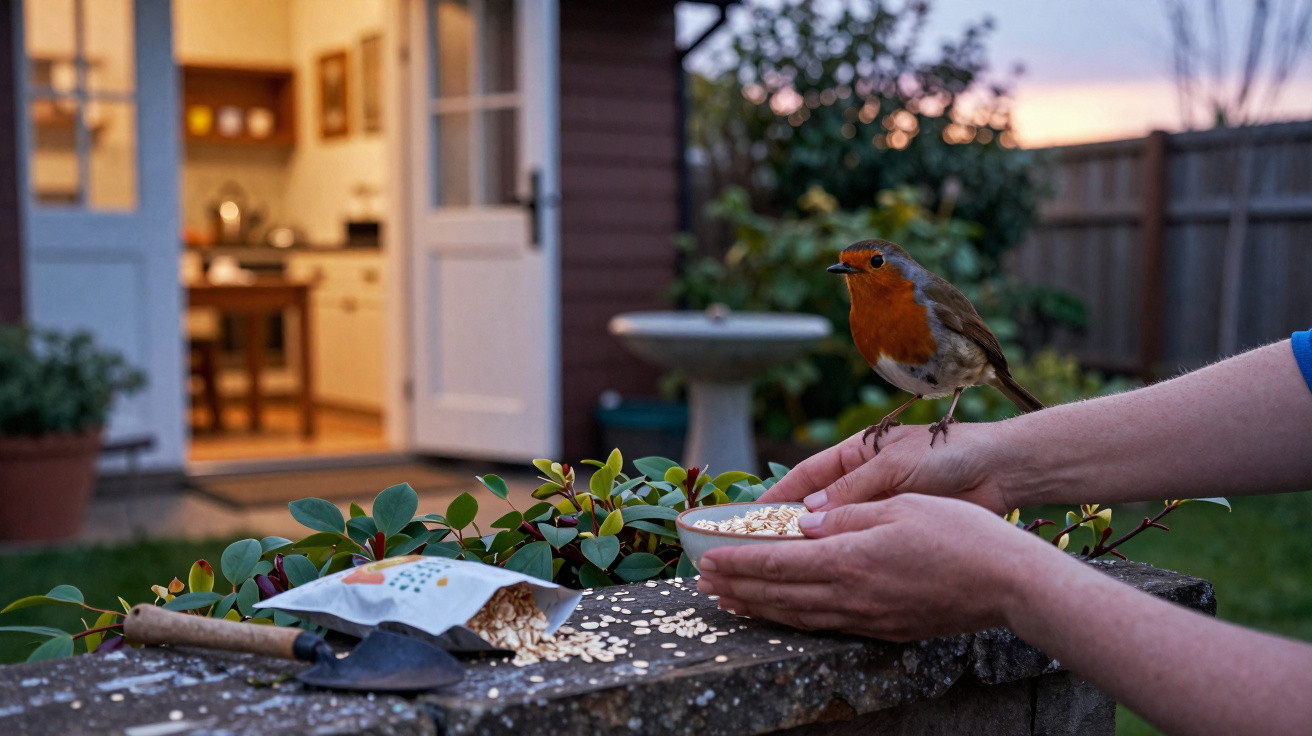
The garden was already sliding into that gentle blue half-light, when dusk makes illumination feel unsure and even small noises seem louder. A robin had taken up position on the fence, breast pushed forward, gaze locked on the lawn as though it owned the lot. You know that slight head-tilt they do - part wary, part optimistic - as if they’re waiting for you to give some hidden cue.
From the kitchen nearby came familiar sounds: a spoon clinking, a bread bag whispering, the compost caddy lid scraping as it’s lifted. Usually, those crumbs and peelings head straight for the bin.
Tonight, they could be a lifeline instead.
Why gardeners are being urged to act tonight for robins
Across the UK, many gardeners are picking up on the same quiet change: the robin that once felt ever-present now seems less common, more cautious, slightly more precarious. You step out with a cuppa and catch that orange-red flare, but it doesn’t hang around. A hop or two, then it slips back into the hedge.
We like to imagine robins as tough little garden mascots, yet that comforting idea covers a more delicate reality. When the ground sets hard, or the weather flips from rain to frost in a single night, their normal spread of worms and insects disappears quickly. At that point, a small assist from a back door or patio can subtly tilt the odds.
One wildlife charity helpline reported a spike in calls last winter from people worried about “fluffed-up robins” sitting still on low branches for long stretches. That puffed-up look is often a bird burning precious energy just to stay warm. A robin weighs roughly the same as a £1 coin. Lose a few grams and the margin between surviving the night and not making it to dawn shrinks dramatically.
Most of us recognise that odd moment of realisation: the garden you cherish is also a small stage where survival plays out while you’re putting the kettle on. It’s a bit unsettling - but it also makes room for doing something unexpectedly straightforward, starting tonight, using what you already have to hand.
This is where the simple figures meet everyday routine. Over a cold day, a robin needs to eat at least a third of its body weight just to keep functioning. When the soil is frozen solid or heavy rain saturates the turf, their main feeding ground effectively closes. They still work the borders, but the larder is close to bare.
That’s the gap a humble, almost comically inexpensive staple can fill. Think a few dry oats from the back of the cupboard - the kind meant for porridge - working out at around 3p a serving when you break it down. For a robin, those flakes are compact, high-energy survival fuel. For you, they’re one of the easiest things on the shopping list to share.
The 3p kitchen staple that can help robins tonight
The approach is almost too easy. Take a small pinch of plain, uncooked porridge oats - not instant, not flavoured, just straightforward rolled oats. Sprinkle them lightly in an open, level spot: a bird table, a low wall, a plant pot saucer, or even a paving stone close to cover.
Then leave the space to settle. Give the garden a moment of calm. Robins can be braver than many birds, but they still want a clear escape route and a quiet stage. Before long, that bird that usually keeps watch from the rose bush may begin edging nearer, sizing up the new offering with that sharp, bright-eyed calculation that feels oddly personal.
This is also where plenty of kind intentions go wrong. Bread crusts, salted peanuts, leftover cake - they seem generous, but they’re like handing a child a bag of crisps and calling it dinner. Robins need a balance of fat and protein, not just empty bulk. Plain oats work without the junk: easy on tiny stomachs, and similar enough to the grains and seeds they sometimes pick up in the wild.
And, honestly, hardly anyone manages this every day without fail. Schedules get messy, the weather shifts, and the oats end up buried behind cereal boxes. That’s fine. What matters is that on the hardest nights - when you can see your breath and the lawn crunches under your shoes - you remember that the robin staring in through the glass would gladly swap a song for a scattering of 3p porridge.
Scientists and bird charities quietly agree on the principle, even if it doesn’t make every leaflet. A small supply of energy-rich food, offered consistently during cold snaps, helps small birds hold body temperature and cuts down on frantic, risky foraging that can leave them vulnerable to predators. One wildlife adviser described it as “adding a tiny buffer to a harsh economy”.
“People underestimate how a cheap, everyday staple like oats can bridge the gap for robins,” says a volunteer from a local bird rescue group. “We see injured or exhausted birds brought in at the tail end of winter. The ones that have been visiting well-fed gardens, with a few oats and some fat-based feeds, often arrive in notably better condition – or they never need to come in at all.”
- Use plain, unsalted porridge oats – not instant sachets or muesli mixes.
- Offer small amounts at dusk and early morning, when robins feed most keenly.
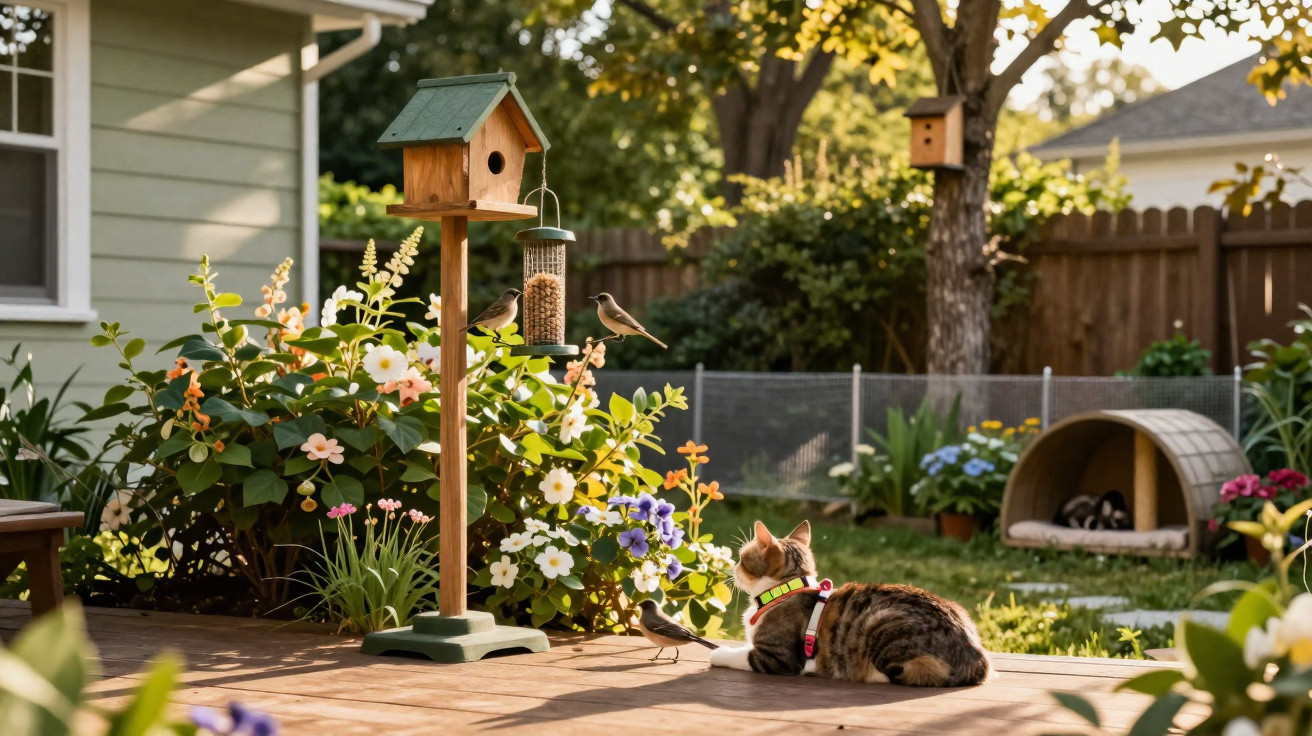
- Place oats on clean, flat surfaces away from busy paths and excited pets.
- Rotate the feeding spot every few days to keep things hygienic.
- Pair oats with other robin-friendly foods like mealworms or suet pellets when you can.
Small evening rituals that make a big difference
Try thinking of it as a small evening ritual, not another job on the list. You wash the mugs, switch off the kitchen light, and before you draw the blind you grab a teaspoon, dip into the oat tub, and step out. The air nips at your face, the garden smells of cold earth and damp leaves, and somewhere in the near-dark a robin gives a sharp, metallic call.
Fan out a few oats - no more than you could mound on a dessert spoon - and listen to the hush as they land. It’s a minute of your time and a few pennies from your budget. Yet that small gesture sits there for hours, like a quiet safety net for the first hungry beak that finds it.
There are a couple of easy pitfalls once you begin. A big pile of food in one place soon turns soggy, draws in rats or pigeons, and can unsettle the birds you’re trying to support. Keep portions small, spread them thinly, and add variety when you can. A little crumbled suet, a few dried mealworms briefly soaked in warm water, and those plain oats make a simple, powerful mix.
Another common misstep is assuming your outdoor space is “too small to matter”. A single patio with one pot, a narrow strip of grass by a fence, even a balcony that looks out over a shared yard - it all counts. To a robin, your space is one stop on a daily loop. That evening spoonful of oats might be the top-up that makes the next hedge, the next tree, the next nest possible.
And there’s a quiet gift in it for us, too. Taking a moment to feed a robin at dusk subtly changes how you experience your home. The window stops being just glass and becomes a view into a living world that’s usually easy to overlook.
“On the worst winter days, that little tap-tap of a robin’s feet on the bird table is what gets me outside,” admits one retired gardener from Kent. “I started with oats because they were cheap and already in the cupboard. Now, I time my tea break so I can watch ‘my’ robin take the first bite.”
- Keep a small jar or tub of oats near the back door for easy access.
- Teach children to offer just a pinch, not a handful.
- Avoid flavoured or sugary oats – those are for you, not the birds.
- Combine feeding with topping up fresh water in a shallow dish.
- Notice patterns: which branch the robin uses, what time it arrives, how it reacts to you.
A shared twilight between kitchen and hedge
Once you start looking, you’ll spot how often your routine overlaps with the robin’s. In the early morning, when you’re half-awake at the sink, it’s out on the lawn, probing for grubs you can’t even see. Later, when you’re rummaging for keys, it’s already organising its last feed before nightfall. A tiny neighbour living right on the edge of your attention.
Putting oats out in the evening isn’t about turning your garden into a wildlife sanctuary or casting yourself as a hero. It’s more like a small, almost private agreement: you’ll offer a little extra energy when conditions turn harsh, and in return you get that flash of colour and that clear, liquid song from the fence when the days feel heavy. It’s a modest, repeatable kindness that fits between normal tasks.
There’s something steadying about realising the same packet of oats that thickens your own porridge can also help a wild creature through the coldest hours. No special kit, no trendy subscription box, no fiddly set-up. Just you, a spoon, a threshold, a bird.
When the world feels too big and too loud, this is an unusually practical action: cheap, local, and visible. You can watch what it does from the kitchen window. And on a crisp, starry night, when the garden seems to hold its breath and the robin drops down to peck at those pale flakes on the stone, you may feel that small but unmistakable thread tying your lit kitchen to the dark hedge beyond.
| Key point | Detail | Value for the reader |
|---|---|---|
| 3p kitchen staple | Plain porridge oats offer cheap, high-energy food for robins | Easy way to help wildlife without stretching your budget |
| Evening feeding ritual | Scattering a teaspoon of oats at dusk supports birds overnight | Creates a simple, calming habit with visible impact |
| Small gardens matter | Even tiny patios or balconies can host a robin feeding spot | Gives every reader a role in supporting local bird life |
FAQ:
- Can I use any kind of oats for robins? Stick to plain, unsalted porridge oats. Avoid flavoured, instant, or sugary varieties, and skip muesli mixes that contain dried fruit or added salt.
- Is bread bad for robins? Small amounts of bread won’t instantly harm them, but it’s low in nutrients and can fill them up without giving enough energy, so oats and proper bird food are far better.
- How much should I feed them each evening? A heaped teaspoon of oats scattered thinly is plenty for a small garden. You can top up lightly in the morning if it’s particularly cold and the food has been eaten.
- Will feeding robins make them dependent on me? No, they’ll still forage naturally. Your food acts as a helpful top-up during tough spells, not a replacement for their wild diet, especially if you keep portions modest.
- What else can I do besides offering oats? Combine feeding with fresh water, a few mealworms or suet pellets, and leaving some leaf litter or undisturbed corners where insects can thrive, creating a richer natural pantry for robins.
Comments
No comments yet. Be the first to comment!
Leave a Comment