
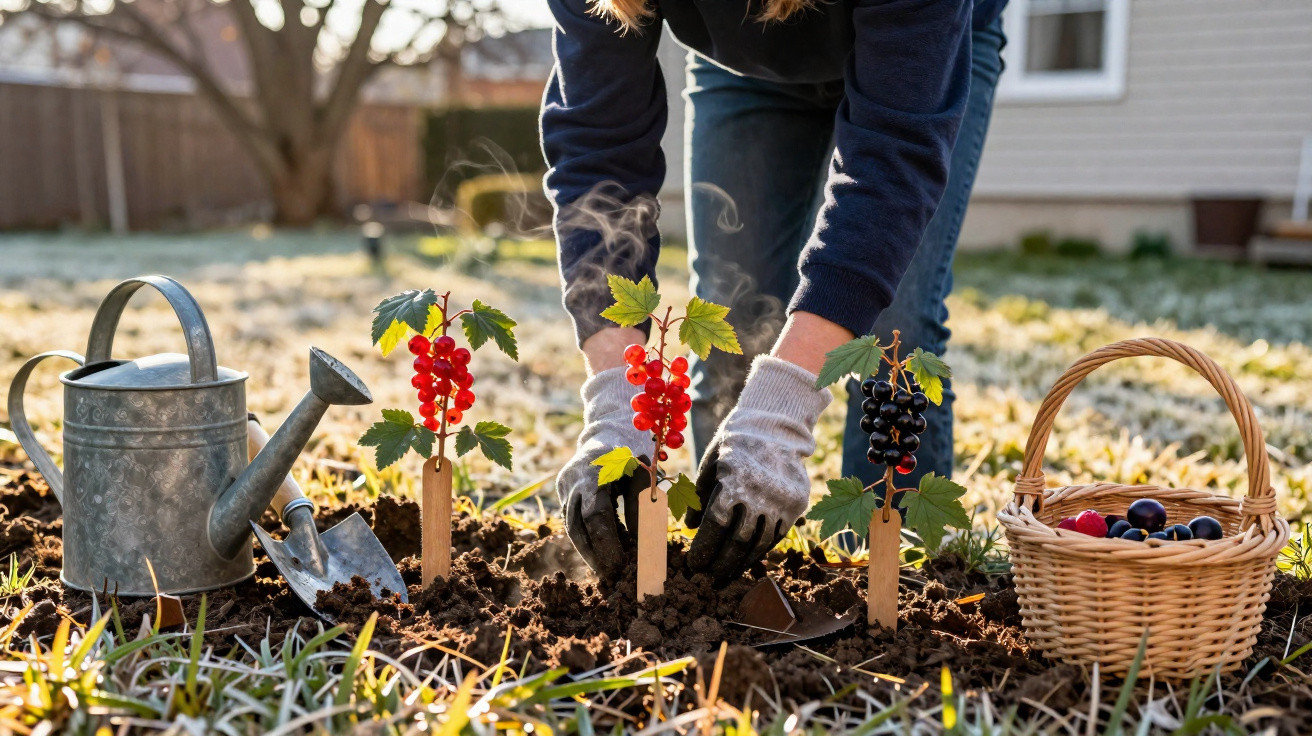
While plenty of people only turn their minds to the garden when spring arrives, a quieter crowd is already setting up next winter’s fruit.
In January, when the lawn still looks asleep and the cold has settled in, some switched-on gardeners do the opposite of what “everyone” expects: they dig, plant and map out what they’ll be picking a few months from now. It’s in this overlooked corner of the calendar that a future basket of red fruits begins-more generous and more reliable-for anyone who chooses the right plants and gets ahead of the game.
Why thinking about fruit now changes what you harvest in six months
For years, the line repeated in back gardens, smallholdings and balconies has been straightforward: plant in spring, harvest in summer. The trouble is, that habit doesn’t match today’s weather patterns as neatly as it used to, nor does it suit certain fruiting shrubs that actually prefer to be settled in before warmth returns.
For a proper “home fruit basket”, three stand out: raspberry, redcurrant and blackcurrant (cassis).
Planted between late autumn and the depths of winter, these fruit plants build strong roots, suffer less stress and crop earlier.
If you wait for higher sun and milder days, you can easily miss the best planting window. Rather than rushing in March or April out of routine, it’s worth treating late January and early February as a smart shortcut to heavier crops with less effort.
Three fruiting shrubs for a complete basket: from sweet to sharp
1. Raspberry: the star that likes to arrive early
For many people, raspberry is the gateway into the world of small fruits. It doesn’t demand much space, can be trained in rows or along fencing, and responds quickly when it’s properly established in cold conditions.
- Flavour: sweet with a light tang, ideal eaten fresh
- Uses: quick puddings, jams, sauces and freezing
- Space: about 2 m x 2 m is enough for a solid row for a family
When planted mid-winter, raspberry takes advantage of soil that is still damp and relatively “warm” deeper down. Even while the top growth is resting, the roots can keep working. That matters when temperatures rise: instead of burning energy just trying to “take” in a new spot, the plant is already anchored and can focus on flowers, new canes and fruit.
2. Redcurrant: patisserie-level sharpness at home
Less familiar in many gardens, redcurrant is increasingly attractive to anyone who bakes regularly or wants to rely less on bought-in fruit. The hanging clusters-red, pink or white-look striking, and they appreciate exactly what many gardeners dislike: cold and moderate moisture.
Redcurrant benefits strongly from early planting because it quickly builds a sturdy woody framework in the first months. With that “skeleton” formed early, it tends to carry fuller, more consistent trusses year after year.
3. Blackcurrant (cassis): the aromatic boost
Blackcurrant (cassis) rounds out the trio with a powerful, almost liqueur-like scent. It isn’t a fruit most people eat in large quantities fresh, but it shines in syrup, sauces, homemade yoghurt and even as an ingredient in drinks.
Raspberry, redcurrant and blackcurrant form a strategic trio: they take up little space, adapt well to cold and deliver complementary flavours.
Set into the ground in cold weather, blackcurrant develops a vigorous root system and typically repays you with better flower and fruit set in its first spring. In smaller gardens, one or two plants can noticeably change what you’re able to store and make.
Winter as an ally: what’s happening beneath the soil
Roots working while the top growth rests
For woody plants like these three fruiting shrubs, winter isn’t a complete stop. Growth above ground slows down, but roots continue to extend whenever soil temperatures climb above roughly 4 °C.
- Less internal competition: most energy is channelled into root growth
- Lower water loss because there are few active leaves
- Stronger anchorage ahead of summer winds and storms
This “silent training” underground shows up at the first hot spell. A plant with deeper, well-spread roots handles dry periods better, can pull water from further afield, and keeps fruit firmer.
Fewer pests, fewer fungi, more breathing space
Cold spells also slow many insects and reduce pressure from fungi that thrive in warm, humid conditions. By the time spring arrives-with roots already established and new shoots starting-the shrubs have passed their most vulnerable phase in a comparatively clean environment.
Winter planting tends to require fewer chemical interventions, because the plant reaches the “pest season” already strengthened.
If you’re aiming for a garden closer to organic management, planting earlier works as a built-in, natural defence.
Soil, weather and timing: the combination that really matters
It’s not just about avoiding frost: soil texture decides the outcome
Checking the forecast for overnight lows isn’t enough. Soil condition matters just as much as the date on the calendar:
- Waterlogged soil: high risk of root rot
- Heavily compacted soil: fine roots struggle to spread
- Very loose, dry soil: poor contact between root and soil
A quick test helps: take a handful of earth from about 15 cm deep, squeeze it, then open your hand. If it forms a clump that breaks apart easily, the structure is about right. If it turns into a dense “brick”, or crumbles with no cohesion at all, it’s not the ideal moment.
Quick table: basic needs of the three fruiting shrubs
| Fruiting shrub | Preferred soil | Light | Typical spacing |
|---|---|---|---|
| Raspberry | Slightly acidic, free-draining, rich in organic matter | Full sun to light partial shade | 50–60 cm between plants |
| Redcurrant | Cool, deep soil with good moisture retention | Light sun or morning sun | 1–1.2 m between plants |
| Blackcurrant (cassis) | Loam/sandy loam, well-structured, rich in humus | Sun to partial shade | 1–1.2 m between plants |
Practical step-by-step: from preparation to the first watering can
Prepare the ground before the best window
If you only start working the soil on planting day, you lose momentum. Ideally, get the bed ready a few days earlier, when conditions are dry.
- Loosen the soil to 30–40 cm deep
- Mix in well-rotted compost or properly aged manure
- In heavy soils, make shallow drainage channels or raised beds to improve drainage
- Let the ground settle for two or three days before planting
With that done, you just wait for a run of mild daytime temperatures and nights without a forecast of hard frost, then get plants in.
Planting and early care: small details that boost yields
A few simple actions make a big difference to how well plants establish:
- Keep young plants hydrated, with roots kept moist before they go into the ground
- Don’t bury the crown too deeply (the transition point between root and stem)
- Firm the soil around the plant by hand to remove air pockets
- Water immediately after planting, even on cold days
A well-used bucket of water on planting day is worth more than three improvised waterings weeks later.
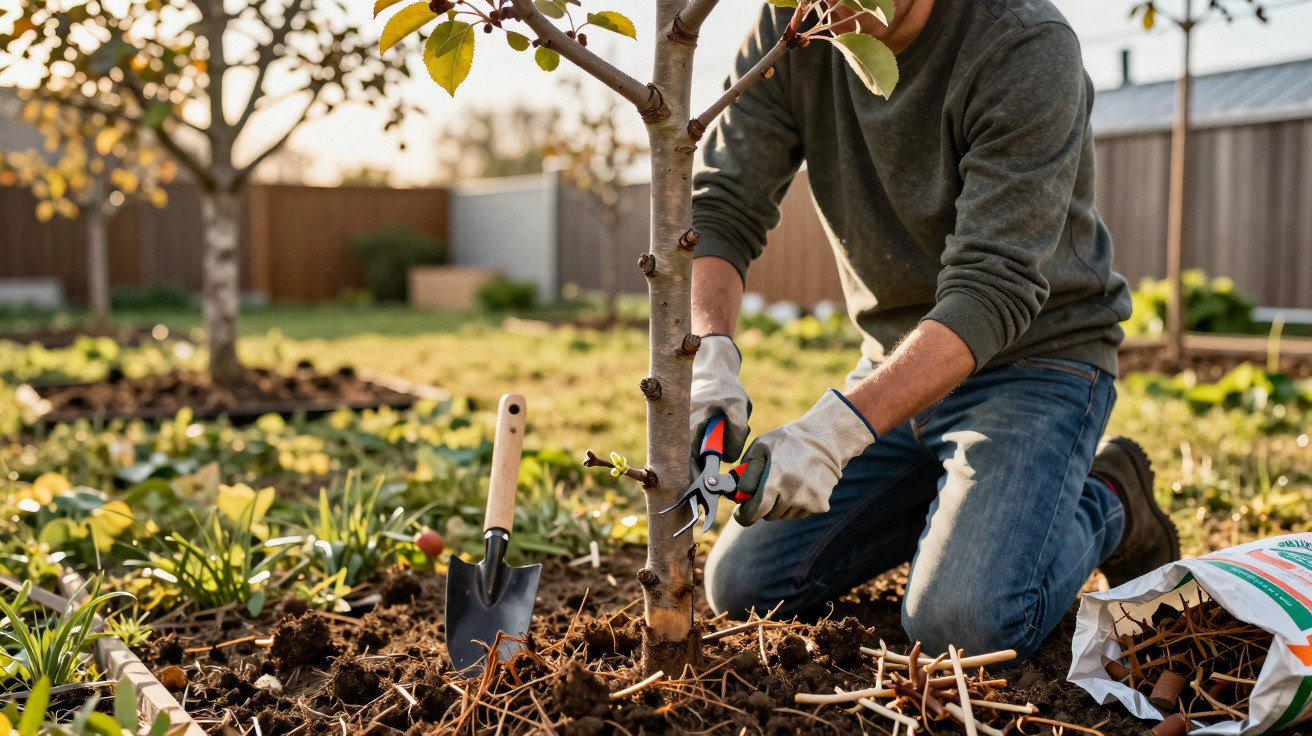
Mulch comes next: lay a 7 to 10 cm layer of straw, dry leaves or chipped prunings around the plants, without piling it against the stem. This cover steadies soil temperature, cuts evaporation and protects the microbial life that supports root health.
A winter of work, a summer of picking: what to expect in practice
Likely timeline if you plant now
If you establish raspberry, redcurrant and blackcurrant during late winter, the season often follows a similar pattern:
- Winter: roots expand and the plant quietly adjusts to its new soil
- Early spring: strong bud break, with more vigorous shoots
- Late spring: more flowers, better spaced and more even
- Summer: successive pickings, with fuller, more regular fruit
- The following autumn: plants are formed and ready to hold their rhythm in the years ahead
Observations from family orchards show a double-digit productivity lift in the first year when planting is brought forward, without increasing space. In other words, the same area produces more.
Risks, tweaks and smart combinations
Bringing planting forward doesn’t remove risk entirely. An out-of-season deep freeze or prolonged rain can disrupt early rooting. It’s sensible to keep a few contingency moves in mind:
- Temporarily cover plants with horticultural fleece if hard frosts arrive
- Channel excess water away using small drainage grooves
- Add more mulch if the soil starts to crack from dryness
If you like planning for the best outcomes, a useful pairing is to edge the bed with pollinator-friendly flowers such as lavender and calendula. That increases bee activity and supports fruit set without needing more room.
One more point worth clarifying is so-called “full fruiting”, which is usually reached from the third year. Many people feel disappointed expecting peak production in the very first season. Winter planting can bring stages forward, but it doesn’t override the plant’s biology. What it does do is shorten the settling-in period: the shrub reaches a steadier balance between growth and cropping more quickly.
For families aiming to cut down on bought-in imported fruit or processed products, this trio of raspberry, redcurrant and blackcurrant works almost like a home signature: harvests in waves, the option to freeze surplus, and a spread of flavours right through summer. Planting in the cold-something that can look “odd” from the outside-often becomes the key difference behind a better fruit basket a few months later.
Comments
No comments yet. Be the first to comment!
Leave a Comment