
A woman in a red fleece stops at the edge of her lawn, rake in hand, taking in a carpet of crisp, copper-coloured leaves.
Further along the road, a leaf blower shrieks like an irritated wasp. It’s the usual autumn chorus: rake teeth rasping, plastic bags crackling, and the dull thump of overfilled sacks dropped by the kerb.
With a weary breath, she tugs on her gloves and gets to work with the steady resolve of someone following what she’s always been told is “good garden hygiene”. Get the leaves off. Make it neat. Put the garden to bed.
Thirty minutes on, her back is stiff, the lawn looks oddly flat and scoured, and five swollen bags of leaves sit by the gate like miserable pumpkins. She doesn’t realise it yet, but she’s just made her biggest autumn gardening mistake.
The ‘clean lawn’ myth that’s quietly damaging your garden
Most of us grew up with the same autumn instruction: as soon as leaves drop, clear them off the grass immediately. Garden centres parade glossy lawns like perfect green carpets with not a leaf in sight. Councils leave pavements swept bare. Neighbours quietly compete over whose lawn looks the most “tidy”, as if it’s a sign of virtue.
So we follow suit. We rake, we blow, we vacuum, and we cram leaves into bin bags. The aim becomes a spotless garden-almost like a lounge you’d happily show visitors. It looks “proper”. It looks managed. It looks… oddly lifeless.
Because the pristine green finish you’re chasing often arrives precisely when your soil, your grass and your local wildlife need you to do the reverse.
Think back to one British suburban street last October. On a mild Saturday, three adjacent gardens told three very different stories. Garden one: a couple using two petrol blowers to drive every leaf into a roaring pile, jaws set, the noise bouncing between the houses. Garden two: an older man methodically raking, then forcing leaves into heavy black bags headed for the tip. Garden three: a scruffy mosaic-leaves left beneath trees, with only the thick mats lifted off the grass.
By April, the contrast was hard to miss. The “leafless” gardens were dealing with thin patches, compacted ground and flowerbeds that looked drained. The “messy” garden showed fewer bare areas, noticeably richer soil and an unexpected burst of self-seeded flowers. No secret feed. Just… fewer bags put out.
Evidence is beginning to support what attentive gardeners have long suspected. Research from US botanical gardens suggests shredded leaves used as mulch can improve soil structure, nourish beneficial fungi and suppress weeds. Where every leaf is removed, earthworm numbers can fall, moisture is lost more quickly, and microbial life becomes less abundant. The price of that tidy look is paid below the surface, out of sight.
When you strip everything back each autumn, it isn’t only “tidying”. You’re taking away food, shelter and next season’s fertility in one sweep.
What to do with your leaves instead of binning them
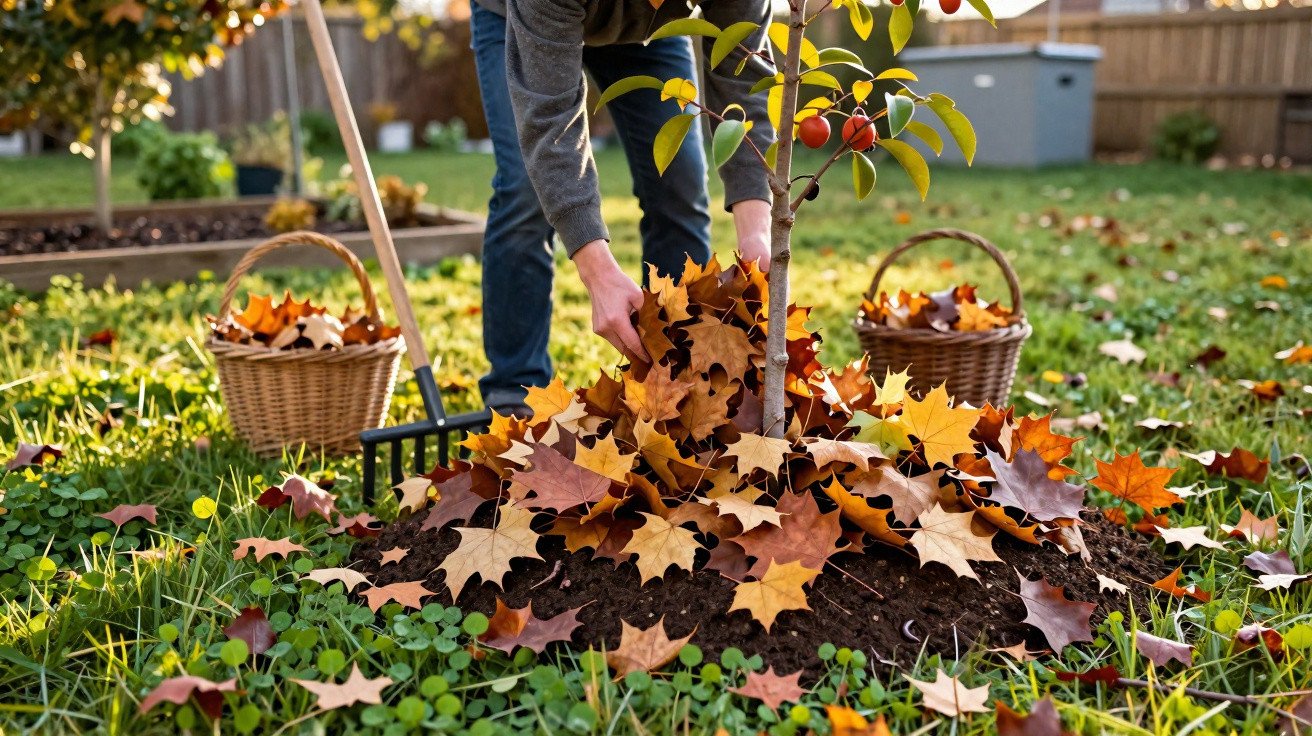
Here’s the understated reality: you don’t have to choose between a lawn smothered in leaf mats and a sterile, leaf-free garden. A more sensible approach is straightforward-shift or blow leaves off the main lawn areas where they gather thickly, then reuse them as free mulch and future compost wherever possible.
Tuck a light layer under shrubs, hedges and trees. Go for something loose, where you can still glimpse soil in places, rather than a heavy, sodden blanket. If your mower has a mulching setting, run it over dry leaves and spread the chopped mix back onto the lawn or onto beds. Smaller pieces break down faster, feeding the ground without sealing it off.
Got leftovers? Stack them somewhere discreet to make leaf mould. A simple heap or a wire cage is enough. In year one it looks unimpressive. By year two, you’ll have a dark, crumbly conditioner that acts like a gentle, pricey soil improver-except it was sitting on your lawn for free.
A common mistake is swinging from one extreme to the other: either removing every last leaf, or declaring “rewilding” and leaving a thick, wet mattress across the entire lawn until spring. Both approaches can backfire.
Grass really can suffer beneath a dense, damp layer-especially in small urban gardens where light levels are lower and drainage is poor. You may notice yellowing patches, moss creeping in, and a springy, unpleasant feel underfoot. That isn’t woodland ecology; it’s simply suffocation.
Go easy on yourself. You don’t need perfect leaf management to get the advantages. Clear the heaviest drifts, spread what remains more thinly, and remember that a bit of leaf cover isn’t “mess”-it’s seasonal. Your garden doesn’t have to look like a catalogue spread to thrive.
One long-time gardener told me something that stayed with me:
“The day I stopped fighting every leaf was the day my garden relaxed… and so did I.”
That’s the real change. You aren’t being careless-you’re deciding when to intervene and when to let nature handle it. You’re turning leaves from a burden into a resource. Under shrubs, they become winter refuge for insects and hedgehogs. On borders, they form a natural layer that slows weeds and holds moisture. On lawns, grass can breathe-rather than sitting under ankle-deep drifts.
- Shift thick leaf build-ups off the main lawn, rather than removing every single leaf.
- Use fallen leaves as mulch beneath trees, hedges and perennial plants.
- Chop dry leaves with a mower (or shred them) to help them break down faster.
- Set up a simple leaf-mould heap in a quiet corner.
- Keep some deliberately “untidy” areas as wildlife habitat.
Rethinking what a ‘good’ autumn garden looks like
On a calm afternoon in November, walk through almost any neighbourhood and you’ll hear the same sounds: the low hum of leaf blowers, rakes scraping, and garden-waste sacks rasping along the pavement towards the kerb. It’s a seasonal ritual of control. We treat effort as proof of care, tidiness as success, and a bare lawn as the mark of a “proper” gardener.
Yet the gardens that feel most vibrant in early spring are rarely the ones scrubbed spotless through winter. More often, they’re slightly rumpled: leaves still edging the borders, a few faded stems left standing, and soil covered and protected rather than exposed. At heart, it’s a move from domination to cooperation. Letting nature take on part of the workload, instead of fighting it with every tool in the shed.
There’s a human shift in it too. On a freezing Sunday morning, do you really want to be outside battling every last leaf because a tidy ideal is lodged in your mind? Or can you allow yourself to do “enough” and let the rest belong to the season? On a screen, it reads like a small gardening tip. In day-to-day life, it’s a modest refusal to feel you must control everything.
Practically speaking, those leaves you used to haul to the kerb can reduce the work you face in spring. Beds mulched with leaves are simpler to weed. Soil enriched by decomposing foliage holds onto moisture better during summer dry spells. And wildlife that overwinters in leaf litter-ladybirds, ground beetles, solitary bees-will quietly help keep pests in check, reducing the temptation to reach for sprays.
Let’s be honest: nobody keeps up with this perfectly. No one always times their raking just right, chops every leaf, and turns a leaf-mould heap on schedule. That’s beside the point. Making one or two small adjustments to how you handle autumn leaves can influence your garden for the whole year. It begins by questioning one loud, persistent message: that clearing away leaves is always the correct choice.
| Key point | Detail | Why it matters to you |
|---|---|---|
| Don’t throw it all away | Move only the thick layers of leaves off the lawn | Protects the grass without losing the soil benefits |
| Use them as mulch | Spread a thin layer under hedges, trees and borders | Feeds the soil, reduces weeds and retains moisture |
| Create a “leaf corner” | Build a simple heap or leaf cage to make leaf mould | Produces a rich spring soil improver for free |
FAQ:
- Will leaves really kill my lawn if I leave them? A light, scattered layer usually won’t. The main problem is thick, wet piles left on the grass all winter, which block light and airflow and can lead to yellow patches and disease.
- Is it okay to mulch with any kind of leaves? Most tree leaves work well. Very thick, leathery leaves (such as laurel) decompose slowly, so it’s best to shred them or keep them in a separate heap to rot down longer.
- Do I need a special shredder for leaves? No. A standard mower over dry leaves is surprisingly effective. Raise the cutting height, go slowly, and spread the chopped mix onto borders or compost heaps.
- Won’t leaving leaves attract pests? Leaf litter mainly provides cover for beneficial insects and small wildlife. Slugs may use it too, but a healthy garden often keeps them in check through natural predators.
- How long does leaf mould take to be ready? Allow roughly 1–2 years, depending on the leaf type and how tightly the heap is packed. When it’s dark, crumbly and smells like a woodland floor, it’s ready to use.


Comments
No comments yet. Be the first to comment!
Leave a Comment