
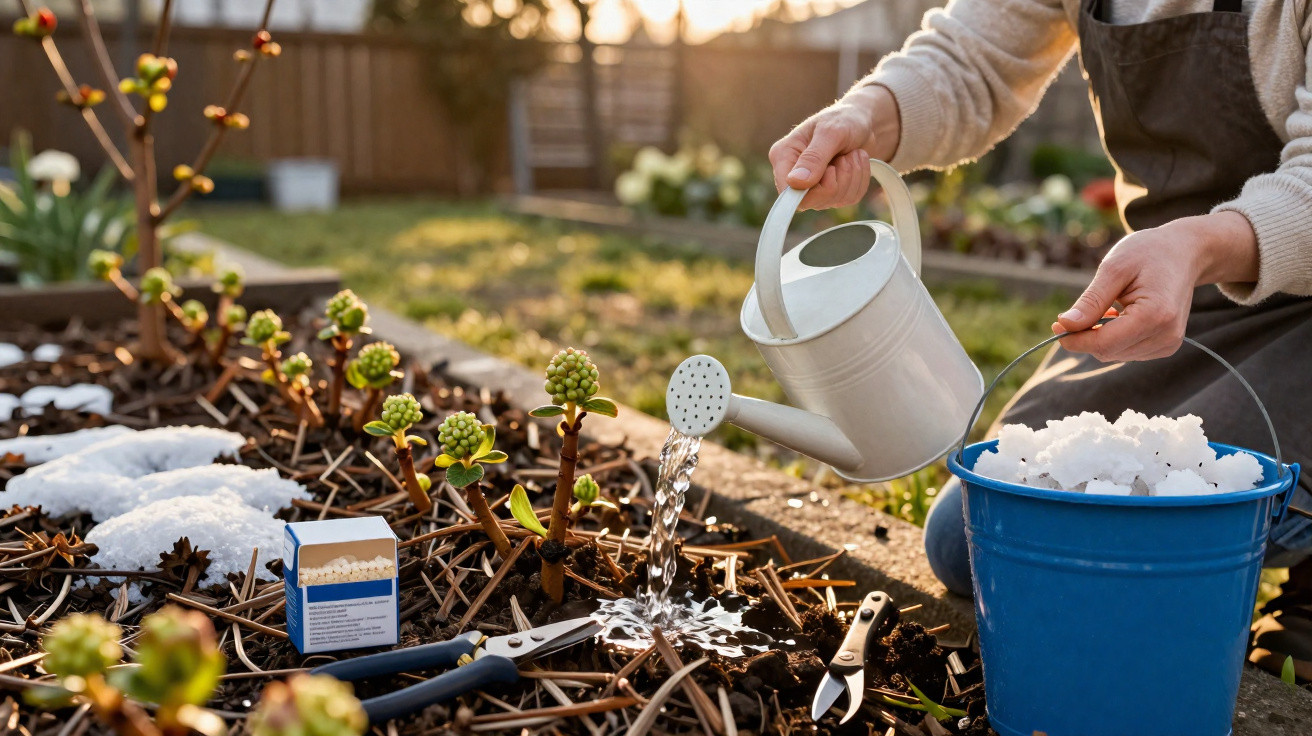
As winter tails off, the garden may look dormant, yet for hydrangeas this is the turning point that determines how well they flower. With a bucket, a straightforward feed and the right pruning approach, those leafless shrubs can be steered towards big, bright pom‑poms rather than dry, brittle stems.
Why late winter is make‑or‑break for hydrangeas
Once the snow has gone or the worst frosts have lifted, hydrangeas are already stirring underground. Buds are in place, the roots are working and the plant is poised for light and nutrients. Many people concentrate on deadheading in summer, but the decisions that matter most are usually made in February and March.
"What you pour around hydrangeas in early spring largely decides whether you get armfuls of flowers or just woody sticks."
In most temperate areas, the key period is from late February into March, after daytime temperatures remain above freezing. This is the point when it makes sense to:
- Take off or loosen any winter protection
- Look for signs of drought stress and water if the soil is very dry
- Do the first prune of the year, matched to the hydrangea type
- Give the first application of fertiliser or an organic feed
Missing these tasks seldom kills hydrangeas, but it can severely cut back flowering and leave plants less resilient against late cold snaps and summer heat.
Uncovering hydrangeas safely after snow
In colder locations, gardeners often wrap hydrangeas in horticultural fleece or similar coverings to shield buds from wind and ice. When a sunny spell arrives, it is tempting to remove everything immediately, but that quick change can backfire.
Hold off until the forecast shows a run of mild days with temperatures above 0°C. Then peel back fleece or other covers on a dry day so the branches are not left cold and damp. If another hard frost is expected, be prepared to put the protection back on overnight.
"The safest rhythm is: uncover in mild spells, keep covers handy, and protect again when temperatures plunge below freezing."
Panicle hydrangeas (Hydrangea paniculata) - sometimes labelled “hydrangea paniculata” or “hydrangea bouquet” in certain guides - usually cope without wrapping in milder UK or US gardens. Bigleaf hydrangeas (Hydrangea macrophylla) and oakleaf hydrangeas (Hydrangea quercifolia) are more easily damaged, so they benefit from extra protection in colder districts or exposed positions.
Pruning: different hydrangeas, different rules
Hydrangeas do not all set flowers on the same type of growth. That single detail is behind many lacklustre displays where buds fail to open. Prune the wrong wood and you can remove the season’s blooms before they even begin.
Hydrangeas that flower on last year’s wood
These hydrangeas form flowers on stems that grew the previous year:
- Bigleaf hydrangea (Hydrangea macrophylla)
- Mountain or serrata hydrangea (Hydrangea serrata, often called “lacecap” types)
- Oakleaf hydrangea (Hydrangea quercifolia)
For these varieties, keep spring pruning modest and precise:
- Remove only stems that are dead, snapped or clearly dried out
- Take off the old, browned flower heads, cutting just above the first pair of sturdy buds
- Thin a small amount of very old, weak growth at the base to improve airflow and light
"On last‑year’s‑wood hydrangeas, stop cutting once you reach a plump pair of buds – those are this summer’s flower heads."
Hydrangeas that flower on this year’s wood
Panicle hydrangea (H. paniculata) and smooth hydrangea (H. arborescens, often sold as ‘Annabelle’) produce flower buds on new shoots that develop in spring.
They generally benefit from a more decisive prune:
- Reduce each stem by roughly two‑thirds in late winter or very early spring
- Maintain a structure of strong, evenly spaced shoots to keep a good shape
- Cut out weak, crossing or spindly growth right down at the base
A harder cut promotes vigorous new growth that carries large, eye‑catching flower heads later on. If left unpruned, the shrub can become top‑heavy and is more likely to break in wind or heavy rain.
The bucket trick: what to “pour” around hydrangeas
The familiar tip - “when the snow melts, grab a bucket and pour it around your hydrangeas” - is less about plain water and more about what you add to it. Feeding at the start of spring influences root energy, leafy growth and how many flower heads you get.
"Think of the first spring feed as breakfast after a long fast: generous, balanced and focused on building strength."
Best early spring feeds for hydrangeas
| Feed | How to use | Main benefits |
|---|---|---|
| Garden compost | Apply a 3–5 cm layer around the base, keeping it clear of the stems | Slow‑release nutrients, improved soil structure, moisture retention |
| Liquid biohumus (worm cast extract) | Dilute with water as instructed and soak the root area | Encourages root activity, boosts resilience, gentle feeding |
| Used coffee grounds | Sprinkle lightly around the plant or add to compost, then water | Supplies nitrogen, potassium and phosphorus and slightly acidifies soil |
| Balanced granular fertiliser for shrubs | Apply at the stated rate and water in using a bucket | Fast boost of key nutrients, supports early shoot growth |
For the bucket approach, many gardeners pair watering with a liquid feed. Fill a bucket with water, mix in diluted biohumus (or another organic liquid fertiliser) and pour it slowly over the root zone. Apply it when the soil is already slightly moist rather than extremely dry, so the solution soaks in evenly instead of running off the surface.
Why nitrogen and acidity matter for hydrangeas
Hydrangeas prefer soil that is rich in humus and slightly acidic. Spring nitrogen supports strong leaf growth, which helps the plant carry more flower heads. In addition, a mildly acidic pH can encourage certain varieties to develop bluer or more purple tones rather than pink.
"Early spring feeds that both nourish and gently acidify the soil can boost flower size and, in some varieties, deepen colour."
Used coffee grounds are favoured because they add small amounts of nitrogen, potassium and phosphorus while nudging alkaline soil towards acidity. The trick is to keep quantities modest: a light scattering around the plant, or a small handful blended into compost, is plenty. If applied too thickly, coffee grounds can form a crust that sheds water.
Practical spring care routine: a simple checklist
If you prefer an easy plan to follow from the moment snow disappears or frosts loosen their grip, this sequence can help:
- Look ahead at the next week’s forecast and avoid pruning during a severe cold spell
- On a mild day, remove or loosen winter covers from sensitive hydrangeas
- Prune based on type: gentle shaping for last‑year’s‑wood varieties, heavier cuts for this‑year’s‑wood types
- Add a ring of compost or well‑rotted manure around each shrub
- Prepare a bucket of water, mix in liquid organic feed as directed and pour slowly around the roots
- If you wish, add a light sprinkle of coffee grounds beneath the compost layer
- During dry periods, water again to prevent “physiological drought”, when frozen or dry soil stops roots absorbing moisture
Potential pitfalls and what to avoid
Spring enthusiasm can trigger a few predictable errors. Applying too much strong chemical fertiliser may scorch roots or drive lush leaf growth while reducing flowering. Keep to the stated dose and, where possible, choose slow‑release or organic feeds.
Another common issue is pruning at the wrong moment. Cutting bigleaf hydrangeas back hard in April, as buds begin to swell, can result in a vigorous green shrub with little or no bloom. If you are uncertain which type you have, start with minimal cuts and watch where flowers appear that season.
Leaving protective covers on for too long can also encourage mould or produce soft growth that the wind damages easily. The aim is a middle ground: cover in harsh cold, then remove promptly once milder weather is reliably settled.
Going further: combining feeds and long‑term care
Hydrangeas often do best with a layered feeding strategy. Adding compost each spring gradually improves soil health. A bucket of liquid feed in early spring helps to rouse the roots. A second, lighter feed in late spring or early summer can aid bud development, particularly after prolonged rain that washes nutrients out.
Gardeners who like to experiment sometimes compare feeding combinations to see what changes in colour and vigour occur. For instance, using compost plus coffee grounds and a specialist hydrangea fertiliser on one shrub, while giving only compost to another nearby, can reveal clear differences in flower intensity and leaf size by mid‑summer.
If you are new to growing hydrangeas, a practical guideline is this: when a plant looks like a bundle of dry sticks after winter, prioritise pruning and watering first, then use gentle feeds. If the shrub has plenty of healthy wood but produces few or small flowers, recheck your spring fertiliser choice and the timing of your pruning. The bucket you carry out as the snow finally melts can be the small routine that transforms the display.




Comments
No comments yet. Be the first to comment!
Leave a Comment