
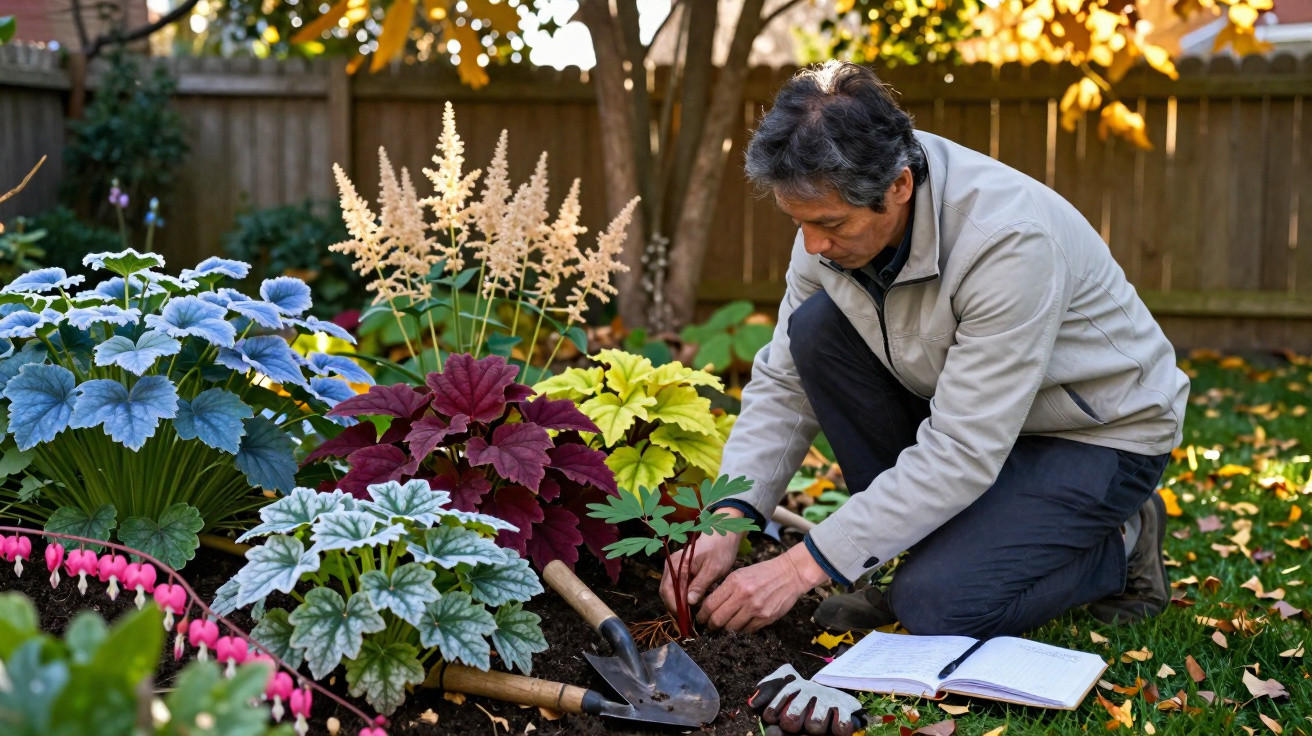
Many gardeners wrestle with bleak, bare patches where the light rarely reaches, yet a small set of shade perennials will steadily fill those beds while demanding very little in return.
From the UK to the US, more people are arriving at a slightly awkward realisation: the plants that do the most in winter shade are often the same ones they’ve walked straight past at the garden centre for years. With December 2025 on the horizon, these easy-going perennials are transforming overlooked corners into reliable, almost self-sustaining plantings.
Why gardeners now regret ignoring these shade perennials
Perennials are the quiet framework of a low-input garden. Because they return year after year, gradually broaden out, and reduce the need for constant replanting, they can dramatically shrink the maintenance list. The ten plants at the heart of recent winter chatter have an unusually useful mix of traits: they tolerate shade, cope with cold, and keep the soil covered when annuals give up.
These perennials don’t just survive in awkward shade; they quietly occupy the space, block weeds and hold structure from late winter to autumn.
Regret tends to land the moment someone notices how long a tricky area stayed empty. The open ground beneath a mature tree might have been layered with a dense mat of tiarellas. A north-facing fence could have been brightened for years by hellebore flowers in January. A flat, damp border could already be carrying tall, scented stems of Actaea racemosa moving above deep foliage.
Rather than persisting with short-lived annuals that struggle in low light, these shade-tolerant perennials settle down, stitch the soil together and require almost no ongoing attention. In practice, they help in three straightforward ways:
- They hide bare ground and limit weed growth.
- They even out moisture levels and shield the soil from winter rain and frost.
- They offer stems, foliage and flowers when nearby beds appear empty.
For most of them, success comes down to two basics: plant them in the correct level of shade, then stop interfering. Realising that a few seasons late is what frustrates many experienced gardeners most in 2025.
Planting in late autumn and early winter: timing quietly shifts
For years, spring was treated as the standard moment for planting. That default is changing, particularly for hardy perennials in temperate regions. Many gardeners in Britain and the northern US are finding stronger results by setting robust shade perennials out from late autumn into early winter, provided the ground can still be worked with a spade.
The aim is simple: let roots grow while the top growth sleeps, so plants wake in spring already anchored deep in cool, moist soil.
This mirrors what’s seen in certain traditional medicinal plants such as black horehound, which builds substantial roots through the colder months. The same principle suits many shade perennials listed here: they prefer consistent, cool moisture and minimal disruption while they get established.
Watching the soil before a cold snap
A practical routine is becoming more common this winter: a quick soil check before a serious frost arrives. It only takes five minutes and can prevent losses in a newly planted perennial bed.
| Step | What to do | What it tells you |
|---|---|---|
| 1. Sample | Take soil from about 8 cm deep in several spots. | Shows general moisture and texture across the bed. |
| 2. Feel | Squeeze a small handful into a loose ball. | If it smears and clings, it’s very wet and more prone to frost damage. |
| 3. Blot | Place some soil on kitchen paper for a minute. | A broad dark halo signals high water content and higher frost risk. |
If the soil is clearly waterlogged, new perennials can be left exposed. In that situation, gardeners now typically:
- Avoid watering ahead of freezing nights.
- Apply a thin organic mulch over new plantings.
- Cover first-year plants with simple horticultural fleece or winter fabric.
Where the soil feels only slightly damp and breaks apart easily rather than sticking, a single thorough watering at planting time is often sufficient. After that, winter rain and low evaporation do the rest, encouraging roots to grow downwards in search of air pockets instead of lingering near the surface.
The 10 low‑maintenance perennials changing shade gardens
These plants share a clear theme: they perform in light shade through to full shade, accept cool (often moist) conditions, and offer interest across long stretches of the year. Their performance in trial gardens and private plots over recent seasons helps explain their rapid rise in late‑2020s planting plans.
1. Brunnera macrophylla: the forget-me-not that stays
Brunnera-often referred to as the perennial forget‑me‑not-lifts into spring with clouds of tiny blue flowers above broad, heart-shaped leaves. Many modern cultivars also bring silvery or patterned foliage that brightens deep shade well after flowering finishes. Beneath deciduous trees, it manages spring sunshine and summer dappled light with ease.
2. Epimedium: delicate flowers, tough roots
Epimedium, sometimes labelled “fairy wings”, is a strong answer to awkward dry shade, particularly under trees that drink heavily. Its fine, wiry roots thread through the shallow root systems of larger plants and hold the soil where few perennials will cope. Fresh growth in spring often emerges bronze or red-tinged before settling to green, while the tiny, dangling flowers reward close viewing.
3. Heuchera: foliage as the main event
Heucheras (coral bells) have moved beyond their old role as simple edging and are now used as key design plants. Their leaves span colours from soft caramel and lime to near-black, allowing gardeners to create distinct blocks of colour even in dull light. They’re particularly effective beside paths near the house, where their evergreen or semi-evergreen habit keeps the planting looking alive through winter.
4. Pulmonaria: early colour and speckled leaves
Pulmonaria is among the earliest perennials to appear towards the end of winter. Its clusters of blue, pink or bi-coloured flowers support early pollinators, and its silver-spotted leaves remain attractive for much of the year. In a moist, shaded border, a small planting can knit together in two seasons.
5. Astilbe: plumes above cool soil
Astilbes add height and movement in shady areas that retain moisture, especially near ponds or below downpipes. Their feathery plumes-ranging from white to deep red-rise above fern-like foliage in early to mid-summer. If left uncut, the finished plumes catch frost and provide structure in December.
6. Dicentra spectabilis: archways of hearts
Now commonly sold as Lamprocapnos spectabilis but still widely known as bleeding heart, this plant produces arching stems hung with pink or white heart-shaped flowers in late spring. It fits best in a sheltered bed with partial shade and combines well with hostas and ferns. Because the foliage can fade in high summer, gardeners increasingly underplant with heucheras or brunnera to keep the area filled.
7. Tiarella: living carpet for dark corners
Tiarellas make neat, low clumps with patterned leaves and airy spires of white or pale pink flowers. Their real value is coverage: they spread at a steady pace to form a soft carpet that suppresses weeds along shady borders and woodland-style paths.
8. Helleborus: winter flowers on standby
Hellebores-often called Christmas or Lenten roses-solve one of the most frequent complaints in temperate gardens: that everything looks lifeless from December through February. With glossy evergreen leaves and nodding flowers that can begin in mid-winter, they hold attention when most beds have collapsed.
By December 2025, many gardeners who once ignored hellebores now rely on them as the anchor plants that make winter feel like a proper season, not a blank interval.
9. Actaea racemosa: height, shade and fragrance
Actaea racemosa, also sold as cimicifuga, can reach about 1.5 metres or more in fertile soil. Late in the season it sends up tall white spikes that are scented and attractive to insects, arriving just as many other perennials are winding down. Dark-leaved forms bring extra drama to deeply shaded back borders.
10. Sanguinaria canadensis: brief but striking
Sanguinaria canadensis (bloodroot) offers a short but memorable display. In early spring, white, daisy-like flowers open just ahead of the tightly folded leaves, which then expand into sculptural bluish foliage. It’s well suited to naturalistic woodland planting, where small, precisely timed bursts of bloom are part of the charm.
Building a year‑round shade scene with almost no effort
When these ten plants are used together, the shade border often stops feeling like a problem and starts behaving like a calm seasonal sequence. Hellebores and pulmonarias begin the year, brunnera and tiarellas follow soon after, bleeding hearts take the lead in late spring, and astilbes, heucheras and actaeas carry the display through summer into early autumn.
A single annual mulch of leaf mould or compost is usually enough to retain moisture, keep weeds down and feed the planting gradually. Many of these perennials also thicken into clumps over time, allowing gardeners to lift and divide them every few years and repeat successful combinations elsewhere without extra purchases.
What this trend changes for home gardeners in 2025
The surge in interest around low‑maintenance shade perennials does more than make winter beds look better. It is also changing how people plan their time and spend their money. Instead of buying trays of short-lived annuals every spring to patch up difficult corners, more gardeners are building a permanent backbone of foliage and long-lived roots, then adding seasonal extras only where the light and soil conditions are suitable.
This shift also lowers risk during unsettled weather. As patterns become less predictable, beds anchored by tough shade perennials generally cope better with sudden downpours and brief dry spells than bare soil or containers crammed with thirsty plants. For beginners, these species provide a forgiving way to learn: plant once with basic care, then observe how the plants respond across an entire year.

Comments
No comments yet. Be the first to comment!
Leave a Comment