
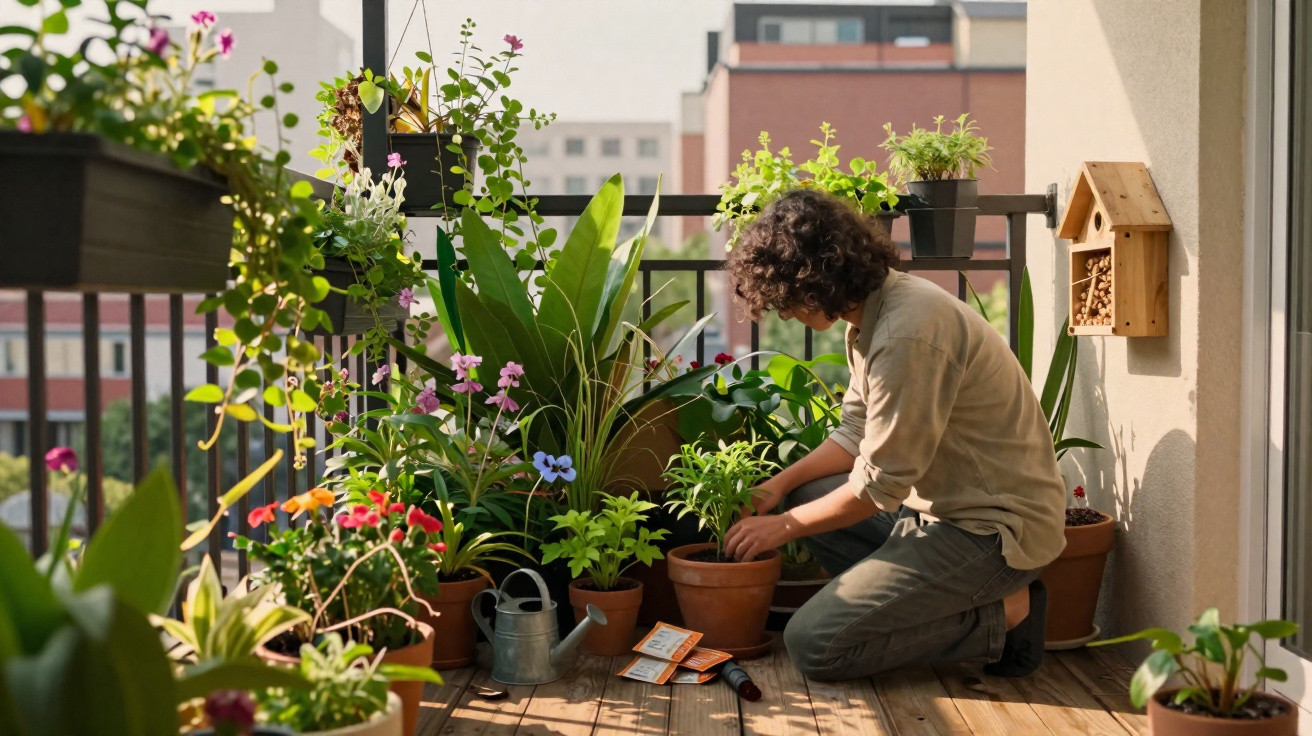
On a fifth-floor balcony there are two plastic chairs, one rosemary plant on its last legs, and a view made up of 40 matching windows. At first glance, that’s the whole scene.
Then you notice the neighbour’s railing: a chaotic tangle of terracotta pots, charity-shop containers, and an old metal toolbox that’s now spilling over with marigolds. Bees float between a chipped mug crammed with thyme and a tall tomato pot, zigzagging like tiny commuters hopping from building to building.
You rest your arms on your own bare railing and feel that familiar, persistent question edge in.
What could a small, rented space like this actually turn into?
Why variety matters when you barely have room to move
Begin here: a tiny garden that grows only one thing is like trying to hold a conversation using a single word. It’s still something, but it doesn’t have much music in it.
When you squeeze variety into a balcony planter or a narrow strip of garden, you’re doing more than plugging empty bits of soil. You’re building layers of life. Different root depths, leaf shapes, flowering windows and scents can share the same small patch of compost, each one taking up its own “storey” of the space.
That’s when things start to add up.
You can feel the difference in any urban courtyard that’s been left to just one plant. A neat hedge of the same species, identical geraniums repeated in every pot, or nothing but lawn clipped to one exact height. It looks orderly, yet oddly drained.
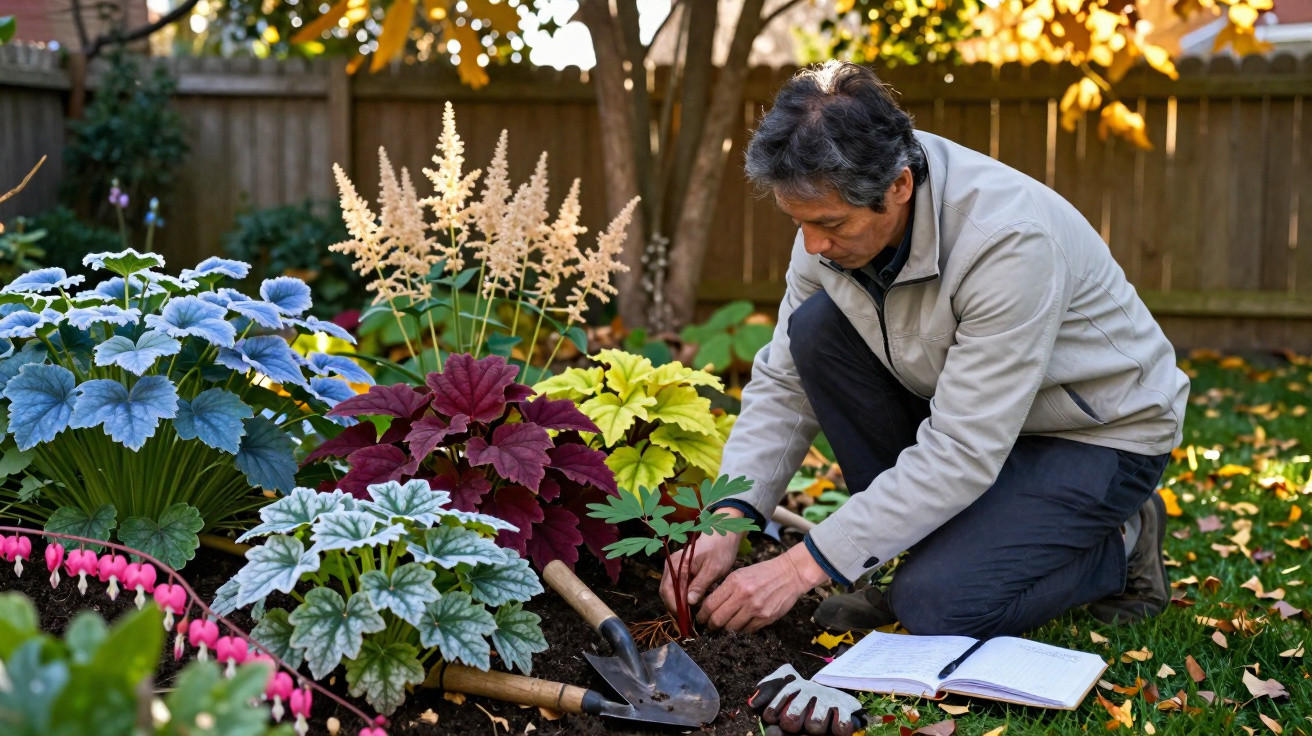
Then you come across one of those postage-stamp front gardens an older neighbour has quietly cared for over years. Lavender brushes your legs. Strawberries creep out from under a rose bush. A pot of mint muscles in beside a cracked step. Bees dart, ladybirds turn up, and birds actually stop and land rather than simply passing overhead.
Same square metres. Entirely different feeling.
That hum has a cause. Each species brings its own visitors: some flowers attract specific pollinators; some leaves shelter tiny hunters that tackle aphids; some roots leave channels that help water soak down. A mixed balcony box is, in effect, a tower block for micro‑life.
Even a small-scale monoculture is delicate. One heatwave, one pest, one missed watering, and everything struggles together. With diversity, one plant’s strengths quietly cover another’s weak spots.
Your little patch ends up tougher than it appears.
How to grow diversity when you only have a balcony and a windowsill
Think in layers rather than square metres: top, middle, ground. If you use those three levels intentionally, you can fit in far more variety than you’d expect.
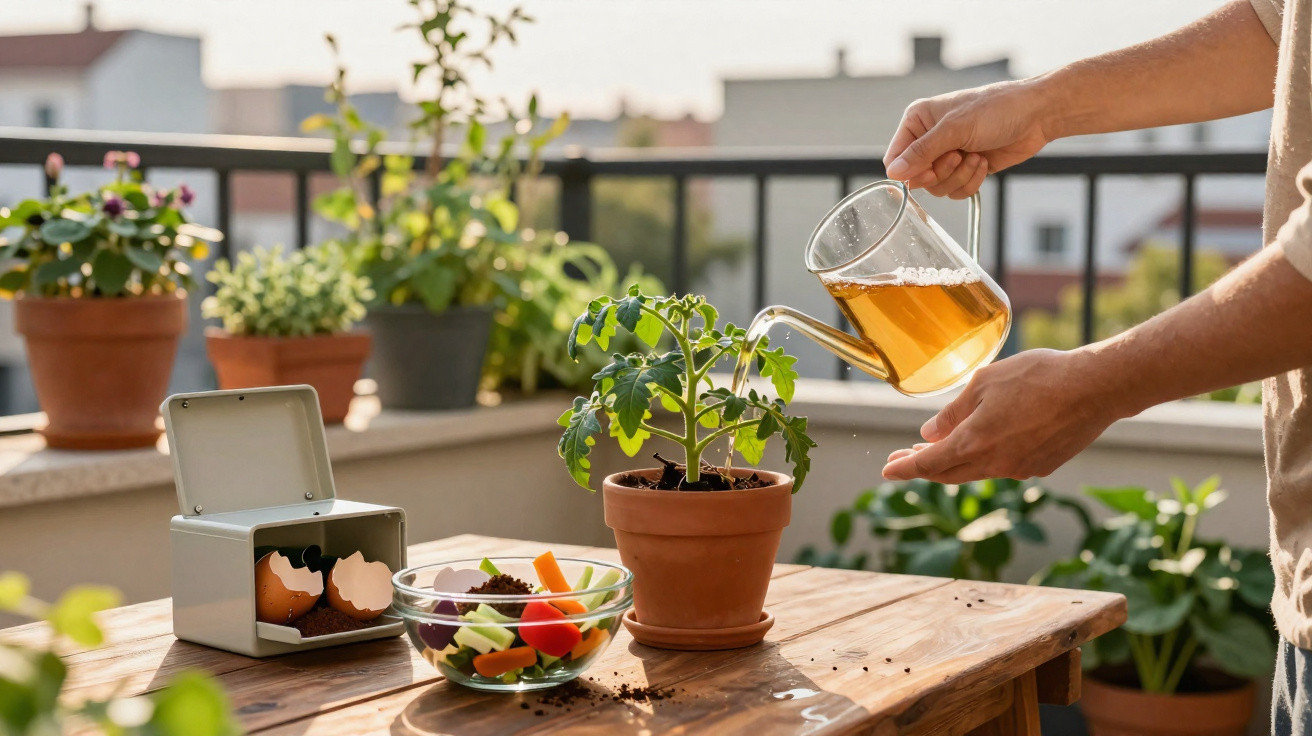
Up on the “top floor”, go vertical: a cherry tomato trained on string, a pole bean winding around a bamboo cane, or peas on a slim trellis. In the middle layer, choose plants that stay compact but full: bushy herbs, small peppers, dwarf dahlias. Down at ground level, let things trail and spread: strawberries that tumble over the edge, creeping thyme, low salad mixes that spill out of a window box.
You’re not expanding the footprint. You’re stacking it.
A lot of people lock up in the garden centre, read a wall of labels, and walk out with two reliable geraniums. That reaction is completely normal. A simpler approach is to choose just three “jobs”: something you can eat, something that feeds pollinators, and something that makes the space feel calm to look at.
That might be lettuce + basil + calendula. Or cherry tomato + lavender + trailing ivy. Don’t get stuck on Latin names. Don’t hold off until you’ve designed the “perfect” layout. Plants are more forgiving than social media makes them look.
And, honestly, nobody keeps this up perfectly every day. You’ll miss a watering now and then. With variety, at least a few plants will cope and carry on.
“People think they need a big garden to help biodiversity,” a city horticulturist told me once, dusting soil from her hands. “But a single diverse balcony on every floor of a building? That’s an entire vertical ecosystem.”
- Mix bloom times
Early-, mid- and late-flowering plants keep bees visiting from spring through to autumn. - Use different pot depths
Shallow planters for lettuce, deeper pots for tomatoes or roses, tiny cups for micro-herbs. - Blend edible and ornamental
Marigolds with tomatoes, nasturtiums with lettuce, chives along the edge of flower pots. - Invite “useful” insects
Grow fennel, dill or yarrow to host lacewings and ladybirds that eat pests. - Leave one wild corner
A half-neglected pot, a small pile of twigs, or a tray of fallen leaves becomes shelter for hidden helpers.
The quiet power of a tiny, diverse patch
Once you start noticing, you see how even the smallest, most cluttered spaces can begin to throb with life. One borage plant that survives the odds can end up hosting half the bees in the street. A window box packed with mixed herbs becomes a late-night snack counter for moths. A single pot of native flowers can lure in a butterfly you haven’t seen since you were a child.
Your garden stops being just “decor” and turns into a small act of involvement. You’re not only living in the city any more. You’re helping write its living edges.
| Key point | Detail | Value for the reader |
|---|---|---|
| Layer your space | Use vertical supports, mid-height pots, and trailing plants | Grow more species without needing more square metres |
| Blend roles | Combine edible, pollinator-friendly, and calming plants | Enjoy food, beauty, and wildlife in one tiny space |
| Let it be imperfect | Keep one “wild” corner or scruffy pot | Create shelter for insects and boost resilience with almost no effort |
FAQ:
- Question 1 Can a single balcony really make any difference for biodiversity?
- Answer 1 Yes. Many insects and birds move in short hops, using balconies, tiny gardens, and street trees as stepping stones. A diverse balcony becomes a crucial refuelling stop in that chain.
- Question 2 How many different plants do I need for “real” diversity?
- Answer 2 A good starting point is 5–8 species with different shapes and roles: at least one herb, one flowering plant, one edible, one “wild” or native species, and one climber or trailer.
- Question 3 Isn’t mixing lots of plants harder to maintain?
- Answer 3 It can actually be easier. Dense, mixed planting shades the soil, reduces evaporation, and attracts natural pest controllers, so you often water and spray less.
- Question 4 What if my balcony is in deep shade?
- Answer 4 Focus on shade‑tolerant species like mint, chives, ferns, hostas, and woodland flowers. Diversity still works: you’re just choosing plants from a different cast of characters.
- Question 5 Do I need special soil or expensive containers?
- Answer 5 No. Good quality potting mix and decent drainage are enough for most balcony gardens. Upcycled containers with holes drilled in the bottom can host a rich mix of species.
Comments
No comments yet. Be the first to comment!
Leave a Comment