
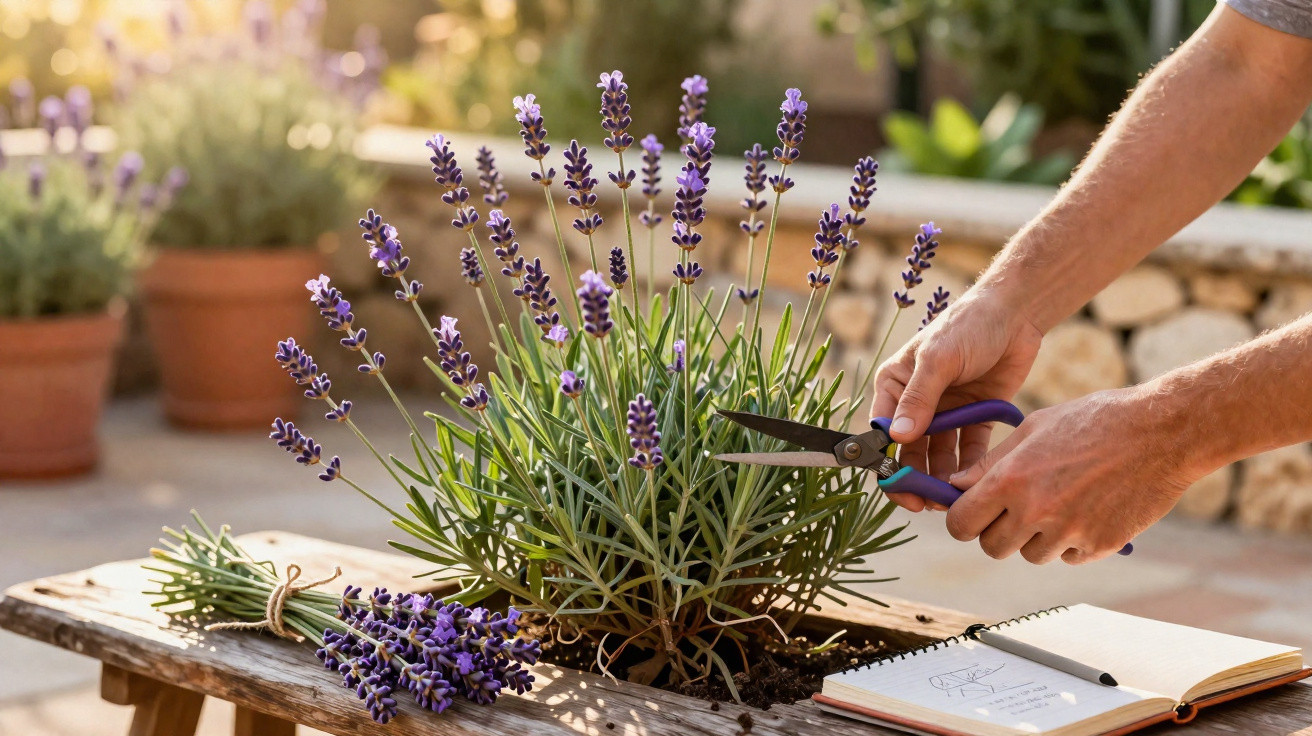
A violet cushion of flowers in summer, grey-green shrubs in winter - that’s how many people picture lavender. In reality, it often ends up as a few dry sticks that look tired after only a few years. The usual culprit isn’t the climate or the soil, but how - or whether - it’s pruned at all. If you cut lavender back deliberately and at the right moment, you can almost double how long your plants stay in good shape.
Why lavender ages so quickly without pruning
Lavender isn’t a typical herbaceous shrub; it’s a subshrub. That means the base quickly becomes hard, brown, woody growth, while the top carries the young, green shoots - and that’s exactly where the issue begins.
From the old, woody section, the plant produces hardly any fresh buds. If a bush is left unpruned for years, or is cut back randomly, the same pattern follows: the centre opens up, the plant splays apart, and it starts to resemble a dry bundle of twigs. If you then panic and cut deep into the wood, you often kill off whole shoots.
"Lavender that is cut back every year in the green growth can stay vigorous for up to two decades - neglected plants often die after fewer than ten years."
Consistent pruning keeps the shrub youthful: it pushes out new side shoots, stays compact, and produces far more flower spikes because light can reach all parts of the plant.
The two most important pruning times each year
Timing matters almost as much as technique. Many amateur gardeners hesitate, worried they’ll cut "too early" or "too late" - and end up not pruning at all. Lavender punishes that delay.
Main cut after flowering
The key date is straight after the main flush of flowering. Depending on where you are, that’s roughly late August to late September. By then most flowers have faded, but the plant still has enough energy in the shoots to respond well.
- Aim: Remove spent blooms, restore the shape, and keep the shrub compact.
- Method: Cut only in the green, leafy growth, shortening roughly one third of the fresh shoots.
Second cut in late winter
A second, optional cut falls between February and March, before sap flow really picks up. This one is mainly for corrections and shaping.
- In mild areas: Prune normally after flowering, then lightly reshape in late winter while buds are still tight to the stems.
- In exposed areas and upland regions: In autumn, do only a basic tidy (remove the flower heads). The real shaping and maintenance cut then follows in March on a dry, frost-free day.
The calendar is only a guide. What matters is what you see on the plant: if the shoots are still soft and green, pruning is straightforward. If your cut lands in dead, brown wood, the shrub will barely respond.
How to prune lavender correctly - step by step
Before you start, take a moment to check your tools. Sharp, clean kit avoids crushed stems and lowers the risk of disease.
- Prepare the tools: Sharpen and disinfect the shears.
- Pick dry weather: No rain and no frost - cuts dry quickly under these conditions.
- Set your safety line: Identify the lowest ring of green leaves. Never cut below it.
- Shorten spent flower stems: Cut flower stalks just above the first pair of leaves.
- Reduce the green growth: Overall, trim the fresh shoots back by about one third.
- Finish the shape: The shrub should end up like a slightly flattened cushion - rounded, not boxy.
"The invisible 'safety line' - the last closed ring of green leaves - determines whether your lavender grows back or becomes bare."
Warning: these pruning mistakes ruin lavender
Lavender will tolerate a lot, but not everything. Some well-meant cuts stop whole sections from ever sprouting again.
- Hard cut into brown wood: If you cut deep into fully woody growth, you risk dead branches. There are few, if any, dormant buds left there.
- Late, severe spring pruning: Once the plant is strongly in sap, heavy cutbacks can cause shoots to dry out.
- No pruning for years: The shrub grows tall and unstable, falls apart, and eventually becomes very difficult to rescue.
With very old plants, only a gradual approach helps: over one to three years, remove some of the oldest branches bit by bit instead of cutting everything back in one go. If there’s genuinely no green regrowth at the base, rejuvenation rarely pays off. In that case, it’s better to take cuttings and raise young replacements.
Treating young, mature and old lavender plants correctly
Shape young plants firmly
In the first few years, lavender can handle much stronger pruning. If you cut young shrubs back by up to half, you encourage branching. The result is dense, sturdy bushes that are easier to maintain later.
Maintain mature shrubs more gently
With established plants - whether classic English lavender, lavandin or French lavender - the cut should be more restrained. Always leave 3–5 cm of green, leafy shoots. That keeps enough reserve for new side growth.
Rejuvenate old specimens in stages
Very old shrubs with a heavily woody centre should be renewed in steps. Each year, remove only a few of the oldest branches. At the same time, check whether young, green shoots are still appearing at the base. If they aren’t, the plant has passed its peak - and starting again with cuttings taken from the most vigorous stems is usually the best option.
Why this pruning works so well
The underlying principle is simple: lavender stays active in its young, green zones. If you consistently cut only there, you prompt the plant to keep forming new shoots from the semi-mature growth. That brings several benefits:
- denser, sturdier cushions
- more flowers over many years
- a much longer lifespan for the whole bed
- fewer breakages caused by wind or snow
Another advantage: the cushion-like shape lets light reach every part, foliage dries faster, and fungal diseases struggle to take hold.
Practical extras: position, varieties and combinations
Even perfect pruning won’t achieve much if the site and general care are wrong. Lavender needs full sun, free-draining, fairly lean soil, and it hates waterlogging. A thin layer of gravel around the plants helps prevent soil splash and looks smart, too.
If you use fertiliser, keep it minimal. Over-rich feeding produces lots of leafy growth, fewer flowers, and reduces winter hardiness. A better option - if your soil is extremely sandy - is to work in a very thin dressing of well-rotted compost once a year.
In mixed borders, lavender looks especially cohesive with plants that want similar conditions: catmint, sage, thyme or low-growing roses. A uniform cut after flowering helps the entire bed look tidy and well structured.
If you garden in very cold regions, you can lightly cover the base of the shrubs with brushwood over winter. It doesn’t replace good pruning, but it does protect the woody parts from deep frost. Remove the cover again in spring so new shoots get enough light.
With the right cut at the right time, a clear eye on the green "safety line", and a suitable spot, lavender stays what it should be for many years: a fragrant, living cushion of flowers rather than a dull heap of grey branches.
Comments
No comments yet. Be the first to comment!
Leave a Comment