
Plenty of keen gardeners are puzzled in summer when their Agapanthus produces short, wobbly flower stems - or even a dense cushion of leaves without a single bloom. The reason is often not July at all, but the brief window when the African lily wakes from winter dormancy in spring. If you act deliberately at that point, you can noticeably influence both the height and the sturdiness of the flower stems.
Why March decides the flowering display of Agapanthus
Agapanthus - commonly known in the UK as the African lily - is considered a tough, Mediterranean-looking perennial. It typically flowers from June or July through to September. Depending on the variety, the flower stems reach 30 to 40 centimetres, and vigorous plants can even manage up to 1.20 metres.
That wide range is not a coincidence. In early spring, the plant effectively sets its priorities: how much energy goes into leaves and how much is invested in flower stems. During this period the buds begin to stir, the roots become active again, and the plant’s metabolism ramps up.
"If you wake your Agapanthus at the right moment and ‘feed’ it correctly, you can steer energy away from foliage and towards tall, strong flower stems."
Professional growing guidance repeatedly stresses the same point: the key timing is around the end of dormancy - usually before the end of March in the UK. In milder areas it can be a little earlier; in cooler locations it may shift slightly later. What matters less is the calendar date and more the point when the soil is noticeably warmer and the first fresh leaf tips are visible.
The P-K trick: phosphorus and potassium instead of leaf mass
The central principle is straightforward: if you mainly apply nitrogen in spring, you’ll encourage lots of green growth but end up with weak flower stems. For tall, stable blooms, you need a different nutrient balance - with phosphorus (P) and potassium (K) taking the lead.
Spring tidy-up around the clump
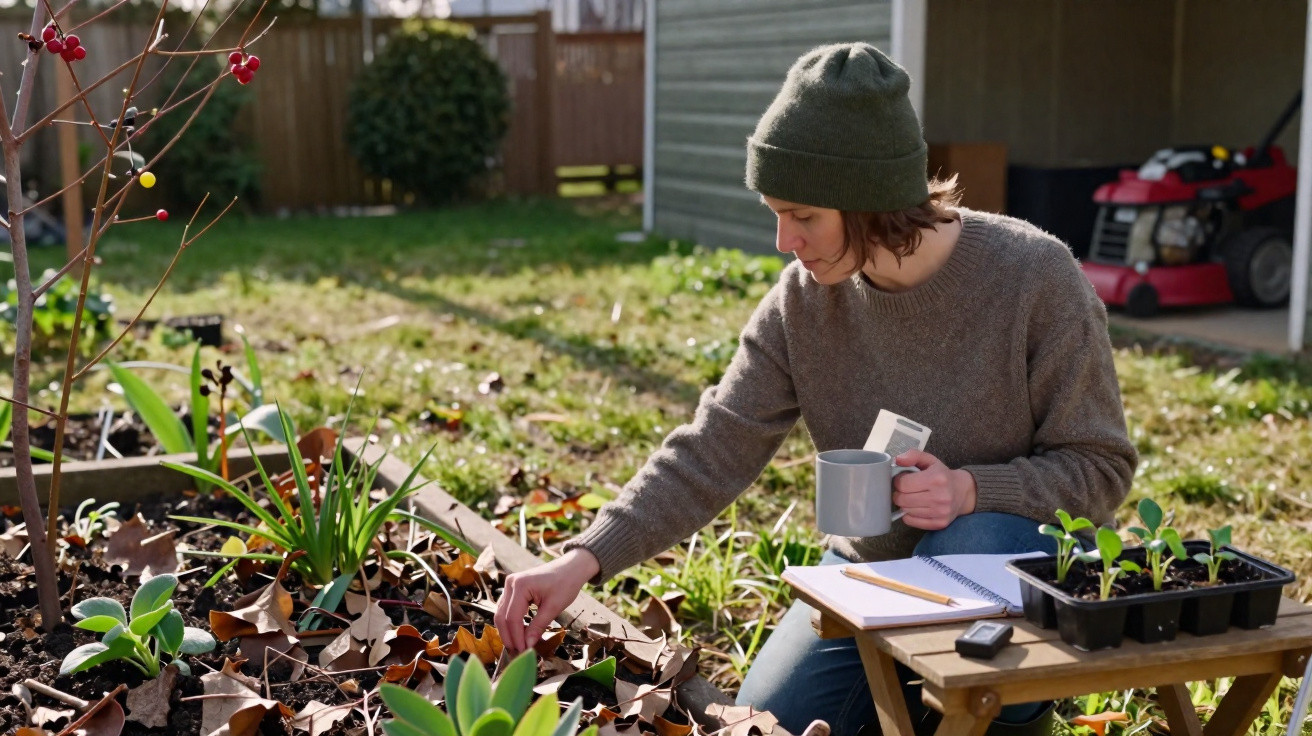
The first step is always a quick clear-out:
- Remove dry, brown leaves
- Cut off old, dried flower stems right at the base
- Clear weeds and coarse plant debris from around the root area
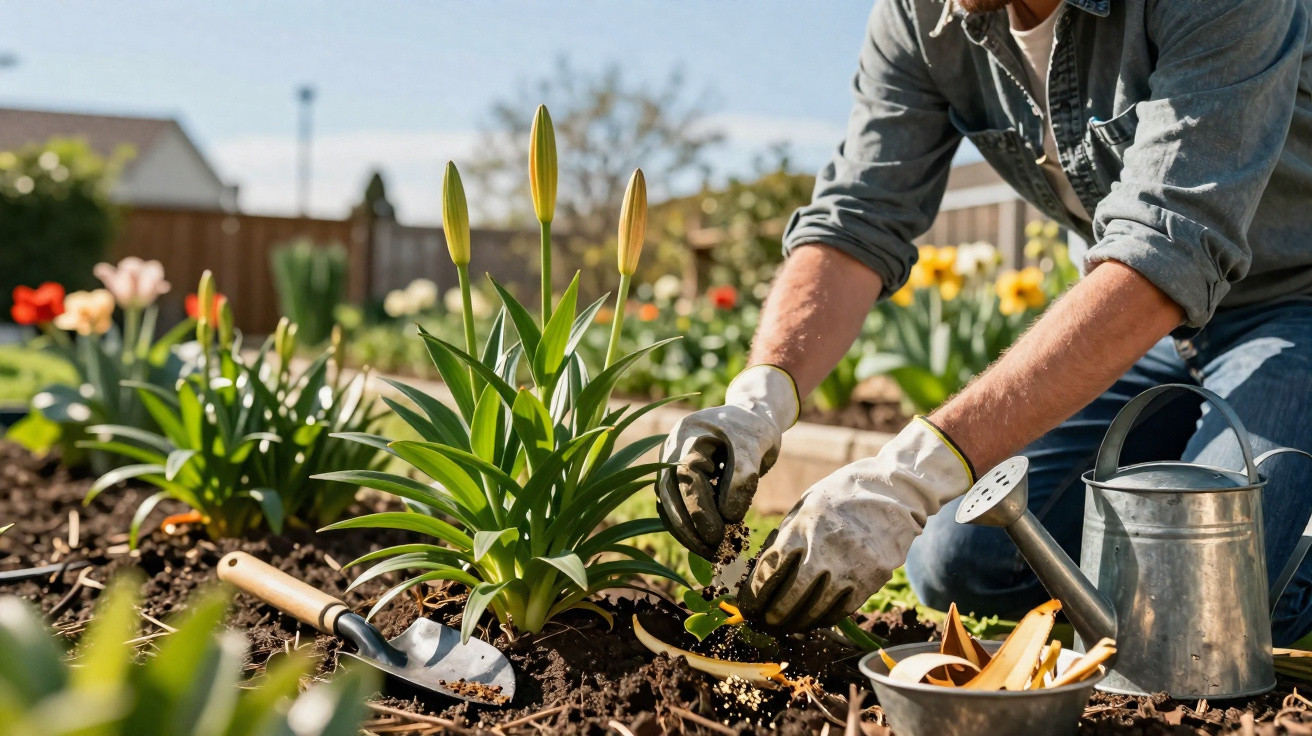
Next comes a step many gardeners never bother with - yet it can make a real difference: lightly scratch over the soil around the plant with a hand cultivator. Work only 3–5 centimetres deep, no more, and take care not to damage the fleshy roots.
"This shallow loosening breaks up the hardened winter crust, aerates the soil, and opens the way for water and nutrients exactly where the roots are now active."
The right nutrient mix for strong flower stems
Once the surface is loosened, you can apply the real flowering ‘boost’:
- Work in 1–2 handfuls of mature compost or worm compost per plant, mixed in lightly
- Sprinkle a thin layer of finely sieved wood ash over the top as a natural potassium source
- Avoid any additional nitrogen-heavy fertiliser at this stage
Phosphorus supports the development of flower structures and roots. Potassium strengthens cell walls, making stems firmer and less likely to snap. Nitrogen, by contrast, mainly drives leaf growth - and with Agapanthus that often comes at the expense of flowering.
After the nutrient mix, add a light covering of compost - essentially a surface dressing of a few centimetres. Then apply a thin layer of organic material, such as flax or hemp bedding. This top layer helps retain moisture and protects soil life.
Finish with slow, thorough watering so everything reaches the root zone. Quick, shallow watering does little at this moment - it’s better to water well once, then let it soak in properly.
Banana skins as a handy alternative
If you do not have wood ash to hand, a simple kitchen leftover can help. Chop banana skins into pieces around 1 centimetre in size and lightly work them into the top layer of soil. Over several weeks, they release potassium and naturally top up the nutrient mix.
Agapanthus in pots: when to repot and when to simply support it
In containers, African lilies often grow even more vigorously - but they can hit their limits quickly. After two to three years, the root ball is usually completely filled. You can tell because water runs down the inside edge of the pot and immediately drains out of the bottom. At that point, the plant struggles to take up nutrients effectively.
"If you don’t loosen and feed in spring, you risk hunger stress - the result is puny stems under 30 centimetres that collapse with the first gust of wind."
If the root ball is not yet fully packed, the P-K programme is enough: loosen the surface, add compost and potassium, mulch, then water in thoroughly. If the plant is effectively ‘set like concrete’ in the pot, repotting is the only real fix - move it into a slightly larger container with drainage holes.
Important: Agapanthus actually prefers a fairly snug pot. A container that is much too large encourages the plant to build roots first and delays flowering. So go up only one size, then carry out the same spring treatment described above.
African lilies in the ground: divide when the clump becomes too tight
In open soil, Agapanthus thrives when it has a sunny spot and free-draining ground. Here too, the ideal moment for care is around March, when the first fresh leaves appear and the soil is no longer icy.
A basic annual maintenance routine is worthwhile:
- Remove old foliage and dead flower stems
- Loosen the surface without injuring the roots
- Work in a layer of worm compost or another mature organic fertiliser, mixed in shallowly
Over time, clumps can become extremely dense. If roots start pushing up to the surface or flowering declines, division helps. In March, lift the clump, then split it with a spade or a sharp knife. Each section should have its own roots and one or two growth buds. Replant, water in well so soil settles around the roots, and finish with a thin layer of mulch.
What if March has already passed?
Many gardeners only realise in April or even May that their Agapanthus has not been tended. There’s no need to give up on it. As soon as the soil is no longer cold and new growth is visible, you can still apply the P-K trick.
The approach stays the same: loosen lightly, supply phosphorus and potassium, add organic material on top, and water thoroughly. The final stem height may be affected a little less than with perfect timing, but the plant will still benefit from improved feeding.
In pots, watching closely matters even more, because new growth often appears earlier than in the border. If you keep an eye out for the first green tips, you’re unlikely to miss the best moment.
In-season care: watering, cutting back, and avoiding nutrient mistakes
During summer, Agapanthus mainly asks for two things: sunshine and consistent moisture - but not soggy conditions. In borders, rainfall is enough in many areas; during extended dry spells, the plants appreciate a deep watering once a week.
In containers it’s different: compost dries out much faster. On warm days, daily watering can be necessary. Any water left standing in a saucer should be poured away a few minutes after watering so the roots are not left sitting wet.
If you use a liquid flowering-plant feed in pots, follow the dosage on the label. Overfeeding does not help - it weakens the plant over time.
"Typical warning sign: lots of leaves, hardly any flowers. That points to too much nitrogen and too little potassium."
In that case, pause nitrogen-rich feeds, strengthen potassium instead, and plan the spring timing more carefully next year. Spent flower stems should be cut off promptly to stop the plant wasting energy on seed production.
What gardeners should also know about Agapanthus
Agapanthus originates from South Africa and loves warmth and sun. In mild parts of the UK it can survive winter outdoors with light winter protection. In colder areas, it’s often more reliable in a container that can be overwintered frost-free.
The term “flower stalk” simply refers to the stem that carries the rounded flower heads. The longer and sturdier the stalk, the more striking the plant looks - especially in groups or planted along paths.
It’s also worth thinking about combinations in the border: African lilies pair well with roses, lavender, ornamental sage, or grasses. Their upright stems add height, while companion plants fill out the lower layer.
Risks mainly come from waterlogging in winter and from moving plants out of winter storage too early. If pots are put straight into strong spring sunshine, leaf scorch can occur. A short acclimatisation period in partial shade is the safer option.
If you try the P-K trick deliberately just once, the pattern becomes obvious: a focused intervention of only a few minutes in March can shape flowering performance for the entire summer. For many gardeners, that brief appointment becomes a fixed point in the yearly routine - along with the anticipation of strong, swaying flower heads above fresh green foliage.

Comments
No comments yet. Be the first to comment!
Leave a Comment