
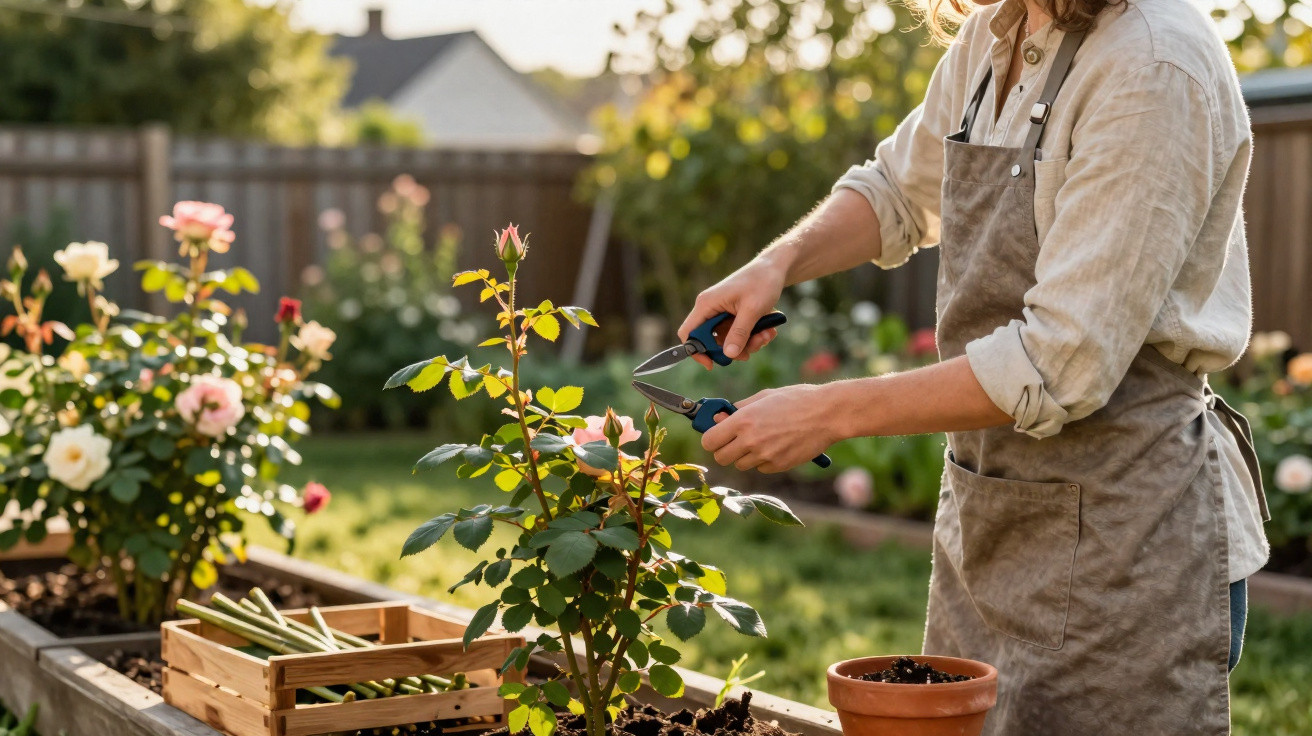
An experienced nursery gardener demonstrates a surprisingly straightforward method that can transform your roses. Rather than automatically “cutting everything back”, the focus is on careful inspection, selective thinning and only a few well-chosen cuts. The payoff is stronger plants, fewer diseases and a noticeably calmer, more attractive rose display in the border.
Why the usual rose pruning so often disappoints
Plenty of gardeners prune their roses every year using the same routine. Everything gets shortened, as long as the shrub looks neat. The aim is vigorous new growth, lots of buds and a tidy plant - yet the outcome in many gardens is often the opposite.
If you cut back too hard, you strip the plant of its reserves. The rose then has to pour huge amounts of energy into regrowth, which weakens it. If you prune too cautiously, old and feeble shoots remain; they produce few flowers and gradually spoil the shrub’s shape.
"The wrong cut robs roses of strength, flowers and, in the end, often their health."
This kind of habitual approach commonly leads to: fewer (and often smaller) blooms, more fungal problems, lots of woody material and a restless overall look. Bed roses and shrub roses in particular can quickly appear scruffy and tired.
The key difference: observe first, prune second
The nursery gardener’s approach sounds almost too simple: before he reaches for the secateurs, he studies the rose calmly. Not from a distance, but properly - from every angle.
He checks three points very carefully:
- Which shoots are strong, green and positioned well?
- Where is there dead, blackened or shrivelled wood?
- Which branches rub or cross and disrupt the structure?
He is not trying to make the plant “clinically clean”. The goal is a balanced, open shrub whose framework consists of a handful of strong canes. That way, light reaches all parts of the plant, the foliage dries faster, and fungal spores have a much harder time.
"Rose pruning becomes less of a cleaning job and more like a small piece of architecture on the plant."
The guiding rule is unexpectedly clear: keep strong wood; remove weak wood. And every cut is made with a defined purpose.
The nursery gardener’s core rules
This method works for almost all garden roses - from bed roses to traditional shrub roses. What matters most is the order you follow.
Step by step to a healthily pruned rose
- Remove dead wood: Start by taking out all shoots that are black, brown or look glassy - right back to healthy tissue.
- Thin out weak shoots: Cut away thin, distorted twigs that would hardly carry worthwhile blooms.
- Remove crossing branches: Anything crossing inside the plant or rubbing against another branch should go. This prevents wounds and entry points for fungi.
- Build the framework: For shrub roses and bed roses, keep three to five strong, well-spaced main shoots.
- Shorten with intent: Cut each of these shoots a few centimetres above an outward-facing bud.
The cut itself should be crisp and clean. A slight angle is perfectly adequate. More important than the exact angle is that your tool is disinfected and properly sharp. Ragged cuts invite disease.
How far back should you actually cut?
The right pruning height depends on the plant’s condition. The nursery gardener uses the rose’s vigour as his guide:
| Rose type / condition | Recommended pruning height |
|---|---|
| Very vigorous bed roses | Shorten shoots to about 20–30 cm |
| Medium vigour | Leave a little higher, about 30–40 cm |
| Weak or young roses | Only shorten lightly; leave noticeably more length |
Important: not every rose should be “lopped” to the same height. Each plant gets its own cut, adjusted to strength, age and location. This helps prevent delicate varieties from gradually declining.
The right time in spring
A date on the calendar is only a rough guide. The clearest signals come from the plant itself - and the garden around it.
A suitable moment is when:
- the buds are clearly swelling and show a light green sheen,
- severe night frosts are unlikely,
- the ground is no longer consistently frozen.
In many areas, that falls somewhere between late winter and early spring. In colder, more exposed spots it is better to wait a bit longer; in milder areas you can begin sooner.
"If you prune very early, you risk frost damage to newly sprouting buds. If you leave it too late, you waste the plant’s energy unnecessarily."
If the rose is already showing small, soft shoots, that is not a disaster. Simply shorten more cautiously and avoid anything too drastic.
What to stop doing in spring
Certain common mistakes show up again and again - and they drain roses of energy for no good reason.
- “Freestyle pruning” with no plan: snipping here and there without respecting the overall shape.
- Leaving old wood out of fear of mistakes: aged shoots remain, block light and barely flower.
- Cutting too close to the bud: placing the blades almost directly under the bud, which can cause it to dry out.
- Using blunt tools: crushed cuts that heal poorly.
Leaving a small gap of around 1 cm above the chosen bud is enough to ensure reliable growth. The remaining stub will simply turn woody.
Care after pruning: the rose needs support now
After pruning, the rose channels its energy into rebuilding. With a little assistance, it does that far more effectively.
- Watering: if the soil is dry, water thoroughly rather than repeatedly “dampening” the surface.
- Nutrients: a thin layer of mature compost or a dedicated rose fertiliser helps the shrub get going.
- Mulch: an organic mulch layer (for example, chipped prunings or bark mulch) retains moisture and suppresses weeds.
If you keep an eye on your roses now, you will quickly see how they respond. If shoots grow strongly and evenly, your approach was right. If one branch stays sparse, you can shorten it harder next year or remove it entirely.
How this technique affects the garden over the long term
When you work this way, the change is obvious after a single season. Pruning feels calmer and less anxious. Instead of constantly comparing your rose to rigid diagrams from gardening books, you learn to read the plant itself.
"Rose pruning becomes less of a chore and more like a small conversation with the shrub."
Many gardeners report:
- sturdier roses with less bare wood,
- less powdery mildew and black spot,
- a much more harmonious shape in the border,
- more flowers, spaced more evenly across the plant.
Another interesting effect: over time you develop a feel for how different rose types respond. Bed roses often cope well with a slightly stronger cut. Hybrid tea roses look better when a few shoots are left longer, rising like slim, elegant rods. Older varieties are more sensitive and tend to reward a more moderate shortening.
Practical extra tips for common rose types
Pruning climbing roses sensibly
With climbing roses, the nursery approach works too - but the key is how you manage the main canes. Ideally, these should be tied in as horizontally as possible on trellises or arches. Those horizontal canes then produce lots of flowering side shoots.
- Only thin main canes; do not shorten them heavily every year.
- Cut side shoots back to two to four buds.
- Every few years, replace old, reluctant-to-flower main canes completely with young new ones.
Treating standard roses with care
With standard (tree) roses, aim to form the crown into a small, airy ball. Remove inward-growing and crossing shoots consistently so the crown does not become tangled. The principle is the same as for shrub roses - just carried out at “stem height”.
Why changing your mindset about rose pruning is truly worth it
Once you stop pruning your roses “with the same brush” every year, you start to see them differently. Weak points become obvious earlier, strong shoots can be encouraged on purpose, and the plants are less likely to become aged and unproductive.
This more deliberate way of pruning can even save work over time. You will face fewer drastic rescue jobs, roses stay more stable, and emergency corrections are needed less often. And by early summer, it is immediately clear whether the new style is working: dense, healthy leaves and evenly distributed buds are the most honest feedback a rose can give.
Comments
No comments yet. Be the first to comment!
Leave a Comment