
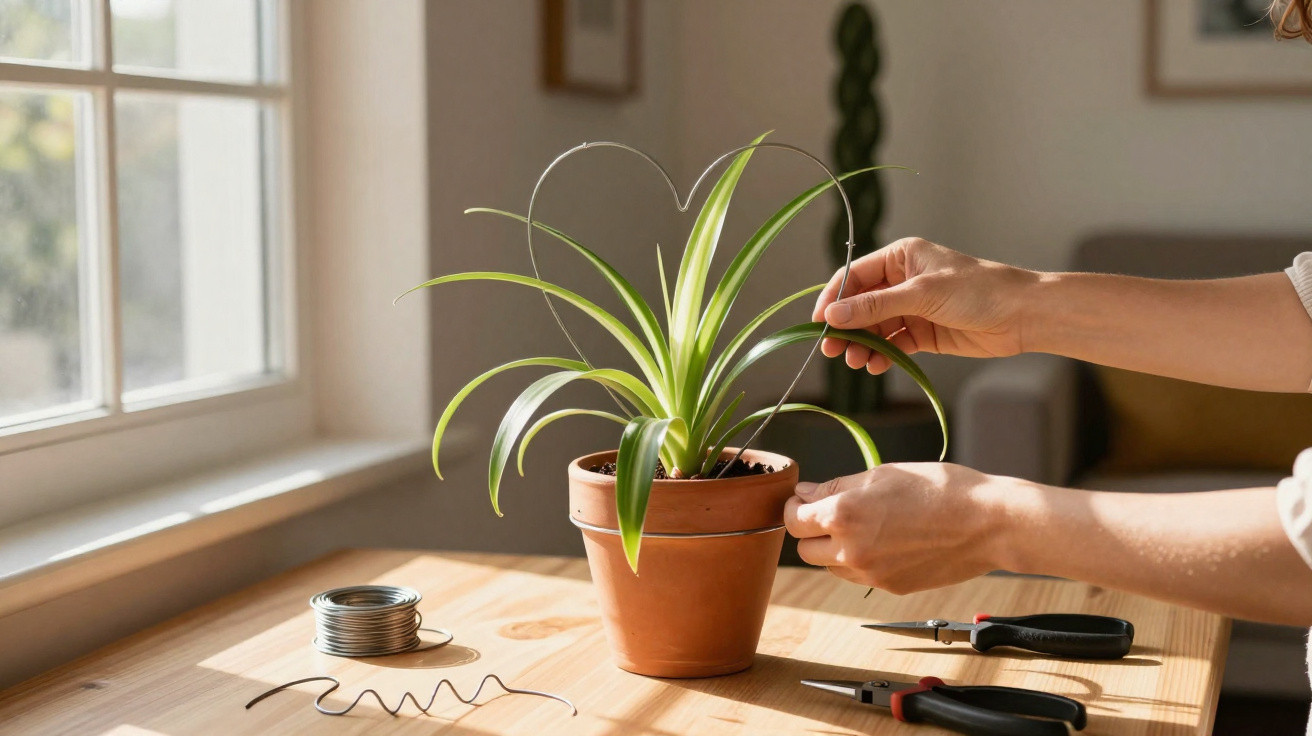
Plenty of people already have this low-effort houseplant sitting somewhere: on a sideboard, in the hallway, next to the television. It soldiers on, asks for very little, and is safe around pets. Precisely because it’s so undemanding, it can easily fade into the background visually. Yet it has huge creative potential: with a bit of patience, you can turn it into a striking plant sculpture that immediately draws the eye.
From everyday greenery to a living sculpture
The star here is the spider plant, botanically Chlorophytum comosum, originally from South Africa. Most people recognise its classic look: a dense rosette of long, green-and-white leaves, with thin, trailing stems that hang down. At the tips of those stems sit small rosettes - the familiar plantlets, which root very easily.
Those trailing stems are exactly what makes the transformation possible. Rather than letting them simply dangle, you can gently guide and shape them. Using the flexible runners, you can create, for example:
- round wreaths with plantlets cascading down
- heart shapes for romantic décor
- braided columns that grow upwards
"If you guide the spider plant’s soft runners instead of letting them hang, you turn an ordinary plant into a living design object."
The benefit is that the plant stays tough and relatively unfussy. You’re only working with its natural growth - you’re just giving it a clear direction. The result is a kind of “plant architecture” that can add structure, especially in smaller flats.
How to turn a spider plant into a vertical feature
A common issue at home is that the plant takes up space because it spreads out low and wide. Instead of constantly shifting the pot around, it’s worth going vertical. With a simple frame, you can build the structure you want - from a plain ring to a playful heart.
Wire frame: shaping a heart, ring or wave
To start, all you need is a sturdy wire, such as aluminium craft wire. It needs to be firm enough to hold its shape, while still bending easily. Aluminium is lightweight, barely rusts, and won’t weigh the plant down.
Here’s the approach:
- Bend the wire into a circle, oval or heart.
- Push the wire shape into the compost or secure it to the rim of the pot so it stands steady.
- Choose the strongest spider plant stems - ideally ones carrying several plantlets.
- Lay the stems gently around the wire, without kinking them or pulling them tight.
- Fix them loosely using soft plant clips, raffia, or gentle rubber ties.
Over time, the plantlets grow larger, the lines thicken up, and the ring or heart looks fuller and fuller. Any excess small rosettes can be snipped off and rooted in another pot - giving you a broader base that visually supports the sculpture.
Braided column: the spider plant as a green totem
Another option is a braided column. For this, you gather several long stems and work them like hair into a plait. A wooden cane in the pot acts as a support to keep the braid upright.
The process in brief:
- select three to five long stems
- guide them carefully upwards in parallel
- plait them into a loose braid, not too tight
- secure the braid to the wooden cane with ties
- let the top fan out slightly
"The braided column looks like a small green totem - ideal for corners that would otherwise feel empty."
In narrow spots - for example beside an armchair, at the end of a low TV unit, or next to a shelving unit - a slim, tall shape like this looks far calmer than a wide, sprawling clump of leaves.
The right preparation: observe, choose, then shape
Before you reach for scissors, it pays to inspect the plant closely. Not every runner is ready for shaping straight away. The best candidates are stems that are healthy, strong, and already well stocked with plantlets. Weak or stunted stems snap more easily and recover less well.
A few rules of thumb help when selecting:
- Stems should be flexible, but not brand new.
- Plantlets with a few leaves cling better to wire.
- Very crowded plantlets can be thinned out and potted up separately.
When shaping, the key is to go slowly. Bend the runners in small stages, if necessary over several days. That way the tissue adjusts gradually and you avoid stress fractures.
Where these plant sculptures make the biggest impact
Once the form is set, placement matters. The location will decide whether your green sculpture remains a pleasant extra or becomes the room’s quiet star.
As a centrepiece on the table
A dense wreath with softly trailing plantlets works brilliantly as a focal point on a dining table. Guests aren’t separated by a bulky floral arrangement, so sightlines stay open. At the same time, the round shape brings a sense of calm and feels less rigid than a vase of upright stems.
A runner trained into a heart shape suits occasions such as birthdays, Valentine’s Day or an engagement. On a narrow console in the hallway, a green heart adds a friendly, slightly playful touch.
Making smart use of narrow corners
The braided column really comes into its own where space is tight: beside an armchair, at the end of the sofa, or between a TV unit and the wall. The form emphasises height while taking up very little visual room.
In small bedrooms, a short mini-column on the bedside table can work well. It adds life without competing for space with a lamp, a stack of books and a glass of water.
Care after shaping: a gentle boost for fresh growth
When you train a spider plant into a sculpture, you’re asking it to adapt a little. A mild nutrient boost helps it bounce back. Many hobby gardeners use a simple liquid feed with a short, clear list of primary nutrients, added to the watering can. A low dose at regular intervals is usually more than enough.
Keep it in a bright spot without harsh direct sun, so the leaves don’t scorch. The compost should stay lightly moist, but never waterlogged. Sitting in water quickly leads to root rot, especially where the roots are dense beneath a heavily trained sculpture.
In very mild regions comparable to the usual hardiness zones 10 and 11, the spider plant can be moved outdoors on warm days. The key condition is that temperatures don’t stay below about 13 °C for long. It can handle slightly cooler spells briefly, but over time it will suffer visibly.
Common mistakes - and how to avoid them
The styling sounds simple - and in many cases it is. Still, a few common pitfalls crop up again and again:
- Bending too hard: splits in the tissue often only show later. Always persuade the stem gently.
- Harsh fastening: tying wire directly around stems can cut in and constrict them. Use soft ties instead.
- Too little light: leaves turn greener, the light–dark pattern fades, and the sculpture looks dull.
- Overfeeding: too much fertiliser causes brown leaf tips. With spider plants, less is often more.
Why this plant is such a good fit
Compared with many other houseplants, the spider plant is remarkably forgiving: short dry spells, slightly too much water, and changing light conditions. On top of that, it isn’t toxic to cats and dogs - a deciding factor in many households.
Its long, flexible runners are made for creative projects. Many plants produce rigid, brittle branches that are difficult to guide. Here, though, the tissue stays soft and bendable as long as the runner is vigorous. That gives you a kind of natural “wire” you can shape without needing heavy tools.
If you enjoy the idea, you can apply the same principle elsewhere: pairing it with climbers, making small supports for herb pots in the kitchen, or creating seasonal displays by weaving fairy lights or dried flowers between the plantlets. That way, the plant stays more than just easy-care greenery - it becomes an ongoing design project in your own home.
Comments
No comments yet. Be the first to comment!
Leave a Comment