
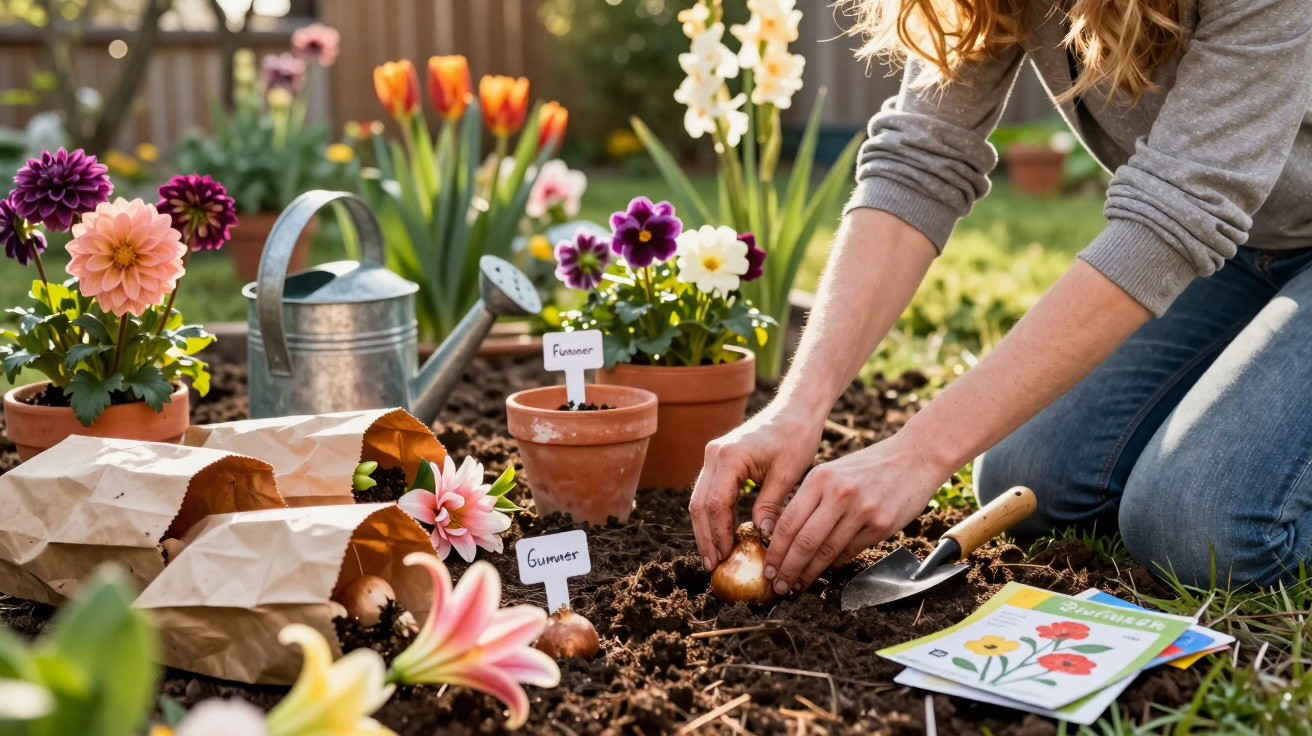
Many amateur gardeners reach spring and stare at bare beds, unsure what to tackle first. Mow the lawn? Pull weeds? TV gardener Alan Titchmarsh argues that the flower-filled peak of June, July and August is decided much earlier - below ground, with the right summer bulbs.
Why March is the hidden key month for summer flowers
March brings gentler temperatures, longer days and soil that slowly starts to warm through again. Seasoned gardeners use this brief window to plant summer-flowering bulbs and tubers. It gives them several valuable weeks to put down roots before the real heat arrives.
Anyone who plants summer bulbs between late February and early April is laying the groundwork for sturdy plants and generous flower heads.
Garden voices such as Alan Titchmarsh and plant expert Sarah Raven share the same practical advice: plant bulbs as soon as possible after buying them. Left too long in netting or paper bags, they can dry out or start to rot. Each extra day sitting on a shelf uses up energy that should later go into flowers.
The payoff is straightforward: summer performers such as dahlias, gladioli and lilies are generally considered relatively low-maintenance. Once they are in, they can bring steady colour from June to August (often longer) without you needing to hover over the border every day.
These summer bulbs deliver genuinely big blooms
If you want real “wow” moments in summer, it helps to choose by more than colour alone - height and overall impact matter just as much. For borders along a fence or beside a patio, taller varieties are especially effective, creating something like a bright, living curtain.
For dramatic, tall borders
- Lilies: Elegant, sometimes scented blooms, well suited to borders and large pots. Varieties range from around 60 cm to over 1.5 m.
- Gladioli: Long flower spikes, excellent as cut flowers for the vase.
- Freesias: Intensely fragrant; best planted in groups.
- Crocosmia: Slim stems with a slightly wild look, ideal for more naturalistic planting.
Alongside those are the well-known showstoppers that can turn an ordinary border into a stage:
- Dahlias: Huge flower heads, from single forms to pompon and cactus types.
- Allium: Spherical blooms held above the planting, especially striking in early summer.
- Begonias: Great for partial shade, and equally happy in pots and window boxes.
- Bearded iris: Bold, upright flowers that give strong structure in a bed.
Many professionals plant in clusters rather than as lone specimens. Three to six bulbs of the same variety placed close together create far stronger blocks of colour than isolated plants dotted around. From the patio, you see a cohesive “cushion” of flowers rather than a few scattered dots.
Perfect for balconies, patios and small gardens
If space is limited, you can apply Alan Titchmarsh’s approach and lean on free-flowering container choices:
- Begonias: Reliable, long-flowering plants for pots and boxes.
- Petunias: Trailing or upright, ideal for balconies and hanging baskets.
- Verbenas: Form mats and spilling cascades.
- Rudbeckias: Coneflower-style blooms; robust and eye-catching.
On a balcony in particular, a handful of pots can be arranged to create a near-continuous wall of flowers - without needing hours of watering every single day.
How to plant and water summer bulbs correctly
One rule applies across bulb plants: avoid waterlogging. Whether you are planting into open ground or containers, the compost or soil needs to be loose and free-draining.
In pots: terracotta, drainage and the right depth
Alan Titchmarsh often favours large terracotta pots. They not only look the part, but they also let moisture evaporate slowly through the sides, which helps prevent “wet feet”.
- Check the drainage hole and clear it if necessary.
- Add a thin layer of gravel or broken crocks.
- Set the bulbs with the pointed end facing up.
- Fill with peat-free compost, leaving a watering gap at the top.
Planting depth depends on bulb size. A simple rule of thumb is to cover with soil to around two to three times the bulb’s own height. Smaller tubers sit closer to the surface; larger dahlia tubers go a little deeper.
In borders: loosen the soil and plant in groups
The same principle applies in garden beds. With lilies in particular, it pays to ensure excellent drainage - work in some sand or grit so the roots do not effectively “suffocate”.
| Plant | Recommended planting depth | Spacing |
|---|---|---|
| Lilies | 15–20 cm | 20–30 cm |
| Gladioli | 8–12 cm | 10–15 cm |
| Dahlias (tubers) | 5–10 cm | 40–60 cm |
| Begonias | 3–5 cm | 15–20 cm |
Water well immediately after planting, then allow the surface to dry slightly again. It is better to water less often but thoroughly than to add a small amount every day. That approach encourages deeper roots that can reach their own moisture reserves.
“Water properly once, then let things dry out - that’s how bulbs stay healthy and the flowers last longer.”
Hidden pests: how to protect your bulbs from thrips
A common issue many people miss does not begin on the leaves at all - it is often already in the packaging: thrips. These tiny insects can hide between the bulb scales, lay eggs there, and then move onto buds and foliage in spring.
Typical signs of damage include:
- Stunted, misshapen flower buds
- Silvery-looking streaks on leaves and petals
- Browned or dried patches
A quick inspection before planting can prevent a lot of trouble. Discard any bulbs that feel soft, show mould, or are heavily blotched. Firm, clean bulbs can be prepared as follows:
- Gently brush the bulbs with a soft brush.
- Spray with a mix of 1 litre of water and 1 tablespoon of a mild, soap-based insecticide or gentle soft soap.
- Let them dry thoroughly.
- Repeat the treatment after three days.
For gladioli, ranunculus or anemones, some gardeners also recommend a short soak of a few hours in a very weak disinfectant solution. That method is not suitable for tulips, daffodils or dahlias, which tend to react more sensitively.
If thrips are already active in the border, a combined strategy is usually needed: spray foliage in the evening with a soapy solution, put out yellow sticky traps, remove badly affected plants, and store only healthy tubers cool (2–4 °C) and dry. Replanting bulbs that have sat unchecked in warm, dry garages often shows up the following year as weak flowering.
Practical tips for planning, combinations and care
Planting in March also makes it easier to plan the garden with intent. A sensible approach is to mix early, mid and late flowering periods so gaps are kept to a minimum.
- Allium and bearded iris for early summer.
- Lilies, gladioli and begonias for the main season.
- Dahlias and later crocosmia for August and early autumn.
For attractive border combinations, you could place tall lilies towards the back, add looser verbenas in front of them, and finish with low begonias or petunias at the very front. The result is a layered look rather than a flat one.
Another key point is not to cut everything back immediately after flowering. Yellowing foliage may look untidy, but it is feeding the bulb with reserves for next year. One simple trick is to hide fading leaves with low-growing perennials or ground cover.
If you are new to this, start small with one or two large containers. A pot packed with begonias plus another filled with dahlias or gladioli is enough to show, in a single season, how powerful March planting can be. From there, it often becomes very tempting to redesign a whole bed the following year.
The real appeal is how little time it takes: an hour’s work in March and a handful of well-chosen bulbs can make the garden look for months as though a professional has been on hand every day. That is exactly why summer bulbs become a quiet secret weapon for so many gardeners.
Comments
No comments yet. Be the first to comment!
Leave a Comment