
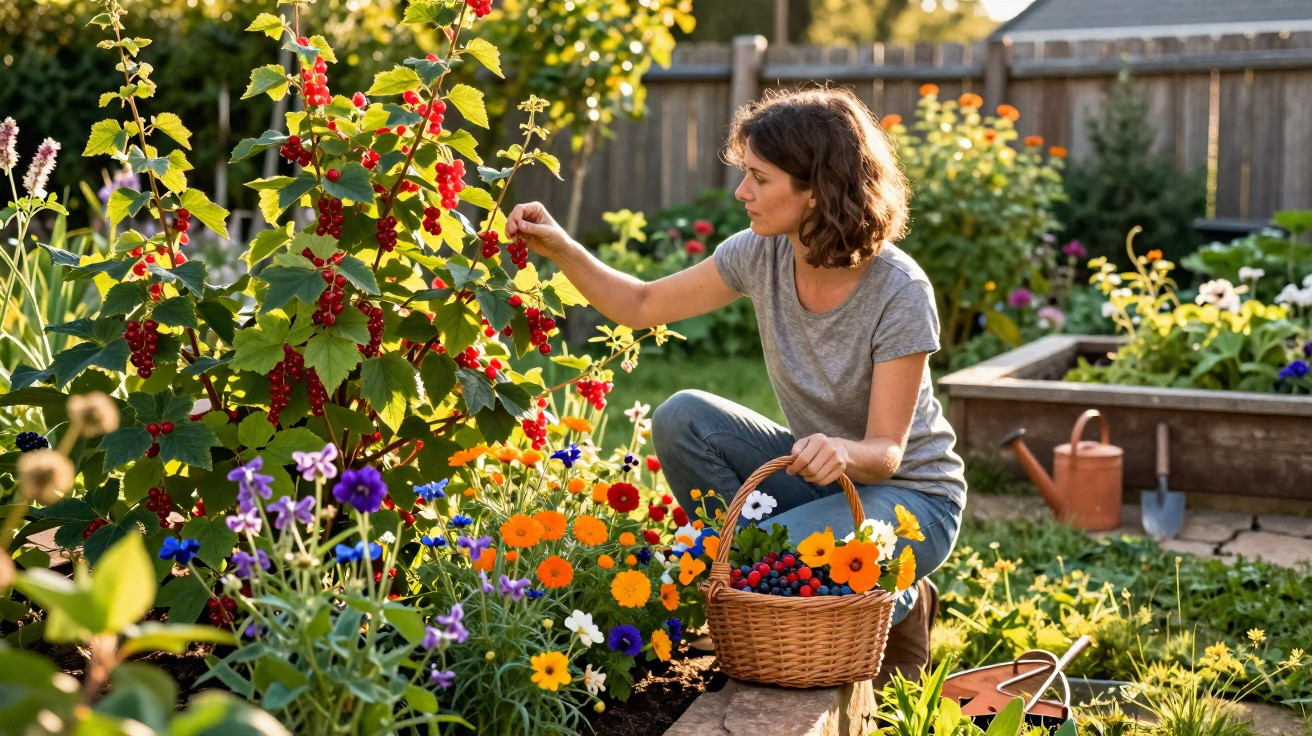
Many home gardeners have had their fill of sterile lawns and tightly clipped hedges. In their place, more and more people want gardens that look attractive, take less effort and, ideally, produce something edible as well. That is exactly what the edible flowering bed is about: a colourful bed that can replace a classic perennial border – and where almost everything can end up on your plate.
Why now is the right time for an edible flowering bed
Most people hold off on serious gardening until spring is properly under way. If you want to create an edible flowering bed, it pays to start earlier. Late winter and the very start of spring are the perfect window for planting the structural plants.
"Planting in late winter gives the plants weeks of head start – and gives you earlier harvests."
At that time of year, the soil is usually still nicely moist, the sun is not yet harsh, and new shrubs can focus on rooting without stress. That helps them cope far better with their first hot summer. Many garden centres sell bare-root berry bushes at this point in the season – typically cheaper, sturdier and often more successful to establish than container plants bought later.
A simple rule of thumb: the less you put off until April, the sooner things get going. Once these woody plants are established, they need noticeably less care and water than freshly planted summer annuals.
Berry bushes as the framework: a beautiful outline with a generous harvest
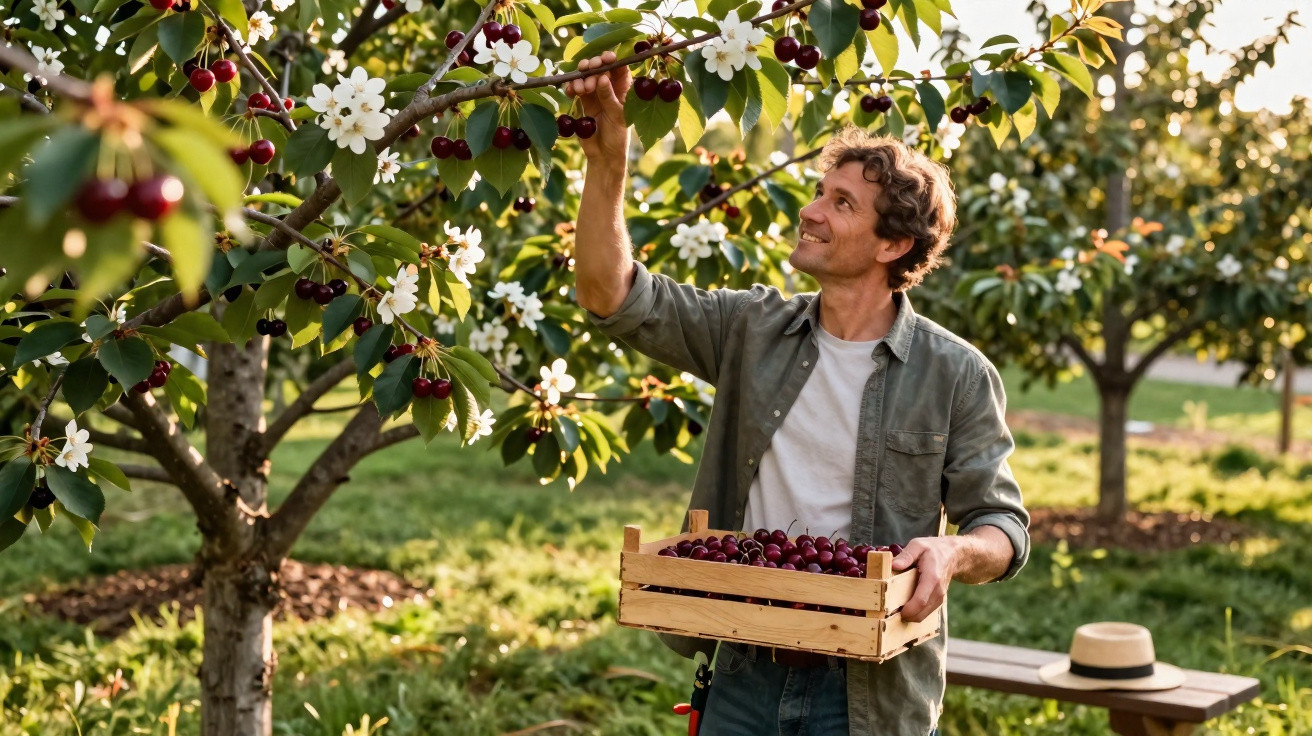
For an edible flowering bed to work, it needs a clear backbone. Instead of box or cherry laurel, berry bushes take on that job. They provide height and structure while producing plenty of fruit.
Suitable shrubs bring several benefits:
- they are tough and frost-hardy
- they only need pruning once a year
- they feed bees and provide vitamins for people
- they look interesting from spring right through to autumn
These berries are ideal for an edible flowering bed
If you want a framework that is both stable and varied, good options include:
- Gooseberries: Dense, slightly prickly shrubs that work well as a natural “hedge” along the edge. The fruit is great for compote or simply eaten straight from the bush.
- Blackcurrants: Bold flavour, a real vitamin C boost, and leaves that release a strong scent when you brush past.
- Thornless raspberries: Best at the back, easy to tie in, and comfortable to pick without scratches.
All of these shrubs are happy with straightforward pruning at the end of winter. In spring they produce understated but highly valuable flowers for pollinators; in summer they set fruit; and in autumn the foliage often turns decorative. That way, the bed stays appealing all year.
Edible flowers: a colourful carpet instead of bare soil
Under the berry bushes, you should aim to leave as little bare soil as possible. Empty patches are an open invitation to weeds – and wasted space that could be edible. The answer is a low, living carpet of edible flowers and herbs.
"An edible flower carpet protects the soil, reduces the workload and ends up straight in a salad, dessert or cocktail glass."
Plants that are especially useful are those that bring colour very early in the year and tolerate light frosts:
- Pansies and violets: Their petals lift salads, desserts or cheese boards, and they add a surprising amount of colour in late winter.
- Chives: The purple flower heads are edible, gently oniony, and look striking in bowls and on open sandwiches.
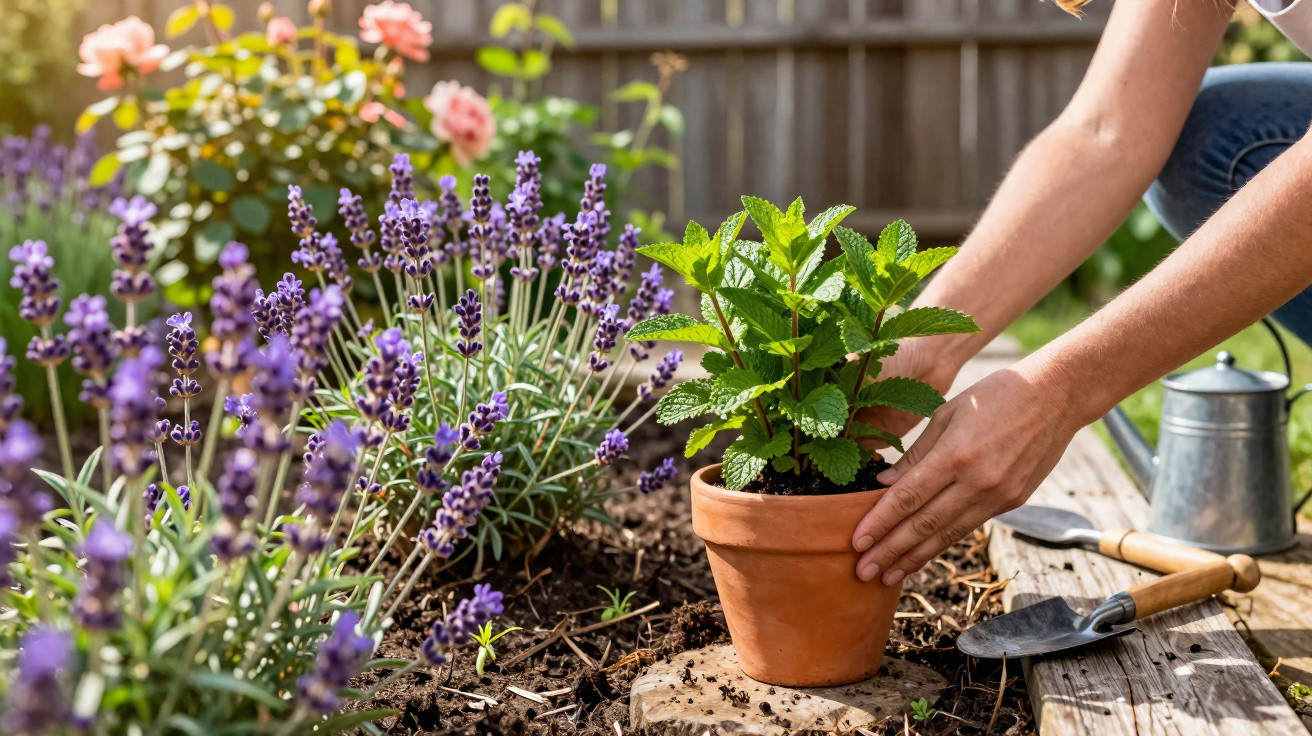
- Mint: Only grow it in the bed inside a sunken pot or with a root barrier, otherwise it will spread uncontrollably.
From early summer onwards, heat-loving species take over:
- Nasturtiums: Leaves and flowers have a pleasant peppery bite, almost like cress with an extra kick.
- Borage: The star-shaped blue flowers work well in punch, frozen into ice cubes, or as an eye-catcher in salads.
Together, these plants form a living “mulch layer”: they shade the soil, hold moisture, protect against erosion and attract a wide range of pollinators.
How the planting works together: less watering, less weeding
A well-designed edible flowering bed behaves a bit like a small woodland system. When planting is dense, very little light reaches the soil surface. That suppresses unwanted weeds and slows evaporation.
"The denser and more diverse the bed, the less you’ll need the watering can and the hoe."
Between the berry bushes, lower herbs and ground cover fill the gaps. Their leaves create shade, humidity stays higher and the soil dries out more slowly. By planting in layers – tall shrubs, mid-height perennials, low ground cover – you build a compact, resilient ecosystem.
A mix of different scents can also confuse pests. Where monotonous rows of roses may invite aphids, the combined aromas of currant leaves, mint, chives and nasturtiums often put many nuisances off. Marigolds and calendula can help as well, by discouraging certain soil-borne parasites.
A simple planting plan
| Zone | Example plants | Benefit |
|---|---|---|
| Back | Raspberries, tall currants | Height, screening, large harvest |
| Middle | Gooseberries, lower currants | Structure, fruit at hand height |
| Front | Pansies, violets, chives | Colour, edible flowers, soil protection |
| Gaps | Nasturtiums, borage, calendula | Pollinators, fewer weeds, kitchen decoration |
A bed that fills you up and lifts your mood
Planted this way, you get far more than a pretty corner of the garden. The bed provides a steady stream of small treats: the first flowers in March, herbs for the kitchen in spring, berries from early summer, and later seed heads plus colourful autumn foliage.
"One look into the bed, one reach for a berry – and the garden becomes a snacking zone."
Visually, the result is lively: deep green currant leaves, orange nasturtiums weaving through, blue borage stars and purple chive pom-poms. Instead of rigid edges and exposed soil, you get a space that changes with the seasons while still producing something to eat.
Practical tips for getting started at home
To try the idea, you do not need to dig up the entire garden. Just 1–2 square metres is more than enough to begin with. A few points make starting easier:
- Choose a spot with at least half a day of sun.
- Plant berry bushes first, then fill the gaps with herbs and flowering plants.
- Use only edible species and, if in doubt, check whether the leaves or flowers are safe to eat.
- Water regularly in the first few weeks until everything has taken, then only as needed.
If you have children, you can create the bed as a “snack garden”. The key is a clear rule: in this area, only plants that are safely edible are grown. Poisonous ornamentals belong somewhere else.
It becomes especially interesting when you combine fragrance with visual impact: strawberries at the front, blue borage flowers in between, raspberries at the back, and a pot of fragrant mint nearby – a small area with almost year-round appeal, created in just a few simple steps.
Even smaller balconies can be set up according to the same principle. A raised bed or several large containers with berry bushes, underplanted with edible flowers and herbs, delivers the same effect on a mini scale. Less lawn, more enjoyment – that is the heart of this trend.
Comments
No comments yet. Be the first to comment!
Leave a Comment