
You haul the rubbish bag outside, knot it tight, and get that unmistakable waft of yesterday’s coffee, onion skins and eggshells. Over the fence, your neighbour is bent over a jungle of tomatoes and roses that look like they’ve had an Instagram filter applied in real life. Their basil shines, their geraniums look self-satisfied, and your own border seems like it’s mid-break-up. You water faithfully, you splash out on the “good” compost, you even chat to your plants when no one’s watching. And yet-something still isn’t right.
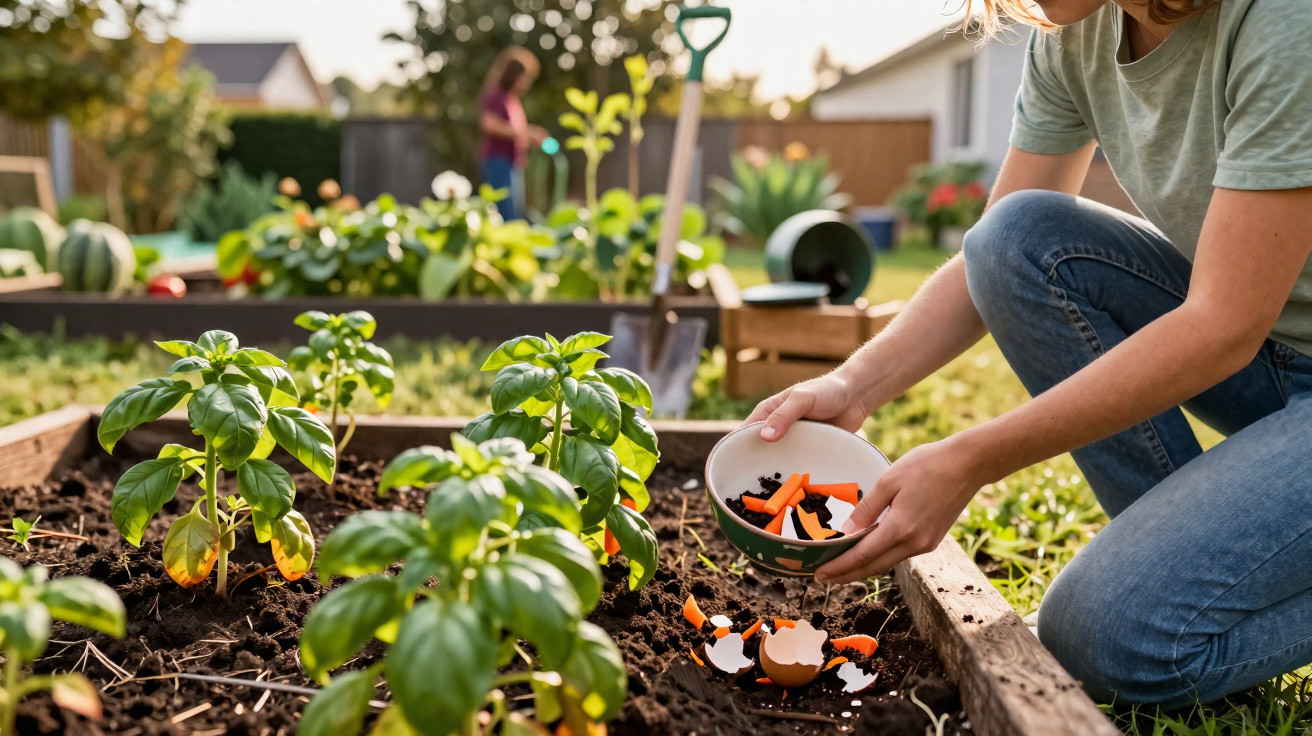
Then, one morning early, you catch the detail you’d missed: your neighbour empties a small bowl of kitchen scraps into a quiet corner, then hides it under a layer of soil like a private ritual. What you throw away each day, they’re feeding back into the garden.
And suddenly you start asking yourself what, exactly, you’ve been binning.
The quiet superpower hiding in your bin
That murky brown sludge in the bottom of the coffee filter. The whisper-thin skins from onions. The broken crescents of eggshell you flick away without thinking. In your neighbour’s garden, that’s the fertiliser. Not a pricey bottle from the garden centre-just the bits you scrape off the chopping board on autopilot.
In any flourishing veg plot, there’s usually a story buried just below the surface. Somewhere along the way, someone stopped treating kitchen waste as rubbish and started treating it as nourishment-food for the soil, not the wheelie bin.
A gardener in my town, Claire, insists her whole street has greener balconies for one reason: coffee grounds. She works in a café and used to chuck out kilograms of used grounds every day. One summer, she began taking bags home and laying them in thin, light layers around her hydrangeas and tomatoes.
By late July, neighbours were peering over the fence wanting to know what fertiliser she’d discovered. “The free kind,” she laughed, passing over small bags of dark, slightly damp coffee grounds. Within a single season, three balconies on her block had visibly thicker foliage. Same sunshine, same air, same mains water-just a different relationship with what used to be “trash”.
What’s going on is straightforward. Plants don’t only rely on water and light; they also need organic material that breaks down slowly and improves the soil as it goes. Coffee grounds help with structure and give a mild nitrogen lift. Crushed eggshells release calcium bit by bit, which can help reduce problems such as blossom-end rot on tomatoes. Onion skins, vegetable peelings and fruit scraps rot down into a loose, spongy layer that holds moisture and welcomes earthworms.
So your neighbour isn’t simply “lucky with plants”. They’re quietly running a recycling system at root level, turning everyday scraps into a steady, living store cupboard the soil can draw on week after week.
Turning kitchen scraps into plant fuel with trench composting
The most likely approach they’re using is as simple as it sounds, with a low-tech name: trench composting. No bin, no tumbler, and no garden that needs to resemble a permaculture blog. You dig a narrow trench or a small hole between plants, tip in your kitchen scraps, then cover everything with soil. Done-no reel required.
Over the following weeks, worms and microbes move in and convert peelings and grounds into humus. Nearby roots gradually nudge towards the buffet, and a month later the same plant looks oddly-and inexplicably-happier.
A basic routine that fits a normal week looks like this. Keep a small bowl or tub on the counter for plant-safe scraps: coffee grounds and filters, tea leaves, crushed eggshells, fruit and veg peelings, and wilted salad leaves. Every couple of days, take the bowl outside. Between two plants, dig a hole about as deep as your hand, tip in the scraps, cover with soil, then water lightly.
Let’s be real: hardly anyone manages this every single day. But even once a week, kept up through a season, can shift soil from tired and compacted to loose and earthy. You’ll feel it when you press a finger in and the ground yields a little, instead of pushing back like dried cake.
A few common mistakes quietly trip beginners up. Some people add meat, cheese or oily leftovers, then wonder why it smells or draws pests. Others spread coffee grounds too thickly on top, creating a dry crust that can actually repel water. And some bury big pieces-whole citrus halves or large potato peelings-that take ages to break down and may tempt rodents.
Your neighbor’s smug secret isn’t that they’re a “natural” gardener; it’s that they’ve learned to give the soil small meals, often, instead of one giant feast that goes half-eaten.
- Skip these: meat, fish, dairy, cooked oily foods, large bones, glossy printed paper.
- Use these freely: coffee grounds, tea leaves, crushed eggshells, veg scraps, fruit peels (chopped), stale bread in tiny pieces.
- Go gently on: citrus peels and onion skins; chop them fine and spread them out so they break down faster.
Why this “waste” changes everything you grow
Once you’ve watched soil change after a few months of quiet feeding, it becomes difficult to unsee it. The garden stops looking like a flat brown surface and starts behaving like a living sponge. You water and it stays damp a little longer. You pull a weed and the roots come away more easily, dragging rich, dark crumbs behind them. When you dig, you spot more earthworms-and you see fewer dusty, lifeless patches where nothing seems to thrive.
That’s the moment you understand why your neighbor’s plants always looked mysteriously “more alive” than yours.
There’s also a strangely satisfying shift in your own habits. The banana skin you used to toss without a pause becomes a small decision: bin or bed? You rinse the coffee filter with intent, tapping the grounds around your roses in a thin ring rather than dumping them in one heap. You start keeping eggshells in a jar, crushing them on a quiet Sunday like you’re preparing secret ingredients for something slow and worthwhile.
The science is easy enough to grasp-organic matter, nutrients, improved structure. The feeling is harder to quantify: you’re finally working with the soil instead of fighting it.
And yes, there’s a small emotional side-effect no one really mentions. The slightly rotten lettuce, the limp carrot tops, the lemon rind left from a midweek dinner-they stop representing waste and start whispering “future tomatoes, future basil, future roses”. The rubbish bag gets lighter, your plants get fuller, and that familiar sense of failure in front of drooping leaves softens into curiosity.
Maybe your neighbour doesn’t have a gift at all. Maybe, at some point, they simply stopped throwing away what the garden had been waiting for all along.
Next time you take the rubbish out, that quiet question will trail you: what if the best fertiliser you use this year is already sitting in your kitchen tonight?
| Key point | Detail | Value for the reader |
|---|---|---|
| Kitchen waste is hidden fertiliser | Coffee grounds, eggshells, and veg scraps feed soil life when buried | Grow stronger, greener plants without buying pricey products |
| Simple trench composting works fast | Dig small holes between plants, bury scraps, cover with soil | Low-effort method for anyone, even in small gardens |
| Avoid the wrong scraps | No meat, dairy, or greasy leftovers; focus on plant-based waste | Prevents smells, pests, and disappointment for beginners |
FAQ:
- Question 1 Can I use coffee grounds on all my plants?
- Coffee grounds work for plenty of plants, particularly roses, hydrangeas, berries and leafy greens. Keep them as a thin layer or mix them into the soil rather than letting them form a thick mat, and don’t tip large amounts into pots that drain poorly.
- Question 2 Do eggshells really help, or is that a myth?
- Crushed eggshells break down slowly and release calcium over time. They won’t transform a plant overnight, but worked into the soil around tomatoes, peppers and roses, they can support longer-term strength and more resilient growth.
- Question 3 What if I only have a balcony?
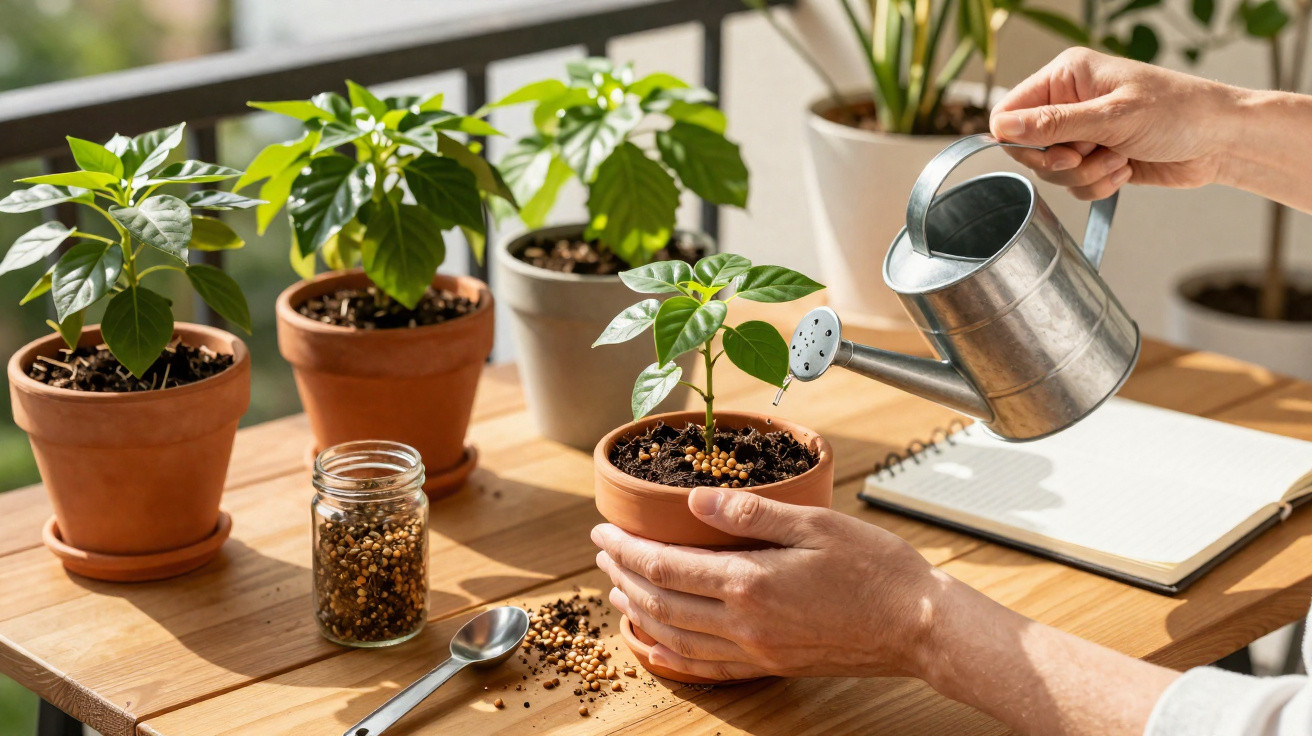
- You can still use kitchen scraps by burying very small amounts in large containers or mixing them into the top few centimetres of potting compost. Keep portions small and consistent, and cover well so nothing smells or attracts flies.
- Question 4 How long until I see a difference in my plants?
- Within a few weeks, you may spot better soil texture and slightly perkier plants. Over a full season, growth, flowering and fruiting can move from “meh” to genuinely abundant.
- Question 5 Will this attract rats or pests?
- If you stick to plant-based scraps, chop them up, bury them at least a hand deep and avoid meat or greasy food, the risk drops dramatically. Small, well-covered amounts disappear into the soil rather than turning into a buffet.
Comments
No comments yet. Be the first to comment!
Leave a Comment