
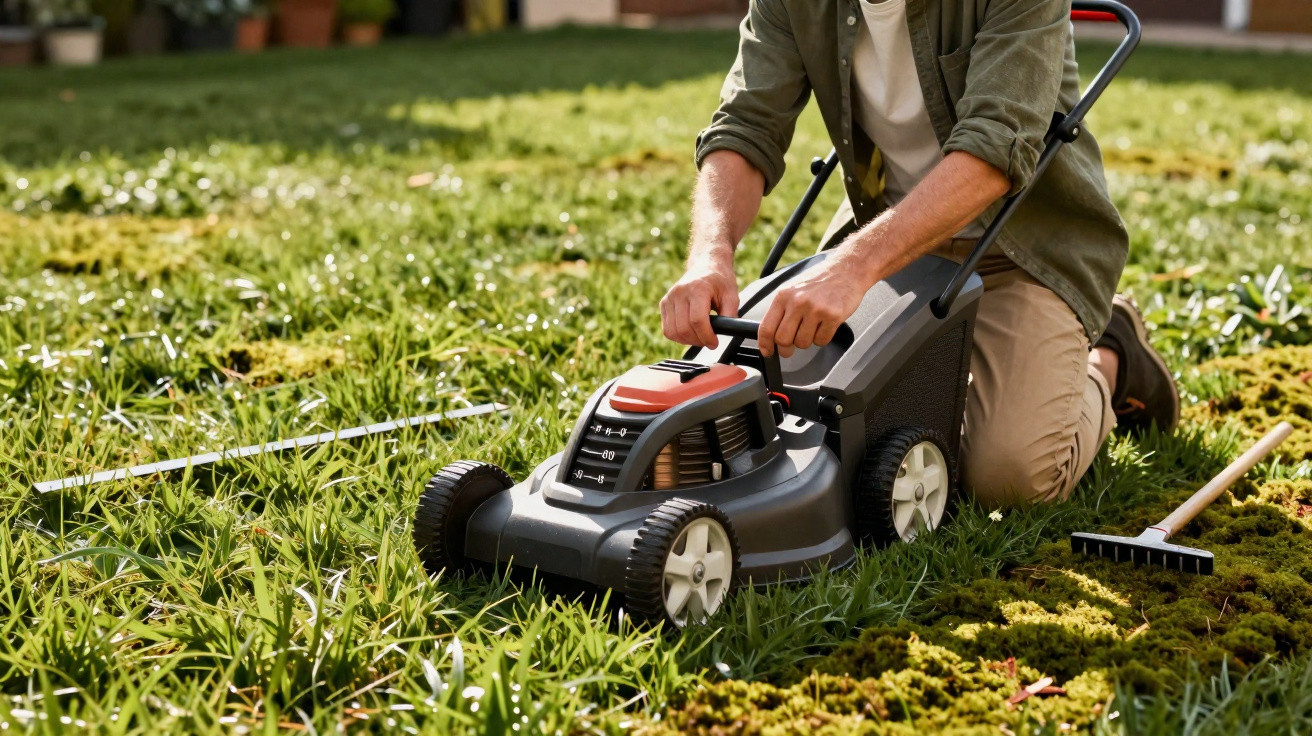
Often the real trigger isn’t in the soil at all, but right on the handle of your garden equipment: the lawn mower’s height adjustment. Just a few centimetres too high or too low is enough for the grass to weaken and for moss to spread like a carpet. If you know the correct cutting height and stick to it consistently, you’ll end up with a noticeably denser, greener lawn - without chemicals and without constant frustration.
Why cutting height decides between moss and a dream lawn
Grass blades aren’t green wallpaper that you can trim on a whim. Every cut changes how efficiently the plant produces energy, how deeply the roots develop, and how much moisture stays in the soil. That’s exactly where the battle is won: either the grass stays in control - or moss does.
When you leave the blades a little longer, there’s more surface area for photosynthesis. The grass develops deeper roots, reaches water and nutrients more easily, and dries out less quickly. The lawn remains hard-wearing and the colour stays a rich green.
If you repeatedly cut the lawn very short, the plant is forced to live off its reserves. Root growth becomes shallower, the soil heats up, it dries out faster, and gaps appear. Moss and unwanted weeds are usually the first to move into those bare patches.
Letting the grass stay very long for extended periods creates a different problem: the blades flop over, moisture builds up, and a dense mat forms. Moss thrives in this damp, poorly ventilated “carpet” and can spread rapidly.
"The right cutting height is the most important lever against moss - far more effective than yet another fertiliser or moss killer."
The ideal cutting height for different lawn types
The best height depends on how the lawn is used and what the site is like. A family lawn in full sun needs a different setting from a shaded area under trees.
Family lawns in the sun
For most gardens, the following applies: if you have a standard general-purpose lawn in a sunny position, the best cutting height for most of the year is 4 to 5 centimetres.
- Under 3 centimetres: the grass becomes stressed, roots stay shallow, the soil dries out, and moss gets an easy advantage.
- 4 to 5 centimetres: blades stay stronger, the surface copes better with wear, the sward closes up, and there’s little room for invaders.
Lawns in shade or damp spots
In shade, grasses also have to cope with limited light. They need more leaf area to generate enough energy. A height of 6 to 8 centimetres is ideal.
The longer blade works like a small solar panel: more leaf area means more photosynthesis, stronger roots, and better recovery. At the same time, the slightly higher growth holds moss back because the grass remains denser and more competitive.
Fine ornamental lawns and the “bowling green” look
If you maintain an ornamental lawn with fine grasses, you can mow shorter - but only with the right variety, excellent care, and ideal soil. In that case, 2 to 2.5 centimetres can be achievable. This style is not suitable for a typical utility lawn: the area becomes extremely sensitive to drought and wear, and moss appears quickly if the maintenance isn’t spot on.
The one-third rule: how often you really should mow
The exact height matters, but so does the gap between mowing sessions. Many people mow too infrequently and then take off far too much in one go - which is a major shock to the lawn.
"Basic rule for a healthy lawn: never remove more than one third of the current blade length in a single cut."
In practice, that means:
- If the grass is 6 centimetres high, cut back to a maximum of 4 centimetres.
- If it has grown to 9 centimetres, the cut should be no lower than 6 centimetres.
In spring, this can mean mowing twice a week when growth really takes off. From around March to October, a weekly cut is usually sensible. Straight after winter, set the mower to its highest setting first and then lower it gradually - rather than going in one step from “winter meadow” to “as short as a golf green”.
Recommended cutting heights through the year
A simple seasonal guide by location is useful in day-to-day care. The values below suit typical home gardens with general-purpose lawns:
| Season | Sun | Shade / damp areas |
|---|---|---|
| Spring | 4–5 cm | 6–8 cm |
| Summer | 5–6 cm in heat | 6–8 cm |
| Autumn | 5–7 cm | 6–8 cm |
In summer, it pays to raise the cutting height slightly during hot spells. Longer blades shade the soil, retain moisture for longer, and reduce heat stress. In autumn, a medium to slightly higher setting helps the grass build reserves for winter without creating dense clumps that topple over.
Common mowing mistakes that practically invite moss
To keep moss at bay, it’s worth dropping three habits that have become common in many gardens:
- “As short as possible, then I won’t have to do it again for ages”: the lawn gets scalped. It looks neat for a moment, but it loses strength. Gaps appear, and moss exploits them every time.
- Letting it grow for weeks, then doing a radical cut: the blades get far too long between cuts and then are suddenly chopped back hard. That puts the plants under heavy stress and weakens the lawn more than any moss species ever could.
- One fixed setting for every area: sunny play areas, a shaded corner, a damp hollow - all mown to the same height. That creates problems precisely where the grass is already under pressure.
What else helps against moss - besides the right mower height
Cutting height is the number-one lever. If you want to do more, a few straightforward actions will amplify the effect:
- Mow in the morning during dry conditions: the grass is under less stress and the cut edges recover faster.
- Aerate or scarify: loosens compaction and thatch so air and water reach the roots more effectively.
- Check soil pH: very acidic soils encourage moss. A test, and a little lime if needed, helps shift the balance back towards grass.
- Moderate fertilising: a balanced lawn feed supports growth without forcing soft, weak top growth.
Rather than relying on harsh chemicals, it’s better to address the underlying cause. If the lawn is strong enough, moss gradually disappears on its own because it no longer has the space or the right conditions.
How to set your mower height correctly in practice
Many mowers don’t show true centimetre markings - only numbered steps. A quick practical method helps: set the mower roughly, cut a short strip, then use a ruler or tape measure to check the actual blade height after mowing. Adjust the setting until you hit your target height.
If you have different zones in the garden, a simple rule of thumb is: sunny areas one step lower, shaded areas one step higher - always keeping the one-third rule in mind. With just a few clicks on the height adjustment, you can achieve a lot without constantly thinking about fertiliser, overseeding, or special treatments.
Terms such as “lawn felt” or “thatch” ultimately describe the same issue: a layer of dead stems and roots that collects between the soil and the green sward. It acts like a sponge - and like a barrier to airflow. Once this padding builds up, moss cushions feel right at home. With the correct cutting height, frequent enough mowing, and occasional aeration, this layer stays thin - and that’s when moss has far worse odds in your lawn.





Comments
No comments yet. Be the first to comment!
Leave a Comment