
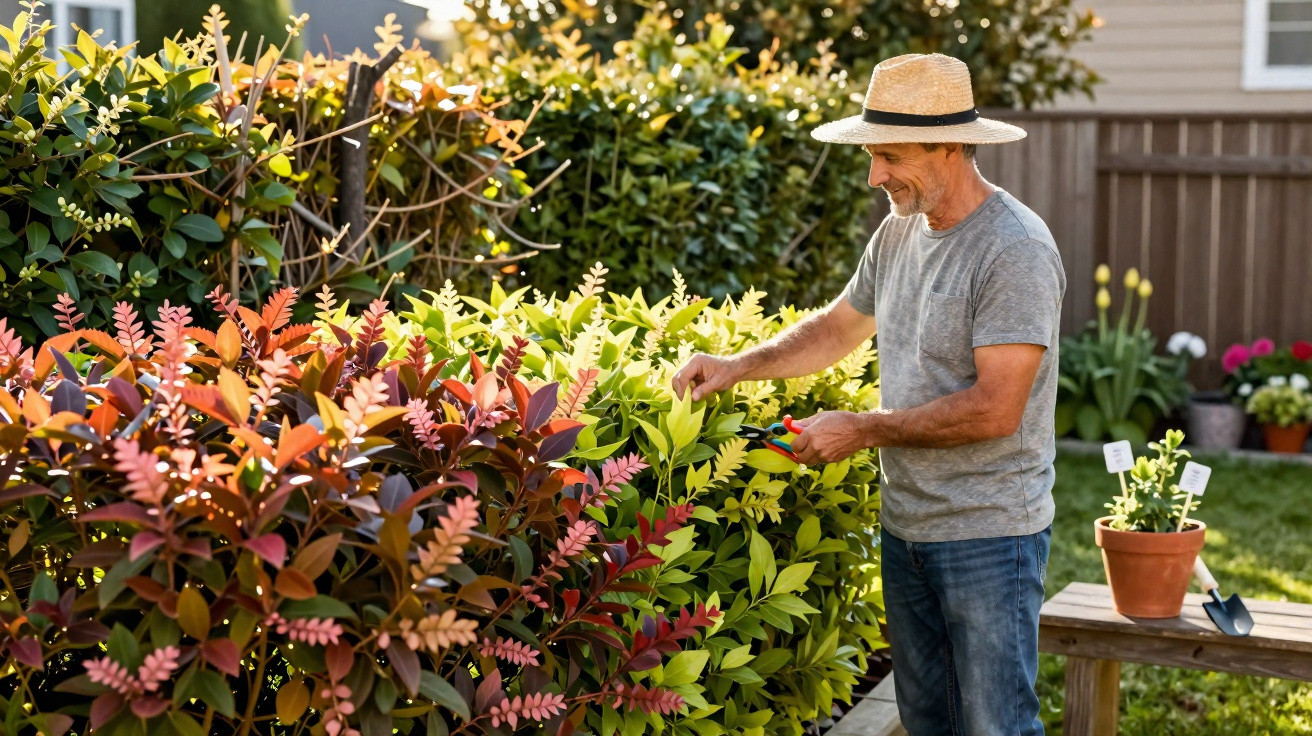
For years, Photinia was treated in countless front gardens as the miracle answer for a fast, evergreen privacy hedge. Now the mood has shifted: disease issues, bare patches and sheer maintenance fatigue are becoming more common. Rather than replanting the same trouble-prone hedge yet again, specialists are pointing towards a different shrub for spring 2026-one that’s far more relaxed to manage and, visually, can do more than many people expect.
Why Photinia is becoming a problem plant in many areas
Photinia rose to popularity because it grows quickly and its red new shoots make an instant impact. In many housing estates it has shaped entire streets. It’s in exactly those places that the downside is now obvious: hedges are starting to look patchy, washed-out and, in some cases, genuinely unhealthy.
Common signs include:
- leaves with reddish-brown spots
- premature leaf drop, sometimes as early as summer
- shoots that become thinner year after year
- hedges that look bare at the base and unstable at the top
The main culprit is a fungal disease known as Entomosporium leaf spot (Entomosporiose). In mild winters and wet springs it attacks the foliage, weakens the shrub over time and leaves it more vulnerable to further issues. If you also plant too tightly and leave dead material around, you’re effectively creating perfect conditions for the fungus to thrive.
"In many gardens, Photinia is now stuck in a constant spiral of disease pressure, bare patches and emergency treatments-in the long run, a complete restart is often the sensible option."
And if, after clearing the hedge, the same species is planted again-often even into the same soil-the whole cycle frequently begins again. That’s where another shrub is increasingly taking centre stage.
Pittosporum: the low-fuss successor for problem hedges
Garden designers are more and more often recommending Pittosporum as an alternative. This evergreen shrub is flexible in design terms and takes well to shaping. Its leaves stay on the plant all year, without the constant shedding that frustrates so many Photinia owners.
Holds its shape and needs little maintenance
Pittosporum grows at a measured pace. It doesn’t surge upwards uncontrollably, yet it reliably fills the space. For most home gardeners, that simply means less pressure to keep reaching for the shears.
- one round of shaping per year is often enough
- for a very crisp, formal hedge, plan for at most two trims
- the shrubs cope well with minor cutting mistakes
Where Photinia often responds to poor cutting by thinning out at the bottom, Pittosporum usually stays denser and more even. The result is a stable green screen that doesn’t demand constant correction.
Subtle foliage colour instead of problem leaves
Depending on the variety, Pittosporum offers a wide range of foliage effects. Some types have deep green, glossy leaves; others come with pale margins and a slightly silvery or yellowish tone. That makes it possible to create a hedge that still looks lively in winter-without becoming garish or visually messy.
"If you liked Photinia’s red new growth, Pittosporum offers a different kind of focal point: understated, but consistently attractive leaf colour."
Why a mixed hedge is often the best option
Even in a garden, monocultures carry risk. When a disease becomes specialised in one plant, it can spread through whole neighbourhoods like wildfire. That’s exactly what many people are seeing right now with Photinia.
Choosing a mixed hedge spreads that risk. Different species respond differently to weather patterns, pests and fungi. If one plant fails, the privacy screen can still hold.
Proven partners for Pittosporum
- Eleagnus: tough, salt-tolerant, well suited to windy sites
- Cornus (bloodtwig dogwood / Cornelian cherry types): coloured stems in winter, attractive autumn colour
- hazel shrubs: a native option, valuable for insects and birds, and produces nuts
This creates a lively “hedge mix” that adds new highlights throughout the year-flowers, berries and stem colour-while also boosting biodiversity in the garden.
Step-by-step: replacing a Photinia hedge properly
1. Assess the situation honestly
Before you reach for a spade or a chainsaw, stand back and take stock. If only a single shrub is struggling, replacing that one plant may be enough. If bare sections run for several metres, though, a full restart is usually more worthwhile than years of patching and fighting decline.
2. Remove and dispose of the old plants
- dig out diseased shrubs including the rootstock, or have them ground out
- collect fallen leaves, prunings and root pieces carefully
- don’t store the waste in the garden: take it to a green-waste recycling centre or, where permitted, burn it
This cuts down fungal spores and other pathogens significantly before the new hedge goes in.
3. Improve and prepare the soil
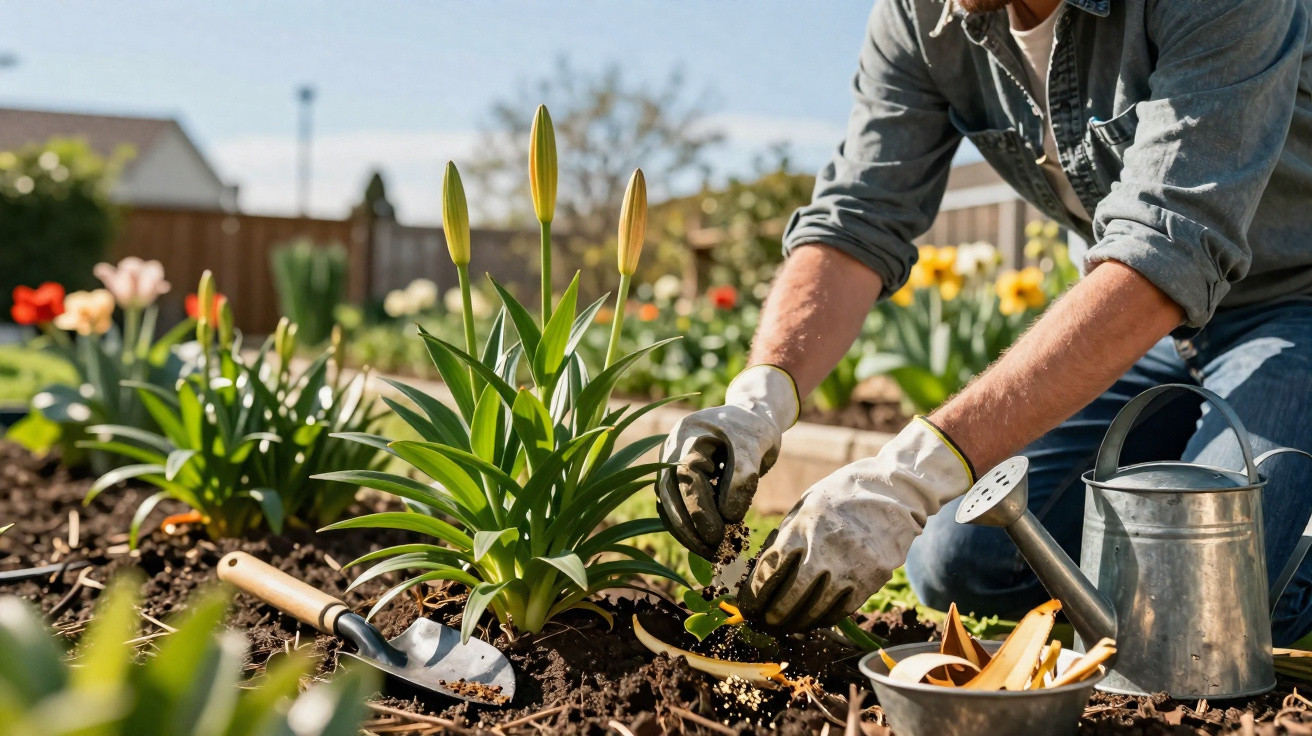
A successful restart begins below ground. Loose, well-aerated soil helps young plants establish.
- loosen the soil to at least two spade depths
- work around 10 litres of mature compost into each planting hole
- in heavy soils, add sand or fine grit to prevent waterlogging
"Pittosporum doesn’t like ‘wet feet’. Thinking about drainage before planting prevents many problems from the outset."
4. Plant correctly and keep proper spacing
For a hedge that’s dense but still well ventilated, spacing of 80 to 100 centimetres has proven effective. This allows the crowns to meet later on without shutting out air completely.
- for 10 metres of hedge, plant around 10 to 12 Pittosporum
- for a mixed hedge, for example, combine 6 Pittosporum, 2 Eleagnus and 2 Cornus
- dig the hole so the root ball sits level with the surrounding soil surface
A 5 centimetre mulch ring made from bark mulch, wood chips or leaf compost keeps moisture in the soil and slows weeds. In windy positions, a support stake can help during the first 12 months, until the roots are properly anchored.
Day-to-day care: keeping the new hedge looking good
Once planting is done, the workload stays manageable. The early years matter most; after that, much of it becomes routine.
Watering, feeding, cutting
- Watering: in the first year, during dry spells, water once or twice a week with around 10 litres per shrub
- Feeding: in spring, apply about 50 grams of a balanced complete fertiliser per running metre
- Cutting: lightly trim once a year; for a strictly formal hedge, plan a second cut
Also important: remove prunings and yellowing leaves regularly. That reduces the opportunities for fungi and pests to take hold.
Common mistakes that weaken the new hedge
Many issues come from well-intended but unhelpful habits, including:
- spacing plants too closely, leaving the hedge permanently damp
- repeatedly adding fertiliser out of worry the shrubs might “starve”
- severe cuts back into old wood, which puts the plants under heavy stress
- replanting old problem species into the same soil again without a break
"A good hedge needs air, light and calm-not constant overactivity with shears and a fertiliser spreader."
What garden owners should also know
Pittosporum isn’t only suitable for a tight, clipped hedge. Left to grow more naturally, it becomes an attractive specimen shrub and can be combined with grasses, roses or perennials. In milder regions it can even work in large containers as a long-term pot plant.
At the same time, a mixed hedge provides more habitat for wildlife. Flowers and fruit from Cornus, hazel and other companions draw in birds and insects. If you include native supporting shrubs, you strengthen local wildlife-something many councils now factor into their requirements for new-build areas.
It’s still sensible to keep an eye on potential risks: in exposed locations with hard frost, it’s advisable to choose frost-hardy Pittosporum varieties or provide wind protection in the first winters. On very chalky soils, leaf paling can occur; this can be reduced with a slightly acidic mulch (for example, from softwood).
If you’re already thinking about updating the garden, you can plan the Photinia hedge replacement as part of it: perhaps one section becomes a mixed privacy hedge, another opens up with flowering shrubs, and a further stretch turns into a looser bed edge using lower Pittosporum varieties. That way, an ongoing nuisance becomes a project that lifts the whole garden-well in time for the 2026 season.

Comments
No comments yet. Be the first to comment!
Leave a Comment