
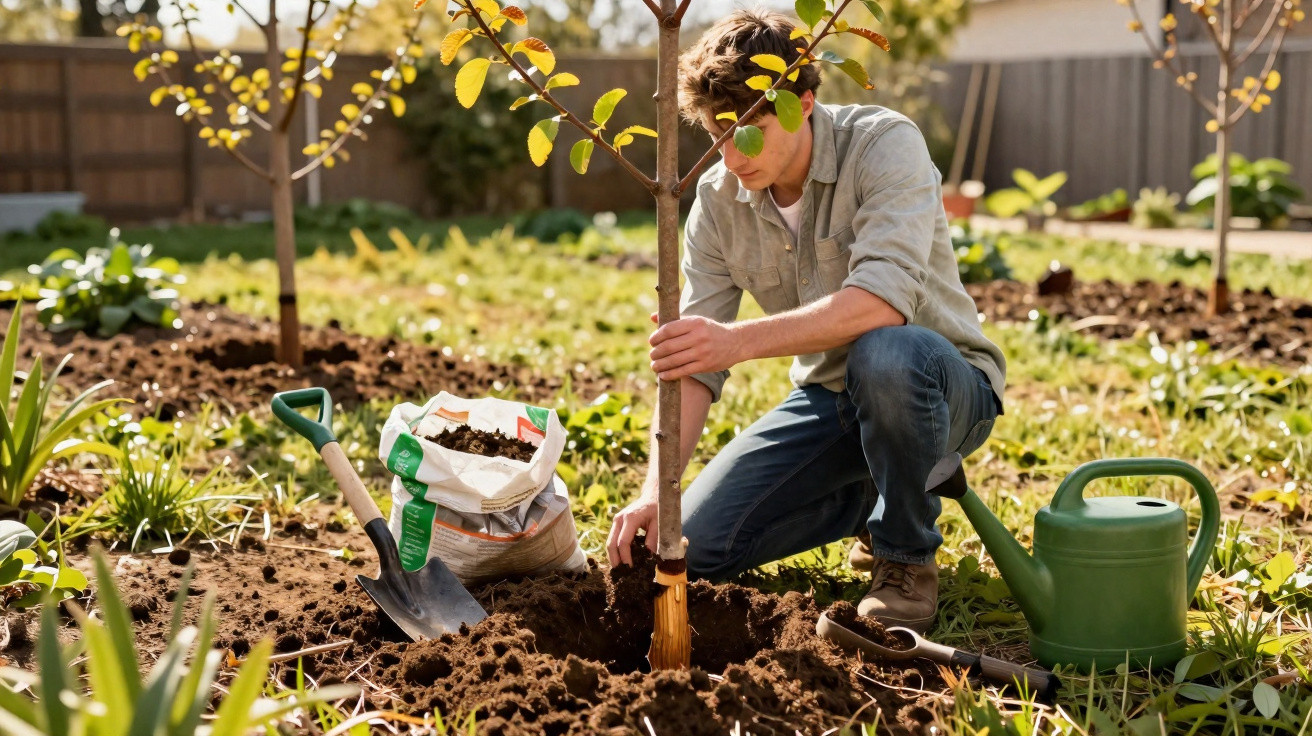
A single slip-up here can hold your tree back for years.
Spring arrives, new fruit trees go in, and expectations are high: an apple or cherry tree is meant to turn the garden into a little paradise. Yet the blossom show often fails to appear, even though the tree looks perfectly healthy. The cause is rarely the variety or the weather, but a very specific area on the trunk that must never end up buried.
The most common planting mistake: the tree is set too deep
Many amateur gardeners want to “protect” a newly bought fruit tree. So they dig a deep hole, pile on plenty of soil, and press earth firmly around the trunk. It feels stable and caring - but it does real harm.
"Fruit trees planted too deep are effectively suffocated - they grow poorly and produce little blossom, or none at all."
Why too much soil around the trunk suffocates the tree
The base of the trunk is not designed to sit permanently in damp soil. There is too little air, water builds up, and that combination damages the sensitive bark.
- constant moisture at the trunk base
- increased risk of rot and fungal infection
- disruption to sap flow within the wood
Below the surface, the trunk can begin to rot. The process often stays hidden for a long time, but it restricts the movement of nutrients and water. The tree may still be alive, yet it behaves as if it is “frozen”: little growth, few new shoots, and no flowers.
Damp and fungi: the hidden danger underground
Bark on the trunk behaves differently from the skin of the roots. Roots can tolerate permanently moist soil; the trunk base cannot. It softens, tiny cracks appear, and those become ideal entry points for fungi and pathogens.
Once inside the trunk wood, they spread quietly and slowly. On the outside you might notice only a slight discolouration or mildly cracked bark, while inside the tree is fighting to survive. In that state, producing blossoms is the last thing it can prioritise.
The crucial area on the trunk: root collar and graft union
To plant fruit trees properly, you need to recognise two key zones: the root collar and the graft union. This is exactly where the critical mistake happens.
How to identify the root collar and the graft
The root collar is where the roots end and the trunk begins. Just above it - usually only a few centimetres higher - sits the graft union. It often looks like a small swelling, a scar, or a slight bend in the wood.
"At the graft union, the desired variety - for example, a flavoursome apple - was ‘grafted’ onto a robust rootstock."
Without grafting, many popular garden varieties would not exist in the first place. The rootstock provides resilience, suitable vigour, and often earlier cropping. If this point is buried, those advantages are lost.
What happens if the graft union ends up underground
When the graft union sits below ground level, the scion variety tries to produce its own roots. In effect, the tree starts to detach itself from the rootstock. That behaviour costs a great deal of energy.
The result:
- the rootstock’s qualities (resilience, yield, eventual height) are lost
- the tree invests effort in survival rather than blossom formation
- fruitfulness is pushed back by years, or may not happen at all
This is why two apparently similar trees can perform so differently in the same garden: one flowers after just a few years, while the other stays a perpetual problem - often because of only a few centimetres of soil in the wrong place.
How to plant fruit trees correctly in March
Especially in early spring, when many new fruit trees are being planted, the planting depth often decides whether the result is success or frustration.
The perfect height: keep the graft union above ground level
The most important rule is:
"The graft union must sit 5 to 10 centimetres above the final soil level - the root collar must remain clear."
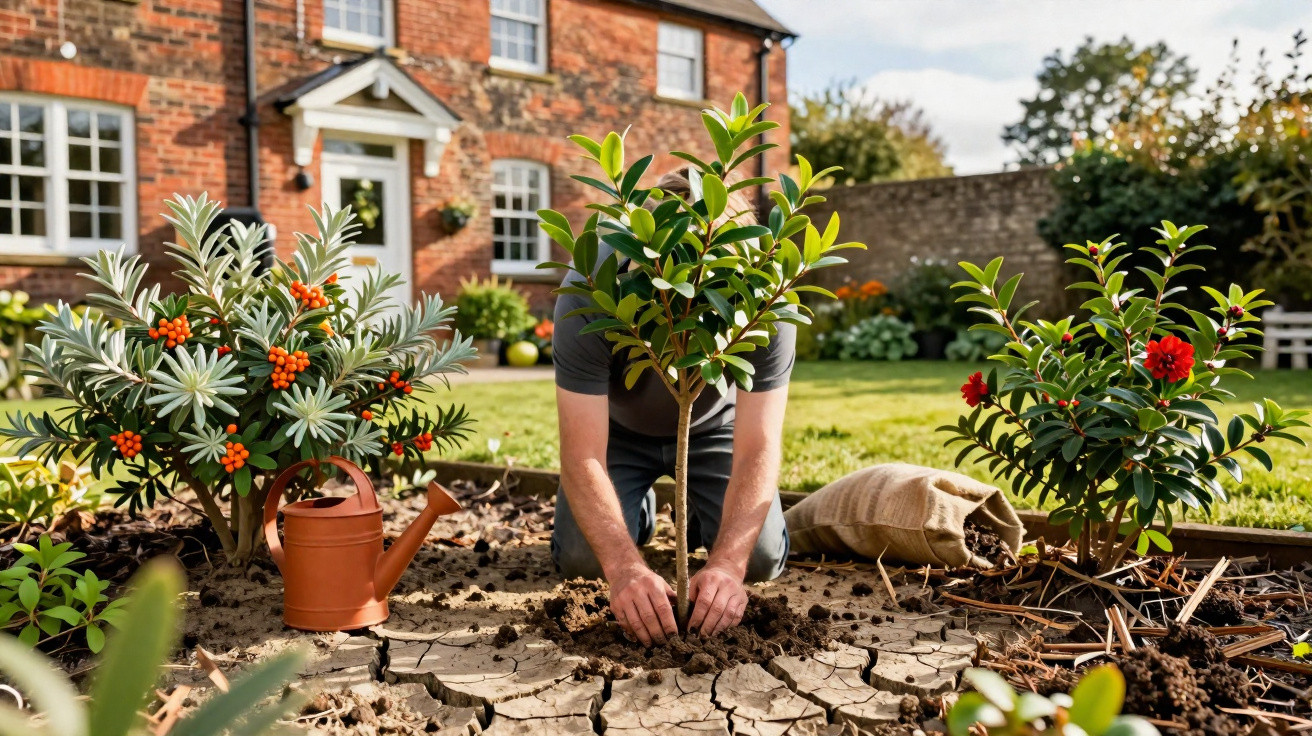
Done correctly, the tree will look as though it is standing a little “higher”, with the scar clearly visible above the soil. It stays dry and gets air and sunshine. That allows the tree to focus its energy on new growth, blossom and, later, fruit.
A trick to stop the soil sinking later
Freshly loosened soil contains lots of air and settles over time. If you do not allow for this, the tree can end up too deep a few weeks after planting.
Practical method:
- At the bottom of the planting hole, shape a small, firm mound of soil.
- Spread the roots out like a fan over this mound.
- Lay a cane or a spade handle across the hole - this becomes your height reference.
- As you backfill, keep checking: leave the graft union 5–10 cm above that line.
- Firm the soil lightly, but do not compact it rock-hard.
This way, even after rain and watering, the tree stays at the correct height instead of “sinking” into the ground.
Warning signs: how to spot a fruit tree planted too deep
The issue rarely looks dramatic in the first year. Many trees appear acceptable at first, even when planted incorrectly. The warning signs tend to show up later.
Typical spring symptoms
In the first sunny weeks, watch for the following:
- little to no extension growth on young shoots
- yellowish, limp leaves despite adequate water
- flower buds shrivel and fail to open
- the whole tree seems “tired” and as if it has stopped
"A fruit tree that barely grows and does not flower for years is very often simply planted too deep."
Rescue measure: uncover the base of the trunk
Once you have identified the mistake, you can often still improve matters. It takes a gentle touch, but not heavy tools.
How to do it:
- Using your hand or a small trowel, carefully remove soil from around the trunk.
- Create a shallow bowl until the root collar and graft union are exposed again.
- Take care not to damage roots and do not scrape the bark.
- Form the watering rim a little further out, not right against the trunk.
The tree will not respond overnight. However, the following season often brings noticeably stronger shoot growth and, later, the first blossom.
Quick checklist for perfect fruit-tree planting
The key rules at a glance
| Step | What to check |
|---|---|
| Prepare the planting hole | Wide and loosened; shape a small soil mound at the bottom |
| Position the tree | Spread roots out; graft union clearly visible above |
| Check the height | Set graft union 5–10 cm above ground level |
| Backfill with soil | No compacted layers; firm lightly; keep root collar clear |
| Watering | Make the watering rim a short distance away from the trunk |
What a well-planted tree gives back
If you give your fruit tree the best possible start, it pays you back. An exposed root collar and a dry, well-ventilated graft union support a strong root system. The tree can take up water and nutrients without difficulty, experiences less stress, and reacts more steadily to heatwaves or sudden cold snaps.
Over the years, the difference becomes obvious: instead of weak twigs, the branches increasingly carry plentiful fruit. The crown develops evenly, the tree stays vigorous, and a good harvest is often possible without heavy chemical intervention.
Why fruit trees are almost always grafted - and what that means
Most apple, pear, cherry or plum trees sold commercially are grafted. In other words, a fruiting variety is joined to a rootstock with specific traits, such as reduced vigour or better adaptation to local soil.
That makes the graft union a key switching point in the tree, combining the strengths of both partners. If it is mishandled or buried, the tree loses that advantage. That is precisely why planting depth matters so much: it helps determine whether the tree stays compact and productive, or becomes overly vigorous and unpredictable.
If you take another critical look at the fruit trees in your garden, you can usually spot the scar quickly. If it sits just above the soil, all is well. If it has disappeared beneath the surface, carefully uncovering it is often the decisive step towards the fruit tree you originally imagined.
Comments
No comments yet. Be the first to comment!
Leave a Comment