
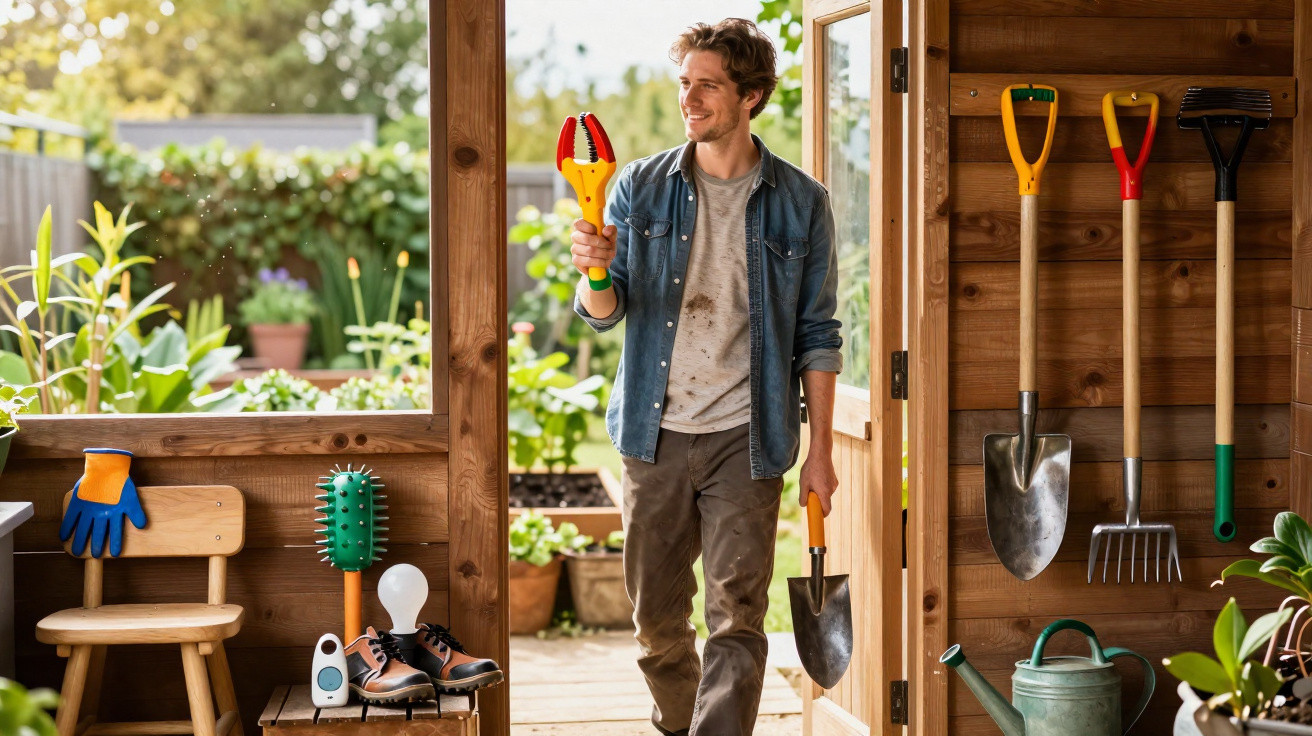
If you enjoy working in the garden, you’ll recognise this pattern: in the brochure, the latest “must-have” helper looks brilliant; in real life, it ends up gathering dust in a corner for months. There’s a fine line between a genuinely useful tool and something that simply eats up storage space - and amateur gardeners keep getting caught out right on that line.
Why so many garden gadgets fail
A lot of unnecessary kit is sold on the same promise: one device will tackle several jobs at once - ideally with hardly any effort. Then reality bites. Plenty of these products only work on the perfect, crumbly soil from a catalogue photo, not on the stony clay patch behind the house.
Poor ergonomics is another common issue. Handles that strain your wrists, awkward working positions, flimsy mechanisms - after a few uses, the tool gets dumped in the furthest corner of the shed. That’s also where you’ll find bargain-basement metal tools that bend on the first root or start rusting after a single season.
"The more functions a garden tool promises, the greater the chance it ends up doing everything only half-heartedly."
If you buy mainly for “cool features”, you often get complication instead of convenience: fiddly settings, parts that jam, and cleaning that takes ages. In the end, the gadget can cost more time than it ever saves.
Twelve garden tools you can confidently get rid of
1. Hand grass shears for lawn edges
At first glance, they look perfect for crisp edging. In practice, many models tend to tear at the grass rather than cut cleanly. After a few minutes, your wrists and forearms complain. If you want neat lawn edges, you’re usually better off with a lawn edging spade or a straightforward petrol strimmer.
2. Folding garden stools with kneeling pads
These hybrid seats promise back-friendly gardening. In many sheds, though, they take up half a shelf and bash into everything when you carry them around. A thick kneeling pad or a simple foam mat gives you the same benefit while using a fraction of the space.
3. Gardening gloves with hard plastic claws
The claws are meant to make digging with your fingers easier. In reality, they remove all feel. Grabbing fine roots, holding seedlings, or working in tight pots becomes difficult. Your hands also get sweaty quickly, and for anything precise the gloves end up back on the shelf.
4. Cheap moisture sensors and wireless gadgets
Budget soil moisture meters that only reach a few centimetres down - and constantly beep - are more stressful than helpful. They often respond mainly to the surface. A quick finger test in the soil, or a small scrape with a hand fork, usually tells you far more about what your plants actually need.
5. Bulb planters with an eject mechanism
The pitch is simple: twist once, get the perfect hole for a bulb, done. In wet soil the tool clogs up; in hard ground it won’t bite; and the first stone can jam the mechanism. A sharp spade or a sturdy hand trowel will usually plant bulbs faster and with fewer problems.
6. Lawn aerator sandals with spikes
Metal spikes under your shoes are supposed to “aerate” the lawn. In reality, they often compact the soil around each hole even more. They’re also not particularly stable, and you risk twisting an ankle. Proper aeration needs an aerator that removes real soil cores - or you can target problem areas with a garden fork and a bit of sand.
7. Fertiliser spray heads for the garden hose
The idea sounds convenient: pour fertiliser into a container, add water, and feed as you spray. In practice, the dose varies wildly depending on water pressure, settings, and the device’s mood. Underfeeding and overfeeding can alternate, and it drips and leaks. Measuring the correct amount into a watering can is more controlled - and often quicker.
8. Rotating compost drums
They look smart and promise fast compost. The catch is that they’re small, fill up quickly, and become extremely heavy once they’re properly loaded. Many gardeners give up because turning the drum becomes a workout. A simple compost heap on the ground, with some structural material (branches, shredded prunings), tends to work far better.
9. Tool cases with 10 or 12 mini garden tools
Bright, compact, and often sold as gift sets. The reality: thin metal, loose rivets, and tiny tools. After a year, you might have two pieces that are vaguely usable; the rest bends or sticks. It’s more sensible to own three to five high-quality individual tools that will last.
10. Overly complicated oscillating sprinklers
Models covered in dozens of nozzles, levers, and click-stops look impressively technical. Then a small change in water pressure can make the sprinkler stick, shift out of position, or suddenly water the patio instead of the beds. A simpler sprinkler with a few well-designed adjustments is more than enough for most gardens.
11. Folding pruning saws with delicate blades
Folding mechanisms often start to jam, especially when dirt gets into the hinge or guide. Many fold-out saws also use very thin blades that flex quickly on thicker branches. A solid fixed-blade saw is more reliable - and can usually be sharpened or the blade replaced.
12. Weed pullers with an integrated spray system
They claim: push in, spray, finished. In reality, nozzles clog, the liquid drips where you don’t want it, and the built-in claws are often too weak to remove the roots properly. A basic weed puller plus the careful use of a separate treatment (if it’s needed at all) gives you far more control.
Which garden tools actually make sense
Many experienced gardeners get a surprising amount done with very little equipment. What matters is durability, sharpness, and how the tool feels in use - not the number of features.
"A small core kit of good, solid tools covers 80 to 90 percent of all jobs in the garden."
A well-chosen basic set typically includes:
- a sturdy spade or digging fork
- a sharp hand trowel
- high-quality secateurs that sit comfortably in the hand
- a fixed pruning saw for thicker branches
- a simple weed puller or patio crack scraper
- a robust pair of gardening gloves without gimmicks
- a watering can and a dependable garden hose with a solid spray gun
If you have space for composting, you’ll often do better with an open compost bay made from wooden slats or basic wire mesh. It holds more, ventilates naturally, and turning the heap is fairly straightforward with a digging fork or a manure fork.
How to check whether a new tool is genuinely necessary
Before you buy anything new, it’s worth a quick reality check. A few questions can prevent expensive mistakes:
| Question | What it’s for |
|---|---|
| Do I already own a tool that does something similar? | Many tasks can be handled well with tools you already have. |
| How often will I realistically use this tool each year? | One-off jobs rarely justify a large, expensive piece of kit. |
| Do I know exactly where I will store it? | If you have no space, it will end up being something you trip over. |
| Do I know someone I could borrow one from? | Sharing saves money and space - and reduces frustration. |
A practical tip: run through a full gardening season using only your current tools and note which tasks are genuinely difficult or simply not possible. That usually produces a very short shopping list - without any impulse buys.
More order in the tool shed: how to declutter successfully
If you’ve kept everything for years, one day you’ll stare in disbelief at a wall of metal and plastic. That’s when a decisive clear-out day helps. Lay every tool out where you can see it - on the lawn or patio - and sort it into three piles.
- Used regularly: these stay and deserve a fixed, easy-to-reach place.
- Rarely used, but useful: for example, a specialist fruit-tree pruner. Keep them, but store them properly.
- Never used or frustrating: this is where the space-wasters live. Sell, donate, or dispose of them.
If you stay honest, you’ll quickly notice that many “clever” solutions were more marketing than help. And with every item that leaves the shed, day-to-day gardening feels that bit easier.
What really matters in garden tools
In the end, two things decide whether a tool becomes a trusted companion or a constant annoyance: material quality and handling. Steel shouldn’t bend by hand, grips need to be non-slip and suit your hand size, and screws or rivets shouldn’t wobble or work loose.
Good ergonomics pays off. If you spend any length of time hoeing, pruning, or digging, you’ll feel a poorly shaped handle in your shoulders and wrists. Where possible, try tools in the shop: does the grip feel right, is the weight sensible, and can you work in your normal posture?
Many glossy gadgets run on promises rather than performance. A small, honest set of dependable tools brings more enjoyment in the garden - and far more space in the shed.
Comments
No comments yet. Be the first to comment!
Leave a Comment