
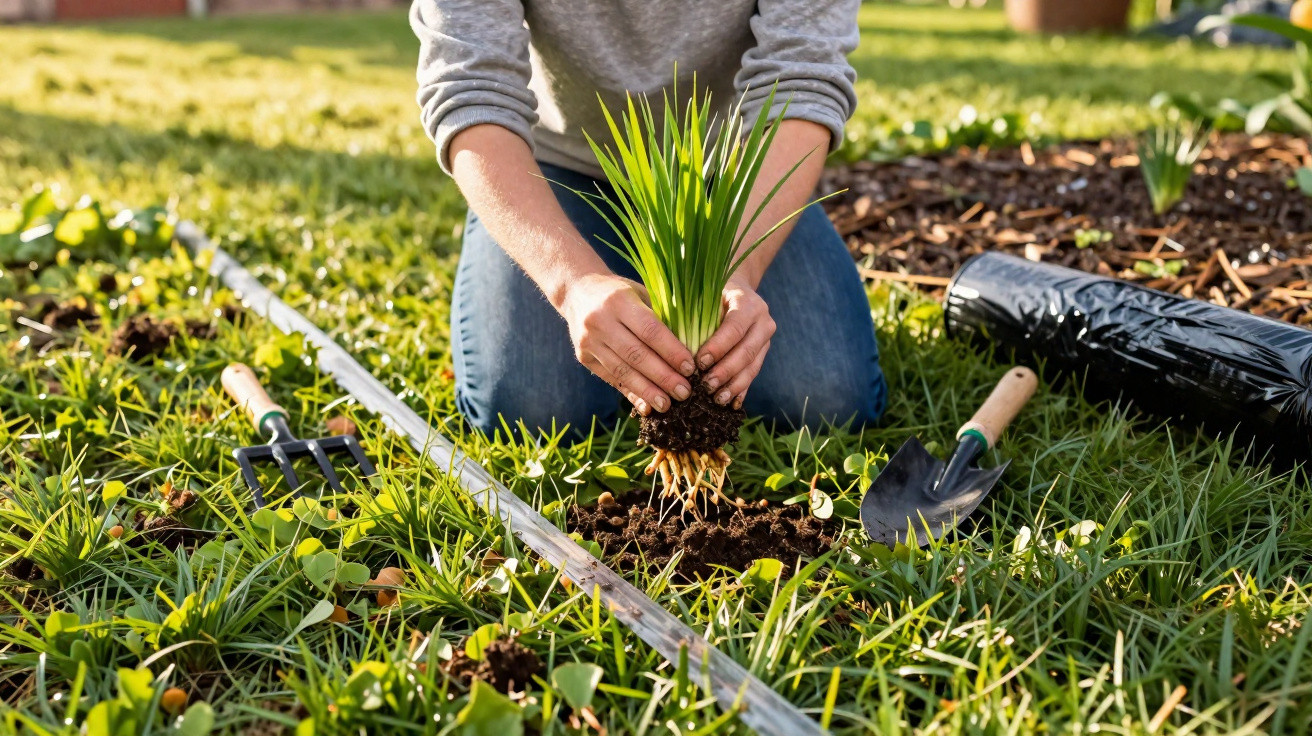
Nutgrass, botanically Cyperus rotundus, is widely regarded as one of the most irritating weeds you can get in a garden. Once it shows up in a lawn or a border, you quickly discover that simply pulling it out achieves very little. The plant builds a dense underground web of tubers and rhizomes, and fresh shoots keep returning from that reserve. However, with accurate identification, deliberate hands-on removal, and carefully targeted herbicide use where appropriate, you can dramatically reduce the problem - and, over time, eliminate it.
How to identify nutgrass with confidence
Many gardeners initially mistake nutgrass for an unusual type of lawn grass. That confusion is understandable, because the shoots look similar at a glance. If you look more closely, the differences are clear.
- The stems are triangular, not round - you can feel the edges between your fingers.
- The leaves often arise in threes at the base.
- In summer, yellowish-brown flower heads form at the tips of the stems.
- After mowing, the shoots regrow noticeably faster than the surrounding lawn.
Another key clue is below ground: just under the surface, the plant forms chains of small tubers linked by rhizomes. Each tuber can produce a new plant, even if the visible growth has already been removed.
"Nutgrass doesn’t live off the leaf - it relies on an underground store of tubers, and that’s exactly what you have to weaken on purpose."
Common hotspots include poorly drained areas, patches that stay waterlogged, or persistently damp zones around sprinklers and drip lines. Nutgrass usually begins in late spring once the soil is consistently warm, then accelerates in high summer. That’s also the period when control measures tend to work best.
Manual methods: pull, dig, and persist
If you want to avoid herbicides - or you’re only dealing with a small area - you can tackle nutgrass mechanically. It takes effort and time, but it can work if you stay consistent.
Dig it out properly rather than tearing it off
Snapping off the shoots is almost pointless; in many cases the plant responds by returning even more vigorously. A methodical approach is far more effective:
- Water the affected patch thoroughly the day before, so the soil softens.
- Use a weeding knife or a digging fork to loosen the soil carefully around the clump.
- Grip the plant as deep as you can and pull upwards slowly and steadily.
- Use your hand or a spade to search nearby for tubers and rhizomes, removing everything you find.
- Put all plant material into a refuse sack for disposal - do not add it to the compost.
- Check the spot regularly over the following weeks and remove any new shoots immediately.
The tubers can sit as deep as 30 centimetres. If you work too shallowly, you often just slice them up - and end up spreading the infestation through the soil.
Rotavating: opportunity and risk at the same time
A cultivator or rotavator can feel like the quickest solution. It loosens soil over a wide area, but it can also spread nutgrass aggressively. Every chopped-up tuber can become a new shoot.
If rotavating is unavoidable - for example, when completely remaking a border - you need a clear plan: repeated cultivation at short intervals. If you cultivate every two weeks during the growing season, the energy reserves in the tubers are gradually depleted. It takes time, but it helps avoid uncontrolled herbicide use.
Using summer heat: soil solarisation
For beds that won’t be planted until later, there’s a highly effective, chemical-free option: solarisation. This method harnesses the sun’s heat.
- Water the area heavily so heat transfers into the soil more effectively.
- Cover the soil with clear plastic sheeting (not fleece and not black plastic).
- Seal the edges airtight with soil, stones, or boards.
- Leave it in place for 4–6 weeks during high summer.
Under clear plastic, heat builds up and soil temperatures can locally rise to well above 60°C. At that depth, many tubers are killed. The downside is that the area can’t be used for growing during this period, and the method is only reliably effective in regions with genuinely hot summers.
Chemical options: when they make sense and how they work
With heavy infestations or large lawns, many gardeners turn to herbicides. If you go down that route, it pays to be precise and to understand how the different products behave.
| Herbicide type | Active ingredient | Timing | Repeat treatment |
|---|---|---|---|
| Selective, post-emergent | Halosulfuron-methyl | Growing season | every 6–8 weeks |
| Non-selective, systemic | Glyphosate | before die-back | usually once |
| Pre-emergent inhibitor | Sulfentrazone | Early spring | once per year |
Selective products for lawns
Products containing halosulfuron-methyl target nutgrass without destroying the lawn. The active ingredient moves from the leaves into the tubers, weakening the plant from the inside.
For best results, nutgrass needs to be actively growing and carrying several leaves. Stressed, droughty growth absorbs very little product. The ideal window is late spring through early autumn, at temperatures above 15°C. Depending on the severity of the infestation, follow-up applications at 6–8 week intervals are often required.
Glyphosate only in exceptional situations
Herbicides containing glyphosate can control nutgrass reliably, but they kill all green growth in the treated area at the same time. For that reason, they’re better suited to sites that will be rebuilt entirely - for instance, a lawn that is completely overrun with weeds or a fallow bed being reset.
After application, you need to wait until everything has died back. Then remove the dead plant material, loosen the ground, and after a short pause you can re-seed or replant. If you choose this option, apply only in still conditions and protect neighbouring beds carefully.
Preventing new growth with pre-emergent inhibitors
Products containing sulfentrazone create a kind of chemical barrier in the top layer of soil. Nutgrass seedlings then have very little chance to establish. However, these products do not change anything about tubers that are already present. That makes them a supplement, not a stand-alone fix.
In practice, a combination is often most effective: first reduce the existing population mechanically or with selective herbicides, then apply a pre-emergent inhibitor in spring to limit new outbreaks.
Lawn care as the best long-term strategy
The healthier and denser the lawn, the fewer opportunities nutgrass has. Many outbreaks occur where grass is already weakened - for example, due to incorrect mowing or too much water.
Mow correctly and avoid thinning the sward
Each turf type has an ideal cutting height. If you mow too low, you open up gaps that let weeds surge through. A solid rule of thumb is to remove no more than one third of the blade height in a single cut. Slightly longer grass shades the soil and keeps the surface cooler and drier - conditions nutgrass handles poorly.
Get water management under control
Nutgrass thrives in damp, poorly drained soil. Lawn grass, by contrast, develops stronger roots when it is watered less often but more thoroughly.
- Water deeply once or twice per week rather than giving a light sprinkle every day.
- Reduce waterlogging with scarifying, aeration, or drainage systems.
- On heavy soils, work in sand or soil-structure improvers over the long term.
Test the soil and fertilise with intent
A soil test every few years shows where pH and nutrient levels stand. Underfeeding weakens the lawn, while overdoing nitrogen can encourage certain weeds too. A balanced feeding plan supports a dense turf: fewer bare patches also means less space for nutgrass to take hold.
Nutgrass in borders and beds: mulch, membrane, and regular checks
In perennial and vegetable beds, a mix of ground covering and routine monitoring helps. A layer of bark mulch, woodchip, or straw around 3–4 centimetres thick noticeably slows new shoots pushing through.
To protect particularly sensitive crops, you can lay a weed-suppressing membrane or horticultural fleece beneath the mulch. Small openings for each plant leave nutgrass little opportunity to access light between rows. Even so, a weekly walk-round is worthwhile: any shoots that do break through can be pulled promptly before they expand the tuber system.
Why nutgrass is so persistent
Nutgrass has earned its reputation. The plant stores large amounts of energy in its tubers. Even tiny remnants can sprout again, which is why so many attempts feel futile. Some tubers can also survive for several years in the soil without doing anything, only to restart when conditions suit them.
Once you understand that the real battle is mostly underground, your approach changes. Rather than removing only what you can see, the aim is to steadily drain the soil reserves: through repeated suppression, carefully applied herbicides, or heat via solarisation. Combined with a strong, vigorous lawn or densely planted beds, the likelihood of nutgrass spreading widely again drops significantly.






Comments
No comments yet. Be the first to comment!
Leave a Comment