
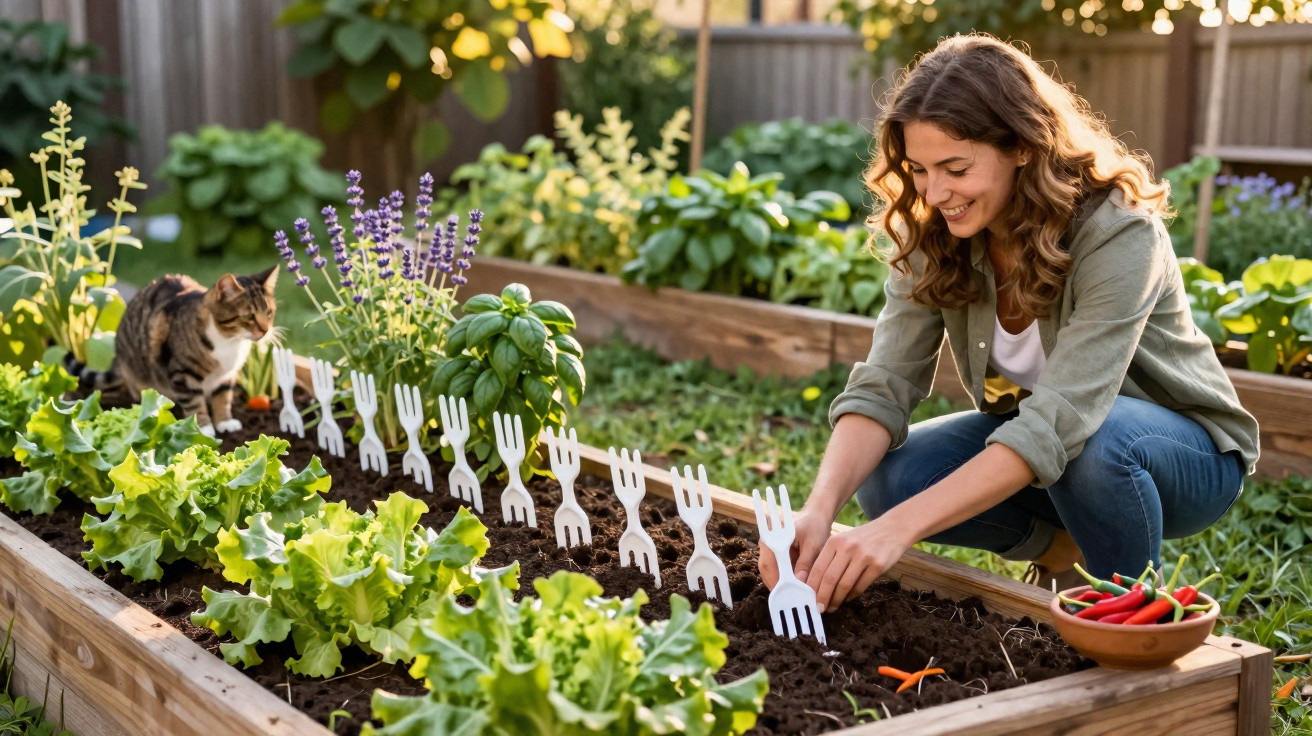
If you’ve been looking over allotment plots or your own balcony lately, you may have noticed something odd: among the lettuce, strawberries and tomatoes, white or brightly coloured fork prongs are suddenly sticking up out of the soil. It isn’t a quirky decorating craze - it’s a highly practical, chemical-free way to deter cats, rabbits, squirrels and other unwanted visitors.
Why plastic forks in the vegetable bed actually make sense
At first glance, the idea sounds almost ridiculous: could cheap plastic forks really protect delicate seedlings? In many gardens, they do exactly that. The method relies on two things animals react to strongly: how the ground feels under them, and their distrust of unfamiliar obstacles.
"Plastic forks turn a cosy digging spot for animals into an unpleasant obstacle course."
Cats, rabbits, hedgehogs and squirrels are drawn to loose, damp soil where they can walk comfortably, scratch around or settle down. Once fork prongs are pushed into the ground throughout the bed, every step becomes awkward. Instead of soft earth, paws meet firm, pointed resistance.
Cats in particular can cause real trouble in vegetable beds. Freshly raked soil can look like an open invitation - either to use it as a toilet or to rummage about. When a paw repeatedly hits fork prongs, cats quickly learn that this bed is not a comfortable place to visit.
Squirrels behave in a similar way when they’re searching the soil for buried nuts, as do rabbits that want to nibble at young lettuce plants. If the surface feels risky and unstable, they tend to move on - ideally to the next garden.
Visual deterrence also plays a big part
Alongside the unpleasant sensation underfoot, there’s a second effect: forks significantly change how the bed looks. For many animals, that difference alone acts as a warning.
Wild animals are naturally cautious. Rows of upright forks resemble small fences or vertical bars. It’s not a pattern they associate with a safe feeding or digging area, so suspicion kicks in. A bed with a smooth soil surface is easy to step onto; a bed filled with “sticks” is far more likely to be avoided.
Another practical benefit is that, unlike liquid or powdered deterrents, forks stay put. Rain doesn’t wash them away and wind can’t blow them off. At most, after a storm you may need to straighten a few.
"Especially during the delicate seedling stage, a single night-time visit from cats or rabbits can destroy an entire row of young plants."
Experienced gardeners report that, in this critical period, closely spaced forks prevent most damage. Once plants are larger and sturdier, you can thin out the forks or move them to different beds.
How to place plastic forks correctly
Success depends less on sheer quantity and more on smart positioning. Ten forks scattered randomly will do very little. A planned layout, however, can make the bed noticeably quieter.
Four strategies many gardeners use
- Protective ring at the edge: Push forks close together along the bed borders. This makes it harder for animals to get in.
- Circles around individual plants: For especially popular crops such as lettuce or strawberries, place four to six forks around each plant to form a small protective circle.
- Forks between rows: Set forks in lines between vegetable rows so there is no clear “corridor” for animals to walk through.
- Block animal routes: If you spot regular paths used by cats or rabbits, place forks directly in those well-worn tracks.
A spacing of around 8 centimetres between forks has proved effective. The prongs should always point upwards. If you leave larger gaps, animals will exploit them straight away. That’s why it’s worth checking after heavy rain or wind: if forks have tilted, simply push them back in so they stand upright again.
Which forks work best?
In principle, almost any lightweight plastic fork you have at home will work - for example, leftovers from parties or takeaway meals. A few details make selection easier:
- light-coloured or white forks are more visible; dark forks blend into the soil
- choose prongs that are reasonably sturdy so they don’t snap in the ground
- avoid very short handles so they sit firmly and stay in place, even in rain
If you’d rather not use plastic forks, you can switch to reusable options such as small wooden skewers with blunted tips or plant supports. The basic principle stays the same: make the surface feel uncomfortable and uncertain for animals.
Natural add-ons: smells, heat and companion planting
The fork method often works best when paired with other natural deterrents. Every garden is different, and depending on your area and the animals involved, you may need to adjust what you use.
Fragrant allies in the bed
Many aromatic plants are pleasant to us but off-putting to some animals. If you plant marigolds, basil or mint around the outer edge of your vegetable bed, you create an extra scented barrier.
Popular combinations include:
- tomatoes with marigolds planted between them
- peppers or chillies with basil nearby
- brassicas with mint close by (in pots, so it doesn’t spread uncontrollably)
This type of companion planting doesn’t just discourage unwanted visitors; it can also support vegetable growth and attract beneficial insects.
Heat and strong aromas as a barrier
Another well-known option is cayenne pepper or chilli powder. Sprinkled lightly around plants, it irritates sensitive noses and paws of mammals. After rain, however, you’ll need to apply it again because the powder washes away.
Essential oils such as peppermint, eucalyptus or citrus can also be used: add a few drops to water, shake well, and spray around the beds. This creates a short-term “unfriendly” scent zone for many animals without harming bees and other pollinators.
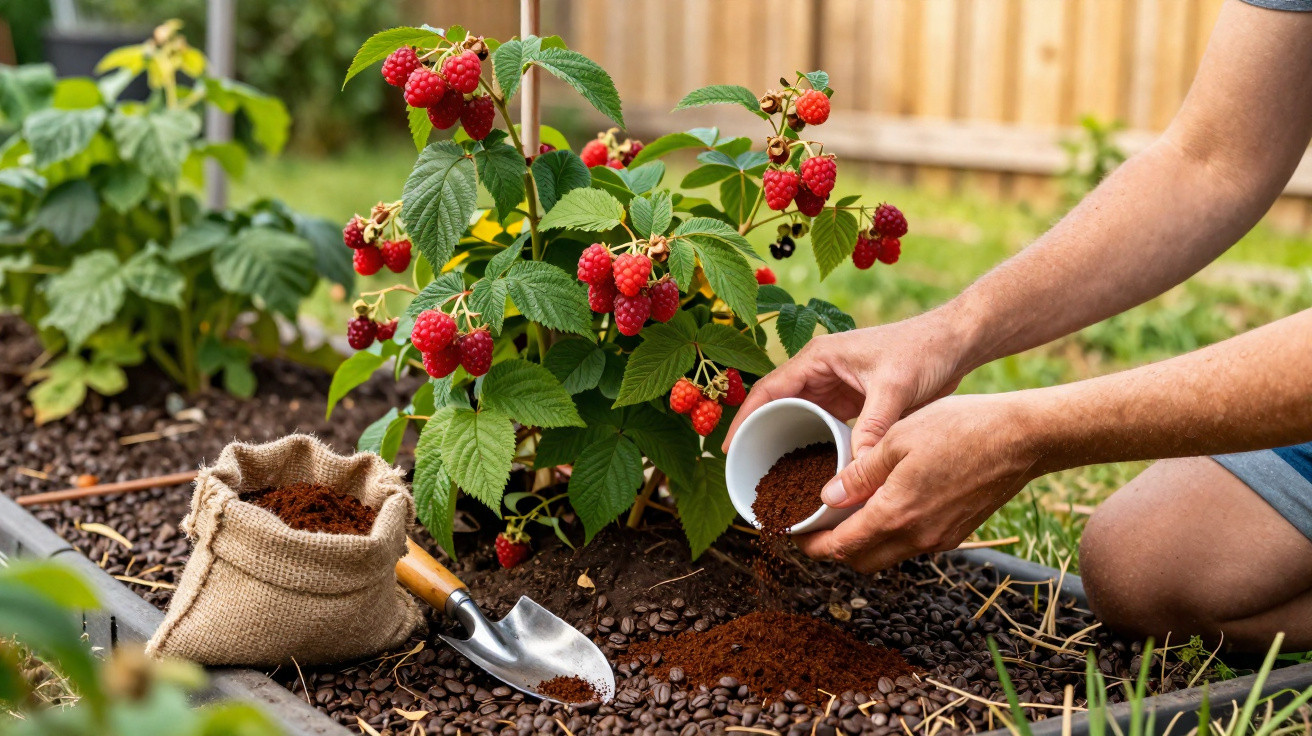
Used coffee grounds do several jobs at once. Their coarse texture and strong smell deter both slugs and some small mammals, and they also add valuable nitrogen to the soil. Scattered thinly around plants, they’re an easy bonus for the vegetable garden.
Sustainability: turning disposable plastic into bed protection
One point that convinces many gardeners is that forks get a second life instead of going straight into the bin. If you already have disposable forks in a drawer, you can put them to work rather than buying new products.
"Plastic forks replace chemical sprays, noisy deterrents or expensive specialist mesh - and can be reused year after year."
Depending on the season, the forks can simply be moved to different areas. When one section no longer needs them, the “fork fence” shifts to the next vulnerable part of the garden. The soil isn’t burdened with chemicals, and you don’t end up with unsightly remnants left behind over time.
What to watch out for: safety and the limits of the trick
Despite its advantages, this approach does require a bit of care. If children use the garden, avoid placing forks right next to paths where they could be missed and stepped on. In narrow beds that you regularly need to step into, it’s sensible to keep a clear footway without forks.
With very persistent or larger animals - such as martens or raccoons - the method eventually reaches its limits. In many areas, only sturdy fencing or professional trapping will help, sometimes in consultation with local authorities.
For the everyday problems most hobby gardeners face - cat mess in the bed, nibbled seedlings or freshly turned rows - fork protection is usually more than enough and can greatly reduce the hassle.
Practical examples and sensible everyday combinations
In a terraced house garden, a slim bed running alongside the patio is often all you have. Here, forks work particularly well as an edge barrier: place them along the patio side, then add a few circles around lettuce and strawberries. Combine that with a strip of coffee grounds and a few pots of mint, and this small area often stays surprisingly undisturbed.
In larger gardens with several beds, a flexible approach pays off. Many gardeners use forks only where they’re most needed - in beds with freshly sown rows or very young plants. As soon as plants become stronger, the forks move on to the next batch of sowings. That saves materials while keeping protection focused on the most vulnerable spots.
If you garden with children, you can even turn the idea into a small project: paint the forks, add numbers, or mark them with brightly coloured tape. That way, the “deterrent fence” also becomes a handy guide in the bed - children can clearly see which row belongs to which plants.
The main point remains the same: simple plastic forks can turn an apparently defenceless vegetable bed into a much safer place for seedlings and young plants. With minimal effort, low cost and no toxins, you get a clever protective barrier that also combines easily with other natural methods.
Comments
No comments yet. Be the first to comment!
Leave a Comment