
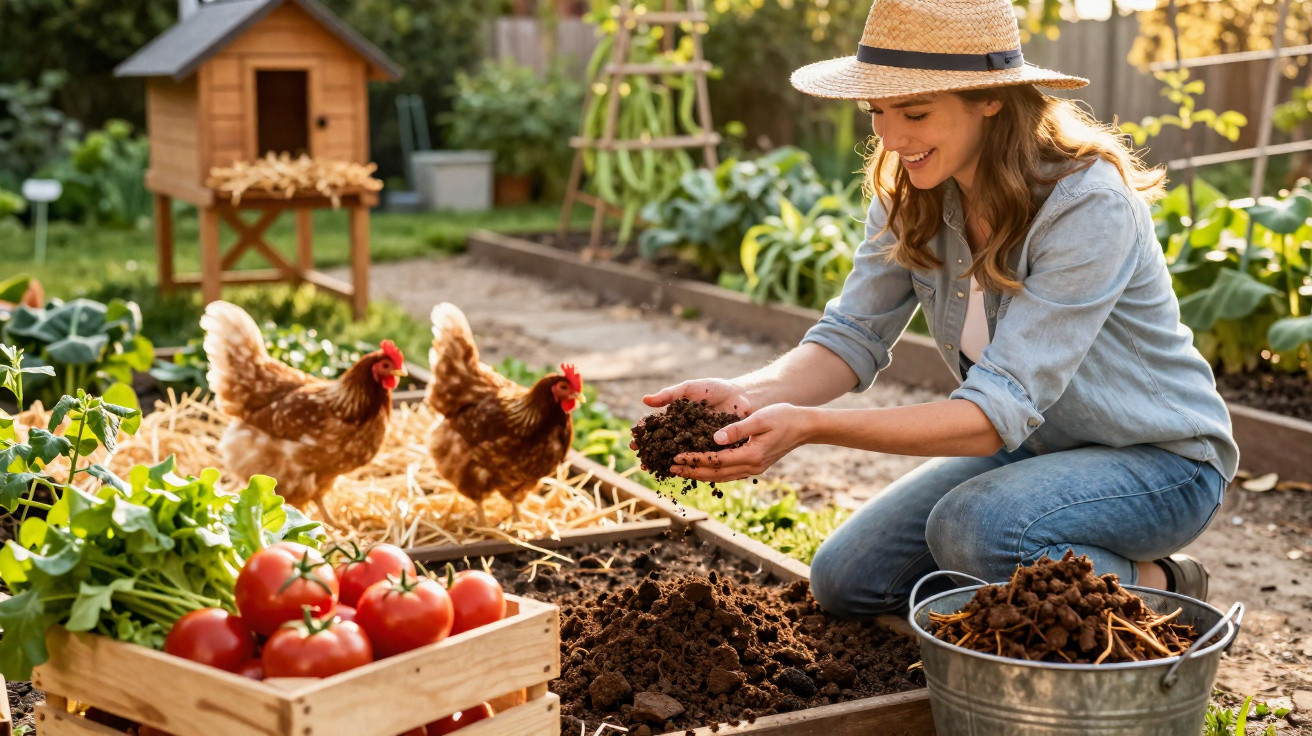
Keeping a few chickens in the garden gives you far more than just fresh eggs. In the background, a powerful fertiliser is produced quietly and steadily - one that can easily compete with any bought-in specialist blend. When handled properly, it can give tomatoes, courgettes and fruit trees a visible burst of growth in the bed - without chemicals and without extra expense.
Why chicken manure works so well as a fertiliser
Chicken droppings are among the most nutrient-dense organic fertilisers available to home gardeners. Compared with cattle or horse manure, they are noticeably more concentrated.
"Chicken manure provides large amounts of nitrogen, phosphorus and potassium - the three key nutrients for strong growth and abundant harvests."
The nutrient powerhouse in detail
Chicken manure contains exactly the elements vegetable beds crave in spring:
- Nitrogen (N): drives leaf and shoot growth; important for salads, brassicas and herbs
- Phosphorus (P): supports roots and flower formation; crucial for tomatoes, peppers, berries
- Potassium (K): improves flavour, keeping quality and resilience against drought and disease
Because these nutrients occur in such concentrated form, the difference in the bed is clear: plants establish faster, leaves become a deeper green, and fruits grow larger and more numerous.
Why the bedding makes all the difference
It becomes even more useful once the droppings mix with the coop bedding. Straw, hay or wood shavings add plenty of carbon, which helps balance the high nitrogen content. That combination is what turns a problematic material into an ideal compost ingredient.
Instead of buying expensive bags labelled “organic slow-release fertiliser”, it’s often enough to look in the run: soiled bedding is, in effect, already half the work towards excellent humus.
Why fresh chicken manure is dangerous for plants
As effective as this fertiliser can be, it’s also delicate to handle when fresh. Tip the contents of the chicken house straight onto a bed and you may get an unpleasant surprise.
Typical damage caused by fresh droppings
Fresh chicken manure can effectively scorch plants. The nutrient concentration is so high that roots can be harmed. Common signs include:
- leaves that suddenly turn yellow or brown
- dried, crisp leaf edges
- young plants collapsing despite regular watering
"Straight from the coop onto the bed - with chicken manure, that’s a sure way to ruin plants."
The golden rule: wait at least six months
To turn this “hot” material into gentle, plant-friendly humus, time is essential. A reliable rule of thumb is that the coop mix of droppings and bedding needs around half a year to compost.
The process in the garden is straightforward, but it matters:
- Lift out soiled bedding and droppings with a fork
- Pile it up in shade or partial shade
- Keep it lightly moist, but protect it from constant rain (for example, with an old tarpaulin)
- Leave it alone and let the microorganisms do the work
Over that period, bacteria and fungi gradually transform the heap. Harsh components dissipate, the texture becomes crumbly, and the smell softens. What you end up with is a dark, earthy compost that plants tolerate well.
Turning compost into autumn fertiliser for record harvests
After the composting period, the most interesting part begins: applying it deliberately to your beds. At this stage, correct dosing is what determines success or failure.
The ideal layer thickness
Even once composted, it remains a strong fertiliser. That’s why a thin layer is entirely sufficient. Gardeners who apply too much risk root damage all over again.
"Recommendation: spread a maximum of two to three centimetres of chicken compost evenly over the soil - you don’t need more than that."
If you wish, you can lightly work the humus into the top layer of soil. On heavy soils, this also improves aeration; on sandy ground, it helps hold water and nutrients in the root zone for longer.
Where chicken manure works best
It pays off most with plants classed as heavy feeders. They have a high nutrient demand and respond gratefully to any extra support.
| Plant group | Suitable candidates | Benefits from chicken manure |
|---|---|---|
| Vegetables | Tomatoes, peppers, chilli, courgettes, pumpkin, brassicas | stronger plants, more flowers, larger fruits |
| Fruit | Apple and pear trees, berry bushes | steadier fruit set, more aromatic harvest |
| Ornamental plants | Roses, perennials with high nutrient needs | fuller flowering, better recovery after pruning |
The mulch trick: keeping the fertiliser effective
A common mistake happens right at the end: the compost is spread widely - and then left exposed in the sun. That allows part of its effect to be lost.
Why covering it is essential
Organic fertiliser performs best with moisture and protection. Sun and wind dry out the surface, while rain can wash nutrients through the soil profile too quickly.
"If you cover chicken compost with a mulch layer after applying it, you preserve its effect for weeks and months."
Suitable options include:
- dried grass clippings
- last year’s leaves
- straw
- torn, unbleached cardboard as a base layer with organic material on top
This mulch layer keeps moisture in the soil, protects soil organisms, and helps prevent nitrogen from escaping into the air too quickly.
Slow, steady nutrient release
Under the mulch, soil life becomes very active. Earthworms gradually pull compost down into deeper layers, and microorganisms continue breaking down the remaining organic matter. Nutrients are then delivered to roots step by step.
For the gardener, that means less hassle with top-ups, less watering, and sturdier plants that don’t surge briefly and then stall - instead they develop strongly and consistently.
Practical tips for chicken keepers with a vegetable garden
How often should you muck out the coop?
In a small hobby chicken house with four to six birds, a thorough clean-out every four to six weeks is often enough. If you use deep litter and add fresh bedding regularly, you can build up a large amount of material for the compost heap over winter.
Smell, hygiene and safety
Many people worry that chicken manure is “unclean”. In a compost heap left to work for months, microorganisms reliably break down problematic germs. The key is to wear gloves when handling it and to avoid positioning the heap right next to a patio or sandpit.
For leafy vegetables eaten raw (such as cut-and-come-again salad), use chicken compost sparingly and only when it is very well matured. With tomatoes or fruit trees, the risk is much lower because the edible parts grow well away from the soil.
What home gardeners without chickens can take from this
If you don’t keep chickens, you don’t have to miss out entirely. Neighbours, smallholdings or local self-sufficient growers often have this material in surplus and are happy to pass it on - sometimes in exchange for a few apples, courgettes or a jar of homemade jam.
The basic rules stay the same: always compost it, give it time, apply a thin layer, and mulch. Whether it comes from your own coop or the farm next door makes very little difference to results in the vegetable bed.
Comments
No comments yet. Be the first to comment!
Leave a Comment